 By Angela Vasquez
Key Takeaways
- Implement a strong Customer Data Platform (CDP) by Q3 2026 to unify customer profiles and enable real-time personalization across all touchpoints.
- Invest in AI-powered predictive analytics tools that forecast customer churn with at least 85% accuracy, allowing for proactive retention strategies.
- Develop a complete voice search optimization strategy, including schema markup for FAQs and local business information, to capture the growing segment of spoken queries.
- Prioritize the integration of augmented reality (AR) experiences into product visualization and virtual try-on features for e-commerce by the end of 2026.
- Establish a dedicated team for monitoring and responding to sentiment analysis insights from social media and review platforms, aiming for a 24-hour response time on critical issues.
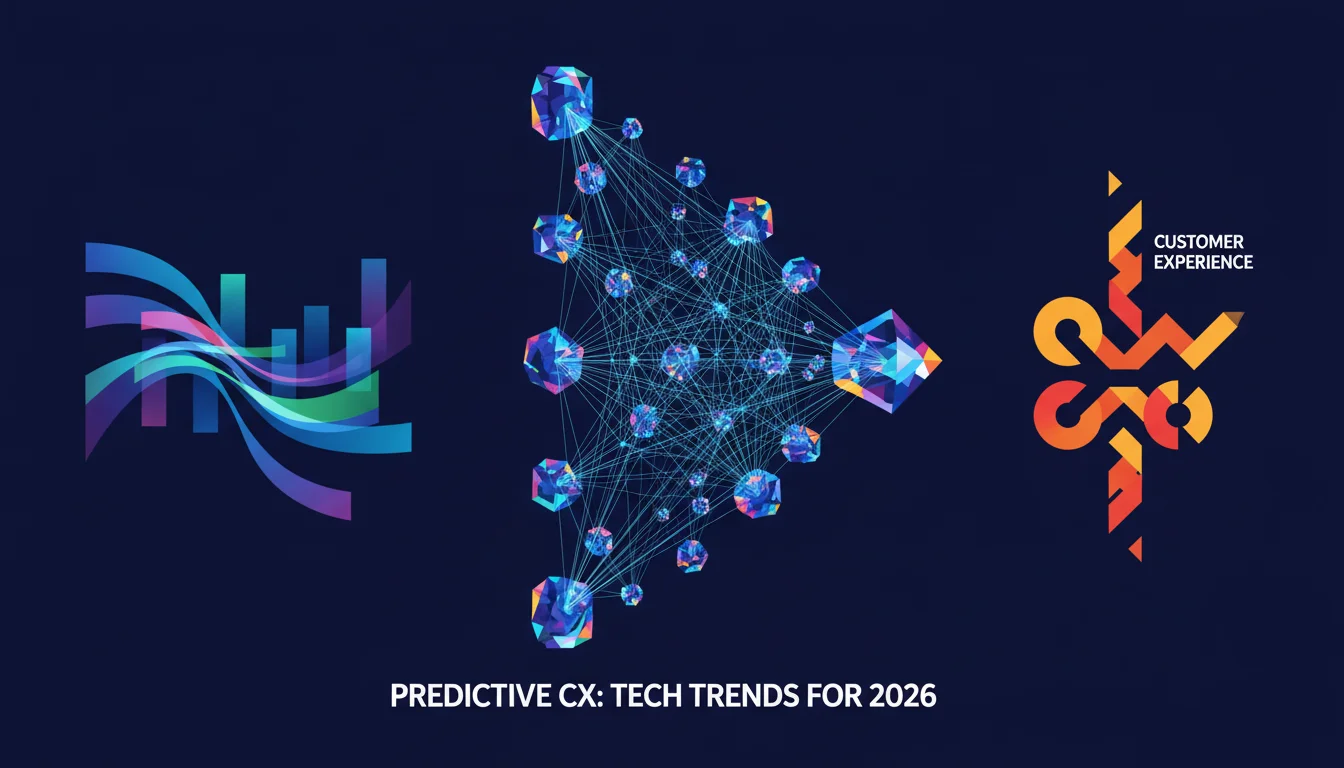
The marketing world of 2026 operates at a speed that demands foresight, especially when it comes to understanding and responding to evolving tech trends. Companies no longer just react to market shifts. They anticipate and shape them, driven by an acute understanding of future customer needs. The ability to predict customer behavior and preferences before they become explicit demands a sophisticated approach to data, artificial intelligence, and personalized engagement. This isn’t just about incremental improvements. It’s about fundamentally reshaping how businesses connect with their audience, transitioning from reactive service to proactive predictive CX.
The Evolution of Customer Data Platforms (CDPs)
Customer Data Platforms (CDPs) have moved beyond mere data aggregation. In 2026, a truly effective CDP is the central nervous system for all customer interactions, capable of processing vast amounts of information from disparate sources in real-time. We’re talking about transaction histories, website visits, app usage, social media engagement, call center transcripts, and even IoT device data, all unified into a single, complete customer profile. This unified view allows marketers to see the complete customer journey, identifying patterns and micro-segments that were previously invisible. Without this foundation, any predictive efforts remain speculative.
Consider the practical application: a customer browses a specific product category on an e-commerce site, then abandons their cart. A sophisticated CDP, integrated with an AI engine, immediately flags this. It doesn’t just send a generic “come back” email. It analyzes their past purchases, browsing history, and even recent social media activity to understand potential reasons for abandonment. Perhaps they viewed a competitor’s product, or maybe they engaged with a post about budget-friendly alternatives. The CDP then orchestrates a personalized follow-up, potentially offering a discount on a similar, more affordable item, or highlighting a unique feature that addresses a concern observed in their digital footprint. This level of granular personalization was once aspirational. Now, it’s a benchmark for competitive customer experience.
The challenge for many organizations remains data fragmentation. Many still struggle with legacy systems that don’t communicate effectively, creating silos of customer information. Overcoming this requires significant investment in integration technologies and a commitment to a single source of truth for customer data. My experience indicates that companies that prioritize this integration early on gain a substantial competitive edge. Those that defer this foundational work often find themselves playing catch-up, struggling to implement advanced predictive models effectively because their data inputs are unreliable or incomplete. According to a recent IAB report, integrating a CDP can reduce data management complexity by as much as 40% for many enterprises.
AI-Driven Predictive Analytics for Proactive Engagement
The real power of unified customer data emerges when fed into advanced AI and machine learning models. Predictive analytics isn’t just about forecasting sales. It’s about anticipating individual customer needs, identifying potential pain points, and even predicting churn before it happens. Imagine an AI model that can predict with high accuracy which customers are likely to cancel their subscription in the next three months, based on their usage patterns, support interactions, and sentiment expressed in their communications. This isn’t magic. It’s the result of carefully trained algorithms sifting through billions of data points.
These predictive capabilities allow businesses to shift from reactive customer service to proactive engagement. Instead of waiting for a customer to complain or leave, companies can intervene with targeted offers, personalized support, or educational content. For example, a telecommunications provider might identify a customer whose data usage has spiked, indicating a potential need for an upgraded plan, and proactively offer a tailored package before the customer experiences overage charges or frustration. Similarly, a retail brand could predict a customer’s next purchase based on seasonal trends, past buying habits, and even external factors like local weather forecasts, then send a timely, relevant recommendation. This creates a perception of genuine understanding and care, fostering loyalty that is difficult to replicate.
The sophistication of these models continues to improve. We are seeing a move towards “explainable AI” (XAI), where not only does the AI provide a prediction, but it also offers insights into why that prediction was made. This transparency is invaluable for marketers, allowing them to understand the underlying drivers of customer behavior and refine their strategies accordingly. It’s not enough for a model to say “this customer will churn”. It needs to explain, “this customer will churn because their product usage has decreased by 20% over the last two weeks, and they recently viewed competitor pricing pages.” This level of insight helps human teams to design more effective interventions. The future of predictive CX hinges on this collaboration between advanced AI and human strategic thinking.
The Rise of Conversational AI and Voice Search Optimization
Conversational AI, particularly through chatbots and voice assistants, has become an indispensable component of modern customer experience. These technologies are no longer confined to basic FAQ responses. They’re handling complex queries, guiding customers through purchasing processes, and even providing personalized recommendations. The goal is to make interactions as natural and efficient as speaking to a human agent, but with the scalability and 24/7 availability that only AI can offer. The key here is continuous learning: the more data these systems process, the more intelligent and nuanced their responses become. Companies that are investing heavily in natural language processing (NLP) and natural language understanding (NLU) are seeing significant improvements in customer satisfaction scores and reductions in support costs.
Hand-in-hand with conversational AI is the burgeoning importance of voice search optimization. With smart speakers in nearly every home and voice assistants integrated into mobile devices, customers are increasingly using spoken queries to find information and make purchases. This trend necessitates a fundamental shift in SEO strategies. Traditional keyword optimization, while still relevant, must now account for longer, more conversational search phrases. Questions like “What’s the best vegan restaurant near me that delivers?” or “How do I troubleshoot my smart thermostat?” are common. Businesses must ensure their content is structured to answer these specific questions directly and concisely. Implementing proper schema markup for FAQs, local business information, and product details is no longer optional. It’s critical for appearing in voice search results.
I’ve observed many businesses still lagging in this area, treating voice search as an afterthought. This is a significant oversight. As consumers become more accustomed to the convenience of voice interaction, those businesses that fail to optimize will simply not be found. Think about local businesses in Atlanta, for instance. If a user asks their smart speaker, “Find a personal injury lawyer in Midtown Atlanta,” and your firm isn’t optimized for that specific query, you’re missing out on direct, high-intent leads. The subtle differences in how people phrase questions verbally versus typing them are deep, and content strategies must adapt to capture this growing segment of the market. This isn’t a future trend. It’s a present imperative, and the companies that excel here will capture a disproportionate share of local and direct search traffic. According to Statista data, global voice assistant user penetration is projected to reach over 50% by 2027.
Augmented Reality (AR) and Virtual Experiences
Augmented Reality (AR) has transcended novelty and is now a powerful tool for enhancing the customer journey, particularly in retail and e-commerce. AR allows customers to visualize products in their own environment before making a purchase. Imagine trying on clothes virtually, seeing how a new sofa looks in your living room, or even test-driving a car through an AR overlay on your street. This significantly reduces uncertainty and returns, while simultaneously boosting customer confidence. The “try before you buy” concept has been revolutionized by AR, offering an immersive and convenient experience that traditional online shopping cannot match.
For example, furniture retailers are deploying AR apps that let users place 3D models of sofas, tables, and chairs directly into their homes using their smartphone cameras. This immediate visual feedback helps customers make informed decisions, reducing buyer’s remorse. Similarly, beauty brands use AR filters to allow users to “try on” different makeup shades or hairstyles. This isn’t just about entertainment. It’s about solving a fundamental problem in online retail: the inability to physically interact with a product. By bridging this gap, AR creates a more engaging and trustworthy shopping experience. The companies that are investing in these immersive technologies are seeing higher conversion rates and increased customer satisfaction. It’s a clear differentiator in a crowded market.
The integration of AR with other technologies, such as AI-powered recommendation engines, creates even more potent possibilities. An AI could suggest a specific piece of furniture based on a customer’s style preferences, and then the customer could immediately visualize it in their home via AR. This teamwork creates a highly personalized and interactive purchasing path. We’re also seeing AR being used in customer support, where technicians can guide users through troubleshooting steps by overlaying instructions onto physical objects. This reduces the need for on-site visits and improves resolution times. The potential applications are vast, extending beyond retail into industries like manufacturing, healthcare, and education. The key is to identify where AR can solve a real customer problem or enhance an existing experience, rather than simply implementing it as a flashy gimmick.
Hyper-Personalization and Ethical AI
The drive towards hyper-personalization is relentless. Customers no longer expect generic experiences. They demand interactions tailored precisely to their individual preferences, past behaviors, and real-time context. This goes beyond segmenting customers into broad categories. Hyper-personalization means delivering the right message, through the right channel, at the exact right moment, for each individual. AI is the engine behind this, analyzing vast datasets to predict needs and preferences with uncanny accuracy. From personalized product recommendations on e-commerce sites to dynamic content on websites that adapts to user profiles, every touchpoint is becoming uniquely customized.
However, this level of personalization brings significant ethical considerations, particularly around data privacy and transparency. Customers are increasingly aware of how their data is collected and used, and concerns about algorithmic bias and data security are paramount. Companies that fail to address these concerns risk alienating their customer base. Therefore, the implementation of hyper-personalization must be accompanied by a strong commitment to ethical AI principles. This means being transparent about data collection practices, giving customers control over their data, and ensuring that AI algorithms are fair and unbiased. A HubSpot report from 2025 indicated that 78% of consumers are more likely to trust brands that are transparent about their data usage.
Building trust in an era of hyper-personalization requires more than just compliance with regulations like GDPR or CCPA. It demands a proactive approach to privacy by design, where ethical considerations are baked into the development of every AI system and data strategy. Companies must clearly articulate the value exchange: what data they collect, why they collect it, and how it benefits the customer. This open dialogue builds confidence and encourages a stronger, more trusting relationship. My firm belief is that brands that prioritize ethical AI and transparency will in the end win in the long run, as customers gravitate towards companies they perceive as responsible stewards of their personal information. Neglecting this aspect isn’t just a risk. It’s a fundamental threat to long-term customer loyalty.
The balance between delivering highly relevant experiences and respecting individual privacy is delicate. It means adopting “privacy-enhancing technologies” (PETs) and ensuring strong cybersecurity measures are in place to protect sensitive customer data. It also means regularly auditing AI models for bias, ensuring that personalization efforts do not inadvertently exclude or discriminate against certain customer segments. This ongoing vigilance is important for maintaining trust and ensuring that hyper-personalization remains a positive force for customer engagement rather than a source of concern.
Anticipating customer needs in 2026 isn’t a guessing game. It’s a strategic imperative fueled by advanced technology and a deep understanding of human behavior. Businesses must invest in strong data infrastructure, use AI for predictive insights, embrace conversational interfaces, and integrate immersive AR experiences to stay relevant. The companies that successfully navigate these trends, while upholding ethical data practices, will not just survive but thrive, building lasting customer relationships.
What is a Customer Data Platform (CDP) and why is it essential for anticipating customer needs?
A Customer Data Platform (CDP) unifies customer data from various sources (e.g., website, app, CRM, social media) into a single, complete profile. It is essential because it provides a well-rounded view of each customer, enabling businesses to understand their behavior, preferences, and journey across all touchpoints, which is the foundation for accurate predictive analytics and personalized engagement.
How does AI-driven predictive analytics help in proactive customer engagement?
AI-driven predictive analytics uses machine learning algorithms to analyze customer data and forecast future behaviors, such as potential churn, next purchase, or service needs. This allows businesses to proactively intervene with personalized offers, support, or content before a problem arises or a customer expresses a need, transforming reactive service into strategic, anticipatory engagement.
What role does voice search optimization play in meeting future customer demands?
Voice search optimization is important because customers are increasingly using voice assistants and smart speakers for queries and purchases. Businesses must optimize their content for conversational, question-based search phrases and implement schema markup to appear in voice search results, ensuring their products and services are discoverable through this growing channel.
How can Augmented Reality (AR) enhance the customer experience in retail?
Augmented Reality (AR) enhances the customer experience in retail by allowing customers to visualize products in their own environment before purchase. This reduces uncertainty, minimizes returns, and creates an immersive “try before you buy” experience, such as virtually placing furniture in a room or trying on makeup shades, leading to increased confidence and satisfaction.
What are the ethical considerations surrounding hyper-personalization and how can businesses address them?
Hyper-personalization raises ethical concerns regarding data privacy, algorithmic bias, and transparency in data usage. Businesses must address these by being transparent about data collection, giving customers control over their personal information, implementing “privacy by design” principles, and regularly auditing AI models to ensure fairness and prevent discrimination, thereby building trust and maintaining customer loyalty.


