 By Angelica Bernard
Key Takeaways
- Ninety-two percent of consumers trust recommendations from individuals over brands, underscoring the critical role of authentic personal branding in 2026.
- Digital twins, or AI-powered replicas of individuals, are projected to handle 60% of all customer service interactions by 2030, fundamentally altering how personal brands scale.
- Investing in a strong digital identity infrastructure, including federated identity management and verifiable credentials, protects against deepfake misuse and strengthens brand authenticity.
- By 2028, over 30% of high-profile individuals and public figures will actively deploy personal AI assistants as digital twins to manage routine communications and content dissemination.
- Successful personal branding with digital twins requires a clear ethical framework and transparent disclosure to maintain audience trust, especially as AI capabilities advance.
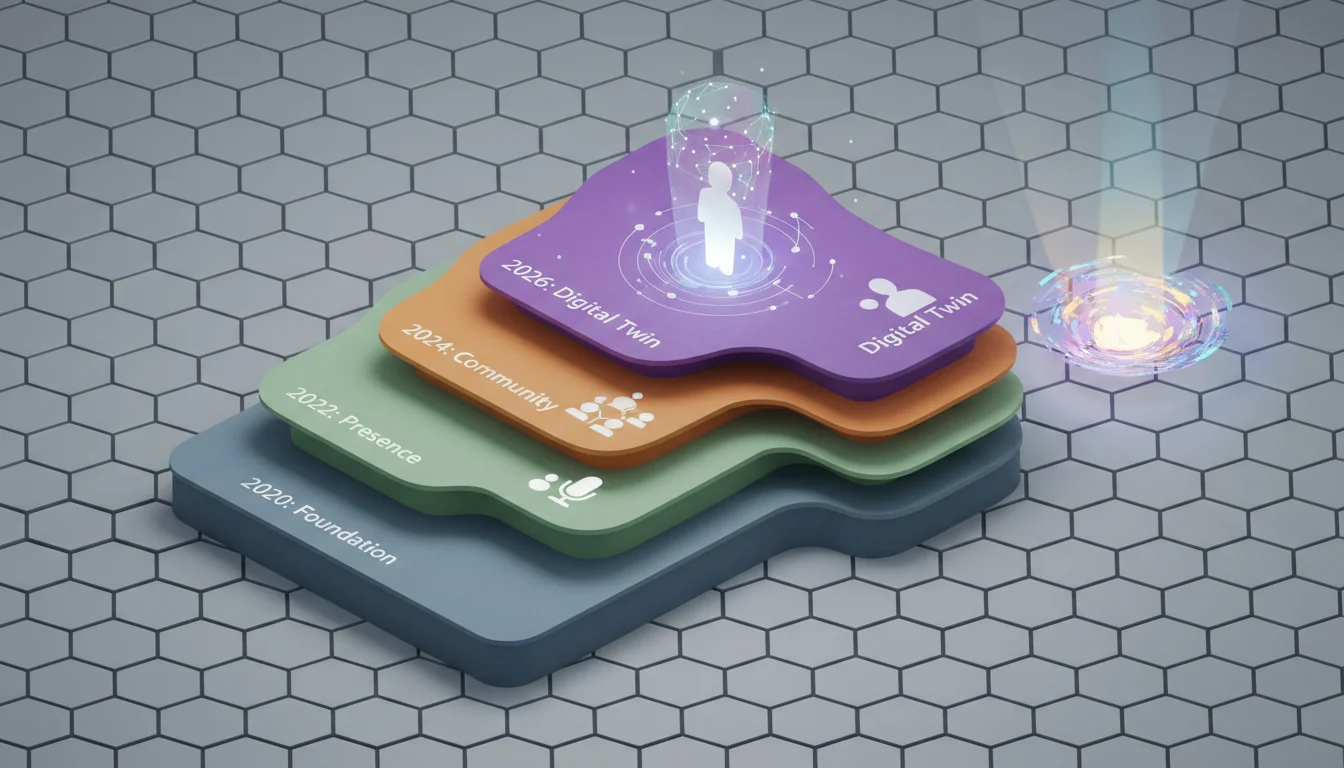
In 2026, the global market for artificial intelligence is projected to exceed $300 billion, with a significant portion dedicated to tools that enhance personal presence and influence. This surge directly fuels the rise of digital twins, AI-powered replicas designed to extend an individual’s reach and impact. The question isn’t if digital twins will reshape personal branding, but how quickly they will become indispensable for those aiming to lead in the future tech field.
““AI is like a calculator,” says Taylor. “Just because I have a TI-89 doesn’t mean I’m going to get the right answer. I still need to put the right inputs into the calculator.””
The 92% Trust Factor: Why Authenticity Remains Paramount
A Nielsen report from late 2023 indicated that 92% of consumers globally trust recommendations from individuals (friends, family, and influencers) over direct brand messaging. This statistic, while not new, gains new weight in the era of digital twins. It tells us that even as personal brands deploy AI to scale their operations, the core driver of influence remains human connection and perceived authenticity. A digital twin, no matter how advanced, must embody the genuine voice, values, and nuanced communication style of its human counterpart. If it doesn’t, the trust factor evaporates, and with it, the brand’s power. My professional experience suggests that those who view digital twins as mere automation tools, rather than extensions of their authentic self, will struggle. The AI needs to learn from a deep well of genuine interactions, not just canned responses. For instance, a thought leader’s digital twin responding to a complex industry query must offer insights consistent with their published works and public statements, reflecting their specific analytical framework, not a generic AI summary.
60% of Customer Interactions by 2030: Scaling Influence Intelligently
According to Statista projections, AI is expected to handle 60% of all customer service interactions by 2030. While this figure primarily pertains to corporate customer service, its implications for personal branding are deep. Imagine a personal brand, say a renowned financial advisor or a prominent author, whose digital twin can field hundreds of common inquiries daily, manage scheduling, and even draft personalized email responses based on learned preferences. This capability frees the human counterpart to focus on high-value activities: deep research, strategic partnerships, and one-on-one engagements that truly move the needle. The challenge here is not just technical implementation, but also setting the boundaries. Where does the digital twin’s autonomy end? How are complex or sensitive inquiries escalated? These are not trivial questions. Mishandling them can quickly erode the trust built over years. We’ve seen early iterations of this with advanced chatbots, but digital twins represent a leap forward in their ability to mimic personal style and decision-making processes. For a personal brand, this means carefully curating the AI’s “personality” and ensuring its responses align perfectly with the brand’s established ethos.
30% of High-Profile Individuals to Deploy Personal AI by 2028: The Early Adopter Advantage
A recent report by eMarketer predicts that over 30% of high-profile individuals and public figures will actively deploy personal AI assistants as digital twins by 2028. This isn’t about vanity. It’s about strategic advantage. Early adopters gain invaluable experience in refining their digital twin’s capabilities, understanding its limitations, and integrating it smoothly into their personal brand strategy. Consider a political candidate whose digital twin can engage with constituents on local policy issues, providing consistent, data-backed responses while the candidate is campaigning elsewhere. Or an executive whose AI can filter and prioritize communication, ensuring they respond to the most critical messages personally. The competitive edge comes from efficiency and omnipresence without burnout. However, this also carries risks. An AI assistant, if not properly trained and monitored, can inadvertently generate controversy or misrepresent the individual’s stance. The ethical considerations are substantial, requiring clear guidelines and constant oversight to prevent reputational damage. This is where conventional wisdom often falters. Many assume more automation always equals better. But with personal branding, automation without careful human oversight can be a liability.
The $1.3 Trillion Global Identity Management Market: Protecting Your Digital Self
The global identity and access management market is projected to reach 1.3 trillion dollars by 2030, according to some analyses. This massive investment shows a critical, often overlooked aspect of digital twins: security and integrity. As personal brands increasingly rely on AI replicas, the need for strong digital identity management becomes paramount. We’re talking about federated identity systems, verifiable credentials, and advanced biometric authentication to ensure that a digital twin is indeed an authorized extension of an individual, and not a deepfake or a compromised asset. Without a strong digital identity infrastructure, a malicious actor could create a convincing deepfake of your digital twin, disseminating false information or engaging in fraudulent activities, thereby destroying your personal brand overnight. This is not a hypothetical threat. The sophistication of generative AI makes it a very real and present danger. Therefore, any serious personal branding strategy involving digital twins must include a significant investment in digital identity protection. It’s the digital equivalent of securing your physical assets, and frankly, it’s an area where many individuals and even some organizations are woefully unprepared. I argue that building a personal brand with digital twins without prioritizing identity security is like building a skyscraper on sand. It might look impressive for a while, but it’s destined for collapse.
My Take: Transparency Over Illusion in the Age of AI
Conventional wisdom often suggests that the more smooth and human-like a digital twin appears, the better. I disagree. While advanced AI can mimic human conversation with startling accuracy, the most effective use of digital twins in personal branding will involve transparency. Audiences are increasingly savvy about AI. Trying to pass off an AI interaction as purely human, especially when the scale of interaction suggests otherwise, risks alienating your audience. Instead, clear disclosure that a digital twin is assisting, perhaps with a subtle indicator or a direct statement, builds trust. For example, a personal brand might use a digital twin to answer frequently asked questions on their social media, but preface the interaction with, “This is [Brand Name]’s AI assistant, here to help with common queries.” This approach respects the audience’s intelligence and sets appropriate expectations. It acknowledges the power of the technology while reaffirming the human at the core of the brand. The goal isn’t to create an illusion of constant human presence, but to extend genuine influence through intelligent, transparent augmentation. The future of personal branding with digital twins is about collaboration between human and AI, not deception.
The integration of digital twins into personal branding is not a distant concept. It is happening now, shaping the competitive field of influence and expertise. Those who embrace this shift with a strategic, ethical, and secure approach will find themselves at the forefront, amplifying their reach and impact in unprecedented ways.
What is a digital twin in the context of personal branding?
A digital twin for personal branding is an AI-powered replica or assistant that embodies an individual’s unique communication style, expertise, and values, designed to extend their presence and manage routine interactions across various digital platforms.
How can digital twins enhance a personal brand’s authenticity?
Digital twins enhance authenticity by consistently reflecting the human counterpart’s established voice and values across a wider range of interactions, freeing the individual to focus on high-value, genuine engagements. Transparency about AI assistance further builds trust.
What are the main risks associated with using digital twins for personal branding?
The main risks include potential misrepresentation if the AI is not properly trained, reputational damage from deepfakes or compromised digital identities, and erosion of trust if transparency is not maintained about AI involvement.
What role does digital identity management play with personal brand digital twins?
Digital identity management is important for personal brand digital twins to ensure the AI is an authorized extension of the individual, protecting against deepfake misuse, unauthorized access, and maintaining the integrity of the personal brand’s digital presence.
Should I disclose that I am using a digital twin for my personal brand?
Yes, transparency is highly recommended. Disclosing the use of a digital twin builds trust with your audience, manages expectations, and reinforces your commitment to genuine connection even when using advanced AI technology.


