 By Angela Smith
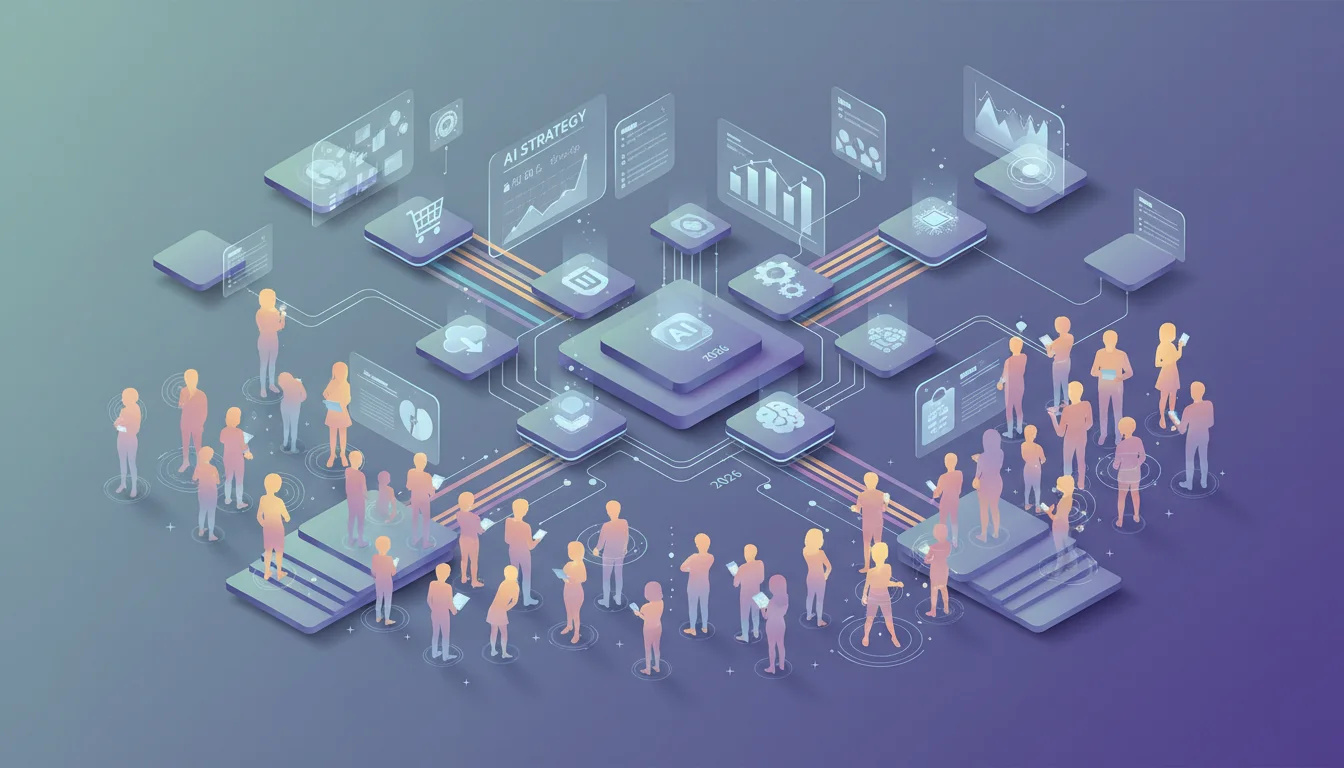
By 2026, the integration of artificial intelligence into digital retail strategies has shifted from experimental to foundational, fundamentally reshaping how businesses interact with consumers and manage operations. The future of marketing in this field isn’t just about automation. It demands a sophisticated AI strategy that blends machine efficiency with nuanced human insight.
Key Takeaways
- Implement AI-powered predictive analytics for inventory management to reduce stockouts by 15% and overstocking by 20%, directly impacting profitability.
- Personalize customer journeys using AI-driven recommendation engines, which can increase average order value by up to 10% through more relevant product suggestions.
- Automate customer service with AI chatbots capable of resolving 70% of common inquiries, freeing human agents for complex issues and improving response times.
- Use AI for dynamic pricing strategies, adjusting prices in real-time based on competitor data, demand fluctuations, and customer behavior to maximize revenue.
The Imperative of AI in Modern Digital Retail
The sheer volume of data generated in digital retail today renders manual analysis obsolete for competitive advantage. Every click, view, purchase, and even abandoned cart contributes to a vast ocean of information that, when properly processed, reveals invaluable patterns. Artificial intelligence excels here, sifting through terabytes of customer interactions and operational data faster and more accurately than any human team could hope to. This isn’t merely about efficiency. It’s about discerning subtle shifts in consumer behavior, anticipating market trends, and identifying opportunities that would otherwise remain hidden. For instance, an AI system can analyze purchasing histories and browsing patterns to predict with high accuracy which products a customer is likely to buy next, allowing for hyper-targeted promotions that resonate far more deeply than broad-stroke campaigns.
Consider the competitive pressure. Companies that fail to adopt advanced AI capabilities risk falling behind competitors who are already using these tools to deliver superior customer experiences and operational efficiencies. We’ve seen businesses struggle when they rely on traditional methods to forecast demand or manage inventory, leading to either costly overstocking or frustrating stockouts. A report from eMarketer (eMarketer.com) in early 2025 indicated that retailers employing AI for demand forecasting saw a 12% reduction in lost sales due to stockouts compared to those without. This direct impact on the bottom line makes AI not just a nice-to-have, but a strategic necessity. The expectation from consumers for personalized, immediate, and relevant interactions also pushes retailers toward AI. A generic experience rarely converts in an age of bespoke digital journeys.
Beyond Automation: Crafting a Human-Centric AI Strategy
While AI brings unparalleled automation capabilities, the most successful AI strategy in digital retail marries these capabilities with a deep understanding of human psychology and customer needs. It’s a mistake to view AI as a replacement for human intelligence. Rather, it’s an amplifier. AI can handle repetitive tasks, analyze complex data sets, and provide predictive insights, but humans remain essential for strategic decision-making, creative problem-solving, and empathetic customer engagement. Think of an AI-powered chatbot that can answer frequently asked questions instantly, but smoothly transfers a customer to a human agent when the query becomes nuanced or emotionally charged. This hybrid approach ensures both efficiency and a high-quality customer experience.
Developing a human-centric AI strategy involves several key pillars. First, define clear objectives that align with both business goals and customer satisfaction. Are you aiming to reduce customer service wait times, increase conversion rates for specific product categories, or improve supply chain predictability? Second, ensure data privacy and ethical AI use are at the forefront of your implementation. Customers are increasingly conscious of how their data is used, and a breach of trust can be devastating. The IAB (iab.com/insights) has published extensive guidelines on responsible AI deployment, emphasizing transparency and user control over data. Third, invest in training your human workforce to collaborate effectively with AI systems. This means teaching employees how to interpret AI insights, manage AI tools, and focus their efforts on tasks where human creativity and empathy are indispensable. The future isn’t about humans competing with machines, but about humans and machines collaborating to achieve superior results.
Predictive Analytics and Personalization at Scale
The ability of AI to predict future outcomes based on historical data is perhaps its most far-reaching application in digital retail. Predictive analytics allows retailers to anticipate consumer demand, optimize pricing, and personalize marketing messages with unprecedented accuracy. For example, an AI model can analyze seasonal sales data, local weather patterns, social media trends, and even competitor promotions to forecast demand for specific products weeks in advance. This foresight enables precise inventory management, reducing waste and ensuring products are available when customers want them, where they want them.
Consider the impact on personalization. Traditional segmentation, while useful, often groups customers into broad categories. AI takes this to a granular level, creating truly individualized experiences. A customer browsing a particular style of shoe might immediately see related accessories, complementary apparel, or even geographically relevant discounts, all served up by an algorithm that understands their unique preferences and context. This isn’t just about product recommendations. It extends to personalized email campaigns, dynamic website content, and even tailored ad placements across various platforms. A study cited by HubSpot (hubspot.com/marketing-statistics) in late 2025 revealed that personalized marketing campaigns driven by AI achieved a 25% higher click-through rate compared to generic campaigns. This level of personalization encourages a deeper connection with the brand, driving loyalty and repeat purchases. On top of that, AI can identify customers at risk of churning and trigger proactive retention efforts, such as exclusive offers or personalized customer service outreach, before they take their business elsewhere.
Operational Efficiency Through AI: Supply Chain to Customer Service
The influence of AI extends far beyond the customer-facing aspects of digital retail, fundamentally reshaping backend operations. From optimizing supply chains to automating customer service, AI drives efficiencies that directly impact profitability and operational agility. In supply chain management, AI algorithms can analyze complex variables like supplier performance, shipping routes, customs regulations, and geopolitical events to predict potential disruptions and suggest alternative solutions. This proactive approach minimizes delays, reduces logistics costs, and improves overall resilience. For example, some leading retailers now use AI to monitor global shipping routes in real-time, rerouting shipments automatically to avoid congested ports or adverse weather conditions, a capability that was unthinkable a decade ago.
Customer service is another area where AI has made significant strides. AI-powered chatbots and virtual assistants handle a large volume of routine inquiries, such as order status checks, returns processing, and basic product information. This frees up human agents to focus on more complex, high-value interactions that require empathy and nuanced problem-solving. The result is a dual benefit: customers receive immediate responses to common questions, improving satisfaction, while human agents can dedicate their expertise to resolving critical issues, enhancing service quality. Plus, AI can analyze customer service interactions to identify common pain points, allowing retailers to address systemic issues and improve their products or services. This continuous feedback loop, driven by AI analysis, is a powerful tool for ongoing improvement. It’s not just about fielding calls. It’s about extracting actionable insights from every customer touchpoint.
The Future of Marketing: Blending Creativity with Computational Power
The marketing future in digital retail will be characterized by an unprecedented fusion of human creativity and AI’s computational power. Marketers will increasingly rely on AI tools not to replace their creative instincts, but to augment them, making campaigns more effective, targeted, and measurable. AI can analyze vast datasets of consumer preferences, past campaign performance, and market trends to identify optimal messaging, visual elements, and distribution channels for any given product or audience. This enables marketers to move beyond guesswork and base their creative decisions on data-driven insights.
For example, AI can generate multiple variations of ad copy or visual designs, then test them rapidly across different audience segments to determine which performs best. This A/B testing at scale, driven by AI, dramatically shortens the time it takes to refine campaigns and achieve optimal results. On top of that, AI can help identify emerging trends in real-time, allowing marketers to capitalize on fleeting opportunities or adjust their strategies before competitors. We’re seeing AI tools that can even assist in generating initial content drafts or suggesting themes for campaigns based on current social media sentiment and search queries. The role of the human marketer evolves into one of strategic oversight, creative direction, and ethical stewardship, guiding AI to produce impactful and responsible campaigns. It’s a partnership where machines handle the heavy lifting of data processing and iteration, leaving humans to focus on the strategic vision and the art of persuasion. The ability to integrate these insights into platforms like Google Ads (support.google.com/google-ads) for highly optimized bidding strategies and audience targeting is a clear differentiator for leading brands.
The convergence of AI and human strategy in digital retail is not a distant concept but a present reality. Businesses that embrace this teamwork, prioritizing ethical deployment and continuous adaptation, will define the next era of commerce.
How does AI specifically improve demand forecasting in digital retail?
AI improves demand forecasting by analyzing a multitude of data points that human analysts would struggle to process, including historical sales data, promotional calendars, macroeconomic indicators, competitor activities, social media trends, and even local weather patterns. These algorithms identify complex, non-obvious correlations and patterns to predict future demand with greater accuracy, reducing both overstocking and stockouts.
What are the ethical considerations when implementing AI in customer personalization?
Ethical considerations include ensuring data privacy and security, avoiding discriminatory biases in algorithms (e.g., inadvertently targeting or excluding certain demographics), maintaining transparency about how data is used for personalization, and providing customers with control over their data and personalization preferences. Responsible AI implementation requires regular audits for bias and adherence to privacy regulations like GDPR and CCPA.
Can AI fully replace human customer service agents in digital retail?
No, AI is unlikely to fully replace human customer service agents. While AI-powered chatbots and virtual assistants can efficiently handle a large volume of routine inquiries and provide instant support for common issues, human agents remain essential for complex problem-solving, emotionally sensitive interactions, building customer rapport, and handling unique situations that require empathy and nuanced judgment. The most effective approach is a hybrid model where AI augments human capabilities.
How does AI contribute to dynamic pricing strategies?
AI contributes to dynamic pricing by continuously analyzing real-time market data, including competitor pricing, demand fluctuations, inventory levels, customer segmentation, and even time of day or browsing device. Based on these factors, AI algorithms can automatically adjust product prices to maximize revenue, clear excess stock, or respond to competitive shifts, often in milliseconds.
What skills should digital marketers develop to work effectively with AI tools?
Digital marketers should develop skills in data interpretation, understanding AI capabilities and limitations, prompt engineering for generative AI tools, strategic thinking to guide AI applications, and ethical considerations for AI deployment. A strong grasp of analytics, a willingness to experiment, and a focus on human-centered design principles will also be important for success in an AI-driven marketing field.


