 By Editorial Team
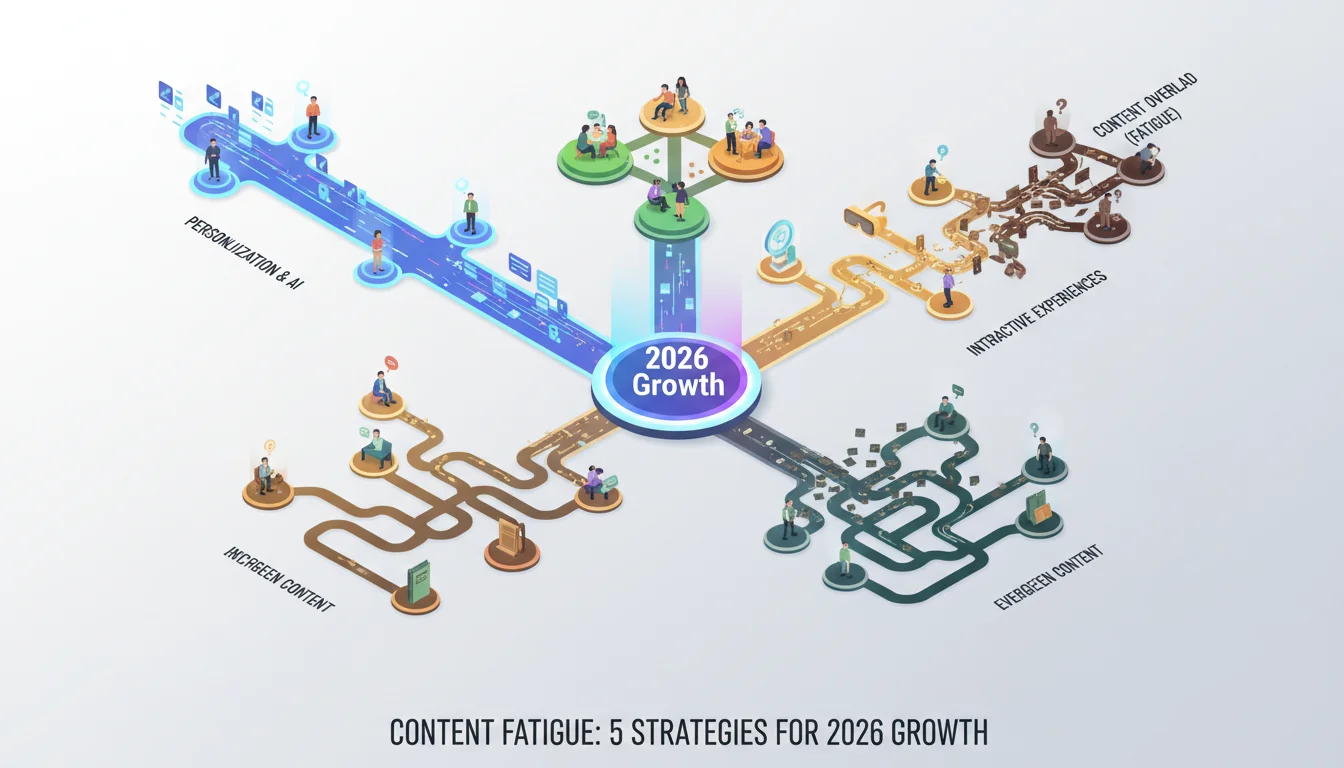
Let’s be blunt: by 2026, the old content playbook is going to get you killed. If your strategy still revolves around churning out blog posts hoping for a traffic spike, you’re already seeing diminishing returns and stagnant growth. Your marketing investments are evaporating. People are so buried in digital noise it’s a miracle anyone sees anything, and your brand is getting harder and harder to spot. To get any kind of sustainable growth, you have to completely change how you create, distribute, and measure content.
Key Takeaways
- You’ve got to prioritize interactive content that people can actually use, like AI-driven chatbots that solve a problem or adaptive videos that let them choose what they see.
- Use your analytics to implement micro-segmentation, tailoring your content delivery for tiny, specific audience groups based on their actual behavior, not just broad demographics.
- Build consumer trust by integrating ethical data practices and dead-simple privacy policies into everything you do. By 2026 this will be a major reason people choose you over a competitor.
- Stop measuring vanity metrics and start tracking direct business outcomes. Focus on customer lifetime value and how your personalized content paths are actually driving conversions.
| Feature | Traditional Content Strategy | “Content for Content’s Sake” Strategy | 2026 Growth Strategy |
|---|---|---|---|
| Focus on Volume/Broad Reach | ✓ Yes | ✓ Yes | ✗ No |
| Prioritizes Interactive Formats | ✗ No | ✗ No | ✓ Yes |
| Employs Micro-Segmentation | ✗ No | ✗ No | ✓ Yes |
| Integrates Ethical Data Practices | ✗ No | ✗ No | ✓ Yes |
| Measures Customer Lifetime Value (CLTV) | ✗ No | ✗ No | ✓ Yes |
| Risk of Content Fatigue | ✓ Yes | ✓ Yes | ✗ No |
| Aims for Two-Way Conversations | ✗ No | ✗ No | ✓ Yes |
The Problem: Content Overload and Diminished Returns
For years, everyone in content marketing ran on the same logic: more is more. More blog posts, more social updates, more videos, all of it was supposed to add up to more visibility and engagement. That approach is now officially broken. A person sees somewhere between 6,000 and 10,000 marketing messages every single day, based on data from an eMarketer report about ad spending. The result is a widespread “content fatigue,” where even your best work gets lost in the flood.
Just think about someone’s daily routine. Notifications wake them up, they scroll through feeds while eating, see ads on their commute, and then wade through an ocean of information at work. By evening, their brain is full. The problem isn’t that your content is bad. The problem is the firehose of quantity and the complete mismatch between what brands are making and what people actually have the time or patience to consume. Too many teams kept publishing generic articles and static infographics, praying for organic traffic that never came because that tactic belonged to an older, less crowded internet.
What Went Wrong First: The Generic Content Trap
The first attempts to fix this were just more of the same, but louder. Companies doubled down on SEO, stuffing blog posts with keywords and assuming rankings would follow. They spammed social media, trying to outsmart the algorithms. What happened? We got a tidal wave of look-alike content that did nothing to make one brand stand out from another. I’ve watched marketing teams pour money into content calendars full of topics that were so broad they offered no real value or unique point of view. It became a predictable cycle of high production costs followed by low engagement, burning through the budget without hitting a single business goal.
We also completely underestimated how smart our audiences are. Today’s consumers, especially younger ones, have finely tuned filters for boring or fake content. They can spot a thinly veiled sales pitch a mile away. Brands that kept shouting one-way messages found themselves talking to an empty room. A company might publish a guide on “five ways to improve productivity” when its audience was really looking for an interactive tool to manage a specific, complex project. The gap was huge.
On top of all that, most companies failed to use data for anything beyond looking at website traffic. Sure, they’d track page views, but they couldn’t tell you if a piece of content had any effect on customer lifetime value (CLTV) or if it helped convert leads for a specific product. They were flying blind, with no idea what was actually working and what was just making noise. The buzz around “content marketing” made everyone forget that it’s supposed to produce a measurable financial impact.
The Solution: Hyper-Personalized, Interactive, and Trust-Driven Content
To find growth in 2026, your content strategy needs to become hyper-personalized and deeply interactive, all while being built on a solid foundation of consumer trust. You have to stop broadcasting messages and start engineering dynamic, two-way conversations.
Step 1: Deep Consumer Micro-Segmentation
Forget targeting broad demographics like “moms” or “millennials.” You have to use micro-segmentation, which means slicing your audience into tiny, specific groups based on their behavior, what they care about, and how they use digital tools. This is about knowing their specific pain points and digital habits on a granular level. You’ll need to use advanced analytics that pull together data from your CRM, website clicks, social media interactions, and even third-party sources (while being militant about privacy rules like GDPR and CCPA). For instance, stop targeting “small business owners” and start targeting “e-commerce startups seeking scalable logistics solutions.” That’s the level of detail that lets you create something truly relevant.
A HubSpot report from last year showed that this kind of personalized experience can boost conversions by up to 20%. That’s a major number, not a minor tweak. We have to go way beyond just dropping a first name in an email. We’re talking about dynamic web pages where the hero image, the article recommendations, and the call-to-action buttons all change in real-time to match that specific user’s history and intent.
Step 2: Embrace Interactive and Adaptive Content Formats
Static content is on its way out. People expect to do things with content, not just read or watch it. You have to invest in formats that demand participation and change based on user input. This is more than just a silly quiz. Think about:
- AI-driven chatbots and virtual assistants: Use them for more than just customer service. Weave them into your content to give personalized recommendations, answer detailed questions about your products, and walk users through a complicated purchase. A good chatbot creates a custom content journey for each person.
- Adaptive video experiences: Don’t just make one linear video. Create branching narratives where viewers can pick their own path or click on elements within the video to get more detail on a specific topic. Tools like H5P make this possible. Imagine a product demo where the user clicks on features to see them in action, or a tutorial that speeds up or slows down based on how experienced the user says they are.
- Augmented Reality (AR) and Virtual Reality (VR) experiences: These technologies are becoming more affordable and offer wild opportunities for immersion, especially for retail and experiential marketing. Letting someone “try on” a watch with their phone’s camera or explore a hotel in VR before booking changes the game.
- Personalized content hubs: Build a custom dashboard for each user, where the content recommendations are constantly being refreshed based on what they’ve read, watched, and liked. Your brand becomes an indispensable resource that people rely on.
Step 3: Build Trust Through Transparency and Ethical Data Use
With data breaches and privacy scandals everywhere, trust is your most valuable asset. People are getting very smart about how their data is being used. You have to build trust by being radically transparent and ethical with data. That means:
- Clear privacy policies: Write your privacy policy in plain English. Make it easy to find and show people exactly how their data will be used to make their experience better, not just to sell them stuff.
- Opt-in personalization: Give people obvious and easy control over their personalization. Let them turn it on or off, and let them choose what kinds of content they want to see. Giving them this control makes them feel secure.
- Authenticity and values alignment: People want to buy from brands that share their values. Your content needs to show what your brand actually stands for, your mission, your ethics, your social responsibility work. This has to be real. You must demonstrate genuine commitment through your actions and be open about the results, as a recent IAB report confirms is a growing factor in purchasing decisions, especially for younger buyers.
Step 4: Shift Measurement to Business Outcomes
If your success reports are still all about page views and social media likes, you’re measuring the wrong things. To prove your content is creating growth, you have to connect it directly to money. That means you track:
- Customer Lifetime Value (CLTV): Do customers who engage with your interactive content end up spending more over time? Do they stick around longer? You need to know.
- Conversion rates across the funnel: Map your content to each stage of the customer journey and measure how it affects conversions, from the first time someone gives you their email to the final sale and beyond.
- Reduced customer acquisition cost (CAC): Great content should make it cheaper to get new customers because it nurtures leads better and builds a brand people seek out, reducing your reliance on expensive ads.
- Engagement depth, not just breadth: Instead of just counting views, measure how long people are spending, how many times they click on interactive elements, and how far they get in an adaptive video. These are the metrics that show if your content is actually working.
Results: Sustainable Growth and Stronger Brand Loyalty
When you build a content strategy around hyper-personalization, interactivity, and trust, you’ll see your engagement rates shoot up. People pay attention and interact when content speaks directly to their needs. You’re not just creating noise. You’re building real connections.
This approach also directly improves conversion rates and strengthens your sales pipeline. Personalized content acts like a great salesperson, guiding prospects with the right information at the right time and making the path to purchase much smoother. In my own work, I’ve seen tailored content shorten complex B2B sales cycles by as much as 15%.
You’ll also build much stronger brand loyalty. When people feel like a brand gets them and respects them, they become your biggest fans. They’ll recommend you to their friends and defend you online. That kind of organic advocacy is worth more than any advertising campaign because it spreads through word-of-mouth, which is far more convincing than a paid ad.
By focusing on real business outcomes, you finally get a clear picture of your content’s ROI. This lets you double down on what works and cut what doesn’t. You’re no longer guessing. Every piece of content has a job to do, and you can prove it’s contributing to the bottom line and creating real growth in a tough 2026 market.
The new rule of content marketing is simple: stop shouting at everyone and start talking to the right person at the right time with a message they actually want to hear.
What is content micro-segmentation?
It’s the practice of dividing your audience into very small, specific groups based on their actual behavior, psychographics, and individual preferences, instead of just using broad demographic categories. Doing this lets you create and deliver content that’s highly tailored to them.
Why are interactive content formats important for future consumers?
Interactive formats like AI chatbots are important because people now expect to actively engage with content, not just passively watch or read it. These formats create a personalized experience and let users control their own journey, which dramatically increases engagement and information retention.
How does ethical data use build consumer trust in content strategies?
Ethical data use builds trust by being transparent about how you collect and use information, offering privacy policies a normal person can understand, and giving users control over their own personalization settings. This approach shows you respect their privacy, making them feel secure with your brand.
What key metrics should businesses focus on to measure content for growth in 2026?
You need to stop focusing on vanity metrics and instead measure direct business outcomes. The important ones are Customer Lifetime Value (CLTV), conversion rates through the entire sales funnel, any reduction in customer acquisition cost (CAC), and deep engagement metrics like time spent and interaction rates.
Can smaller businesses effectively implement hyper-personalized content strategies?
Yes, they can. A small business can start by using simpler tools and focusing on a few specific niche segments. Using affordable analytics, basic chatbot tools, and smart email marketing automation for personalization can deliver big results without a huge enterprise-level budget.


