 By Editorial Team
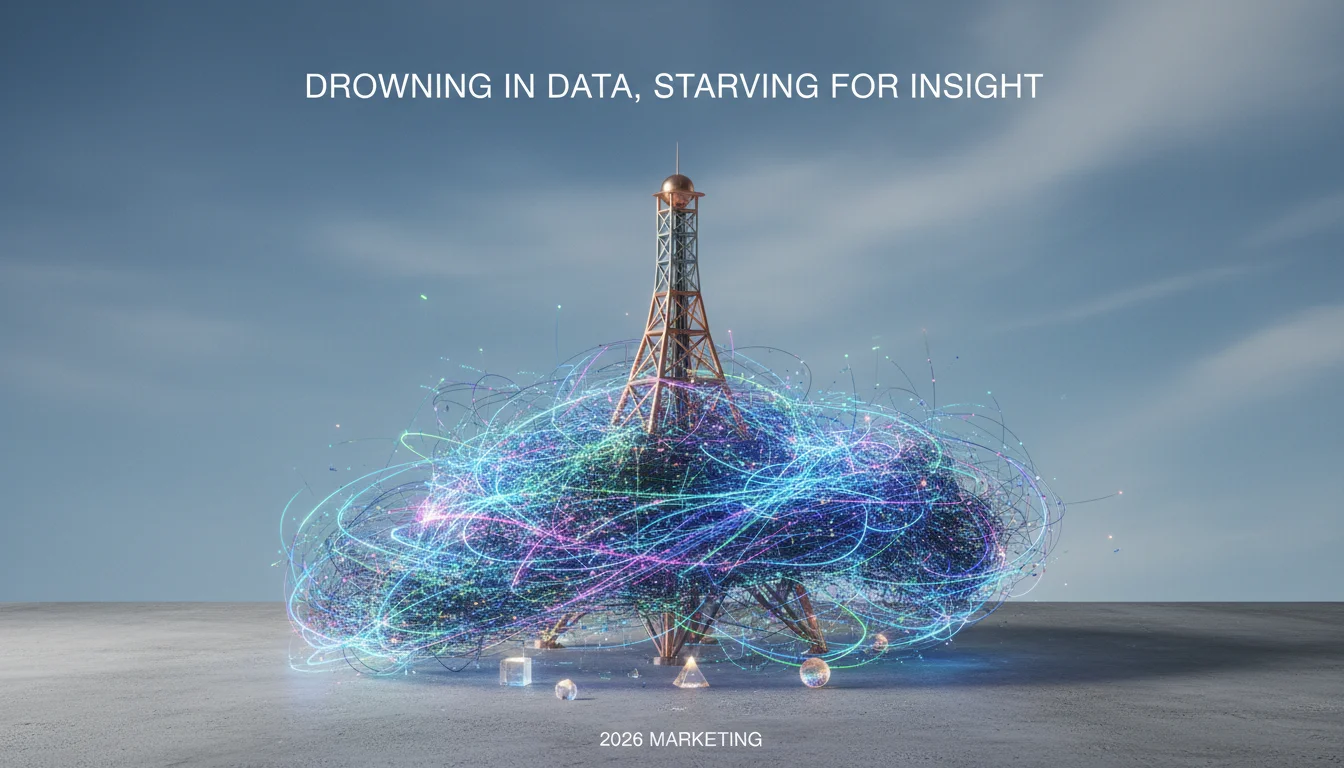
It’s 2026 and most marketing teams are drowning. They get a constant flood of industry news but can’t figure out how to turn it into actual strategy, so they miss the big shifts that wreck campaign performance and blow up budgets. When you can’t turn raw info into real news analysis and trend insights, you’re always reacting. You’re never proactive. And you’re letting competitors eat your lunch. The real job is to take that overwhelming stream of data and make it tell you where to go next.
Key Takeaways
- Set up a daily 15-minute news habit using RSS feeds and AI summaries to catch emerging trends.
- Always cross-reference a new trend with at least three different sources, like platform announcements and industry reports, to make sure it’s real.
- Create a weekly trend assessment with a simple risk/opportunity score for each trend.
- Write validated insights directly into your campaign planning docs and tie them to specific changes in targeting, creative, or budget.
A marketing director just told me his team spends over three hours a day digging through articles, podcasts, and social media, and they still feel like they’re behind. “We’re drowning in information,” he said, “but starving for insight.” He’s not alone. The sheer volume of content published across marketing, tech, and consumer behavior makes it nearly impossible for any team to process it all and find the real signals without a system.
The Failed Approach: Blind Consumption and Reactive Tweaks
Before they get a system, most people fall into the “blind consumption” trap. This usually means they’re just reading a few favorite blogs that have clickbait headlines or they’re just copying whatever a competitor does. I’ve watched teams scramble to copy a rival’s TikTok campaign only to find out the trend was already dead, or worse, it was never a fit for their audience in the first place. You also see the “shiny new object” syndrome all the time, where every new platform feature gets adopted with zero thought. This burns through your budget, creates campaigns that don’t make sense together, and leaves you with no clear strategy. Back in early 2025, a ton of brands dove into generative AI for content without thinking about brand voice or accuracy, which led to some embarrassing PR moments and watered-down messaging.
Another mistake is relying on water-cooler talk or one-off stories. A junior marketer hears about a new ad format from a friend and pushes the team to jump on it, but there’s no data or analysis behind it. This ad-hoc decision-making feels agile, but it doesn’t have the foundation for actual growth. It will inevitably collapse, like a house of bricks with no mortar.
From Noise to Signal: A Structured Approach to News Analysis
To turn raw news into something you can actually use, you have to build a process. You need to be efficient, you have to validate what you’re hearing, and then you have to integrate it. The whole thing starts with gathering information properly, then moves to real analysis, and finally ends with putting it to work.
Step 1: Automated Information Aggregation and Filtering
First, stop digging through websites manually. Set up an automated system. Use a tool like Feedly or Inoreader to pull in RSS feeds from hundreds of industry sites, news outlets, and company blogs. Then, integrate an AI summarization service. Many of these platforms have it built-in, or you can use a separate one. Configure the AI to flag keywords for your specific industry, audience, and campaign goals. A B2B SaaS company, for instance, could filter for “enterprise AI adoption,” “cloud security regulations,” or “C-suite purchasing trends.” This first pass cuts the reading list by about 70%. Have one person spend a dedicated 15 minutes every morning scanning the AI summaries and flagging the important stuff for a deeper look.
Step 2: Multi-Source Validation and Data Triangulation
Once you’ve spotted a potential trend, you have to validate it. Never rely on a single source. So many teams fail right here because they take one article’s claim at face value. If a tech blog says engagement is tanking on a social platform, you need to check that against official announcements from the platform itself, data from independent firms like Nielsen or eMarketer, and what you’re seeing in your own social listening tools. A Q3 2025 IAB report showed a huge gap between how people thought platforms were performing and the actual numbers, which just highlights the need for diverse data. You’re looking for a consensus across at least three credible sources. If a trend is real, you’ll see it reflected in multiple places. This step alone prevents chasing phantom trends and saves a ton of ad spend.
Step 3: Impact Assessment and Quantifiable Scoring
After you’ve validated a trend, figure out how it might affect your marketing. This requires quantification, not just a qualitative discussion. Create a simple scoring system. On a scale of 1 to 5, score factors like: relevance to target audience, potential impact on campaign ROI, urgency of response, and resource requirement for adaptation. For example, a new privacy law would score high on relevance, impact, and urgency, but also high on the resources needed to adapt. A small change to an ad platform’s bidding algorithm might score lower on urgency but still be high on ROI impact. This structured assessment helps you prioritize. I suggest a weekly “Trend Insights Meeting” where the team reviews the top 3-5 validated trends, assigns scores, and writes down why. It forces a real discussion.
Step 4: Strategic Integration and A/B Testing
Now you have to plug these insights into your campaign planning and execution. This means you explicitly connect a validated trend to a specific change in your tactics. If your analysis shows a big jump in short-form video use among your key demographic (and you’ve confirmed it with Statista data), your team needs to propose concrete actions: move more budget to Instagram Reels, build new video templates, or find influencers for that format. The key is that every change you make needs a clear A/B test. If you’re changing ad copy because of a new messaging trend, test it against your old control copy. If you’re trying a new ad placement, test it with a small budget first. This iterative approach ensures that insights are acted upon and that you’re actually measuring if they work. For example, a local Atlanta financial advisor I know saw a 12% jump in leads just by using news analysis to tweak their Google Ads keyword strategy around shifting search intent for “retirement planning.”
What Went Wrong First: The Pitfalls of Unstructured Monitoring
Early in my career, my approach was basically “just keeping an eye on things,” which predictably led to a lot of missed opportunities. We’d read an article, think “that’s interesting,” and do nothing with it. We were always playing catch-up. I remember one painful time in 2024 when a huge algorithm change hit a major social platform. We had seen articles about it, but with no system for real news analysis, we all just shrugged it off as “another update.” Then our organic reach dropped 40% in two weeks. The scramble to fix it was expensive, and we wasted budget on boosts that did nothing and spent weeks trying to reverse-engineer the change. I learned that casual observation isn’t a strategy.
The other big failure was the echo chamber. When everyone on the team gets their news from the same two or three sites, you end up with a really narrow view of the market and just confirm your own biases. This meant we were completely blind to what smaller, more nimble players were doing or to weird shifts in consumer behavior until they were already mainstream. By that point, we were too late to get any real advantage. Reading broadly and critically is essential.
In 2026, being able to quickly turn fragmented news into a coherent plan is a basic requirement for marketing success. If you set up automated aggregation, validate everything from multiple sources, score the impact, and A/B test your changes, you can turn a chaotic mess of information into the thing that keeps you ahead of market shifts.
How frequently should a marketing team conduct news analysis?
A 15-minute daily review of aggregated summaries works for initial filtering. Follow that with a dedicated 60-minute weekly meeting to discuss, score, and integrate the most important validated trends.
What types of sources are most reliable for marketing news analysis?
Prioritize official platform announcements (from the Meta Business Help Center or Google Ads docs), reports from independent research firms (like Nielsen, eMarketer, Statista), and data from industry groups (like the IAB). You can supplement those with high-quality marketing publications.
How can small marketing teams effectively implement a news analysis strategy without extensive resources?
Small teams should use free or cheap automation tools like Feedly for aggregation. Designate one person to do the daily review, and keep the weekly trend meetings short and focused on what will have the biggest quantifiable impact.
What is the risk of not performing thorough news analysis in marketing?
You’ll end up making reactive decisions, wasting budget on trends that are already dead or irrelevant, missing big opportunities, and falling behind competitors in a field that changes fast.
How do you measure the ROI of news analysis efforts?
Track the performance of campaigns that use your validated insights and compare them to control groups or past campaigns. You should be able to see a direct link between a trend-driven change and improvements in metrics like conversion rates, CPA, or engagement.


