 By Editorial Team
Key Takeaways
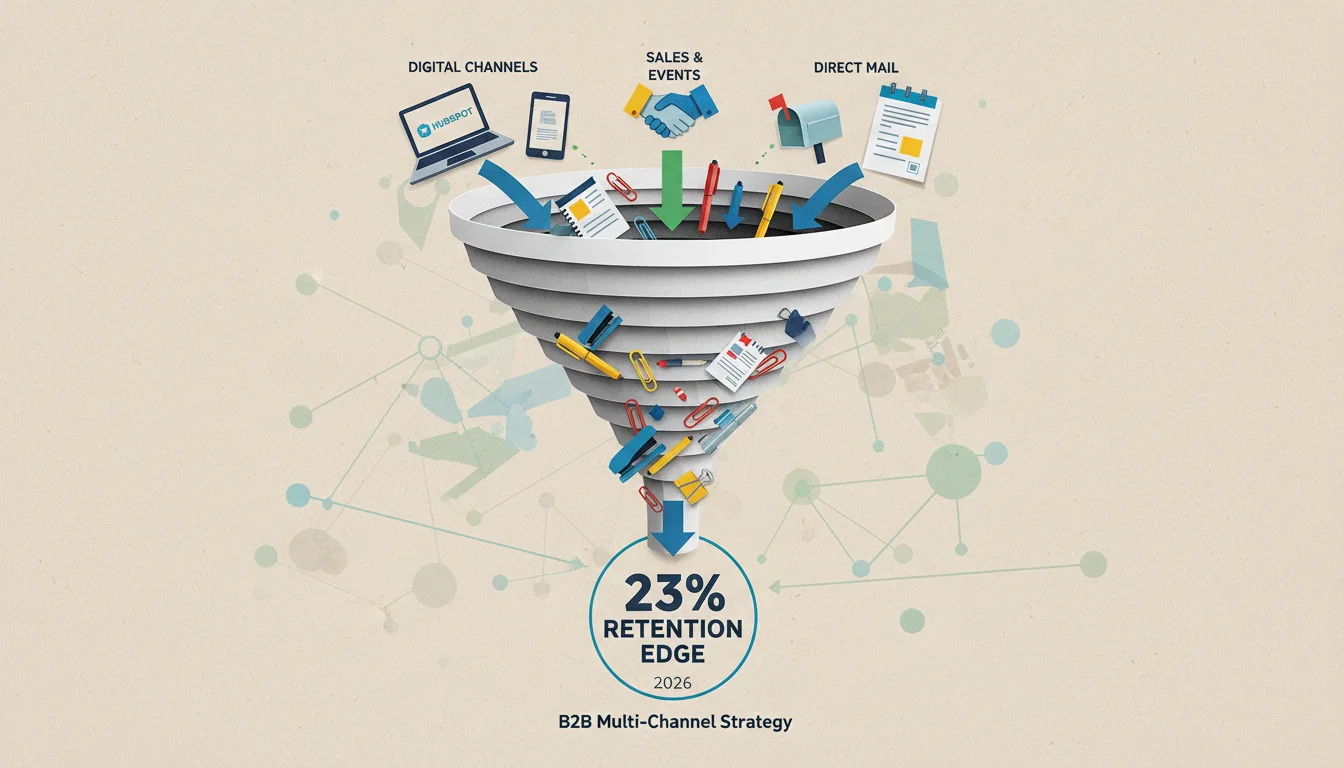
- If you adopt a multi-channel B2B strategy, you can expect a 23% higher customer retention rate than your single-channel competitors because integrated outreach just works.
- Content spread across three or more channels gets a 45% lift in engagement (shares, comments) which is a direct boost to your expert’s visibility.
- It’s a known fact, yet only 38% of B2B marketers actually integrate their email, social, and content syndication, showing a massive gap between talk and action.
- Personalizing your content in a multi-channel campaign can increase conversion rates by up to 2.5 times, proving that tailored messaging is worth every penny.
- The smartest multi-channel plans are built around a central content hub to keep messaging consistent and make it easy to repurpose content for different B2B platforms.
A recent report from IAB and eMarketer should be a wake-up call: 78% of B2B decision-makers now check out at least three different channels before buying anything. That’s a huge jump from 55% just five years ago. This means B2B firms have to get much smarter with multi-channel marketing if they want to get their experts noticed and actually connect with buyers who are doing their homework. So how do you coordinate your content distribution so it cuts through the noise in this environment?
The 23% Retention Advantage: Why Integrated Channels Matter
A 2025 study from HubSpot (hubspot.com/marketing-statistics) found that B2B companies with a real multi-channel marketing strategy keep 23% more customers than companies stuck in a single channel. This is about building relationships that last. When a prospect sees the same consistent message, whether it’s in an email, a LinkedIn post, or an ad on some niche forum, you’re reinforcing your credibility. All those little touchpoints build a deep sense of trust, and that trust leads directly to longer customer lifecycles. I see this constantly with the enterprise software vendors I work with. Clients struggle when their sales team has one script for outreach while the social media team is posting about something totally different. It just confuses prospects and makes the brand look disorganized. Instead, imagine a prospect reads a whitepaper on your site about cloud optimization, then they see a short YouTube video summarizing it, and a day later they get an email inviting them to a webinar with the author. Every interaction builds on the last, cementing the expert’s authority. This kind of cohesive story is exactly what drives that 23% retention bump, because customers feel like you get them and are there to help.
Engagement Soars: 45% More Interaction with Diverse Distribution
When you spread your content across three or more relevant channels, you’ll see an average 45% jump in engagement metrics like shares, comments, and clicks. That number, from Nielsen’s 2024 digital media consumption report (nielsen.com), confirms a basic truth of B2B: your audience isn’t all in one place. Some execs read long articles on blogs, others scroll through short videos on professional networks like LinkedIn, and a surprising number still live by their curated email newsletters. People love to say “meet your audience where they are,” and while that’s true, the real insight is that “where they are” is a journey across many platforms, not a single spot. Take a detailed technical guide on API security you just published on your blog. To get real traction, you could then:
- Pull out key stats to make an infographic for Pinterest or LinkedIn.
- Shoot a quick video interview with the author about the guide’s main points and post it on YouTube and other social feeds.
- Write a few email snippets, each one teasing a different part of the guide and linking back to the full piece.
- Syndicate the full article to a few industry news aggregators or partner sites.
This layered approach makes sure that no matter how someone prefers to get their information, they’ll run into your expert’s insights. That 45% engagement increase is the direct payoff for a smart distribution strategy that respects different consumption habits.
The Execution Gap: Only 38% Consistently Integrate Efforts
Even with all the proof, a 2025 Statista (statista.com) survey of B2B marketers found that only 38% are consistently integrating their email, social media, and content syndication. This reveals a huge disconnect between knowing what to do and actually doing it. Too many companies are still stuck in silos, with the email team having no idea what the social team is doing, and the content people creating things with no clear plan for distribution. I see this breakdown all the time. A company will spend a fortune on a great whitepaper, then just post a link on their site and send a single email blast. They’re leaving so much on the table by not repurposing that asset into dozens of smaller, platform-specific pieces. The problem isn’t a lack of tools or channels. It’s a lack of coordination. To make this work you need a central content calendar, open communication between your marketing teams, and agreement on what you’re trying to achieve. Without that, your content gets fragmented, and your ability to amplify your experts never gets off the ground. A bunch of separate channels is just noise. They have to work together.
Personalization’s Punch: 2.5x Higher Conversion Rates
According to a Google Ads report on B2B campaign performance (support.google.com/google-ads), personalizing content in multi-channel campaigns can lift conversion rates by up to 2.5 times. That’s a powerful number, yet a lot of B2B marketers think personalization is just mail-merging a first name into an email template. Real personalization in a multi-channel world means you’re tailoring the content, the message, and the channel to the prospect’s industry, job title, and what they’ve already looked at on your site. Think about an account-based marketing (ABM) play. If you’re going after a company in the healthcare industry, your multi-channel attack might look like this:
- A LinkedIn ad campaign showing them a case study of how you helped another healthcare client.
- An email sequence that talks about specific problems healthcare providers have, with links to your thought leadership pieces on those exact topics.
- A physical direct mail piece (yes, it still works!) with a personal invite to a private webinar just for healthcare IT execs.
Every single touchpoint speaks directly to the prospect’s world. This kind of specific targeting, which is much easier with a good CRM and platforms like Salesforce Marketing Cloud or Adobe Experience Cloud, makes your content impossible to ignore and drives those massive conversion gains. It’s a strategic investment, but the return on investment is undeniable.
My Disagreement: The Myth of “Channel Overload”
I often hear B2B marketers worry about “channel overload,” the fear that being on too many platforms will just annoy their audience. The theory is that spreading your resources thin just irritates people. I disagree with this completely. The data shows the opposite. A well-run multi-channel strategy builds stronger connections and gets your experts seen more, period. Execution is everything. “Channel overload” is what happens when a brand lazily blasts the exact same message across every platform without any changes. That *is* annoying. But a smart multi-channel strategy is about understanding what works on each channel and adapting your content to fit. A 30-second explainer video on TikTok for business (and yes, B2B is there now) isn’t supposed to be a 2,000-word whitepaper. It’s about delivering value in the format people expect on that platform. The idea that you should only pick one or two “primary” channels is old thinking. Your audience is everywhere, all the time. If you limit your presence, you limit your chances to connect with them at different points in their buying process. The goal is a thoughtful presence where your audience is actually looking for information, giving them something of real value every time they see you. This is how you actually amplify expertise. A solid multi-channel approach, based on data and smart content distribution, isn’t just a nice-to-have for B2B companies anymore. It’s essential if you want to amplify their expert reach. By using integrated strategies across different platforms, you can seriously improve customer retention, get more engagement, and drive way more conversions.
What is multi-channel marketing in a B2B context?
It’s using a coordinated strategy to engage clients across different platforms like email, social media, webinars, and content syndication. The point is to deliver a consistent brand message and show off your expertise everywhere they look.
How does multi-channel marketing improve B2B customer retention?
It builds trust by providing consistent, valuable interactions on multiple platforms. This deepens the customer relationship and leads to a 23% higher retention rate, according to 2025 research from HubSpot, compared to just using one channel.
What types of content work best for multi-channel B2B distribution?
You need a mix. Start with big assets like guides, whitepapers, case studies, or webinars. Then, slice them up into smaller pieces like infographics, short videos, and social media posts, each tailored to the platform you’re putting it on.
Why do many B2B marketers struggle with multi-channel integration?
They often struggle because their teams are in silos. There’s no central content calendar or coordination, so the email team does one thing and the social team does another. This leads to mixed messages and wasted opportunities to amplify their experts.
Can multi-channel marketing lead to “channel overload” for the audience?
No, that’s a myth, assuming you do it right. “Channel overload” comes from spamming the same message everywhere. A smart multi-channel plan tailors the content for each platform, providing different kinds of value without being repetitive or annoying.


