 By Angelica Jones
A recent eMarketer report predicts that by 2026, over 70% of social media marketers will regularly use AI tools for content generation, scheduling, and performance analysis, indicating a significant shift from manual processes. How can brands effectively benchmark their AI social media efforts against competitors, particularly across diverse brand portfolios?
Key Takeaways
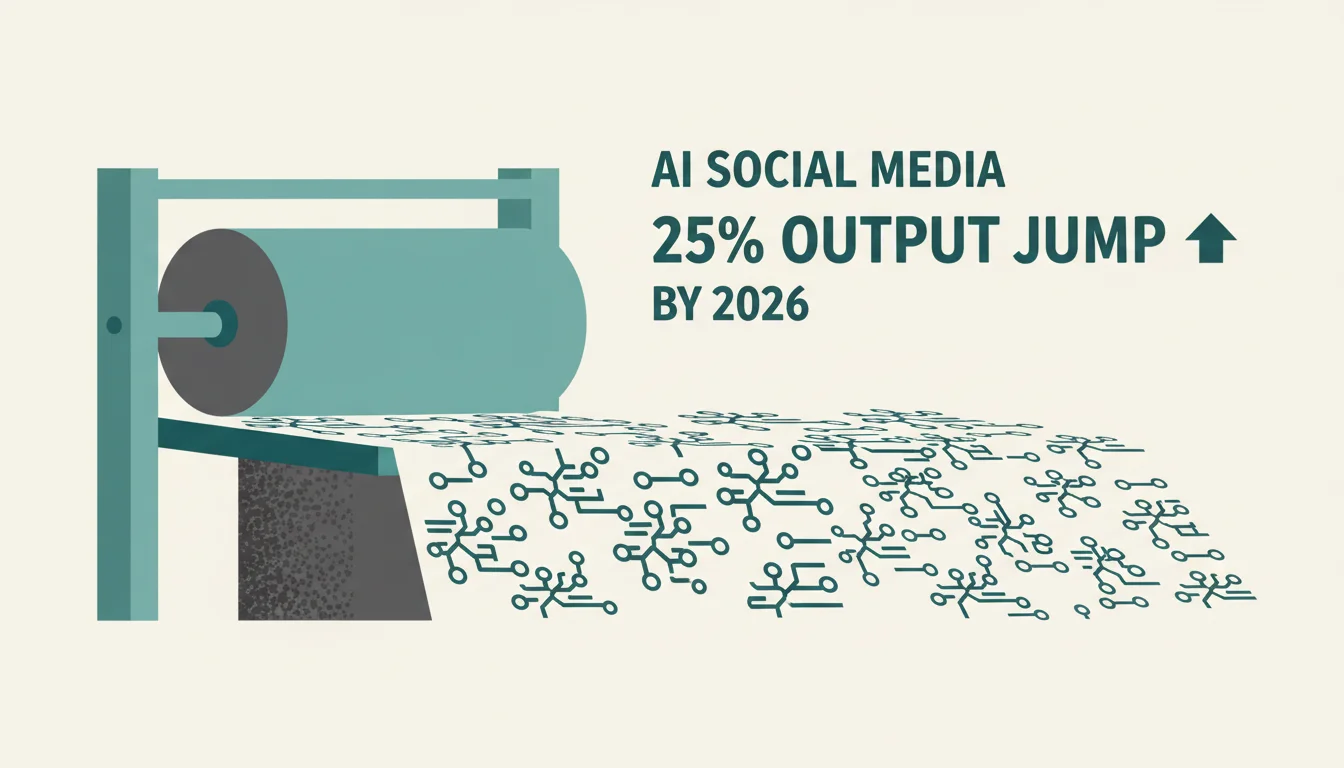
- Brands using AI for social media content generation report a 25% increase in content output compared to those relying solely on human creators.
- Competitive analysis reveals that 40% of leading brands now employ AI to identify trending topics and optimize posting times for maximum engagement.
- Over 60% of consumers surveyed in 2025 indicated they cannot differentiate between AI-generated and human-written social media posts when quality is high.
- Implementing AI-powered sentiment analysis tools can reduce the time spent on manual social listening by up to 50% for multi-brand organizations.
- A structured approach to AI social media competitive analysis, focusing on tool adoption and content performance metrics, is essential for strategic advantage.
The AI Content Velocity Gap: 25% More Output
The sheer volume of content required to maintain a competitive presence across multiple social platforms is staggering, and it’s only growing. My professional experience working with marketing teams across various industries confirms that the primary constraint isn’t always creativity. It’s often bandwidth. A recent industry study by HubSpot Research found that brands using AI for social media content generation increased their content output by an average of 25% compared to those relying exclusively on human creators. This isn’t just about churning out more posts. It’s about maintaining a consistent, high-frequency presence that captures fleeting attention spans. Consider a large consumer goods conglomerate managing dozens of distinct brands. Each brand requires unique messaging, visual assets, and a tailored tone of voice. Manually scaling this operation is a logistical nightmare, often leading to inconsistent posting schedules or content fatigue for the creative team. When we introduce AI tools like Copy.ai or Jasper, the immediate impact is visible in the content calendar. These platforms can generate multiple variations of ad copy, social captions, and even short-form video scripts based on provided prompts and brand guidelines. This allows human strategists to focus on higher-level campaign planning and nuanced message refinement, rather than the repetitive task of drafting initial content. The 25% increase in output isn’t a vanity metric. It directly translates to more opportunities for engagement, broader reach, and more data points for A/B testing. This velocity gap will only widen as AI models become more sophisticated in understanding brand voice and audience nuances.
Competitive Edge in Trend Identification: 40% of Leaders Use AI
Staying relevant on social media means understanding what your audience cares about, right now. The conventional wisdom often involves manual trend spotting, sifting through feeds, and relying on anecdotal evidence. However, a significant competitive advantage emerges when brands integrate AI into this process. Data from Nielsen indicates that 40% of leading brands are now employing AI to identify trending topics and optimize posting times for maximum engagement. This goes beyond simple hashtag tracking. These AI systems analyze vast datasets, including news articles, forum discussions, and competitor content, to predict emerging conversations with remarkable accuracy. Imagine a scenario where a brand in the fashion industry needs to react quickly to a sudden surge in interest for a particular style or color. Manually identifying this trend, drafting content, and scheduling it across all relevant social channels for multiple sub-brands could take hours, potentially missing the peak engagement window. AI-powered platforms such as Sprout Social or Brandwatch can flag these micro-trends in real-time, suggest relevant keywords, and even propose optimal posting times based on historical audience activity. This predictive capability allows brands to be proactive, not just reactive, ensuring their message lands when audience receptiveness is highest. The 40% figure shows that this isn’t a niche application. It’s becoming a standard operating procedure for market leaders who understand the value of timely, relevant communication. Ignoring this capability is akin to driving blind in a fast-paced race. For more on how AI helps with marketing ROI, see our article on AI Targeting Boosts ROI in 2026.
The Blurring Line: 60% of Consumers Undetected AI Content
One of the most surprising findings from a recent IAB report is that over 60% of consumers surveyed in 2025 indicated they could not differentiate between high-quality AI-generated and human-written social media posts. This statistic challenges the early skepticism surrounding AI’s ability to produce engaging, authentic content. It suggests that as large language models (LLMs) continue to improve, their output is becoming indistinguishable from human creativity, at least to the average social media user. This has deep implications for multi-brand competitive analysis. The fear that AI-generated content would feel generic or soulless seems largely unfounded, provided the AI is given clear guidelines and sufficient training data. Brands can use this by scaling personalized content across various segments without sacrificing perceived authenticity. For example, a travel company with multiple destination brands can use AI to generate highly specific travel tips, local insights, and promotional messages tailored to different demographics, all while maintaining a consistent brand voice for each. The fact that 60% of consumers don’t notice the difference means brands can explore AI solutions for content creation without fear of alienating their audience. This isn’t permission to stop creative oversight. It’s an opportunity to reallocate human talent to strategic initiatives that AI cannot yet replicate, such as innovative campaign concepts or deep community engagement. The challenge now becomes less about “can AI write well?” and more about “how can we best integrate AI into our content workflow to enhance, not replace, human creativity?” The shift towards Personalized Marketing is already seeing significant growth by 2027.
“SEMrush and Meltwater both found that LinkedIn is the second-most cited URL by generative AI models, second only to YouTube. According to SEMrush research, 11% of pages cited by ChatGPT, Perplexity, and Google AI mode originate from LinkedIn.”
Efficiency in Listening: 50% Reduction in Manual Sentiment Analysis
Understanding public perception of your brand, and your competitors, is fundamental to social media strategy. Traditionally, this involved laborious manual monitoring, sifting through comments, reviews, and mentions to gauge sentiment. This process is time-consuming and prone to human bias, especially across a portfolio of multiple brands. However, implementing AI-powered sentiment analysis tools can reduce the time spent on manual social listening by up to 50% for multi-brand organizations. This efficiency gain is not merely about saving hours. It’s about gaining real-time, objective insights at scale. Consider a multi-brand food and beverage company. Each brand might have its own distinct customer base and set of common complaints or praises. Manually tracking sentiment across all social platforms for each brand would require a dedicated team working around the clock. AI tools, such as those offered by Talkwalker or Semrush, can automatically process millions of data points, categorizing mentions as positive, negative, or neutral, and even identifying specific themes or emotions. This allows marketing managers to quickly pinpoint emerging crises for one brand or identify successful campaign elements for another. The 50% reduction in manual effort translates directly into faster response times, more informed strategic adjustments, and a clearer understanding of the competitive field. It also frees up human analysts to delve deeper into nuanced insights that AI might miss, rather than being bogged down by data aggregation. For more insights, explore how Social Analytics: 5 Myths Busted for 2026 can further refine your strategy.
Debunking the “Human Touch” Myth
There’s a persistent belief that social media, by its very nature, demands an exclusively human touch. The argument goes that AI cannot replicate genuine emotion, spontaneity, or the subtle humor that defines authentic online interaction. While it’s true that AI still struggles with highly nuanced, context-dependent humor or truly empathetic responses in real-time conversations, the data on content output and consumer perception tells a different story. The idea that every single social media post needs to be painstakingly crafted by a human hand is a luxury few multi-brand enterprises can afford, especially when competing against organizations that are rapidly adopting AI. My experience suggests that the “human touch” is best preserved at the strategic level: defining brand voice, setting campaign objectives, and intervening in high-stakes customer service scenarios. For the vast majority of daily content, particularly repetitive formats like product announcements, event reminders, or curated news, AI performs exceptionally well. To cling to the notion that AI-generated content is inherently inferior is to ignore the measurable gains in efficiency, consistency, and even engagement that forward-thinking brands are already realizing. The human element isn’t being removed. It’s being redefined, shifting from content generation to content orchestration and strategic oversight. The real “human touch” now lies in effectively training and guiding AI, rather than doing all the grunt work ourselves. The integration of AI into social media strategies is no longer a futuristic concept but a present-day imperative for competitive analysis and growth. Brands must actively audit their competitors’ AI adoption, focusing on content velocity, trend identification, and sentiment analysis capabilities to gain a strategic advantage. For marketers looking to gain an edge, considering Expert Interviews: B2B Marketers’ 2026 Edge can provide valuable perspectives.
What is AI social media competitive analysis?
AI social media competitive analysis involves using artificial intelligence tools to monitor, analyze, and benchmark competitors’ social media strategies, including their content output, engagement tactics, and audience sentiment, to identify trends and opportunities.
How can AI help with multi-brand social media management?
AI assists multi-brand social media management by automating content generation, scheduling, and optimization, enabling consistent brand voice across platforms, and providing scalable solutions for monitoring performance and audience sentiment for each distinct brand.
What specific AI tools are used for social media competitive analysis?
Specific AI tools for social media competitive analysis include platforms like Sprout Social for scheduling and analytics, Brandwatch or Talkwalker for sentiment analysis and trend identification, and generative AI tools like Copy.ai or Jasper for content creation.
Can consumers tell the difference between AI-generated and human-written social media posts?
According to recent surveys, a majority of consumers (over 60%) cannot differentiate between high-quality AI-generated and human-written social media posts, indicating the increasing sophistication of AI content creation.
What are the benefits of using AI for social media content creation?
Benefits of using AI for social media content creation include increased content output, improved consistency in brand messaging, faster adaptation to trending topics, and the ability to scale personalized content across diverse audiences more efficiently.


