 By Editorial Team
Key Takeaways
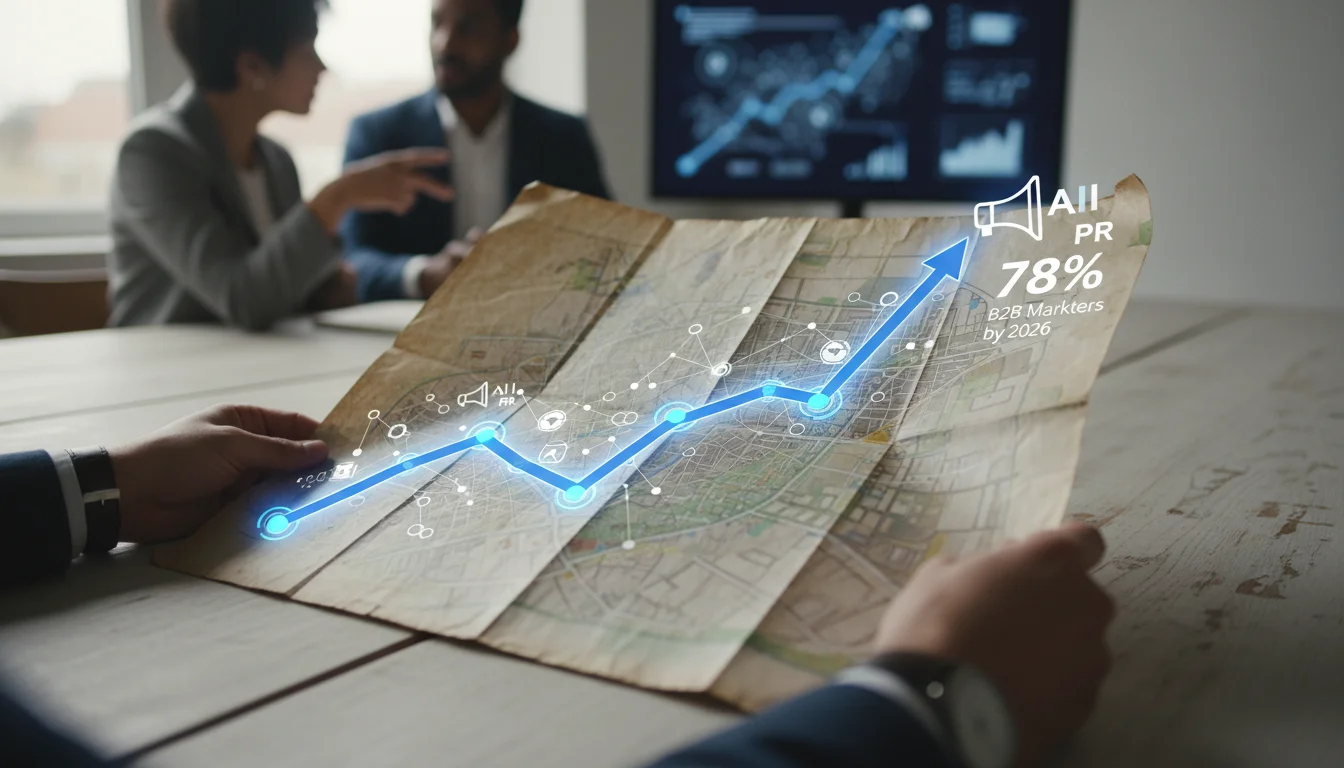
- That 2025 IAB report is a big deal: 78% of B2B marketers plan to spend more on AI media monitoring for their thought leaders by Q3 2026.
- AI media mining can claw back up to 60% of the time your PR team sinks into manual media analysis, freeing them up for actual strategic work.
- To make AI work for story mining, you need to define target publications and specific journalist beats, not just throw broad keywords at it.
- Thought leader PR campaigns that properly use AI are seeing a 25% jump in *relevant* media mentions in the first six months compared to the old way.
- AI is great for spotting opportunities, but a human still has to craft the nuanced story and build the relationships. Don’t forget that part.
A 2025 IAB report found that 78% of B2B marketers are planning to increase what they spend on AI-powered media monitoring for thought leader PR by Q3 2026. That’s a clear signal of where the money, and the priorities, are going. This push to adopt AI is reshaping how brands identify and then act on media opportunities. But is all this tech actually leading to more impactful thought leadership, or is it just creating more noise?
78% of B2B Marketers Will Increase AI Investment for PR by Q3 2026
That number, from the Interactive Advertising Bureau’s 2025 B2B Marketing Outlook, isn’t just a forecast. It reflects real budgets being reallocated as we speak. For people in thought leader PR, this means we’re finally moving past basic keyword alerts. Companies are now looking for AI that can understand context, read sentiment, and figure out the subtle connections between topics, journalists, and entire publications. My take is that the market’s finally over the “AI is coming” talk and has moved on to “AI is here, how do we use it to win?” Brands get it now: you can’t manually keep up with the speed and sheer amount of content being published. The edge goes to whoever can spot emerging stories and reporter interests before everyone else piles on. This is about augmenting PR pros by getting them out of the weeds of sifting through irrelevant junk, which frees them up to be more strategic.
AI Reduces Manual Media Analysis Time by Up to 60%
The efficiency claim is huge. An early 2026 study from eMarketer showed that PR teams using AI for story mining were spending up to 60% less time on the initial grunt work of analysis and finding opportunities. Think about what that actually means. A PR manager who used to burn two full days a week just scanning feeds and newsletters can now get that done in less than a day. That reclaimed time allows for the deep strategic thinking, relationship building, and pitch crafting that actually moves the needle. It’s a shift from just reacting to what’s already been published to proactively generating new opportunities. Instead of just seeing what’s out there, AI can help predict what stories could be told next based on data and editorial patterns. This lets you be incredibly targeted, making sure your thought leadership pitch lands perfectly with what journalists are thinking about right now.
25% Increase in Relevant Media Mentions Within Six Months with AI
This stat gets quoted a lot in case studies from PR tech companies, and for good reason. It suggests a direct line from adopting AI to getting measurable results. A 25% jump in relevant media mentions in just six months is a big win for any thought leader campaign. And what does “relevant” mean here? It means getting mentioned in the specific publications you’re targeting, by the reporters who actually influence your audience, and on the exact topics where your expert is an expert. It’s about quality and focus. This happens because the AI can spot micro-trends and ridiculously specific journalist beats (like a reporter at The Wall Street Journal who only covers AI ethics in finance, not just general AI). It can even learn the preferred language of certain outlets. My own experience shows this doesn’t happen on its own, though. You have to configure the AI platform carefully and have a very clear definition of what a “win” looks like for your thought leader. If you feed it garbage, it will just give you more garbage back, not insight.
Only 30% of Organizations Fully Integrate AI Insights into Their PR Strategy
Here’s where things fall apart for a lot of companies. Even with all the compelling data, a 2025 HubSpot research report showed only 30% of them are actually weaving AI-driven insights into their main PR strategy. The other 70% are just using AI as a fancy news feed. This is a massive missed opportunity. Real integration means the AI’s findings are shaping your content calendar, your speaker submissions, your social media, and even discussions about product development. For example, if the AI keeps flagging an uptick in articles about the cybersecurity risks of quantum computing, a thought leader in that space needs to be creating content and pitching talks on that specific topic immediately, not just talking about “cybersecurity” in general. The problem isn’t the tech. It’s getting the organization to change how it works and bake these insights into daily routines. Too many PR teams are still stuck in a silo, separate from content and marketing, which kills any chance of a coordinated approach.
Challenging the Conventional Wisdom: More Data Doesn’t Always Mean Better Stories
There’s this idea in thought leader PR that more data leads to more precision and more impact. AI definitely gives you more data, but I disagree that it automatically leads to better stories or real influence. The common thinking is that if you can just identify every possible media opportunity, you’ll get more placements. My experience tells a different story. Relying too heavily on AI without a smart human reviewing the output can lead to a firehose of bad pitches and make your thought leader’s unique voice sound generic. The real trick with AI story mining is using it to understand *why* something is being talked about and *who* is leading that conversation. A common mistake is just chasing every trending keyword the AI spits out. That’s how you end up with bland, “me-too” content. For example, the AI might tell you “the future of work” is trending. A lazy PR team might rush out a generic piece on that. But a smart PR pro, looking at the same data, would see the *real* story is the sub-trend getting traction, like “the ethics of AI for managing remote teams” or “how generative AI impacts creative jobs.” That level of nuance, which a human who knows their expert and the media field can provide, is what turns a trend into a real story. And just using AI to find journalists is a recipe for a transactional, spammy approach. Sure, the AI can tell you who writes about your topic, but it can’t tell you their pet peeves, their long-term editorial goals, or the personal angle that might get them interested. You still need a human with empathy and persistence to build a real relationship. AI is a fantastic filter, but it’s no substitute for the art of relationship building. The goal is to send *better* pitches, not just *more* pitches. The best ones are targeted and resonate because they show you’ve actually done your homework on the journalist and their publication. The real advantage comes when you combine AI’s number-crunching power with the human touch of strategic insight and authentic connection. AI for media story mining is a sophisticated tool, not a magic wand. In the hands of a skilled PR pro, it can seriously amplify their work and sharpen their aim. The future of our field is this partnership: let the machines do the heavy data lifting so the humans can do what they do best, craft great stories and build the connections to tell them.
So what exactly is thought leader PR?
Thought leader PR is all about making an individual or a company the go-to expert in their industry. You do this by getting them media coverage, speaking gigs, and bylined articles that show their unique perspective. The point is to build their credibility and influence.
How is AI media mining different from what we used to do?
Traditional media monitoring was basically a glorified keyword search that counted brand mentions. AI media mining is way deeper. It analyzes sentiment, spots emerging trends before they’re obvious, maps out what specific journalists care about, and even predicts what topics might get hot next, giving you actual strategic intelligence.
What are the real benefits of using AI for media story mining?
The main benefits are saving a ton of time on manual analysis, getting much better at finding the right media opportunities, and really understanding journalist interests. This leads to better content alignment and, in the end, more high-quality media placements that actually matter.
Will AI take my PR job?
No. AI is great at analyzing data and finding patterns, but it can’t replace a PR professional. Humans are still needed for the strategy, for crafting a compelling story, for building real relationships with journalists, and for exercising the judgment needed to manage a brand’s reputation.
What should I look for in an AI media mining tool?
Look for tools with solid sentiment analysis, the ability to find topic clusters, and good journalist profiling. You’ll want something with trend prediction, customizable dashboards, and that integrates into your current workflow. The key is finding a tool that gives you actionable insights, not just a mountain of raw data.


