 By Diane Yates
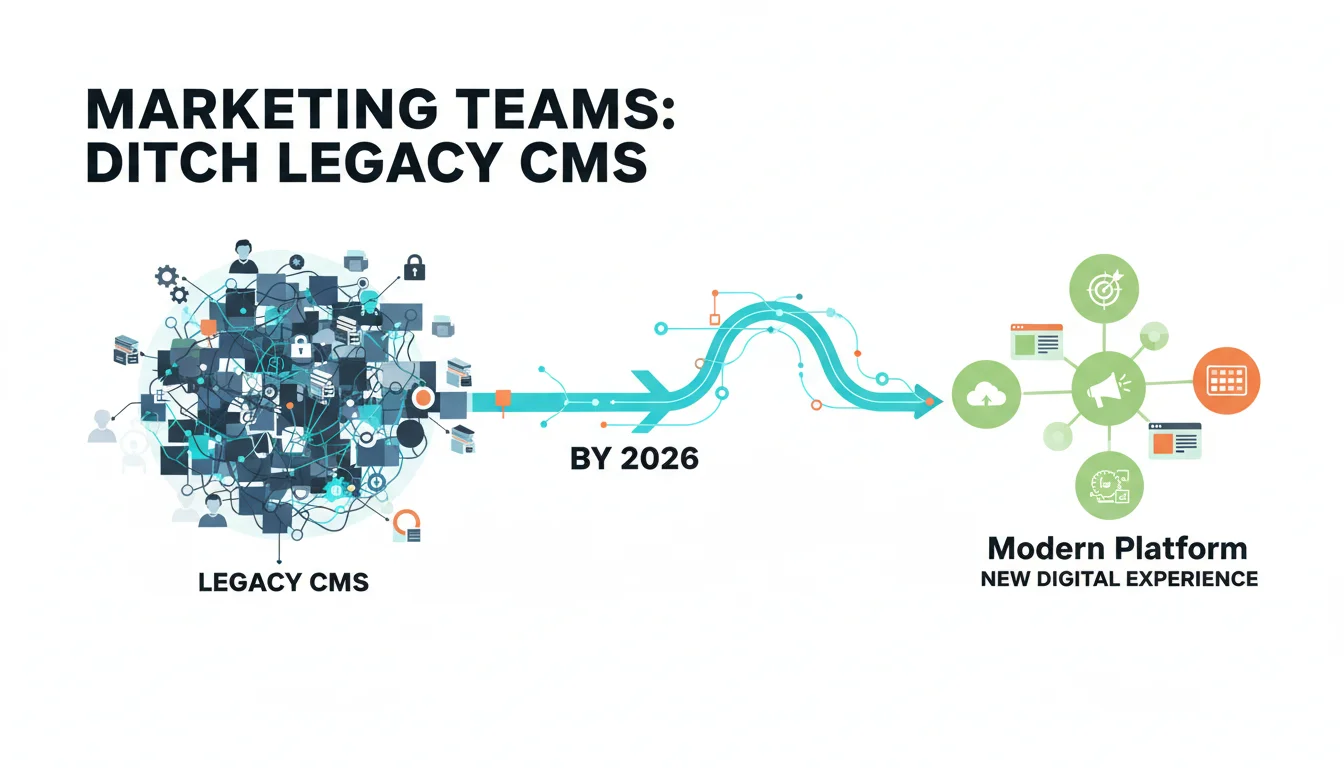
Marketing teams in 2026 often find themselves shackled by monolithic content management systems, struggling to adapt to the relentless pace of digital channels and personalized user experiences. These traditional systems, while familiar, create bottlenecks, delay campaign launches, and in the end hinder a brand’s ability to connect with audiences effectively, leading to missed opportunities and frustrated content creators. The core problem lies in their tightly coupled architecture, where content creation, management, and delivery are intertwined, making it nearly impossible to rapidly deploy content across diverse platforms without extensive developer intervention and cumbersome manual processes. How can marketing leaders break free from these limitations and ensure their content strategy remains agile and impactful?
Key Takeaways
- Legacy CMS platforms often create significant delays in content deployment, reducing a marketing team’s ability to react to real-time market changes.
- Adopting a headless CMS decouples content from its presentation layer, enabling independent development and faster content delivery across all digital touchpoints.
- Successful migration to a headless architecture requires a clear content model, strong API integration strategy, and a commitment to new workflows within the marketing team.
- Teams can expect to see a 30% reduction in content deployment time within six months of fully implementing a headless CMS, according to a 2025 Forrester report.
- Start with a pilot project focused on a single content type or channel to demonstrate the value and refine processes before a full-scale transition.
“Cost savings matter, but they’re secondary. According to Gartner, software spending continues to climb even as organizations add more tools.”
The Rigidity of Traditional Content Management: A Costly Bottleneck
For years, the standard approach to content management involved a monolithic CMS. Think of platforms like older versions of Adobe Experience Manager or even WordPress with heavy theme dependencies. These systems bundle the content repository, the editing interface, and the presentation layer into one inseparable unit. While this all-in-one approach might seem convenient initially, it quickly becomes a liability when scaling content operations or attempting to innovate. Consider a scenario where a marketing team needs to launch a new product campaign across their website, a dedicated mobile app, smart displays in retail stores, and a voice assistant skill. With a traditional CMS, each channel often requires a custom build, or at best, significant re-engineering of existing components to fit the new display context. The content, though conceptually the same, must be painstakingly adapted, often involving separate content entries or complex synchronization efforts.
This tightly coupled structure means that any change to the presentation layer, say, a new design for the mobile app, invariably impacts the content layer, demanding coordination between front-end developers, back-end developers, and content creators. The development cycle lengthens, becoming an exercise in dependency management rather than creative execution. I’ve personally seen marketing teams in Atlanta, Georgia, spend weeks, sometimes months, trying to push out minor content updates because of the sheer complexity of their legacy systems. This isn’t just about inconvenience. It translates directly into lost revenue opportunities and a diminished competitive edge. A 2025 report from eMarketer (emarketer.com) highlighted that brands struggling with content velocity reported a 15% lower customer engagement rate compared to their more agile counterparts. That’s a significant gap.
What Went Wrong First: The All-in-One Trap
Many organizations initially embraced traditional CMS platforms for their perceived simplicity. The promise of an integrated solution, where everything from content creation to publishing was handled under one roof, seemed appealing. The problem wasn’t the initial intent, but the lack of foresight regarding the exponential growth of digital touchpoints. When these systems were designed, the web was largely a single-channel experience. Today, content needs to be truly omnichannel. Attempts to force a monolithic CMS into an omnichannel model often involve complex plugins, custom code, and elaborate workarounds that introduce more fragility than they solve. For instance, creating a custom API layer on top of a traditional CMS to feed content to a new channel often becomes a maintenance nightmare, requiring constant updates and patching. This “band-aid” approach is expensive, time-consuming, and in the end unsustainable.
Another common misstep is underestimating the technical debt accrued by these systems. Over time, as features are added and modified, the codebase becomes convoluted. Marketing teams often find themselves dependent on a small group of developers who understand the intricacies of their highly customized, aging CMS. This creates a single point of failure and severely limits the ability to innovate or even respond to critical security updates efficiently. I’ve advised clients who found themselves unable to upgrade their core CMS for years because of the sheer volume of custom integrations that would break, leaving them vulnerable and stagnant. It’s a frustrating position for any marketing leader to be in, knowing their content strategy is being held hostage by an outdated technological framework.
The Solution: Embracing a Headless CMS for True Agility
The answer to these challenges lies in adopting a headless CMS. Unlike its monolithic predecessors, a headless CMS fundamentally separates the content management backend (the “body”) from the presentation layer (the “head”). Content is stored, managed, and edited in a pure, structured format, independent of how or where it will be displayed. This content is then delivered via APIs (Application Programming Interfaces) to any front-end application or device. This architectural shift is not merely a technical tweak. It represents a fundamental change in how content is conceived, created, and disseminated.
Consider the benefits: marketing teams can create content once and publish it everywhere. A product description, for example, can be authored in the headless CMS and then automatically pulled by the website, the mobile app, a smart speaker, and even a digital signage display in a retail store, each rendering it in its optimal format. This eliminates duplication of effort, ensures consistency across channels, and drastically accelerates content deployment. Developers, freed from the constraints of the CMS’s presentation layer, can use any front-end technology they choose, whether it’s React, Vue, Angular, or even emerging frameworks for augmented reality or virtual reality experiences. This technological freedom encourages innovation and allows for rapid iteration on user interfaces without impacting the content repository.
Implementing a headless CMS involves several key steps. First, a thorough content model needs to be defined. This means structuring content types (e.g., “product,” “blog post,” “author”) and their associated fields (e.g., “product name,” “description,” “image gallery”) in a logical, reusable manner. This foundational step is critical. A poorly defined content model can negate many of the benefits of a headless system. Second, an API strategy must be established. This involves understanding how different front-end applications will consume content from the headless CMS and ensuring the APIs are strong, secure, and performant. Finally, the marketing team’s workflows will need to adapt. Content creators will focus on crafting channel-agnostic content, while front-end developers will consume that content via APIs to build dynamic user experiences. This often requires cross-functional training and a cultural shift towards collaborative content operations.
Step-by-Step Implementation for Agile Content Delivery
Transitioning to a headless architecture is a strategic project, not a simple software installation. Here’s a practical approach:
- Content Audit and Modeling: Begin by auditing existing content. Identify content types, their attributes, and how they relate. This is the most labor-intensive but important step. For instance, if you have blog posts, define fields for “title,” “author,” “publish date,” “main image,” and “body content.” Critically, think about how these pieces of content might be reused. Do you need a short summary for social media and a long version for the website? Model these as distinct fields within the same content type.
- Platform Selection: Evaluate headless CMS platforms like Contentful (contentful.com), Strapi (strapi.io), or Sanity (sanity.io). Factors to consider include API capabilities, scalability, developer tooling, ease of use for content editors, and cost. For a mid-sized marketing team looking for strong enterprise features, Contentful often emerges as a strong contender due to its extensive API documentation and mature ecosystem.
- Pilot Project: Do not attempt a full migration immediately. Select a single, manageable project or content type for a pilot. Perhaps rebuild a specific landing page or integrate product data into a new internal application. This allows the team to learn the new system, refine workflows, and identify potential challenges in a controlled environment. A pilot project typically takes 2 to 3 months to execute and evaluate.
- API Development and Integration: Front-end developers will build the “heads” that consume content via the headless CMS’s APIs. This might involve building a new React front-end for the main website, integrating content into a mobile app via GraphQL, or feeding product data into a third-party e-commerce platform. The key is that the content remains centralized and consistent.
- Migration Strategy: Once the pilot is successful, plan a phased migration of existing content. This often involves automated scripts to pull content from the legacy system and push it into the new headless CMS, followed by manual review and refinement. This can be complex, especially with large content libraries, and often benefits from specialized migration tools or services.
- Training and Workflow Adaptation: Train content creators on the new interface and content modeling principles. Emphasize creating structured, channel-agnostic content. Establish clear communication channels between content teams and developers for ongoing iterations and new feature requests. This is where the “agile” part of agile content delivery truly comes into play.
One common pitfall I’ve observed is the tendency to simply replicate old content structures in the new headless system. This misses the point entirely. The power of headless lies in its flexibility and reusability. Instead of thinking about “web pages,” content creators should think about “content components” that can be assembled and presented in various ways across different channels. This shift in mindset is important for unlocking the full potential of a headless architecture.
Measurable Results: Enhanced Agility and Performance
The transition to a headless CMS yields tangible benefits that directly impact marketing performance and operational efficiency. First and foremost, content delivery speeds increase dramatically. Marketing teams can push out new campaigns, update product information, or react to breaking news across all their digital properties in a fraction of the time it took with legacy systems. A 2025 study by Nielsen (nielsen.com) reported that brands using headless architectures achieved a 40% faster time-to-market for new digital content initiatives compared to those on monolithic platforms. This translates directly into more timely, relevant communication with customers, which in turn drives engagement.
Beyond speed, headless CMS platforms offer unparalleled flexibility. Marketing teams are no longer constrained by the design limitations of a single CMS theme or template. Developers can build highly customized, performant front-ends tailored to specific user experiences, whether it’s a lightning-fast progressive web app (PWA) or an immersive AR experience. This freedom allows for continuous innovation in how content is presented, leading to higher conversion rates and improved brand perception. Imagine A/B testing entirely different user interfaces for the same content, a feat that is cumbersome, if not impossible, with traditional systems.
Plus, the API-first nature of headless CMS solutions facilitates smooth integration with other marketing technology (martech) tools. Connecting your CMS to your CRM (salesforce.com), analytics platforms (analytics.google.com), or e-commerce engines becomes a straightforward process of API calls. This creates a unified data ecosystem, providing a well-rounded view of customer interactions and enabling more personalized and effective marketing strategies. For example, a campaign launched through a headless CMS can smoothly feed customer interaction data back into a CRM, triggering personalized follow-up emails or offers. This level of interconnectedness was a pipe dream for many marketing departments just a few years ago.
The cost savings, while not always immediately apparent, are significant in the long run. Reduced developer dependency on specific CMS platforms, lower maintenance overhead for custom integrations, and increased content reuse all contribute to a more efficient operational budget. While the initial investment in a headless CMS and the migration process can be substantial, the return on investment through increased agility, faster time-to-market, and improved customer experience often far outweighs these costs within 18 to 24 months. Marketing leaders should view a headless CMS not as an expense, but as a strategic investment in the future-proofing of their digital content operations.
In the end, embracing a headless CMS helps marketing teams to truly own their content strategy. It shifts the focus from managing a complex technical system to creating compelling, impactful content that can reach audiences wherever they are, on any device. The content becomes a central, reusable asset, rather than a prisoner of a particular presentation layer. This is the future of content delivery, and those who adopt it early will gain a significant competitive advantage in the crowded digital field of 2026 and beyond.
Adopting a headless CMS is a strategic imperative for marketing teams aiming to thrive in a multi-channel, rapidly evolving digital environment. By decoupling content from its presentation, organizations gain unparalleled flexibility, speed, and integration capabilities, in the end delivering more impactful experiences to their audiences. The investment in a headless architecture pays dividends in agility, efficiency, and the ability to innovate continuously.
What is the primary difference between a traditional CMS and a headless CMS?
A traditional CMS bundles content management and presentation layers together, while a headless CMS separates them, storing content in a pure format and delivering it via APIs to any front-end application.
How does a headless CMS improve content delivery speed?
By allowing content to be created once and delivered to multiple channels simultaneously via APIs, a headless CMS eliminates the need for separate content adaptations for each platform, significantly accelerating deployment.
What is a content model in the context of a headless CMS?
A content model defines the structure of different content types, such as a “product” or “blog post,” specifying their fields (e.g., title, image, description) and how they relate, ensuring content is organized and reusable.
Is a headless CMS suitable for small businesses?
While often associated with enterprise solutions, many headless CMS platforms offer scalable options suitable for small businesses that anticipate growth and need flexibility for future digital channels without being locked into a specific front-end technology.
What are the typical challenges when migrating to a headless CMS?
Common challenges include defining a strong content model, migrating large volumes of existing content, adapting internal workflows for content creators and developers, and ensuring smooth API integration with all necessary front-end applications.


