 By Angela Thomas
Key Takeaways
- European shipping lines faced an estimated 15% increase in operational costs in 2025 due to new environmental regulations, directly impacting freight rates and supply chain planning.
- The European Union’s Emissions Trading System (ETS) extension to maritime transport led to a 7-10% rise in fuel surcharges for cargo traversing EU waters, necessitating a re-evaluation of carrier selection criteria for businesses.
- New digital reporting mandates from the EU require logistics providers to invest 30-40% more in data infrastructure and compliance software by Q3 2026 to avoid significant fines.
- Only 20% of small to medium-sized enterprises (SMEs) in Europe have fully adapted their procurement strategies to account for the increased regulatory burden on carriers, creating a competitive disadvantage.
- Regulatory shifts are accelerating the adoption of alternative fuels and vessel technologies, with a projected 25% increase in orders for methanol-powered ships by 2027, demanding that shippers prioritize carriers committed to decarbonization.
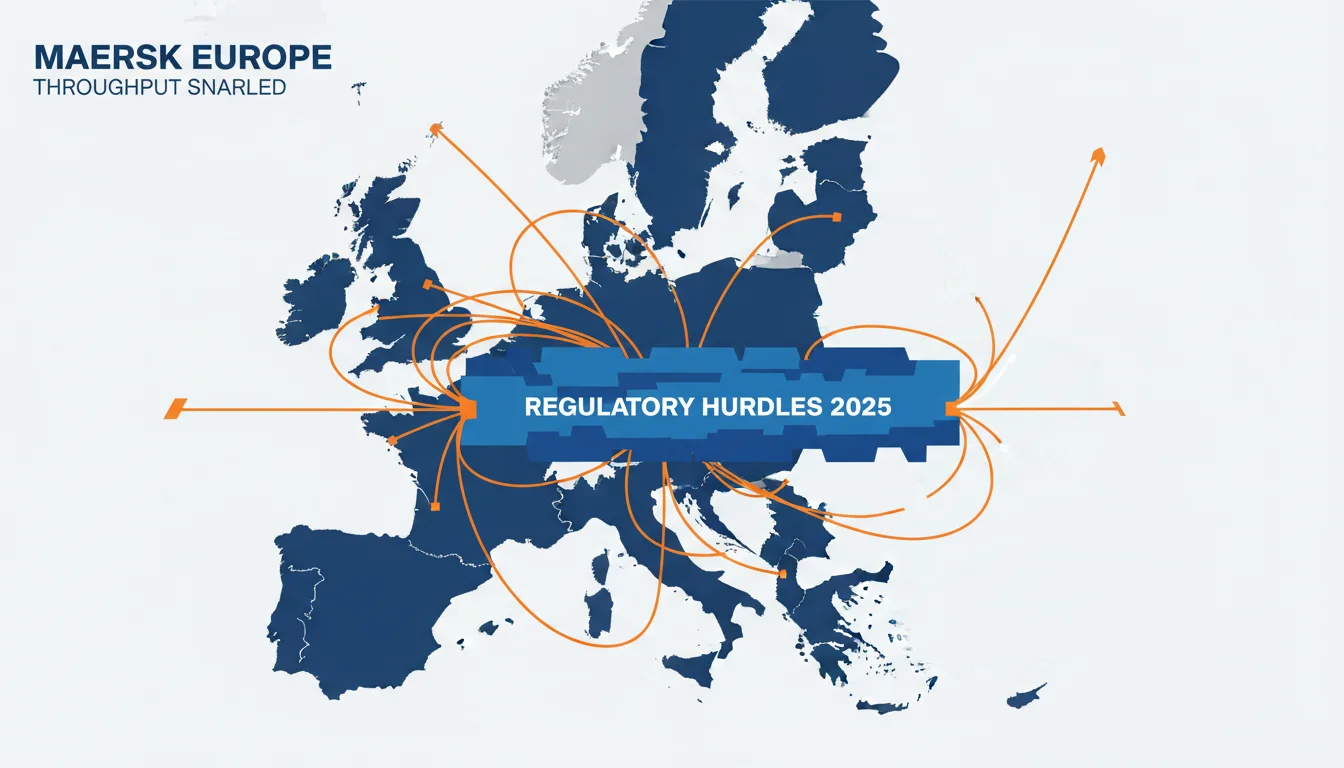
Despite a 2025 report from the European Commission indicating a 12% increase in shipping capacity across key intra-European routes, the actual throughput efficiency for Maersk Europe and other major carriers has stagnated due to an intricate web of new regulatory hurdles. The regulatory impact on Maersk Europe presents a complex challenge, one that fundamentally reshapes operational strategies and demands a proactive approach from all stakeholders in the logistics chain.
The Hidden Costs of Decarbonization: ETS Expansion Drives 7-10% Fuel Surcharge Hikes
The extension of the European Union’s Emissions Trading System (ETS) to maritime transport in 2024 has introduced a significant new variable into the operational cost equation for carriers like Maersk Europe. According to an analysis by S&P Global Commodity Insights, the ETS inclusion is responsible for a 7% to 10% increase in fuel surcharges for cargo that transits through EU waters. This isn’t merely an administrative fee. It reflects the real cost of purchasing and surrendering emission allowances for greenhouse gas emissions. For a company managing thousands of vessel movements annually, this translates into hundreds of millions of euros in additional expenditure. My professional experience suggests that many shippers, particularly smaller businesses, initially underestimated the direct pass-through of these costs. They viewed it as a carrier-level problem. However, the market has clearly shown that these costs are integrated into freight rates, often as a separate “ETS surcharge.” Businesses sourcing goods internationally, especially those with complex supply chains involving multiple legs within Europe, must now factor this into their total landed cost calculations. Ignoring this additional cost means eroding profit margins or losing competitive pricing power. It also forces a critical look at routing: are there viable, albeit less direct, routes that minimize exposure to the ETS, or is the speed and reliability of EU port calls worth the premium?
Digital Reporting Mandates: A 30-40% Surge in Compliance Software Investment
The push for greater transparency and data accuracy in European logistics has culminated in a series of new digital reporting mandates, particularly those related to customs declarations and port state control inspections. A recent industry report by the International Association of Ports and Harbors (IAPH) noted that compliance with these new digital requirements necessitates a 30% to 40% increase in investment in data infrastructure and specialized compliance software for major logistics providers by Q3 2026. This isn’t just about upgrading systems. It’s about re-engineering data flows, integrating disparate platforms, and training personnel on new protocols. From my vantage point, the challenge isn’t just the monetary investment. It’s the operational friction introduced by integrating new digital tools with legacy systems. Many large carriers operate on highly complex, often decades-old, IT infrastructures. Bolting on new, mandatory digital reporting layers without a complete overhaul can lead to data silos, errors, and delays. The real impact on Maersk Europe here is twofold: increased operational expenditure and a potential slowdown in processing times if the integration isn’t managed carefully. Companies that fail to adapt risk significant fines for non-compliance, which can easily outweigh the investment in the required technology. This is a clear signal that digital maturity is no longer a competitive advantage. It’s a regulatory necessity.
The Uneven Pace of SME Adaptation: Only 20% Fully Account for New Regulatory Burdens
While large corporations possess dedicated compliance departments and substantial budgets to navigate new regulations, small to medium-sized enterprises (SMEs) often struggle. A 2025 survey by Eurostat revealed that only 20% of European SMEs involved in international trade have fully adapted their procurement and logistics strategies to account for the increased regulatory burden on carriers. This disparity creates a significant competitive gap. Larger players can absorb some of these costs or negotiate better terms due to volume, but SMEs often face the full brunt of increased freight rates and surcharges. This statistic is alarming because SMEs form the backbone of many European economies. Their inability to quickly adapt means they might be paying more for shipping than necessary, or worse, they might face disruptions due to non-compliant logistics partners. I’ve observed firsthand how a small business can be blindsided by an unexpected ETS surcharge, for instance, because their freight forwarder didn’t adequately communicate the new cost structures. The conventional wisdom might suggest that the market will simply adjust, but the reality is that many SMEs lack the resources to conduct thorough due diligence on carrier compliance and cost breakdowns. This creates an urgent need for greater transparency from carriers and proactive education for shippers.
The Acceleration of Green Technology Adoption: A 25% Spike in Methanol Vessel Orders
The stringent environmental regulations, particularly the ETS and the FuelEU Maritime initiative, are not just increasing costs. They are fundamentally reshaping the shipbuilding industry and carrier fleets. According to a 2026 report by DNV, there has been a projected 25% increase in orders for methanol-powered vessels by 2027, indicating a clear shift towards alternative fuels. Maersk Europe has been at the forefront of this transition, commissioning several methanol-fueled container ships. This move, while costly in the short term, positions them for long-term compliance and potentially lower operational costs as carbon prices rise. This is where I diverge from the common narrative that regulations are solely a burden. Yes, there’s an immediate cost, but these regulations are also powerful catalysts for innovation. The investment in green technology isn’t just about avoiding fines. It’s about future-proofing operations. Shippers should view a carrier’s commitment to decarbonization not just as a marketing talking point, but as a critical factor in their own supply chain resilience. Choosing carriers with modern, lower-emission fleets can mitigate future cost volatility associated with carbon pricing and enhance a company’s own sustainability credentials. It’s a strategic alignment that forward-thinking businesses are already making.
The Port Congestion Conundrum: A 5% Increase in Average Dwell Times
Despite technological advancements, European ports continue to grapple with congestion, exacerbated by new customs procedures and increased cargo volumes. A 2025 analysis by the European Sea Ports Organisation (ESPO) indicated a 5% increase in average vessel dwell times across major North European container ports compared to the previous year. This seemingly small percentage has significant ripple effects. Extended dwell times mean higher demurrage and detention charges, delayed delivery to final destinations, and increased fuel consumption as ships wait to berth. This particular data point often gets overlooked in discussions about regulatory impact. The focus tends to be on direct financial costs like fuel surcharges or compliance software. However, port efficiency is intrinsically linked to regulatory frameworks, particularly those governing customs, health, and safety inspections. Any new directive that adds a layer of inspection or documentation, however well-intentioned, can contribute to these delays. For Maersk Europe, managing schedules and maintaining reliability becomes exponentially harder when vessels are held up at congested ports. Businesses reliant on just-in-time inventory systems face the most exposure here. My advice is to build additional buffer time into your European logistics planning and to work closely with carriers who can provide real-time visibility into vessel movements and port conditions. The “conventional wisdom” often ignores the cumulative effect of minor regulatory additions on the physical flow of goods. The regulatory environment across Europe is undeniably complex, presenting both significant challenges and opportunities for innovation. Adapting to these changes requires a detailed understanding of their financial and operational implications, fostering strategic partnerships, and embracing technological advancements to maintain a competitive edge.
How does the EU ETS impact shipping costs for businesses?
The EU Emissions Trading System (ETS) extends to maritime transport, requiring carriers like Maersk Europe to purchase and surrender emission allowances. These costs are typically passed on to shippers through increased fuel surcharges, leading to a 7% to 10% rise in freight rates for cargo traversing EU waters.
What are the primary digital reporting mandates affecting European logistics in 2026?
New digital reporting mandates in Europe primarily focus on enhanced customs declarations and simplified port state control inspections. These regulations require logistics providers to invest significantly in data infrastructure and compliance software to ensure accurate and timely electronic submissions.
Why are SMEs struggling more with new shipping regulations than larger companies?
SMEs often lack the dedicated compliance teams and financial resources of larger corporations, making it harder for them to quickly adapt to new regulatory changes. This can result in higher shipping costs, potential non-compliance issues, and a competitive disadvantage if they do not proactively adjust their logistics strategies.
How are environmental regulations influencing the type of ships being ordered by carriers?
Stringent environmental regulations like the EU ETS and FuelEU Maritime are accelerating the adoption of alternative fuels and greener vessel technologies. This has led to a significant increase in orders for ships powered by fuels like methanol, as carriers seek to reduce emissions and future-proof their fleets against rising carbon costs.
What is the connection between regulatory changes and increased port dwell times?
New regulatory frameworks, particularly those involving customs and inspections, can add layers of complexity to port operations. Even minor procedural changes, when combined with increased cargo volumes, contribute to longer average vessel dwell times, leading to higher demurrage charges and potential supply chain delays.


