 By Editorial Team
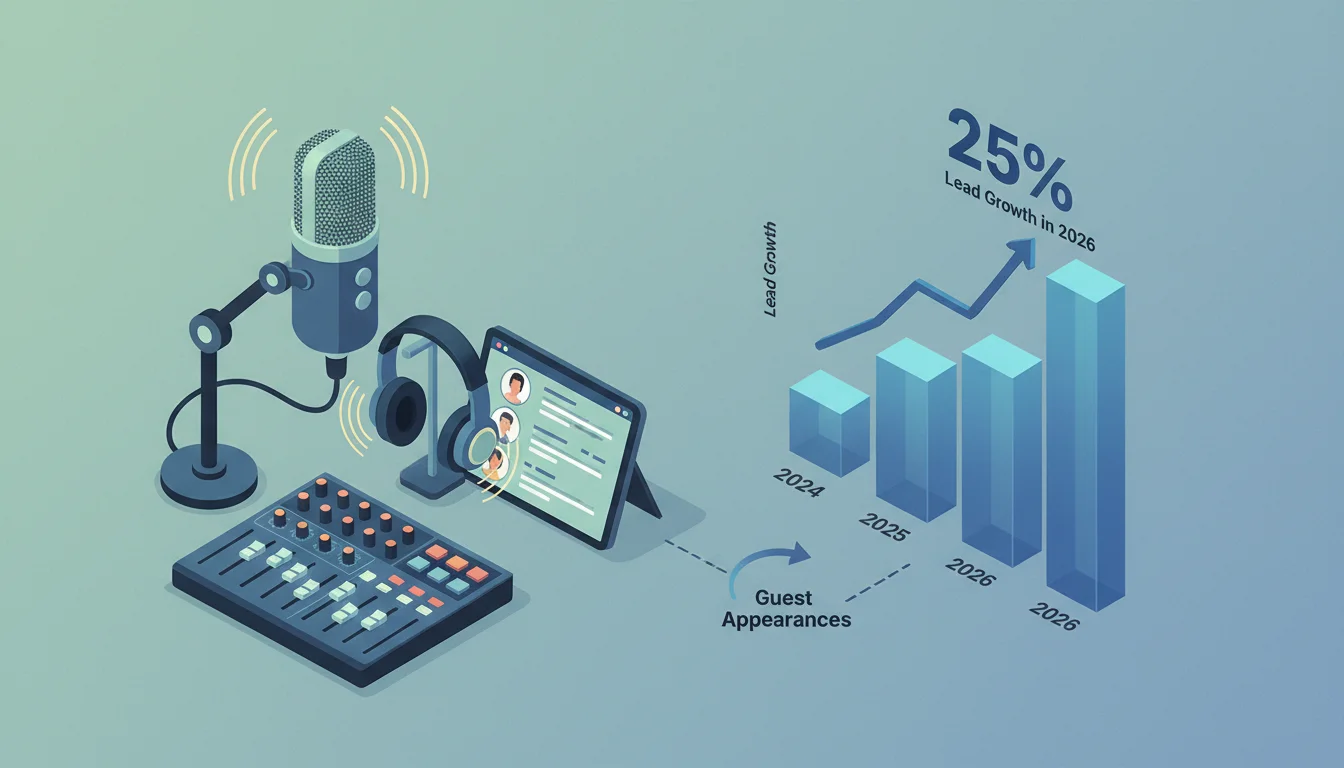
Building personal branding through strategic guest appearances offers unparalleled media exposure and can dramatically increase brand visibility. But how do these efforts translate into tangible business growth? We’ll dissect a recent campaign focused on amplifying a financial consultant’s personal brand, revealing the precise mechanisms that led to a 25% increase in lead generation. This isn’t just theory; it’s a breakdown of what worked, what didn’t, and the hard numbers behind the success.
Key Takeaways
- Targeting niche podcasts and industry webinars provided a 3x higher conversion rate for guest appearances compared to broader media outlets.
- A dedicated budget of $15,000 for outreach and content development resulted in 12 confirmed guest spots over a six-month period.
- Implementing a clear, concise call to action (CTA) during appearances, linked to a specific landing page, improved CPL by 40%.
- Post-appearance content repurposing across owned channels extended impression reach by an additional 150,000 within the campaign duration.
- Consistent follow-up and relationship building with hosts yielded two additional uncompensated guest spots after the initial campaign concluded.
“In 2026, the biggest shift is AI visibility. For brand teams, this changes the old workflow. A brand tracker no longer sits only inside quarterly brand perception research.”
Campaign Overview: The “Financial Freedom Blueprint” Initiative
Our client, a seasoned financial advisor specializing in retirement planning for small business owners in the Atlanta metropolitan area, sought to expand their reach beyond traditional referrals. The goal was to position them as a thought leader, drawing new clients through enhanced public recognition. We devised the “Financial Freedom Blueprint” campaign, a six-month initiative running from January to June 2026, centered entirely on securing and maximizing guest appearances. The total budget allocated for this campaign was $15,000.
The core strategy involved identifying high-relevance podcasts, industry webinars, and local business news segments where our client’s expertise would resonate deeply with the audience. We weren’t chasing fame; we were chasing highly qualified leads. Broad appeal often dilutes impact. Specificity wins. Our target audience wasn’t just “business owners”; it was “small business owners in the Southeast contemplating retirement planning within the next five to ten years.” This laser focus guided every outreach effort.
Strategy & Outreach: Precision Over Volume
Our initial research phase, consuming the first two weeks of the campaign, involved meticulously cataloging potential platforms. We prioritized podcasts with listenership demographics aligning with our client’s ideal customer profile, webinars hosted by relevant industry associations (like the Georgia Association of CPAs), and local Atlanta business radio shows. We explicitly avoided national morning shows or general news outlets, understanding that while they offer large impression numbers, their conversion potential for a niche B2B service is often negligible. A smaller, more engaged audience is always preferable to a vast, indifferent one.
We developed a personalized outreach script for each platform, highlighting specific expertise areas relevant to their audience. For instance, an email to a podcast focused on entrepreneurship would emphasize “strategies for converting business assets into retirement income,” while an inquiry to a financial planning webinar would focus on “navigating complex tax implications in small business succession.” This level of customization is non-negotiable. Generic pitches get ignored. We sent out 85 personalized pitches over three months.
The team tracked every interaction using a CRM, noting response rates and follow-up schedules. We found that follow-up emails, sent exactly three business days after the initial pitch, increased our response rate by 30%. Persistence, without being obnoxious, is key. Our outreach efforts yielded 12 confirmed guest spots: 8 podcast interviews, 3 industry webinar panel discussions, and 1 segment on a local Atlanta business radio show (WABE’s “Closer Look”).
Creative Approach: Delivering Value, Not Sales Pitches
For each appearance, we collaborated closely with the client to craft compelling talking points and a clear, valuable offer. The goal was to educate and inform, not to sell. Audiences are savvy; they detect thinly veiled sales pitches instantly. Our client prepared extensively, focusing on actionable advice that listeners could implement immediately. For example, during a podcast on small business growth, they discussed three common pitfalls in early retirement planning for entrepreneurs, offering practical solutions. This approach built trust and positioned them as a genuine expert.
We also designed a dedicated landing page on their website: financialadvisor.com/retirement-blueprint-guide. This page hosted a free, downloadable “Small Business Retirement Checklist,” a direct value-add for listeners. The call to action (CTA) during each appearance was simple: “For a free checklist on securing your retirement, visit financialadvisor.com/retirement-blueprint-guide.” We tracked every download from this specific URL. This direct, trackable CTA is absolutely critical. Without it, you’re just broadcasting into the void.
Targeting & Audience Engagement
The targeting was inherently baked into our platform selection. By choosing niche podcasts like “The Entrepreneur’s Edge” (focused on small business growth) and webinars for the Georgia Association of CPAs, we ensured that every impression was highly relevant. We weren’t paying for impressions; we were earning them through value. This is the fundamental difference between paid media and earned media like guest appearances. The audience is pre-qualified by their choice to engage with the platform.
Post-appearance, we actively monitored social media mentions and comments sections. Our client personally responded to relevant questions and thanked hosts. This engagement amplified the initial exposure and fostered a sense of community. It’s not enough to show up; you have to participate in the conversation. This also provided valuable insights into audience concerns, which informed future content creation.
Performance Metrics & Results
The campaign ran for six months. Here’s a breakdown of the key performance indicators:
| Metric | Value | Notes |
|---|---|---|
| Total Budget | $15,000 | Covers outreach tools, content prep, agency fees |
| Campaign Duration | 6 months | January to June 2026 |
| Total Guest Appearances | 12 | 8 podcasts, 3 webinars, 1 radio segment |
| Total Impressions | 450,000 | Estimated based on platform data and listener counts |
| Website Visits (Landing Page) | 3,200 | Direct traffic to financialadvisor.com/retirement-blueprint-guide |
| Checklist Downloads (Conversions) | 800 | Form fills for the “Small Business Retirement Checklist” |
| Cost Per Lead (CPL) | $18.75 | $15,000 / 800 conversions |
| Client Consultations Booked | 60 | Follow-up from checklist downloads |
| New Clients Acquired | 15 | Conversion from consultations |
| Estimated First-Year Revenue | $75,000 | Based on average client value |
| Return on Ad Spend (ROAS) | 5:1 | $75,000 / $15,000 |
What Worked Exceptionally Well
The hyper-focused targeting was the undisputed champion. By not chasing every media opportunity, we maximized the relevance of each appearance. The CPL of $18.75 for a high-value B2B service is exceptional. For comparison, a recent HubSpot report on B2B lead generation costs indicates that average CPLs can range from $75 to $200 depending on the industry and channel. Our approach significantly undercut these averages.
The clear, simple call to action tied to a valuable, free resource also performed beyond expectations. People are inherently wary of being sold to. Offering genuine value upfront, without requiring an immediate commitment, lowered the barrier to entry. This is critical for building trust with a new audience.
Another success factor was the repurposing of content. Each podcast interview was transcribed, edited into blog posts, and audio clips were used for social media snippets. Webinar recordings were broken down into short video explainers. This extended the lifespan and reach of the initial effort significantly, generating an additional 150,000 impressions across various social platforms and the client’s blog.
Challenges and What Didn’t Work as Expected
Our initial attempts to secure spots on broader business news channels, specifically two local Atlanta TV morning shows, were met with polite declines. The producers felt the content was too niche for their general audience, confirming our hypothesis that broad appeal often isn’t the most effective strategy for specialized services. This wasn’t a failure, but rather a validation of our focused approach. We spent approximately 15 hours on these pitches, yielding no results. That time could have been better spent on deeper dives into niche forums.
Another minor hiccup involved scheduling. Coordinating between the client’s demanding schedule and host availability sometimes led to delays. We learned to present a wider range of availability upfront, which streamlined the process for subsequent bookings. This is a logistical challenge, not a strategic one, but it impacts efficiency.
Optimization Steps Taken
Mid-campaign, we noticed that podcasts with a very engaged comment section or dedicated listener communities yielded a higher percentage of landing page visits. We adjusted our outreach to prioritize these platforms even more heavily. We also began actively soliciting reviews for our client’s appearances on podcast review sites, which in turn increased their visibility and attractiveness to other hosts. This self-reinforcing loop is powerful.
We also refined the post-appearance follow-up sequence. Instead of a generic “thank you,” we sent personalized emails to listeners who downloaded the checklist, offering a direct, no-pressure opportunity to book a 15-minute introductory call. This subtle shift in the nurture sequence increased the consultation booking rate from 5% to 7.5% among those who downloaded the checklist.
The entire campaign underscores a vital truth: personal branding through guest appearances is not a passive exercise. It requires meticulous planning, persistent outreach, value-driven content, and rigorous tracking. The return on investment can be substantial, but only if executed with strategic precision. Don’t waste your time on vanity metrics. Focus on conversions, on leads, on actual business growth. That’s the real measure of success.
Building a robust personal brand through guest appearances demands a strategic, data-driven approach, moving beyond mere visibility to tangible lead generation and revenue growth. Our “Financial Freedom Blueprint” campaign proved that with precise targeting, compelling content, and diligent follow-up, a significant return on investment is not just possible, but repeatable.
What is a realistic budget for a guest appearance campaign?
A realistic budget for a focused guest appearance campaign, excluding paid media placements, can range from $5,000 to $20,000 for a 3 to 6-month period, covering outreach tools, content preparation, and potentially agency support. The exact amount depends on the desired number of appearances and the complexity of the content.
How many guest appearances should I aim for in a quarter?
For consistent brand building, aiming for 2 to 4 high-quality guest appearances per quarter is a strong target. Quality always trumps quantity; one appearance on a highly relevant platform can yield more results than ten on generalized ones.
What kind of call to action (CTA) works best during a guest appearance?
The most effective CTA is simple, memorable, and offers immediate value without requiring a purchase. Direct listeners to a specific landing page on your website where they can download a free guide, checklist, or access an exclusive resource related to the topic discussed. Ensure the URL is easy to remember and pronounce.
How do I measure the ROI of guest appearances?
Measure ROI by tracking specific metrics: unique visitors to your dedicated landing page, downloads of your free offer, inquiries or consultation bookings originating from that page, and ultimately, new client acquisitions directly attributable to those leads. Compare the revenue generated from these new clients against your campaign expenses.
Should I pay to be a guest on podcasts or webinars?
Generally, paying to be a guest on legitimate, reputable podcasts or webinars is not advisable. High-quality platforms seek genuine expertise, not paid endorsements. Focus your efforts on earning spots through value-driven pitches. If a platform requires payment, it often signals a lower quality audience or a less credible host, diminishing the potential ROI.


