 By Editorial Team
Content repurposing stands as a powerful strategy for maximizing executive reach in the current digital environment. Many organizations invest heavily in creating high-value content, only to see its impact diminish after initial publication. This approach ensures that a single, well-crafted piece can fuel a continuous stream of engagement, extending its lifespan and amplifying its message across diverse platforms. It isn’t just about efficiency; it’s about strategic amplification. But how do you transform a single executive thought leadership piece into a multifaceted campaign that truly resonates?
Key Takeaways
- Identify core messages within existing executive content to form the basis for new, derivative assets.
- Segment your audience to tailor repurposed content formats and distribution channels for maximum impact.
- Develop a structured content calendar that maps original content to its repurposed derivatives across various platforms.
- Measure engagement metrics for each repurposed asset to refine your strategy and improve future content amplification.
- Invest in tools and processes that automate parts of the repurposing workflow, saving time and ensuring consistency.
The Strategic Imperative of Content Repurposing for Executives
Executives possess a unique perspective, their insights often shaping industry discourse. However, their time is finite. Producing original, in-depth content for every platform is simply not sustainable. This is where strategic content repurposing becomes indispensable. It allows an executive’s core ideas to permeate a wider array of channels without demanding a constant reinvention of the wheel. Think of a quarterly earnings call transcript. It’s a goldmine of data and strategic direction. Leaving it as a static document on an investor relations page is a missed opportunity. That single transcript can become a series of LinkedIn posts, a podcast segment discussing market trends, an infographic highlighting key financial metrics, or even a short video addressing common shareholder questions. The original investment in gathering and presenting that information pays dividends multiple times over.
The goal isn’t just to make more content; it’s to make more effective content that reaches the right people in the right format. According to a 2025 report from HubSpot (hubspot.com/marketing-statistics), companies that repurpose content see a 3x increase in their return on content investment compared to those who don’t. This isn’t a minor improvement; it’s a fundamental shift in efficiency. We’re talking about taking a 2,000-word whitepaper and extracting five distinct blog posts, ten social media updates, a video script, and a presentation deck from it. Each new asset speaks to a different audience segment or serves a different purpose, yet all are rooted in the executive’s original expertise. This approach ensures that the executive’s voice maintains consistency, authority, and presence across all touchpoints, building trust and strengthening their personal brand.
Deconstructing Core Content for Maximum Executive Reach
The first step in any effective repurposing strategy is a thorough deconstruction of the original content. This isn’t about summarization; it’s about identifying the atomic units of information, the key messages, and the compelling narratives. For an executive keynote speech, for example, we’d look beyond the transcript. What were the most impactful soundbites? Which data points resonated most strongly with the audience? Were there any unexpected questions from the Q&A session that reveal common pain points in the industry? These are the elements that can be extracted and standalone pieces.
Consider a detailed industry analysis published by an executive. Instead of simply pushing it out once, break it down:
- Key Findings: Transform the executive summary into a series of short social media posts, each highlighting a distinct finding with a compelling visual.
- Methodology: For a more technical audience, extract the methodology section into a detailed LinkedIn article, explaining the research process and data sources.
- Implications: Create a short video where the executive discusses the practical implications of the analysis for different business sectors.
- Quotes: Pull out powerful quotes and design them into shareable image quotes for platforms like Instagram or X.
- Data Visualizations: Convert complex charts and graphs into standalone infographics or animated GIFs that simplify the information for a broader audience.
This systematic approach ensures that every valuable insight from the original piece finds a new life and a new audience. It’s about recognizing that not everyone consumes content in the same way, and offering variety increases the likelihood of engagement. We shouldn’t limit ourselves to text. Visuals and audio offer different pathways to understanding and retention.
Audience Segmentation and Channel Selection
Repurposing without a clear understanding of your target audience is like shouting into the wind. Each piece of repurposed content needs to be tailored not just in format but in tone and message to the specific audience segment and the platform where it will live. An executive’s thought leadership on emerging AI trends, for instance, will be received differently by a technical developer on LinkedIn than by a C-suite executive on a private industry forum or a general business audience on a news outlet’s opinion page.
I advocate for a granular approach to audience segmentation. Don’t just think “customers” or “investors.” Consider their specific roles, their challenges, and their preferred content consumption habits. Are they busy executives who prefer quick video summaries during their commute? Are they researchers who need detailed data points in a downloadable PDF? Or are they prospective employees evaluating company culture through authentic executive insights?
Once you understand your audience, selecting the appropriate channels becomes intuitive.
- For C-suite and B2B Decision Makers: LinkedIn articles, executive summary PDFs, webinar snippets, industry reports, and guest contributions to reputable business publications.
- For Technical Professionals: Detailed blog posts, whitepapers, instructional videos, and participation in relevant online communities.
- For General Public/Brand Awareness: Short-form video (e.g., for platforms like TikTok or Instagram Reels), infographics, compelling quotes on image-based platforms, and accessible blog posts.
- For Internal Communications: Executive memos, internal video messages, and presentations to foster alignment and motivation.
The key is to meet your audience where they are, with content that directly addresses their needs and interests. This targeted distribution significantly boosts the chances of your repurposed content achieving its desired impact, driving engagement, and solidifying the executive’s influence. One common mistake I see is companies broadcasting the same asset across every channel. That’s not repurposing; that’s just cross-posting, and it rarely yields optimal results.
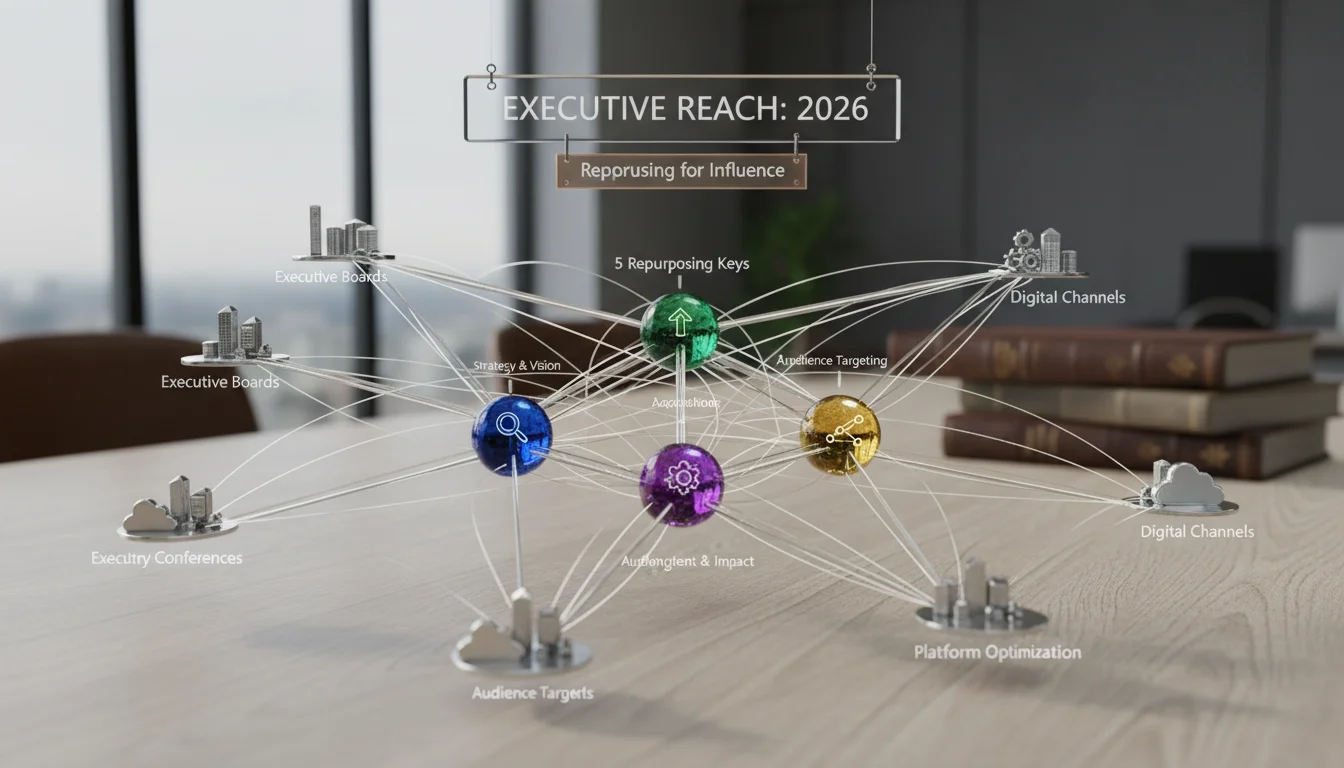
| Repurposing Key | Strategic Amplification | Audience-Centric Tailoring | Automated Efficiency |
|---|---|---|---|
| Identifies Core Messages | ✓ Yes | ✗ No | ✗ No |
| Segments Audience | ✗ No | ✓ Yes | ✗ No |
| Structured Content Calendar | ✓ Yes | ✗ No | ✗ No |
| Measures Engagement Metrics | ✓ Yes | Partial (for tailored content) | ✗ No |
| Invests in Automation Tools | ✗ No | ✗ No | ✓ Yes |
| Focuses on Multi-Platform Reach | ✓ Yes | ✓ Yes | ✗ No |
| Improves ROI (3x increase) | ✓ Yes | ✓ Yes | ✓ Yes |
Implementing a Scalable Repurposing Workflow
Transforming a content strategy to embrace repurposing requires a structured workflow. It’s not an ad-hoc process; it needs planning, clear roles, and efficient tools. Without a defined system, even the best intentions can dissolve into disorganization. We begin by establishing a content calendar that not only schedules original content but also maps out all its potential derivatives. This calendar should be a living document, reflecting shifts in priorities and emerging opportunities.
A typical workflow might look like this:
- Content Ideation & Creation: The executive or their team produces the foundational piece (e.g., a keynote speech, a whitepaper, an interview).
- Core Message Identification: A content strategist or editor reviews the original piece to identify key themes, data points, and quotable sections.
- Format & Channel Planning: Based on the core messages and target audiences, a plan is developed for specific repurposed assets (e.g., 3 blog posts, 5 social graphics, 1 video).
- Asset Creation: Dedicated teams or individuals (writers, designers, video editors) create the repurposed assets. This is where efficiency tools truly shine. Text-to-speech software can quickly generate audio snippets, while template-based design tools can produce branded graphics in minutes.
- Review & Approval: All repurposed content undergoes a review process, ensuring accuracy, brand consistency, and executive approval.
- Distribution & Scheduling: Assets are scheduled for publication across relevant platforms using content management systems and social media schedulers.
- Performance Tracking: Metrics for each repurposed asset are monitored to understand what resonates best with different audiences. This feedback loop is absolutely vital. What performs well on LinkedIn might flop on Instagram, and understanding those nuances is how we refine our strategy over time.
This structured approach ensures that the executive’s time commitment remains minimal after the initial content creation, while the output and reach maximization are significantly amplified. It transforms content creation from a series of isolated events into a continuous, interconnected campaign.
Measuring Impact and Refining Strategy
The true value of any marketing strategy lies in its measurable impact. For content repurposing, this means going beyond vanity metrics. We need to understand how each repurposed asset contributes to overall executive reach, engagement, and ultimately, business objectives. This requires a robust analytics framework.
We track metrics such as:
- Engagement Rate: Likes, shares, comments, and saves across social platforms.
- Click-Through Rate (CTR): How many people clicked on links embedded in the repurposed content.
- Time on Page/Video View Duration: For blog posts or videos, this indicates how deeply the audience engaged.
- Lead Generation: Did a specific repurposed asset drive sign-ups, downloads, or inquiries?
- Brand Mentions & Sentiment: How is the executive’s message being discussed online?
- Website Traffic: Is repurposed content driving traffic back to the executive’s bio, company website, or specific landing pages?
By analyzing these metrics, we gain insights into which formats, channels, and messages resonate most effectively with different segments of the audience. For example, if short-form video snippets derived from a longer interview consistently generate high engagement on Instagram, we know to prioritize more of that format. Conversely, if detailed infographics on LinkedIn receive minimal interaction, we might reconsider that approach or refine its presentation. This iterative process of measurement and refinement ensures that the repurposing strategy remains agile and continually improves, preventing wasted effort and maximizing the executive’s influence. It’s not a one-and-done; it’s an ongoing conversation with your audience, guided by data.
Strategic content repurposing is no longer an optional add-on; it’s a fundamental pillar of effective executive communication. By systematically transforming core messages into diverse formats, you extend an executive’s influence far beyond the initial publication, ensuring their insights drive continuous value and engagement.
What is content repurposing in the context of executive communication?
Content repurposing for executive communication involves taking a primary piece of content, such as a speech, whitepaper, or interview, and transforming its core messages into multiple new formats for different platforms and audiences. This maximizes the reach and lifespan of the executive’s insights.
Why is repurposing content important for executives?
It’s important because executives have limited time for content creation. Repurposing allows them to maintain a consistent, authoritative presence across various channels without constantly producing new ideas, amplifying their thought leadership and efficiency.
What types of content can be repurposed from an executive’s original work?
Almost any original executive content can be repurposed. Examples include converting a keynote speech into blog posts, social media updates, video highlights, infographics, podcast segments, or even email newsletters.
How do you decide which platforms to use for repurposed executive content?
Platform selection depends on the target audience for each repurposed asset. For B2B audiences, LinkedIn and industry publications are effective. For broader brand awareness, platforms like Instagram or X might be more suitable. The choice is always audience-driven.
What are the key benefits of a strong content repurposing strategy for executive reach?
The key benefits include increased brand visibility, enhanced executive thought leadership, improved efficiency in content production, better audience engagement through diverse formats, and a stronger return on investment for original content.


