 By Angela Thomas
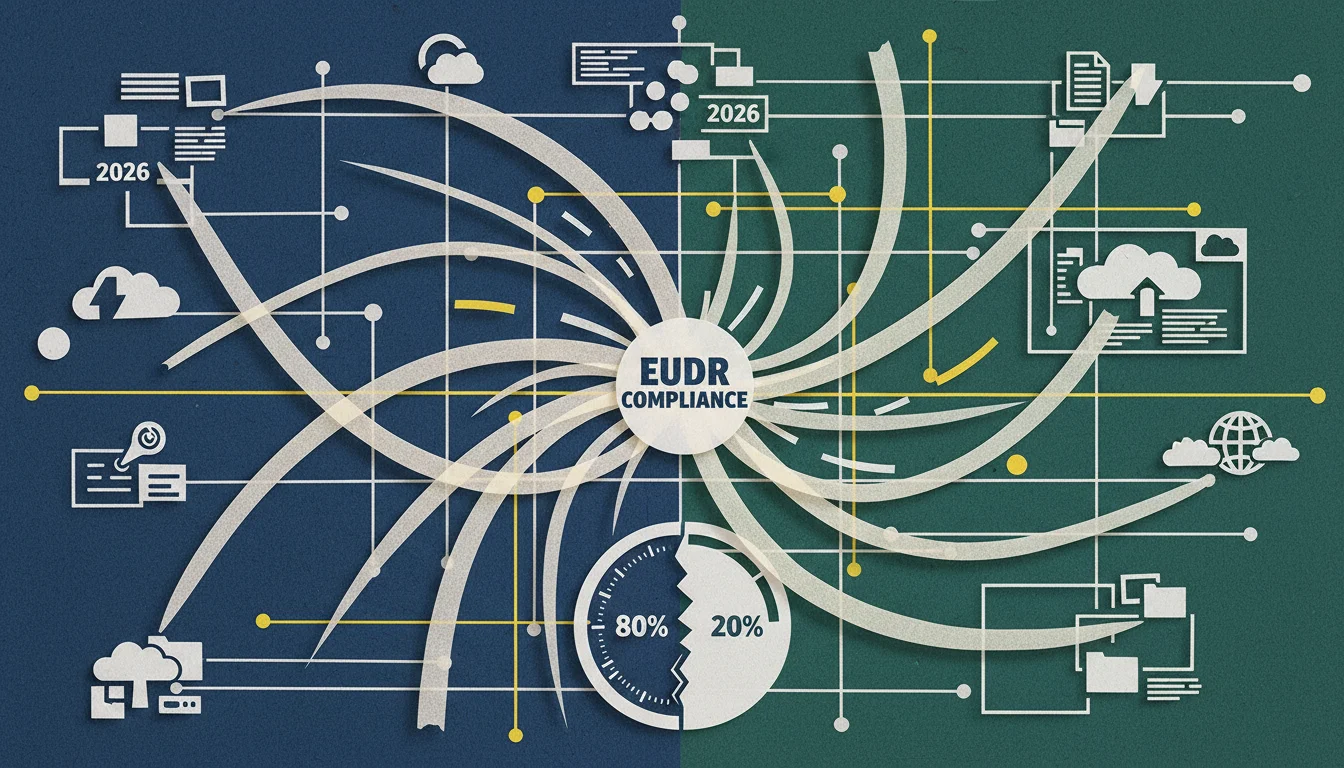
By 2026, an estimated 80% of businesses importing or exporting commodities covered by the EU Deforestation Regulation (EUDR) will face significant operational overhauls, yet only a fraction have fully integrated these changes into their content planning. This regulatory shift demands a proactive, data-driven approach to communication, not just compliance. How prepared is your organization to articulate its journey towards deforestation-free supply chains?
Key Takeaways
- Businesses must integrate traceability data directly into their content strategy by Q4 2025 to meet EUDR due diligence requirements.
- A verifiable 50% reduction in deforestation-linked commodity sourcing must be demonstrable through public-facing content channels by the end of 2026.
- Content teams need direct access to supply chain data platforms to generate credible, auditable claims for EUDR compliance.
- The cost of non-compliance, including potential fines and market exclusion, can exceed 4% of annual turnover, necessitating strong content to mitigate reputational damage.
- Strategic content planning must articulate a clear path to compliance, moving beyond generic sustainability statements to specific, traceable actions.
72% of Consumers Expect Transparency, EUDR Demands It
The consumer field has shifted dramatically, with a recent NielsenIQ report indicating that 72% of global consumers now actively seek out brands demonstrating environmental responsibility. This isn’t a preference. It’s a baseline expectation, and the EUDR codifies this expectation into law. For content strategists, this means generic “green” messaging no longer cuts it. Your content, whether it’s a product description, a corporate social responsibility report, or a social media campaign, must be underpinned by verifiable data directly linking your products to deforestation-free supply chains. I’ve seen countless brands struggle to bridge the gap between their marketing claims and the actual on-the-ground realities of their sourcing. The EUDR effectively makes this gap illegal for covered commodities.
Consider the practical implications: if your content highlights a new coffee blend, you can’t just say it’s “sustainably sourced.” You need to be prepared to show the geographic coordinates of the farms, the date of harvest, and evidence that those lands have not been subject to deforestation since December 31, 2020. This level of granular detail transforms content creation from a creative exercise into a data-driven reporting function. The content team, often seen as the “storytellers,” now becomes an important part of the compliance framework, responsible for communicating complex supply chain due diligence in an accessible, credible manner.
Only 15% of Companies Have Integrated Supply Chain Traceability Tools with Content Platforms
Despite the looming 2026 deadline, a eMarketer analysis from late 2025 revealed that a mere 15% of companies impacted by EUDR have successfully integrated their supply chain traceability systems with their content management systems (CMS) or marketing automation platforms. This statistic is alarming. It suggests a significant disconnect between operational compliance efforts and the outward-facing communication strategy. Without this integration, generating the required verifiable claims for content becomes a manual, error-prone, and in the end unsustainable process. You’re effectively asking content creators to become data analysts, sifting through spreadsheets and certification documents for every single claim. That’s a recipe for delays, inconsistencies, and potential regulatory scrutiny.
My advice to clients is always direct: your content team needs direct API access or strong, automated data feeds from your supply chain visibility platforms. Tools like TraceX or Sourcemap aren’t just for your procurement department. They are now foundational tools for your content strategy. Imagine being able to pull real-time, geolocated data for every batch of cocoa beans directly into your e-commerce platform, dynamically updating product pages with verifiable deforestation-free claims. That’s the standard EUDR demands, and anything less puts your brand at risk. The current state of integration is a critical bottleneck for many organizations, and overcoming it requires cross-departmental collaboration, not just a marketing initiative.
The Cost of Non-Compliance: Fines Up to 4% of Turnover
The EUDR isn’t just about good PR. It carries substantial penalties. The regulation stipulates that fines for non-compliance can reach up to 4% of a company’s annual turnover in the EU. For large multinational corporations, this translates into hundreds of millions of euros. Beyond direct financial penalties, there’s the equally damaging loss of market access. Non-compliant products will simply be barred from entering the EU market. This is where content planning becomes a defensive strategy.
A well-executed content strategy, transparently detailing your due diligence process, can serve as a critical component of your compliance defense. If a regulator audits your operations, your public-facing content, alongside your internal documentation, demonstrates your commitment and efforts. Conversely, vague or unsubstantiated claims in your marketing materials could be used as evidence of negligence. This isn’t theoretical. We’re already seeing early enforcement actions in other areas of environmental regulation. The reputational damage from being publicly identified as non-compliant can be irreversible, impacting consumer trust and shareholder confidence for years. Content, therefore, isn’t just about attracting customers. It’s about protecting the business itself from significant financial and reputational harm.
Only 30% of Marketing Budgets Allocate Funds for EUDR-Specific Content Development
A recent IAB report on global digital ad spend in 2025 highlighted that only 30% of marketing budgets among affected businesses specifically earmarked funds for content development related to regulatory shifts like EUDR. This underinvestment is a major concern. Creating the kind of detailed, data-rich content required by EUDR is not cheap. It necessitates new skill sets within content teams, investment in data integration tools, and potentially external expertise in supply chain transparency and regulatory communication. Many organizations still view sustainability content as an “add-on” or a “nice-to-have,” rather than a core strategic imperative.
This oversight is particularly glaring when considering the potential returns. Brands that demonstrably achieve and communicate EUDR compliance effectively will gain a significant competitive advantage. They will not only maintain market access but also appeal to the growing segment of environmentally conscious consumers. The 70% of companies neglecting this budgetary allocation are essentially gambling with their future market position. My firm belief is that the content budget for EUDR compliance should be treated with the same gravity as legal or operational compliance budgets. It’s a cost of doing business, not an optional marketing expense. Companies that understand this and invest proactively will be the ones that thrive in the new regulatory environment.
The Conventional Wisdom: “Greenwashing is Fine if You Don’t Get Caught” is Dead
There’s a persistent, albeit cynical, conventional wisdom in some marketing circles that “greenwashing” is an acceptable risk, particularly if the claims are vague enough to avoid direct challenge. The EUDR effectively eliminates this strategy for covered commodities. This isn’t a regulation that allows for ambiguity. It demands verifiable proof of origin and deforestation-free status. Any content that makes sustainability claims without this underlying data is not merely misleading. It’s a direct violation of a legally binding regulation.
I’ve had conversations with marketing leaders who still believe they can navigate these waters with clever phrasing and aspirational statements. My response is always the same: the regulatory field of 2026 is fundamentally different. Regulators are equipped with satellite imagery, AI-driven deforestation monitoring, and advanced data analytics. They will cross-reference your public claims with actual supply chain data. The era of superficial sustainability messaging is over. Your content strategy must reflect genuine, verifiable action, not just good intentions. This shift requires a fundamental change in mindset, from viewing content as purely promotional to understanding it as an integral part of your digital reputation scorecards and risk mitigation strategy.
The EUDR’s 2026 implementation is not merely a compliance hurdle. It’s a catalyst for radical transparency in supply chain communication. Marketing and content teams must pivot from broad, aspirational messaging to data-backed, verifiable claims, investing in the necessary tools and expertise to articulate their deforestation-free journey effectively. This directly impacts brand loyalty and trust in the long run, and could even influence overall AI in commerce strategies for building trust.
What specific commodities are covered by the EUDR?
The EUDR covers a range of commodities including palm oil, cattle, soy, coffee, cocoa, timber, and rubber, as well as products derived from these commodities, such as chocolate, leather, and printed paper.
When does the EUDR officially come into effect for most companies?
The EUDR largely comes into force on December 30, 2024, but for small and medium-sized enterprises (SMEs), some obligations, particularly those related to due diligence statements, extend until June 30, 2025.
What kind of data do content teams need access to for EUDR compliance?
Content teams require access to precise geolocation data for production sites, dates of production, proof of legal land use, and evidence that the land has not been deforested or degraded since December 31, 2020, for each batch of covered commodities.
How can content help mitigate the risk of EUDR non-compliance fines?
Transparent, data-backed content demonstrating a strong due diligence process, consistent monitoring, and corrective actions can serve as evidence of good faith efforts and commitment to compliance, potentially reducing the severity of penalties in case of an audit.
Are there any specific digital platforms that aid in EUDR content creation and verification?
While no single platform provides a complete solution, integrating supply chain traceability platforms like Everledger or SAP’s Responsible Design and Production with content management systems is becoming critical for automating content generation with verifiable data.


