 By Editorial Team
Making a real impact with your brand means your content has to be seen, engaged with, and acted on. The work isn’t over when you hit “publish.” The strategic push to get it out there is called content activation, and it’s what separates brands that get real conversions from those that just fill up a blog. If you’ve crafted great content, you can’t just let it sit in a digital archive. It has to actively work for you and drive your objectives.
Key Takeaways
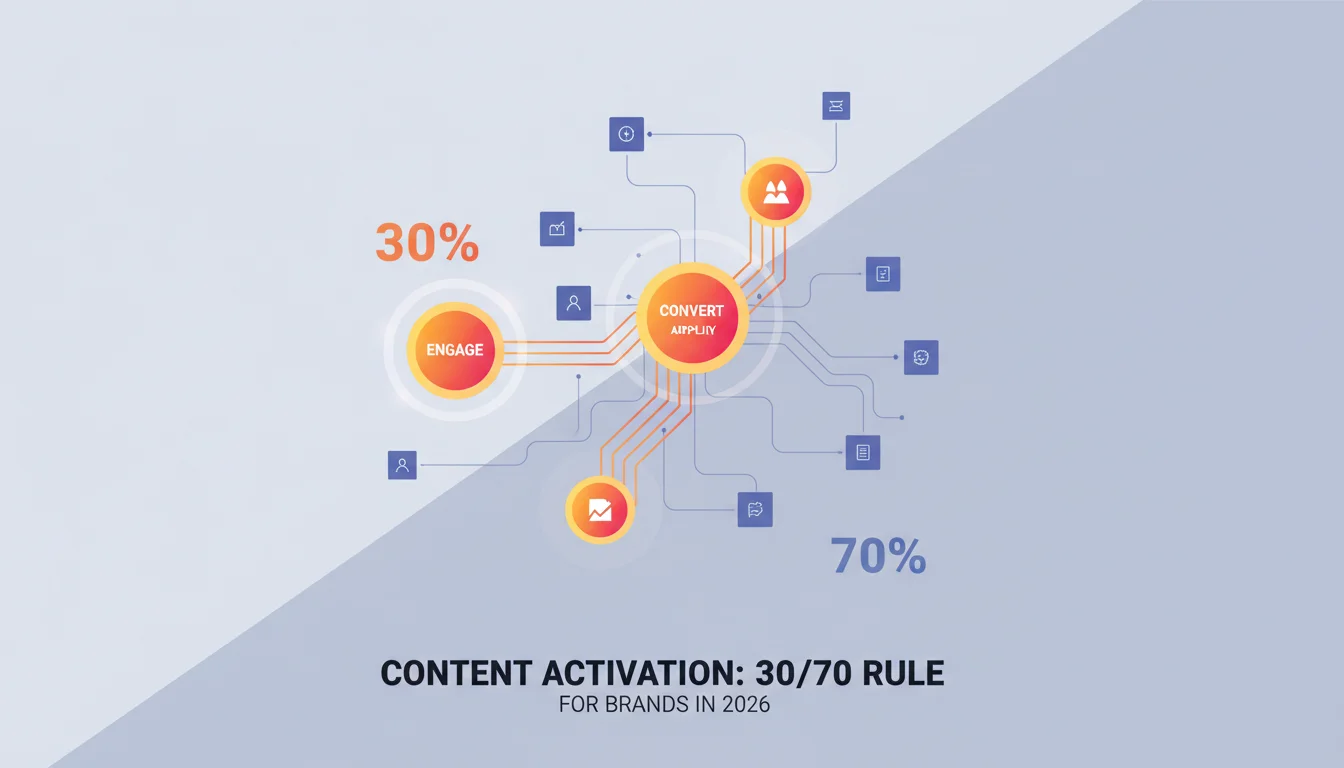
- Stick to a 30/70 rule: spend at least 30% of your content budget and time on activation, not just creation.
- Get into platforms like Google Ads and Meta Business Suite and actually use their A/B testing features on ad creative and landing pages to see what messaging works.
- Set up retargeting campaigns for website visitors and people who’ve engaged with your stuff. You’ll see conversion rates up to 10 times higher than with cold prospecting.
- Stop obsessing over vanity metrics. You justify activation spend with engagement rate, conversion rate, and return on ad spend (ROAS).
1. Define Your Activation Goals and Target Audience with Precision
Before you push a single piece of content out, you need to know exactly what you want it to accomplish and who you’re trying to reach. This means defining specific, measurable outcomes like lead generation, a bump in website traffic, better brand sentiment, or direct sales. Your goal determines your entire activation strategy.
Start by building out your ideal customer profiles (ICPs). You need to know their psychographics, their biggest pain points, and their digital hangouts. You have to know which platforms they use and what kind of language they respond to. For example, if you’re targeting B2B tech executives, you’ll be spending your time and money on LinkedIn, whereas reaching Gen Z means you’re probably on TikTok or Instagram Reels. It’s no surprise that an eMarketer report projected B2B digital ad spending to blow past $20 billion by 2025, with most of it going to professional networking sites.
Pro Tip:
Go into your CRM or marketing automation platform and create detailed audience segments. If you have an email list, for instance, you can segment it based on who opens your emails, what they’ve bought in the past, or what interests they’ve told you they have. This is how you get the right content to the right person, making it far more relevant and powerful.
Common Mistake:
The most common mistake is creating a generic piece of content and then trying to shotgun it out to completely different audiences. All this does is dilute your message and make your activation efforts fall flat. You have to tailor the content for each key audience, or at the very least, adapt the intro and call to action for each segment.
2. Map Content to the Buyer’s Journey
Good content activation is about surgical precision: delivering the right message at the right time in the buyer’s journey. You have to think in terms of the awareness, consideration, and decision stages. Someone just becoming aware of a problem needs broad, educational content, but a person deep in the decision stage is looking for detailed product comparisons, case studies, or testimonials to make a final choice.
Here’s a practical example: a blog post like “5 Common Challenges in Cloud Security” is for the awareness stage, so you’d promote it through SEO and organic social. A whitepaper that compares your solution to a competitor’s is for the consideration stage, which you could offer as gated content promoted with LinkedIn ads targeting specific job titles. Finally, something like a customer success story or a free demo offer is for the decision stage, perfect for pushing to retargeting audiences who’ve already seen your other content.
Screenshot Description:
Imagine a content calendar in a tool like Asana or monday.com where you have everything color-coded by the buyer’s journey stage (maybe green for awareness, yellow for consideration, and red for decision). Each content entry would be tied to specific distribution channels and audience segments, laying the whole strategy out visually.
3. Implement a Multi-Channel Distribution Strategy
Your content can’t just live on your website. A real activation strategy uses a mix of owned, earned, and paid channels to get it in front of as many people as possible, as many times as possible.
- Owned Channels: This is your website, blog, email list, and organic social profiles. You own these, so you control the message entirely. Make sure your site is optimized for search (SEO) using tools like Semrush or Ahrefs to find the right keywords and see how your content is ranking in search results.
- Earned Channels: This is free amplification from others, like PR, media mentions, influencer collaborations, guest posts, and organic shares. Taking the time to build relationships with industry journalists and influencers pays off in huge ways with earned media.
- Paid Channels: This is search engine marketing (SEM), social media ads, native advertising, and content syndication. This is how you get precise targeting and scale your reach fast. Platforms like Google Ads and Meta Business Suite give you incredibly detailed targeting options.
Pro Tip:
I’d seriously consider a content syndication strategy for your big assets like research reports and whitepapers. Using platforms like Outbrain or Taboola, you can get your content onto major publisher sites and in front of relevant audiences you’d never reach otherwise. We’ve seen clients get a much lower cost-per-lead for certain B2B content this way than with direct social ads, especially for niche topics.
4. Optimize Paid Promotion Campaigns for Content Engagement
Paid promotion is how you really scale content activation. Stop just “boosting” posts and start designing actual, structured campaigns. In Google Ads, for example, you can set up a Discovery campaign that shows your content across the Google feeds, YouTube, and Gmail. On social, pick campaign objectives in Meta Business Suite that actually match your content goals, like “Traffic,” “Engagement,” or “Lead Generation.”
You have to **A/B test everything**: headlines, ad copy, images, calls to action (CTAs), and even the landing page itself. I’ve seen a small tweak to a headline change click-through rates (CTRs) dramatically. For one client, we saw a 25% lift in e-book downloads just by A/B testing five different ad creatives and landing page layouts. The built-in testing tools in Google Ads and Meta are there for a reason, use them to systematically figure out what works.
Screenshot Description:
This would look like the “Experiments” section inside Google Ads, where you can see an A/B test running between two different headlines for a content ad. The dashboard would show you the impressions, clicks, and conversion rates for each version side-by-side, so you know which one is winning.
Common Mistake:
A classic mistake is blowing the budget on creation and leaving nothing for activation. Too many brands follow an 80/20 rule, spending 80% of their money making the content and only 20% promoting it. From my experience, it should be closer to 30/70, with the bulk of your resources going to activation, especially if you’re trying to hit aggressive growth targets. If you went to the trouble of making valuable content, you have to invest in getting it seen.
5. Use Retargeting and Nurturing Sequences
The best activation strategies keep working after the first click. You need to use strategic retargeting and nurturing sequences to re-engage anyone who showed interest and guide them down the funnel.
It’s simple: create custom audiences in Google Ads and Meta Business Suite based on what people did. For example, you can target:
- People who visited a specific blog post but didn’t sign up.
- Viewers who watched at least 75% of your video ad.
- Users who downloaded your top-of-funnel whitepaper but haven’t looked at a case study yet.
Once you have those audiences, you serve them follow-up content that addresses their next logical question. If someone read your blog post on data privacy challenges, you retarget them with an ad for your whitepaper on solving those challenges with your product. This kind of personalization works. HubSpot research consistently finds that retargeting campaigns can pull in conversion rates up to 10 times higher than standard display ads.
Pro Tip:
The next step is to connect all this to your email marketing automation. As soon as you get a lead from a gated content download, they should be automatically enrolled in a targeted email nurture sequence. That sequence then drips out a series of related, helpful content over a few weeks, warming them up for a sales call or a direct purchase.
6. Measure, Analyze, and Iterate
Activation is never a ‘set it and forget it’ job. It’s a constant process of tweaking and refinement. You have to establish clear Key Performance Indicators (KPIs) that go past vanity metrics like page views. Focus on the metrics that tie directly to your original goals:
- Engagement Rate: Clicks, shares, comments, and actual time spent on the page.
- Conversion Rate: How many people are filling out lead forms, requesting demos, or buying.
- Cost Per Acquisition (CPA) / Cost Per Lead (CPL): A direct measure of how efficient your paid ads are.
- Return on Ad Spend (ROAS): The money you’re making for every dollar you spend on ads.
Get into Google Analytics 4 (GA4) to see how users behave on your site and live in the native analytics of Google Ads and Meta Business Suite to monitor your campaigns. You have to review the data constantly, figure out what’s working so you can double down, and identify what’s failing so you can kill it or fix it. When you see a certain ad creative is crushing it with a specific audience, or one type of content gets way more conversions? Do more of that.
Common Mistake:
Don’t ignore the losers. Not every piece of content will be a winner, and not every campaign will work out of the gate. The whole game is about learning from what doesn’t work. If a campaign is missing its CPL target, you have to pause it, dig into the creative and targeting, and try something else. In my opinion, brands that don’t embrace this cycle of iteration are just lighting money on fire, paying for content that never does anything.
The whole point of balancing content creation with activation is to get real results, not just to make noise. By strategically defining your audience, mapping content to their journey, using a mix of channels, optimizing your paid ads, using retargeting, and constantly analyzing performance, you can turn your content from a cost center into a growth engine. To see how this works at a massive scale, check out how BlackRock’s 2026 strategy achieved its CPL goals.
What is the primary difference between content marketing and content activation?
Content marketing is the whole process: creating, publishing, and distributing content. Content activation is the specific, strategic part focused on promotion and distribution to make sure that content actually reaches people and hits your business goals. It ensures your content performs instead of just existing.
How much budget should be allocated to content activation versus content creation?
There’s no single rule, but a good starting point is dedicating at least 30% of your total content budget to activation. If you’re a new brand or you’re trying to grow fast, that ratio can easily climb to 50% or even higher. You need to invest to get traction.
Can content activation be effective without paid promotion?
Yes, but your reach and speed will be limited. Organic activation depends entirely on strong SEO, your email list, and earned media (like PR or influencer shares). Paid promotion is what gives you immediate, scalable reach and precise targeting which is why it’s a critical part of any serious activation plan.
What are some key metrics to track for content activation success?
Forget page views. Focus on engagement rate (time on page, shares), conversion rate (form fills, downloads, sales), cost per acquisition (CPA) or cost per lead (CPL) from your paid campaigns, and especially return on ad spend (ROAS). These tell you the real financial story of your efforts.
How often should content activation strategies be reviewed and adjusted?
You should be checking in on active campaigns weekly, or bi-weekly at the minimum. For a bigger picture, do a full review every month to spot larger trends, see how you’re doing long-term, and make strategic changes based on how audiences and platforms are evolving.


