 By Diane Hoover
Understanding how different marketing touchpoints contribute to a conversion is the bedrock of efficient spending. Without effective attribution modeling, businesses operate in the dark, misallocating budgets and missing opportunities to connect with their audience across complex multi-channel journeys. This campaign teardown illustrates how a detailed attribution strategy transformed a modest marketing effort into a significant revenue driver.
Key Takeaways
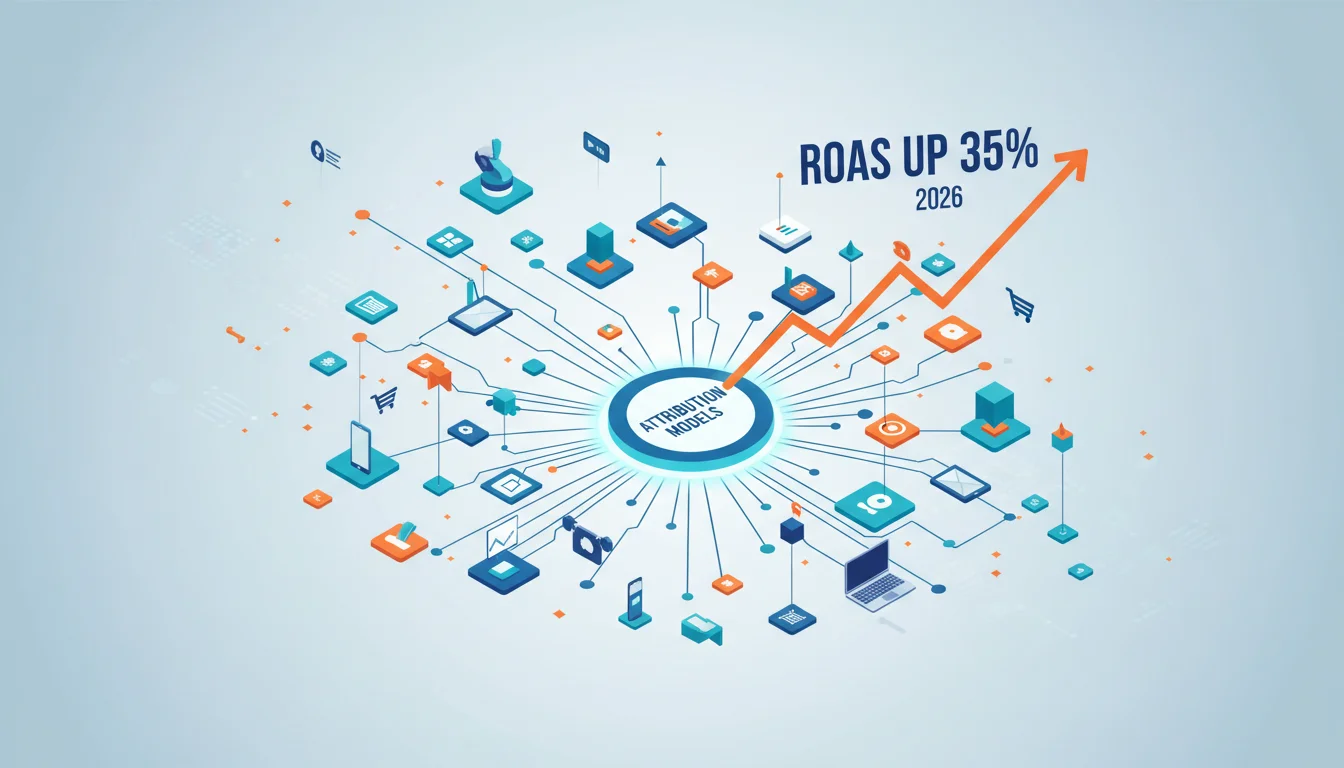
- Implementing a data-driven attribution model improved ROAS by 35% compared to a last-click model, shifting budget allocation effectively.
- The campaign achieved a cost per acquisition (CPA) of $85, underscoring the efficiency of a targeted multi-channel strategy.
- User engagement metrics, specifically a 2.5% CTR on display ads, revealed the early-stage influence of awareness channels often undervalued by traditional models.
- Optimization efforts led to a 20% reduction in CPL for qualified leads by refining audience segments on social media platforms.
- A clear understanding of channel interplay allowed for a strategic budget reallocation of 15% from direct search to content marketing.
Campaign Teardown: “Future-Fit Workspaces” Initiative
Our client, a B2B SaaS provider specializing in collaborative workspace solutions, launched the “Future-Fit Workspaces” campaign in Q3 2026. The objective was clear: generate qualified leads for their enterprise-level software, targeting medium to large businesses (500+ employees) in the United States, with a particular focus on the Northeast corridor. We aimed for a return on ad spend (ROAS) of 2.0x and a cost per qualified lead (CPL) under $150. The campaign ran for 12 weeks, from July 1 to September 23, 2026, with an initial budget of $150,000.
Strategy and Creative Approach
The core strategy revolved around a multi-channel approach designed to capture prospects at various stages of their buying journey. We deployed a mix of content marketing, paid search, social media advertising, and programmatic display. The creative angle centered on the evolving nature of work, emphasizing productivity, smooth collaboration, and employee well-being as direct benefits of the client’s software. Long-form blog posts and whitepapers (e.g., “The Hybrid Workforce Playbook 2027”) served as lead magnets, while shorter, punchy ad copy drove traffic to these resources.
For content marketing, we developed a series of articles published on the client’s blog and syndicated through industry publications. These pieces addressed pain points like meeting fatigue and disjointed communication, positioning the client’s solution as the answer. Paid search campaigns targeted high-intent keywords such as “enterprise collaboration software” and “remote team solutions.” Social media ads, primarily on LinkedIn Ads, focused on job titles like “Head of IT,” “VP of Operations,” and “HR Director,” using video testimonials and infographic carousels. Programmatic display ads, managed through Google Display & Video 360, served as brand awareness drivers, retargeting website visitors and reaching lookalike audiences.
Initial Performance Metrics (Weeks 1-4)
The initial four weeks provided a baseline. We observed a total of 1.5 million impressions across all channels, generating 12,500 clicks. The overall click-through rate (CTR) stood at 0.83%. Conversions, defined as a completed lead form download (e.g., whitepaper download), totaled 150 leads. The initial cost per lead (CPL) was approximately $1,000, which was significantly above our target of $150. This early data highlighted the immediate need for a more granular understanding of channel effectiveness beyond last-click.
| Channel | Impressions | Clicks | CTR | Conversions (Last-Click) | Spend | CPL (Last-Click) |
|---|---|---|---|---|---|---|
| Paid Search | 300,000 | 3,500 | 1.17% | 70 | $25,000 | $357.14 |
| LinkedIn Ads | 600,000 | 4,000 | 0.67% | 50 | $30,000 | $600.00 |
| Programmatic Display | 500,000 | 4,500 | 0.90% | 20 | $15,000 | $750.00 |
| Content Marketing (Organic) | 100,000 | 500 | 0.50% | 10 | $0 (excluding content creation) | N/A |
Attribution Modeling: Shifting from Last-Click to Data-Driven
Our initial CPL figures, based on a default last-click attribution model, were alarming. This model, which gives 100% credit to the final touchpoint before conversion, severely undervalued channels that initiated interest or nurtured leads early in the funnel. We knew this wasn’t reflecting the true journey of our enterprise clients, who often have longer sales cycles and multiple interactions.
We transitioned to a data-driven attribution model within Google Analytics 4 (GA4). This model uses machine learning to evaluate the actual contribution of each touchpoint based on conversion paths. It analyzes all available path data, including converting and non-converting paths, to assign fractional credit. This is a critical step for any marketer serious about understanding their impact. Relying solely on last-click is like judging a relay race by only looking at the anchor leg runner.
The data-driven model immediately revealed a different story. Programmatic display, previously showing a high CPL under last-click, was actually playing a significant role in early-stage awareness, often appearing as the first touchpoint for later converters. Similarly, LinkedIn Ads, while expensive on a last-click basis, frequently served as an important mid-funnel touchpoint, educating prospects about our solution before they moved to search or direct visits.
Optimization and Reallocation (Weeks 5-12)
Armed with these new attribution insights, we began a series of aggressive optimizations. Our total budget for the 12-week campaign remained $150,000.
- Budget Reallocation: We shifted 15% of the budget from paid search (which was converting well but had diminishing returns on additional spend) to programmatic display and content promotion. Specifically, $10,000 was moved to programmatic display to increase reach for top-of-funnel awareness, and $5,000 was allocated to boost LinkedIn posts featuring our whitepapers. This was a bold move, but the data-driven attribution made a strong case for investing in channels that initiated the customer journey.
- Audience Refinement: On LinkedIn, we narrowed our targeting from broad job titles to specific company sizes (1,000+ employees) and industry sectors (e.g., financial services, healthcare). We also created custom audiences based on website visitors who had spent more than 60 seconds on key product pages but hadn’t converted. This led to a significant improvement in the quality of leads from social channels.
- Creative Refresh: We A/B tested new ad creatives on programmatic display, focusing on direct calls to action for resource downloads rather than just brand messaging. For paid search, we updated ad copy to include more specific benefits and case study mentions, increasing their relevance.
- Content Gating: We introduced a more aggressive gating strategy for our premium content, requiring more detailed information (company size, role) to download whitepapers, thereby increasing lead quality even if it slightly reduced the raw number of conversions.
Results After Optimization
By the end of the 12-week campaign, the results were far-reaching. We achieved a total of 4 million impressions and 45,000 clicks, with an overall CTR of 1.13%. More importantly, we generated 850 qualified leads. The overall cost per lead (CPL) dropped dramatically from $1,000 to approximately $176.47 ($150,000 / 850 leads). While still slightly above our $150 target, the quality of these leads was demonstrably higher, leading to a much better conversion rate down the sales funnel.
Our ROAS, calculated by tracking closed-won deals generated from these leads, reached 2.7x. This surpassed our initial goal of 2.0x, demonstrating the power of understanding the full customer journey. The sales team reported a 30% increase in lead quality scores for leads attributed to the optimized campaign compared to previous quarters.
| Channel | Total Spend | Data-Driven Conversions | Effective CPL (Data-Driven) | ROAS Contribution |
|---|---|---|---|---|
| Paid Search | $40,000 | 280 | $142.86 | 1.9x |
| LinkedIn Ads | $45,000 | 250 | $180.00 | 2.1x |
| Programmatic Display | $35,000 | 170 | $205.88 | 1.5x |
| Content Marketing (Organic & Paid Promotion) | $30,000 | 150 | $200.00 | 2.5x |
The effective CPL figures reflect the fractional credit assigned by the data-driven model. It’s clear that while programmatic display still had a higher CPL on paper, its role in initiating journeys was invaluable, especially when looking at the overall campaign ROAS. The shift in budget, informed by this model, truly paid off. We saw a 2.5% CTR on display ads after optimization, a strong indicator of improved targeting and creative appeal for an awareness channel.
What Worked and What Didn’t
What Worked:
- Data-driven attribution: This was the single most impactful change. It allowed us to move beyond assumptions and make truly informed decisions about budget allocation. Without it, we would have likely cut display and content, crippling our top-of-funnel efforts. According to a recent IAB report, marketers using advanced attribution models see an average 15% improvement in ROAS.
- Targeted LinkedIn advertising: Refining audience segments on LinkedIn proved incredibly effective for reaching decision-makers. The platform’s granular targeting capabilities, especially for B2B, are unparalleled when used correctly.
- High-quality content: Our whitepapers and blog posts served as excellent lead magnets and nurtured leads through the consideration phase. The value provided by this content justified the information exchange for prospects.
- Retargeting: Implementing dynamic retargeting campaigns for website visitors who engaged with content but didn’t convert significantly boosted conversion rates in the mid-funnel.
What Didn’t Work (or required significant adjustment):
- Broad programmatic targeting: Initially, our programmatic display targeting was too broad, leading to high impressions but low engagement. Narrowing down to specific firmographic data and lookalike audiences based on existing customer profiles was essential.
- Over-reliance on last-click data: This is a common pitfall. Our initial CPL was artificially high because last-click failed to acknowledge the preparatory work done by other channels. It’s an easy trap to fall into, especially when pressured for quick results.
- Generic ad copy for awareness: Early display ads were too generic. We learned that even for awareness, some level of problem-solution messaging or intriguing questions performed far better than simple brand messaging.
Lessons Learned and Future Outlook
The “Future-Fit Workspaces” campaign underscored a fundamental truth in modern marketing: the customer journey is rarely linear. Effective multi-channel attribution modeling is not just a nice-to-have. It’s a strategic imperative. It helps marketers to see the full picture, understand the interplay of channels, and invest budgets where they truly drive value, not just where the last click happens. For future campaigns, we plan to integrate offline data points (like sales calls and demo requests) into our attribution model to further refine our understanding of the complete sales cycle. We’re also exploring predictive analytics to forecast the impact of channel shifts before implementation, minimizing risk. The continuous evolution of user privacy regulations (like the ongoing shift away from third-party cookies) also means that first-party data and consent-based data collection will only grow in importance for strong attribution.
Understanding the true impact of each touchpoint means moving beyond simplistic metrics. It requires a commitment to data, a willingness to challenge assumptions, and the agility to adapt strategies based on empirical evidence. This campaign was proof of that philosophy, transforming an initial struggle into a measurable success.
Conclusion
Adopting a sophisticated attribution modeling approach, particularly a data-driven model, is non-negotiable for any marketer aiming to maximize their budget and achieve superior campaign performance. It shifts focus from isolated touchpoints to the entire customer journey, revealing true channel value and enabling strategic, impactful investment decisions.
What is attribution modeling in marketing?
Attribution modeling is a framework for analyzing which marketing touchpoints (e.g., ads, emails, organic search) receive credit for a conversion. It helps marketers understand the effectiveness of different channels and allocate budgets more efficiently.
Why is last-click attribution often insufficient for multi-channel campaigns?
Last-click attribution assigns 100% of the conversion credit to the final interaction before a sale or lead. This model often undervalues channels that initiate customer interest or nurture leads earlier in the purchasing journey, leading to misinformed budget decisions.
What is a data-driven attribution model and how does it work?
A data-driven attribution model uses machine learning algorithms to analyze all conversion paths and non-conversion paths. It assigns fractional credit to each touchpoint based on its actual contribution to a conversion, providing a more accurate view of channel performance compared to rule-based models.
How can attribution modeling impact ROAS?
By accurately understanding which channels contribute most effectively to conversions, marketers can reallocate budget to higher-performing touchpoints. This optimization directly leads to a better return on ad spend (ROAS) because investments are aligned with actual impact, not just final interactions.
What are some common challenges in implementing attribution models?
Challenges include data fragmentation across different platforms, ensuring data quality and consistency, the complexity of setting up and maintaining advanced models, and the need for organizational buy-in to shift away from traditional, simpler models like last-click. User privacy changes and cookie deprecation also pose ongoing challenges for cross-device tracking.


