 By Eliza Aguilar
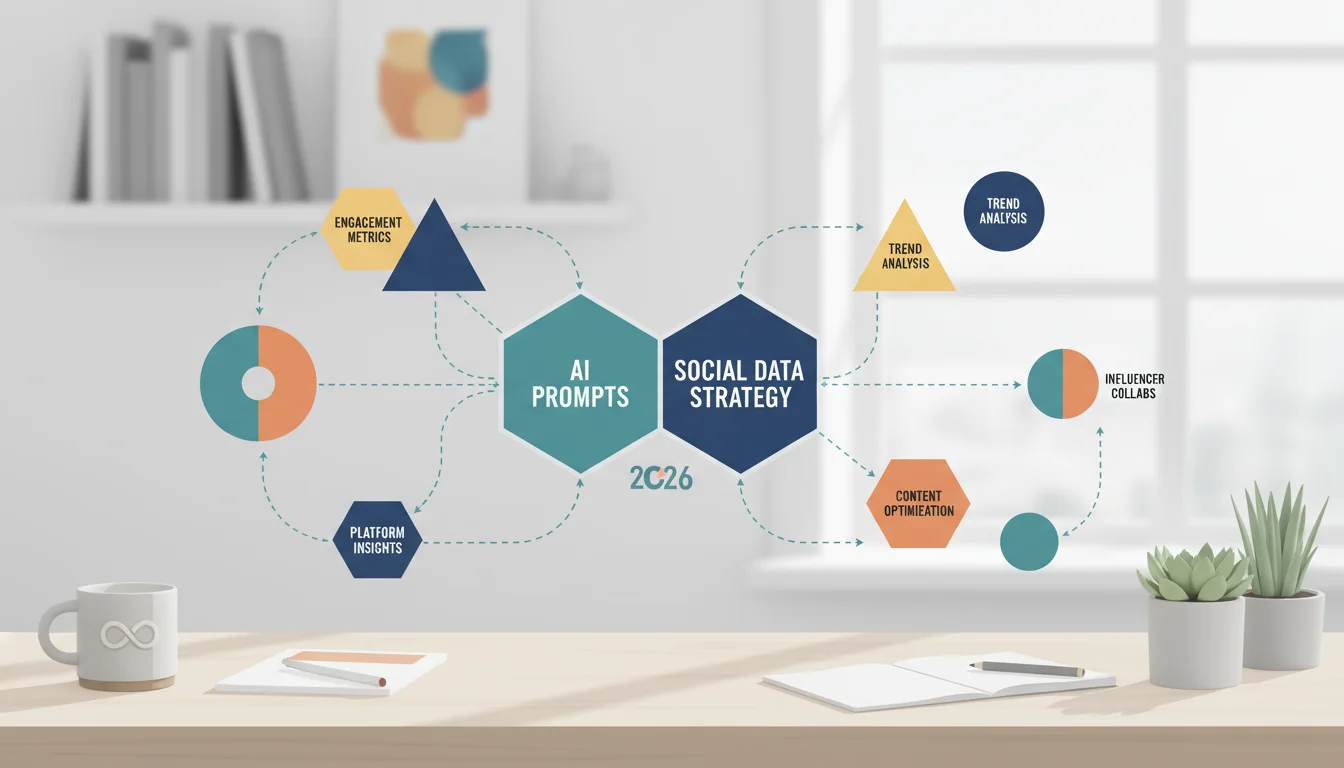
The strategic application of AI prompts for social media data analysis transforms raw metrics into actionable insights, providing a clear competitive advantage in a crowded digital space. Brands that master this process move beyond rudimentary reporting, uncovering nuanced audience behaviors and content performance patterns. How can businesses truly use AI to dissect their social media data effectively?
Key Takeaways
- Implement AI prompts to identify specific audience segments showing high engagement with particular content formats, such as short-form video or interactive polls, to inform future content strategy.
- Use AI-driven sentiment analysis on social media comments and reviews to pinpoint emerging customer pain points or positive product associations, allowing for proactive brand reputation management.
- Employ AI prompts to correlate peak engagement times with content types across different platforms, optimizing posting schedules for maximum reach and interaction.
- Generate AI prompts that compare competitor social media performance against your own, revealing content gaps or untapped audience demographics.
Deconstructing Social Data with AI Prompts
Social media platforms generate an astonishing volume of data daily. From likes and shares to comments and direct messages, each interaction provides a piece of the puzzle regarding audience preferences and content efficacy. Historically, sifting through this data required extensive manual effort or reliance on predefined dashboards that often missed subtle but significant trends. The advent of AI, specifically large language models (LLMs), changes this model entirely, allowing marketers to ask complex, open-ended questions of their data and receive coherent, insightful answers.
Consider the process: instead of merely looking at “total likes” on a post, an AI prompt can analyze the qualitative aspects of comments, categorize them by sentiment, identify recurring keywords, and even suggest underlying motivations behind those comments. For example, a prompt like “Analyze comments on our recent product launch post on LinkedIn for recurring themes related to product features, pricing, or customer service, and summarize overall sentiment” yields far more than a simple numerical count. This level of granular analysis is not just about reporting what happened, but understanding why it happened, and, importantly, what to do next. The ability to parse natural language at scale transforms unstructured data into structured insights, making it a foundation for informed decision-making.
Crafting Effective AI Prompts for Audience Insights
The power of AI in social media analysis hinges on the quality of the prompts. Vague prompts yield vague results. Effective prompts are specific, contextual, and direct the AI towards a particular analytical goal. When seeking audience insights, focus on prompts that explore demographics, interests, and behavioral patterns.
For instance, instead of asking “What do our followers like?”, a more effective prompt might be: “Identify the top three demographic segments (age, location, primary interests) that engaged most positively with our Instagram Reels in the last quarter, and provide examples of content themes that resonated with each segment.” This prompt provides specific parameters (demographic segments, platform, content format, timeframe) and requests actionable outputs (examples of content themes). Another valuable prompt could be: “Analyze Twitter mentions of our brand over the past six months, categorize them by sentiment, and identify any significant shifts in positive or negative perception following our recent marketing campaign. Provide specific examples of tweets that exemplify these shifts.” This type of detail guides the AI to perform a targeted analysis, rather than a broad, less useful summary. Marketers must learn to think like data scientists, even if they aren’t writing code. It’s about asking the right questions in the right way.
A key aspect of prompt engineering for social media involves specifying the data sources the AI should consider. While some AI tools integrate directly with social media APIs, others may require you to upload or specify access to exported data sets. Always clarify the scope. A prompt like “Compare engagement rates for Facebook posts containing user-generated content versus professionally produced content from January to March 2026, and identify which type generated higher click-through rates to our website” requires the AI to access specific performance metrics and content types, delivering a direct comparison that informs future content strategy.
Measuring Content Performance and Campaign Effectiveness
Understanding which content performs best and why is fundamental to successful social media marketing. AI prompts can move beyond simple metrics like reach or impressions to dissect the drivers of engagement and conversion. This deeper analysis allows for continuous refinement of content strategies and more effective allocation of marketing budgets. A recent eMarketer report highlighted the increasing sophistication of AI in attributing social media efforts to tangible business outcomes, underscoring the shift from vanity metrics to performance indicators.
Consider a scenario where a brand runs multiple campaigns across different platforms. Manually correlating specific content pieces with overall campaign goals can be arduous. An AI prompt such as, “Evaluate the performance of our ‘Summer Sale’ campaign across Pinterest and TikTok from June 1st to August 31st, 2026. Specifically, identify which creative assets (e.g., short videos, static images, carousels) contributed most to lead generation and provide a summary of the common elements present in top-performing assets,” offers a well-rounded view. This goes beyond simple engagement numbers. It links specific creative choices to downstream business objectives, providing concrete guidance for future campaign development. It’s not just about what got seen, but what drove action.
Plus, AI can assist in A/B testing analysis. Instead of manually comparing spreadsheet after spreadsheet, a prompt can be: “Analyze the A/B test results for our recent Instagram ad series, focusing on variations in call-to-action text. Determine which CTA performed best in terms of conversion rate and explain potential reasons for its superior performance based on audience comments and click patterns.” This approach simplifies the learning process, allowing marketers to iterate on campaign elements more rapidly and with greater confidence.
Predictive Analytics and Trend Spotting
One of the most compelling applications of AI in social media data analysis is its capacity for predictive analytics and trend spotting. AI models, trained on vast datasets, can identify subtle patterns that human analysts might miss, forecasting future trends and audience shifts. This foresight allows brands to be proactive rather than reactive, positioning themselves at the forefront of emerging opportunities.
For example, using a prompt like “Based on historical engagement data and current conversational trends on X (formerly Twitter), predict the top three emerging topics related to sustainable fashion that will gain significant traction in Q4 2026. Provide keywords and audience segments likely to be most interested in each topic.” This type of predictive insight enables content creators to develop relevant material before the trend peaks, capturing early adopter attention. A report by the IAB emphasized that early identification of consumer shifts provides a significant competitive edge, allowing brands to tailor product development and marketing messages ahead of the curve.
AI can also monitor competitor strategies and market shifts more efficiently. A prompt could be: “Track the content themes and engagement strategies of our top five competitors on Facebook over the past six months. Identify any new content formats or messaging approaches that show high engagement, and suggest potential areas where we can differentiate our own content.” This competitive intelligence is invaluable, offering a constant pulse on the market dynamics and helping brands refine their unique value proposition. The ability to anticipate rather than simply react is a distinct advantage artificial intelligence brings to social media marketing.
Ethical Considerations and Data Privacy
While the capabilities of AI in social media analysis are far-reaching, it is imperative to address the ethical considerations and data privacy implications. The use of personal data, even aggregated and anonymized, requires careful handling and adherence to regulations such as GDPR and CCPA. Brands must ensure their AI tools and prompting strategies respect user privacy and comply with all legal frameworks. Transparency with users about data collection and usage is not just a legal requirement but a foundation of building trust. Failing to do so risks significant reputational damage and legal penalties.
When crafting prompts, avoid requesting personally identifiable information or engaging in surveillance-like activities. Focus on aggregated, anonymized insights. For example, instead of asking “Identify individual users who frequently discuss X product,” frame it as “Summarize the common characteristics and sentiments of audience segments discussing X product.” This distinction is critical. Plus, be aware of potential biases in AI models. If the training data for an AI is biased, the insights it generates can perpetuate or even amplify those biases, leading to inaccurate or unfair conclusions about certain audience groups. Regular auditing of AI outputs and prompt refinement are essential steps to mitigate these risks.
The responsibility lies with the marketers and data analysts to use these powerful tools ethically. It’s not enough for an AI to provide an answer. The answer must be derived responsibly. Understanding the limitations and potential pitfalls of AI, alongside its immense benefits, is part of becoming a proficient user.
Harnessing AI prompts for social media data analysis allows for unparalleled insight into audience behavior and content performance, driving more effective and targeted marketing strategies. For those looking to refine their approach to customer engagement, exploring marketing personalization strategies can further amplify these data-driven insights. Also, understanding the nuances of AI and the customer journey can unlock further sales alignment secrets.
What is an AI prompt in the context of social media data analysis?
An AI prompt is a specific, natural language instruction given to an artificial intelligence model (like a large language model) to analyze social media data and extract particular insights, trends, or summaries.
How can AI prompts help identify audience segments?
AI prompts can analyze vast amounts of social media interactions, comments, and demographic data to identify common characteristics, interests, and behaviors among groups of users, effectively segmenting the audience based on predefined criteria.
Can AI prompts predict future social media trends?
Yes, by analyzing historical data, current conversations, and emerging topics, AI models can use prompts to identify subtle patterns and predict potential future trends in content, consumer interest, or platform usage.
What kind of data can AI prompts analyze from social media?
AI prompts can analyze various data types, including text (comments, posts, reviews), engagement metrics (likes, shares, clicks), demographic information (if available and anonymized), and content formats (images, videos).
Are there ethical considerations when using AI prompts for social media analysis?
Yes, ethical considerations include ensuring data privacy, complying with regulations like GDPR, avoiding biases in AI outputs, and being transparent about data collection practices. Prompts should focus on aggregated, anonymized insights rather than individual user identification.


