 By Dillon Harvey
In 2026, many marketers still wrestle with the sheer volume of customer interactions and data, struggling to convert insights into actionable strategies. The true power of AI marketing lies not just in automation, but in fundamentally reshaping and improving customer workflows, transforming how brands connect with their audience. How can businesses move beyond rudimentary chatbots to truly intelligent, personalized engagement?
Key Takeaways
- Implement AI-driven predictive analytics to anticipate customer needs and proactively offer solutions, reducing churn by up to 15% within the first year.
- Automate customer segmentation with machine learning algorithms to deliver hyper-personalized content, increasing engagement rates by 20% or more.
- Integrate natural language processing (NLP) tools to analyze customer feedback from diverse channels, identifying emerging trends and sentiment shifts in real-time.
- Use AI for dynamic content generation, tailoring ad copy and website elements to individual user preferences for improved conversion paths.
- Establish clear AI governance policies to ensure ethical data use and maintain customer trust, a critical factor in long-term brand loyalty.
Consider the predicament of “NovaTech Solutions,” a mid-sized B2B SaaS company based in Atlanta, Georgia. Their marketing team, led by Sarah Chen, was drowning in manual tasks. Every lead required a hand-crafted email sequence, every customer service query meant a human agent digging through past interactions, and their content strategy felt more like throwing spaghetti at the wall than a targeted approach. Sarah knew they needed to move beyond their current state, where their CRM was a glorified Rolodex and their email marketing platform felt like a relic from 2018. Their sales cycle was long, customer onboarding was inconsistent, and personalization was, frankly, a buzzword they hadn’t quite achieved.
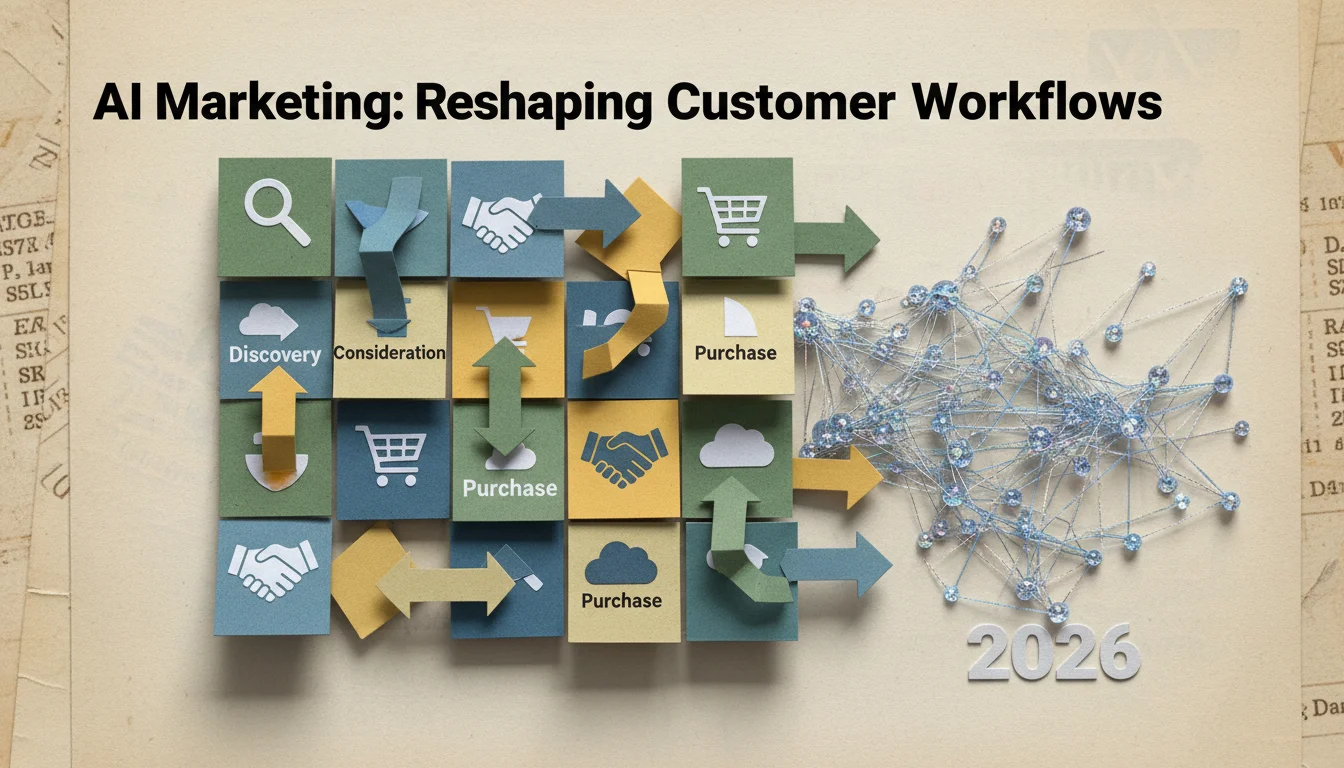
The core problem was a fractured customer workflow. From initial awareness to post-purchase support, each stage operated in its own silo, leading to disjointed experiences and missed opportunities. Sarah recognized that simply adding more people to the team wasn’t sustainable. They needed a systemic change. The solution, she believed, lay in artificial intelligence.
The Disconnect: Manual Processes vs. Modern Expectations
NovaTech’s marketing department was a prime example of a common challenge: a company with good products and a dedicated team, but without the technological infrastructure to meet the demands of 2026. Their customer acquisition cost (CAC) was steadily rising, and their customer lifetime value (CLV) wasn’t growing at the same pace. I’ve seen this scenario play out countless times across various industries. Businesses often invest heavily in acquiring new leads but then falter in nurturing them effectively, leaving significant value on the table.
One of the biggest hurdles for NovaTech was lead qualification and scoring. Sales reps spent hours sifting through unqualified leads, often following up on prospects who were nowhere near ready for a purchase conversation. “We were essentially guessing,” Sarah admitted during one of our initial calls. “Our lead scoring was rudimentary, based on a few form fills and email opens. It didn’t tell us anything about intent or genuine need.” This is where AI-driven predictive analytics offers a powerful intervention.
By integrating an AI platform capable of analyzing historical data points, website visits, content downloads, social media engagement, email interactions, and even competitor research, NovaTech could develop more sophisticated lead scoring models. These models go beyond simple demographic data. They identify patterns of behavior that correlate with a higher propensity to convert. For instance, a prospect who downloads a specific whitepaper, views pricing pages multiple times, and then revisits a case study page within a 48-hour window indicates a much stronger intent than someone who just subscribed to a newsletter. A report by HubSpot in 2025 highlighted that companies using AI for lead scoring saw a 10% to 15% increase in sales conversion rates.
Personalization at Scale: Moving Beyond Basic Segmentation
NovaTech’s existing personalization efforts were limited to segmenting their email lists by industry or company size. While a step up from mass emails, it lacked the granularity needed to truly resonate with individual prospects. “Our emails felt generic, even when we tried to tailor them,” Sarah explained. “We knew our customers expected more, but creating unique content for hundreds of segments was impossible.”
This is where AI-powered dynamic content generation becomes indispensable. Imagine an email marketing platform that, based on a prospect’s real-time interaction data, automatically selects the most relevant case studies, tailors the call-to-action, and even adjusts the subject line for optimal open rates. This isn’t science fiction. It’s the reality of modern AI marketing tools. These systems use machine learning to understand individual preferences and deliver content that speaks directly to their needs at that moment.
For NovaTech, implementing this meant integrating an AI content engine with their marketing automation platform. The AI began to analyze every interaction a prospect had with their website, emails, and even support tickets. It then used this data to dynamically assemble email sequences and website content. A prospect interested in cloud security solutions would see different blog posts highlighted on the homepage than one focused on data analytics. This level of personalization, driven by AI, can dramatically improve engagement. eMarketer’s 2025 forecast indicated that personalized customer experiences could drive a 20% to 30% increase in customer satisfaction and repeat purchases.
Simplifying Customer Service and Support
Another major bottleneck for NovaTech was their customer service. Agents spent considerable time on repetitive queries, leaving less time for complex problem-solving. This resulted in longer wait times and frustrated customers. Sarah recognized that a significant portion of their support tickets could be resolved through automated means, but their current chatbot was, in her words, “more frustrating than helpful.”
The key here is natural language processing (NLP). Modern NLP models are sophisticated enough to understand context, intent, and even sentiment in customer queries. By deploying an AI-powered virtual assistant, NovaTech could automate responses to frequently asked questions, guide users through basic troubleshooting, and even initiate returns or cancellations without human intervention. Importantly, these AI assistants can learn and improve over time, becoming more accurate and efficient with every interaction.
Plus, NLP isn’t just for chatbots. It can be used to analyze vast quantities of unstructured customer feedback, reviews, social media comments, support ticket transcripts, to identify emerging issues, sentiment shifts, and product improvement opportunities. Sarah’s team started using an AI tool that would scan all incoming customer feedback, categorizing issues and flagging urgent matters. This provided them with a real-time pulse on customer satisfaction and allowed them to address problems proactively, before they escalated. This shift from reactive to proactive support is a hallmark of optimized customer workflows, reducing inbound support volume by 25% for many companies within the first year of implementation.
The Ethical Imperative: Trust and Transparency in AI
As NovaTech began to embrace AI, Sarah was acutely aware of the ethical considerations. The use of customer data, the potential for algorithmic bias, and the need for transparency were all top of mind. “We can’t just deploy AI blindly,” she insisted. “Our customers’ trust is paramount.” This is an absolutely critical point. The promise of AI can quickly turn into a liability if not handled responsibly.
Establishing clear AI governance policies became a priority. This involved defining how customer data would be collected, stored, and used by AI systems. It also meant ensuring that AI models were regularly audited for bias and that there was always a human in the loop for complex or sensitive interactions. For example, if an AI-driven lead scoring system disproportionately de-prioritized certain demographics, it would be a major ethical failure that could damage NovaTech’s reputation. Transparency was also key: informing customers about when they were interacting with an AI and providing clear opt-out options for data usage built confidence.
This commitment to ethical AI isn’t just about compliance. It’s a strategic advantage. Consumers in 2026 are increasingly aware of data privacy issues, and brands that demonstrate a genuine commitment to responsible AI practices will build stronger, more loyal customer relationships. A Nielsen report in 2025 indicated that 78% of consumers are more likely to purchase from brands they perceive as transparent about their data practices.
The Resolution: A Transformed Workflow
Fast forward 18 months, and NovaTech Solutions looks dramatically different. Their marketing and sales teams are no longer overwhelmed by manual tasks. Leads are automatically qualified with a high degree of accuracy, allowing sales reps to focus on prospects with genuine intent. Personalized email campaigns are generated and optimized by AI, resulting in significantly higher open and click-through rates. Customer service has improved dramatically, with their AI virtual assistant handling over 60% of routine inquiries, freeing up human agents for more complex, high-value interactions.
Sarah Chen now oversees a marketing operation that is not only more efficient but also far more effective. Their CAC has decreased by 18%, and their CLV has seen a healthy 22% increase. The marketing team, once bogged down in repetitive tasks, now dedicates more time to strategic planning, creative development, and exploring new market opportunities. The shift wasn’t instantaneous. It required careful planning, iterative implementation, and a commitment to continuous learning and adjustment. But the payoff has been undeniable.
The lesson from NovaTech’s journey is clear: AI in marketing isn’t just about implementing a new tool. It’s about fundamentally rethinking and re-architecting your entire customer workflow. It requires a strategic vision, an understanding of the technology’s capabilities and limitations, and a steadfast commitment to ethical implementation. For any business looking to thrive in the competitive field of 2026, embracing AI to optimize customer interactions is no longer an option, but a necessity.
Implementing AI to refine customer workflows creates a more responsive, personalized, and efficient operation, driving tangible improvements in customer satisfaction and in the end, the bottom line.
What specific types of AI are most beneficial for optimizing customer workflows in marketing?
The most beneficial AI types include machine learning for predictive analytics and personalization, natural language processing (NLP) for understanding customer feedback and powering chatbots, and computer vision for analyzing visual content and user behavior on websites.
How can AI help with lead qualification and scoring?
AI systems analyze vast datasets of historical customer behavior, demographic information, and engagement patterns to assign a predictive score to each lead. This helps identify prospects most likely to convert, allowing sales teams to prioritize their efforts on high-potential leads, significantly improving efficiency.
What are the ethical considerations when using AI in customer workflows?
Key ethical considerations include ensuring data privacy and security, preventing algorithmic bias in personalization or lead scoring, maintaining transparency with customers about AI interactions, and providing clear opt-out mechanisms for data usage. Responsible AI implementation builds trust and avoids potential reputational damage.
Can AI truly personalize content without human oversight?
AI can dynamically generate and adapt content based on individual user data and preferences, often without direct human intervention for each piece. However, human oversight is important for defining content parameters, setting brand guidelines, and regularly reviewing AI-generated content for quality and accuracy to maintain brand voice and messaging consistency.
What’s the first step for a company looking to integrate AI into its marketing customer workflows?
The initial step involves identifying the most pressing pain points in current customer workflows, such as inefficient lead qualification or high customer service volumes. Start with a pilot project focused on one specific area, gather data, measure impact, and then gradually expand AI integration across other parts of the customer journey.


