 By Renato Vega
Key Takeaways
- Advanced AI platforms now analyze over 50 data points per influencer, including audience psychographics and content resonance, to identify ideal thought leader partnerships.
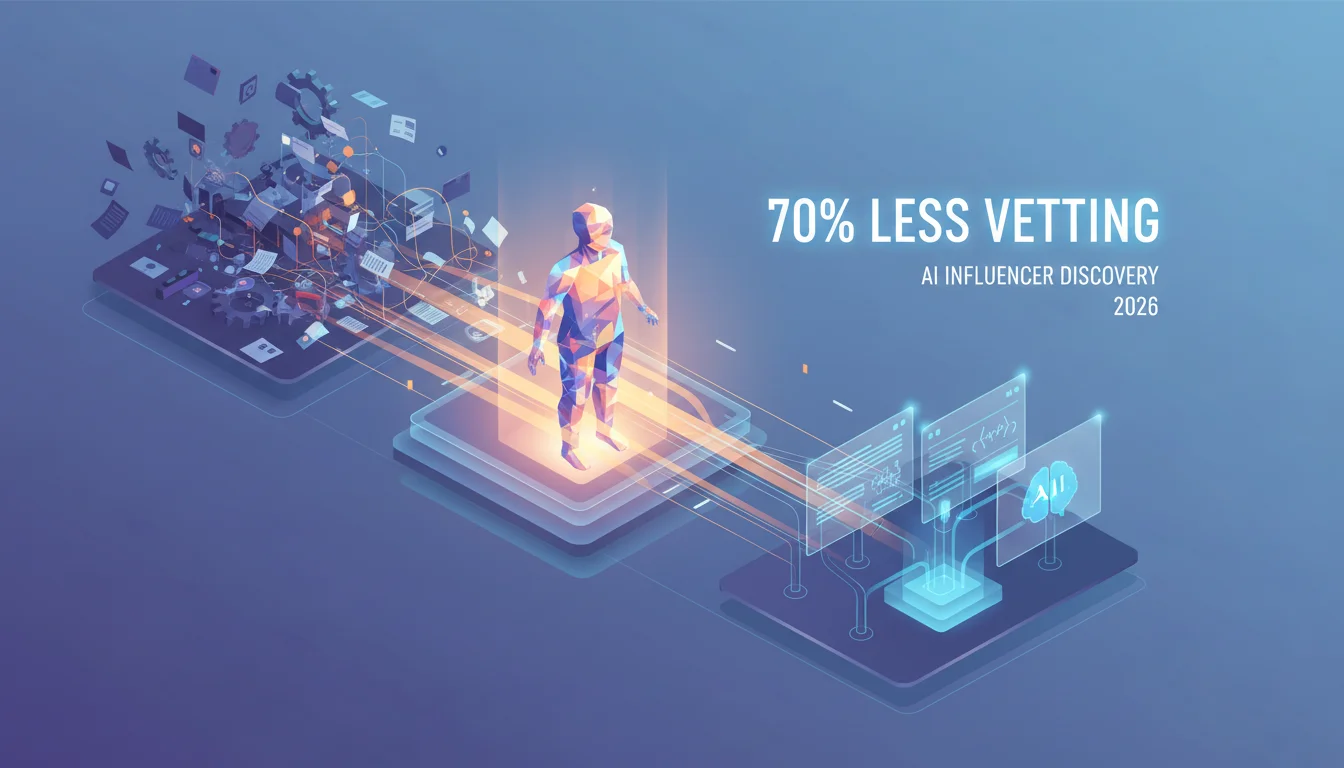
- Implementing AI-driven influencer discovery can reduce manual vetting time by up to 70% and increase campaign ROI by identifying more precisely aligned collaborators.
- Effective AI tools move beyond follower counts, focusing on granular audience engagement metrics, authentic content fit, and predictive performance indicators for thought leaders.
- Successful integration requires clear definition of campaign objectives and iterative refinement of AI model inputs based on real-world campaign outcomes.
The field of strategic partnerships for thought leaders has undergone a significant transformation, driven largely by advancements in artificial intelligence. Traditional methods of identifying influential voices are increasingly inefficient, making AI-driven influencer discovery not just an advantage, but a necessity for brands seeking genuine resonance and measurable impact. How can AI accurately pinpoint the right thought leaders who genuinely align with a brand’s ethos and audience?
The Evolution of Influencer Discovery: Beyond Follower Counts
Gone are the days when influencer selection was a simple matter of follower numbers. In 2026, audience authenticity, engagement depth, and thematic alignment are paramount. Early influencer marketing efforts often stumbled because they prioritized reach over relevance, leading to campaigns that felt forced or inauthentic. We saw countless examples where brands partnered with mega-influencers whose audiences, while vast, had little genuine interest in the product or message. This often resulted in high impressions but low conversion rates and minimal brand affinity. Modern AI platforms shift this model entirely. They analyze a multitude of qualitative and quantitative data points that a human simply cannot process efficiently. Consider the sheer volume: audience demographics, psychographics, past content performance, sentiment analysis of comments, keyword relevance across their entire content library, and even the frequency and nature of their interactions with other thought leaders in their niche. These tools can dissect a thought leader’s digital footprint to understand not just who they reach, but how they influence, and why their audience trusts them. This granular analysis is what separates a truly strategic partnership from a superficial endorsement.
Using AI Tools for Precision Matching
The core strength of AI in influencer discovery lies in its ability to match a brand’s specific objectives with a thought leader’s intrinsic value. It’s not about finding someone famous. It’s about finding someone whose influence maps directly to your campaign goals. For instance, if a tech company wants to promote a new enterprise software solution, an AI tool will prioritize thought leaders who consistently engage with topics like B2B SaaS, data security, or cloud architecture, and whose audience primarily consists of IT decision-makers or business executives, rather than general tech enthusiasts. Specific platforms now offer features that allow marketers to input detailed criteria, from target audience income brackets and geographic locations to specific online behaviors and purchase intent signals. For example, a platform might allow you to filter for thought leaders whose audience demonstrates a high propensity for early adoption of emerging technologies, based on their past engagement with product launches and tech reviews. This level of specificity dramatically reduces the guesswork. According to a recent eMarketer report, companies employing AI in their influencer campaigns reported an average 35% increase in audience quality scores compared to those relying on manual methods, primarily due to this enhanced precision in matching. When you’re seeking to establish thought leadership, you need partners who are already respected voices in that specific conversation, not just loud ones.
Strategic Partnerships: Beyond the Transaction
The goal of strategic partnerships with thought leaders extends beyond a single campaign. It’s about fostering long-term relationships that build sustained credibility and expand influence. AI plays a critical role here by identifying potential partners who are not only a good fit for a current campaign but also possess characteristics that suggest a durable, mutually beneficial relationship. This includes analyzing their growth trajectory, consistency in content quality, and their ability to adapt to new trends while maintaining their core message. We’ve seen how quickly influence can wane if it’s not authentic. AI can flag potential issues by detecting sudden shifts in content themes, unusual spikes in follower counts that might indicate bot activity, or even inconsistent brand messaging across different platforms. It’s a powerful filter against inauthenticity, which is a major concern for brands investing significant resources into these partnerships. For example, some AI tools incorporate natural language processing (NLP) to analyze the tone and sentiment of a thought leader’s historical content, ensuring it aligns with the brand’s desired public image and values. This deep dive into content semantics helps avoid misalignments that could damage brand reputation.
Implementing AI-Driven Discovery: Practical Steps for Marketers
Integrating AI into your influencer discovery process requires a structured approach. First, define your specific campaign objectives with clarity. Are you aiming for brand awareness, lead generation, or thought leadership positioning within a niche? The AI model needs these parameters to effectively filter and rank potential partners. Second, invest in a reputable AI platform designed for influencer marketing. Tools like Grabyo or CreatorIQ offer advanced analytics and discovery features that go far beyond basic search functions. These platforms often integrate directly with social media APIs, allowing for real-time data ingestion and analysis. Once you have your platform, the iterative process begins. Start with a broad search based on keywords and industry. Then, refine your criteria using audience demographics, engagement rates, and content quality scores provided by the AI. Don’t be afraid to experiment with different parameters. The initial output might be overwhelming, but with each refinement, the list of truly relevant thought leaders will sharpen. Remember, the AI is a tool. Your strategic input is what makes it effective. For instance, if the AI identifies a thought leader with high engagement but their content consistently features a competitor, you need to manually adjust your filters or exclude them. The human element of strategic oversight remains indispensable, even with the most advanced AI. Finally, measure everything. Track the performance of your AI-identified partners against your initial objectives. Did they drive the desired engagement? Were conversions met? Use this data to feed back into your AI model, teaching it what works best for your brand. This continuous learning loop improves the AI’s predictive capabilities over time, making future discovery even more precise. A report by HubSpot Research in 2025 indicated that companies that consistently refined their AI models based on campaign performance saw an average 15% improvement in subsequent campaign ROI within a year.
The Future of Thought Leader Partnerships
The trajectory for AI tools in influencer discovery points toward even greater sophistication. We can anticipate AI models becoming more adept at predicting future trends and identifying emerging thought leaders before they reach peak saturation. Imagine an AI that can analyze early-stage content creators, identifying those with unique voices and rapidly growing, highly engaged audiences, predicting their rise to prominence. This foresight would allow brands to forge partnerships at an earlier, more cost-effective stage, potentially securing exclusive long-term collaborations. Plus, AI will likely play a larger role in validating the authenticity of influencer engagement. With increasing concerns about fake followers and engagement pods, advanced AI can detect subtle patterns indicative of artificial inflation, ensuring that brands invest in genuine influence. This will protect marketing budgets and uphold the integrity of the entire ecosystem. The goal is to move towards a system where every partnership is not just a transaction, but a genuine alignment of values and objectives, amplified by data-driven insights. The ability of AI to sift through vast amounts of data, identify subtle patterns, and make highly specific recommendations means marketers can now build more impactful, authentic, and measurable thought leader partnerships than ever before.
What specific data points do AI tools analyze for influencer discovery?
AI tools analyze a complete range of data points including audience demographics and psychographics, historical content performance, engagement rates per post type, sentiment analysis of comments, keyword relevance across their content, growth patterns, and cross-platform consistency.
How does AI improve the ROI of influencer marketing campaigns?
AI improves ROI by enabling more precise matching between brands and thought leaders, reducing wasted spend on misaligned partnerships, and identifying partners whose audiences are more likely to convert, in the end leading to higher engagement and better conversion rates.
Can AI identify thought leaders who are not yet widely recognized?
Yes, advanced AI models are increasingly capable of identifying emerging thought leaders by analyzing early growth indicators, unique content resonance, and niche authority, allowing brands to establish partnerships before these individuals reach peak market value.
What are the limitations of AI in influencer discovery?
While powerful, AI still requires human oversight. It may struggle with nuanced contextual understanding, detecting highly subtle forms of inauthenticity, or interpreting campaign goals that are not clearly defined. Manual review and strategic input remain essential for optimal results.
How often should a brand refine its AI model for influencer discovery?
Brands should continuously refine their AI model based on the performance data from each campaign. This iterative feedback loop helps the AI learn what works best for specific brand objectives and audience segments, leading to improved accuracy over time.


