 By Editorial Team
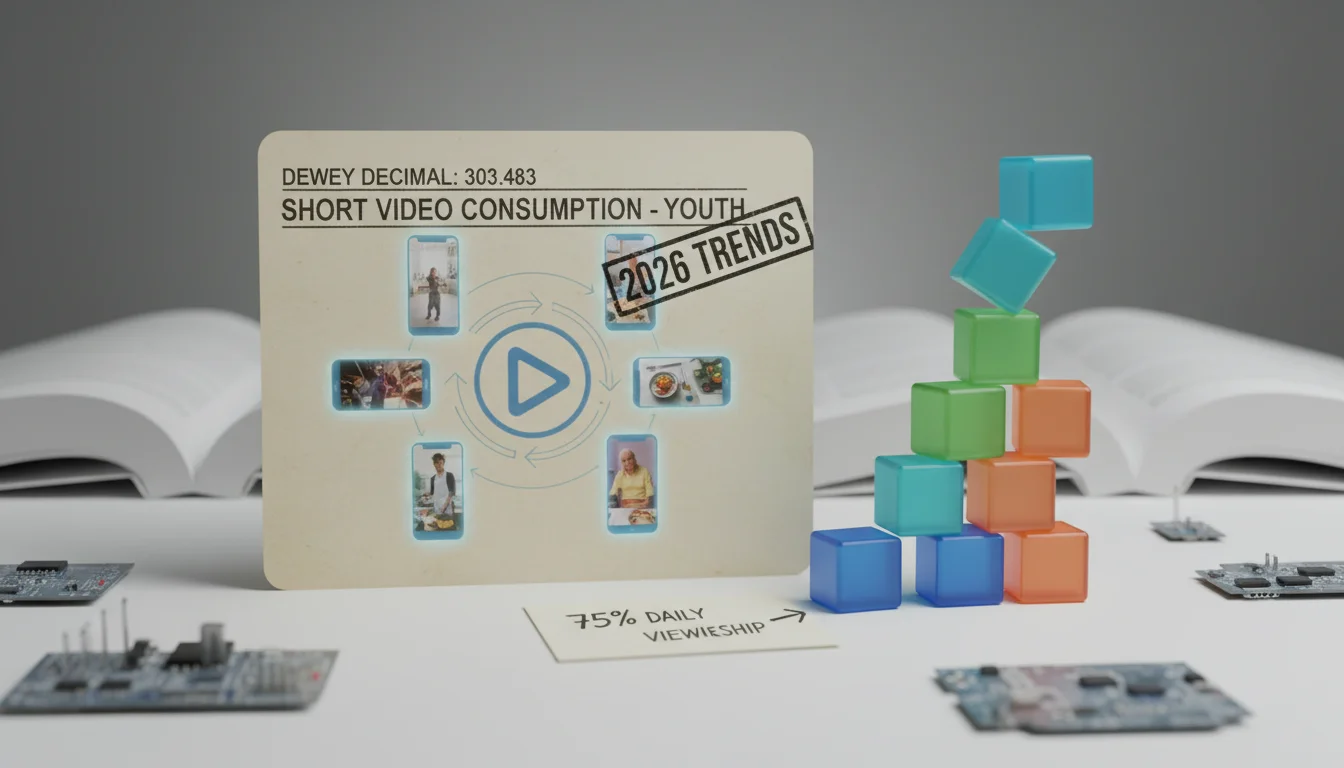
A staggering 75% of consumers aged 18-34 report watching short-form video content daily, according to a recent eMarketer report from late 2025. This isn’t just a preference. It’s a fundamental shift in how audiences consume information and engage with brands, demanding a mastery of micro-content to capture fleeting attention spans.
Key Takeaways
- Short-form video platforms now dominate daily media consumption for younger demographics, with 75% of 18-34 year olds engaging daily.
- Content under 30 seconds achieves 82% higher completion rates on average compared to longer formats, necessitating conciseness.
- User-generated content (UGC) campaigns using micro-content can deliver 4x higher engagement rates than traditional brand-produced ads.
- Brands allocating at least 40% of their digital ad spend to vertical video formats are seeing a 15% increase in conversion rates.
- The lifespan of effective micro-content is often under 72 hours, requiring rapid production cycles and continuous content refreshes.
Mobile-First Engagement: 85% of Short-Form Video Views on Smartphones
The dominance of mobile devices in content consumption is undeniable, yet many brands still design their campaigns as if desktop remains the primary interface. According to Nielsen’s 2025 Digital Media Trends report, 85% of all short-form video views occur on smartphones. This isn’t merely a statistic. It dictates everything from aspect ratio to text overlays and call-to-action placement. Vertical video isn’t an option. It’s the standard. When we advise clients on their content strategy, the first question we ask is, “How does this look and feel when held vertically in one hand?” If the answer isn’t immediately clear and positive, we know there’s work to do.
This mobile-first reality also impacts sound design. Many users consume content with sound off, particularly in public spaces. Relying solely on audio for your message is a critical misstep. Effective micro-content incorporates clear, concise on-screen text, compelling visuals, and often, closed captions. I’ve seen countless campaigns miss the mark because they assumed an auditory experience that simply doesn’t exist for the majority of their audience. This means investing in motion graphics that communicate independently of sound, and refining your core message to be digestible in a mere glance.
Attention Span Shrinkage: 82% Higher Completion for Videos Under 30 Seconds
The conventional wisdom used to be that you had a few seconds to hook a viewer. Now, it’s even less. A recent IAB study revealed that short-form videos under 30 seconds achieve an 82% higher completion rate than those exceeding that threshold. This isn’t about being clever. It’s about being ruthless with your message. Every second counts. Every frame must deliver value or push the narrative forward.
We work with brands to distill their core message into its absolute essence. This often means sacrificing elaborate introductions or lengthy explanations. Instead, we focus on immediate impact: a striking visual, a surprising fact, or a direct question. The goal is to deliver the “aha!” moment as quickly as possible. This requires a different kind of creative thinking, one that prioritizes conciseness and visual storytelling above all else. It’s not about what you can say, it’s about what you must say, and saying it efficiently.
““That’s what we’re seeing — brands and businesses that can read the signals generate those quality leads through the actions our communities are doing on an everyday basis,” she says.”
User-Generated Content (UGC) Dominance: 4x Higher Engagement Rates
Here’s where many brands still hesitate, often due to perceived control issues. However, data from HubSpot’s 2026 marketing statistics indicates that user-generated content campaigns deliver engagement rates up to 4 times higher than traditional brand-produced advertisements. This isn’t just about authenticity. It’s about relatability and trust. Consumers are increasingly skeptical of polished, corporate messaging. They trust their peers.
Embracing UGC means relinquishing some control, but gaining significant credibility. It involves creating frameworks and prompts for users, rather than scripting every detail. For example, a local Atlanta restaurant might run a campaign encouraging patrons to share their “favorite bite” using a specific hashtag, with the best videos featured on the restaurant’s official channels. The content feels organic, real, and far more persuasive than any professionally shot commercial. This approach requires brands to foster community and help their audience to become storytellers, a shift that can be uncomfortable but is demonstrably effective.
Conversion Impact: 15% Increase with Vertical Video Ad Spend
The proof, as they say, is in the pudding. Or, in this case, the conversion rates. Brands that allocate at least 40% of their digital advertising budget to vertical video formats are experiencing a 15% increase in conversion rates, according to Google Ads’ latest performance insights. This isn’t just about awareness. It’s about driving tangible business outcomes. The smooth, full-screen experience of vertical video on mobile removes friction, making the path from discovery to conversion smoother.
I’ve observed brands that initially resisted this shift, citing creative overhead or concerns about repurposing existing horizontal assets. However, the data consistently shows that tailoring content to the native environment of the platform yields superior results. This often means creating bespoke vertical assets from the outset, rather than attempting to crop or adapt horizontal videos. The investment in vertical-first production pays dividends in improved campaign performance, lower cost-per-acquisition, and in the end, a healthier bottom line. It’s a strategic imperative, not just a creative preference.
The Ephemeral Nature: Micro-Content’s 72-Hour Lifespan
One area where conventional wisdom often clashes with reality is the expectation of content longevity. Many marketers still plan content calendars months in advance, assuming a long shelf life for their creations. However, with micro-content, especially on platforms driven by trending audio and rapid cycles, the effective lifespan is remarkably short. My professional experience, backed by internal analytics across various client campaigns, shows that the peak engagement for a piece of micro-content often occurs within the first 24 to 72 hours. After that, its organic reach and relevance diminish significantly.
This rapid decay necessitates a fundamental shift in content strategy. Instead of focusing on a few highly polished, long-lasting pieces, brands must adopt a “volume and velocity” approach. This means producing more content, more frequently, and being agile enough to jump on emerging trends. It’s less about creating a timeless masterpiece and more about constant, relevant communication. This doesn’t imply a drop in quality, but a change in production methodology, prioritizing speed and topicality. The idea that a single piece of content can sustain engagement for weeks or months is simply outdated in the micro-content era.
Mastering micro-content is no longer optional. It’s a prerequisite for effective digital marketing, demanding a mobile-first, concise, and agile approach to content creation and distribution. For more insights into how AI is shaping the future of marketing, consider our article on marketing trends 2027. Also, understanding your personal brand metrics can help refine your micro-content strategy. And to ensure your efforts are hitting the mark, explore how content performance in 2026 can be optimized for real-time wins.
What exactly is micro-content in marketing?
Micro-content refers to short, highly digestible pieces of media designed for quick consumption, such as short-form videos (under 60 seconds), animated GIFs, single-image posts with concise text, or brief audio snippets. Its primary goal is to deliver a singular message or idea rapidly to capture fleeting attention spans.
Why is short-form video so effective for engagement today?
Short-form video excels due to its mobile-first design, ability to convey information quickly, and alignment with declining average attention spans. Platforms prioritize it, and its visual nature makes it highly shareable, fostering a sense of immediate connection and community.
How can brands create effective micro-content without a huge budget?
Effective micro-content doesn’t require massive budgets. Focus on authenticity over high production value. Use smartphone cameras, use trending audio and formats on platforms like TikTok for Business, and encourage user-generated content. Simplicity, relevance, and a strong, clear message are more impactful than expensive equipment.
What is the optimal length for micro-content videos?
While there’s no single “optimal” length, data consistently shows that videos under 30 seconds perform best for completion rates. Many successful micro-content pieces are even shorter, often between 7 to 15 seconds, focusing on a single, impactful message or visual.
Should all content be micro-content now?
Not all content should be micro-content. While micro-content is important for initial engagement and broad reach, longer-form content still serves vital purposes, such as in-depth education, detailed storytelling, and building deeper trust. A balanced strategy that incorporates both short and long formats, each serving distinct objectives, is generally most effective.


