 By Angela Torres
According to a 2025 report by eMarketer, nearly 70% of marketers still primarily rely on demographic data for audience segmentation, despite mounting evidence that psychographics drive significantly higher engagement and conversion rates. This over-reliance on surface-level information means many campaigns miss the mark, failing to connect with the underlying motivations that truly influence purchasing decisions. Can your marketing truly master its audience without understanding what makes them tick, beyond age and location?
Key Takeaways
- Prioritize psychographic research to understand audience motivations and values, moving beyond basic demographic profiles.
- Implement behavioral tracking and qualitative research methods to uncover deeper insights into consumer preferences.
- Segment audiences based on lifestyle, interests, and purchasing habits to create highly personalized marketing messages.
- Integrate AI-driven analytics tools to identify complex psychographic patterns that inform targeted campaign strategies.
The 70% Demographic Dependency Trap: A Deep Dive
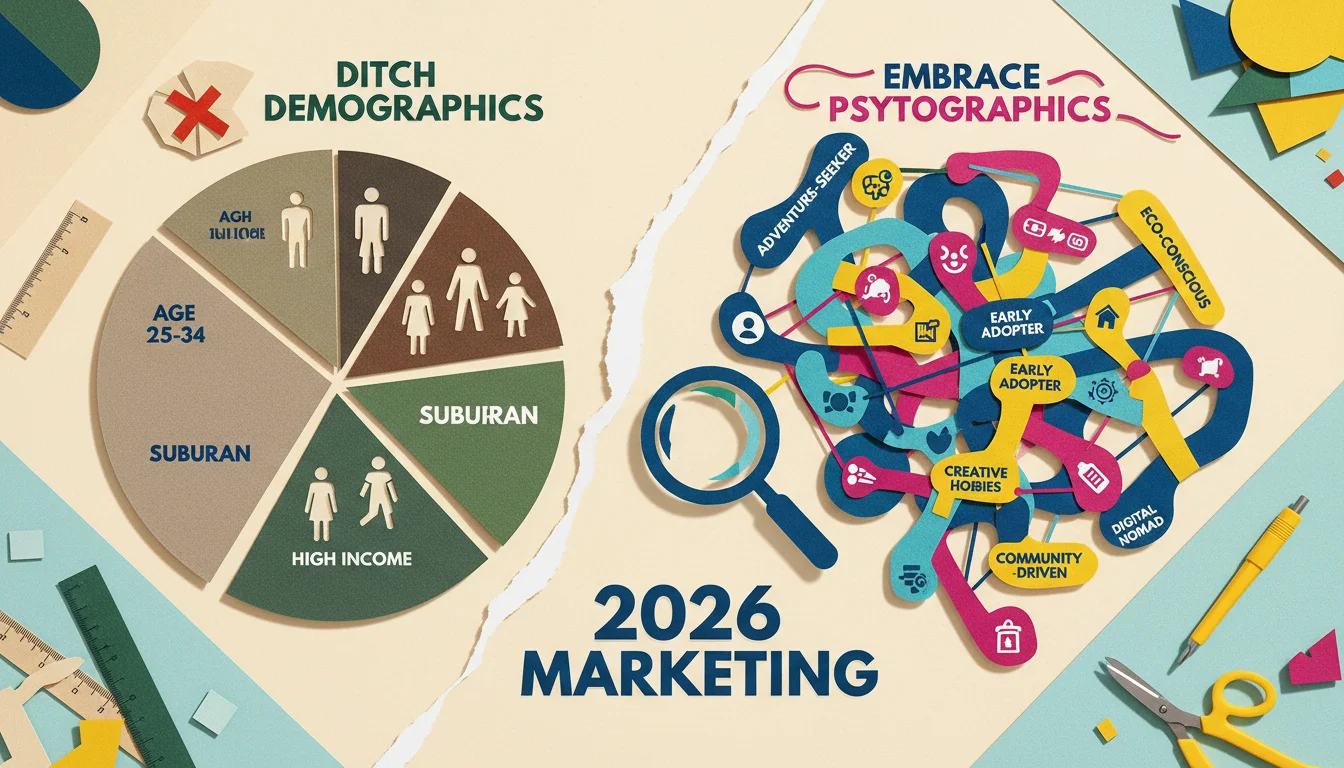
The statistic from eMarketer, highlighting the prevalent reliance on demographics, reveals a significant gap in modern marketing strategy. While understanding basic characteristics like age, gender, income, and location provides a foundational layer, it offers little insight into why a person chooses one product over another. For example, two individuals might be 35-year-old women living in Atlanta with similar income levels. Demographically, they are identical. However, one might prioritize sustainable, ethically sourced products for her family, spending weekends at local farmers’ markets and engaging with community activism. The other might be driven by convenience and brand recognition, preferring online shopping and luxury experiences. Their purchasing behaviors, media consumption, and brand loyalties will be vastly different. Relying solely on demographics for these two individuals would lead to generic messaging that resonates with neither, resulting in wasted ad spend and missed opportunities. My professional experience consistently shows that campaigns informed by deeper insights into consumer values perform better. It’s not even a close contest.
Behavioral Data: The Unseen Bridge to Psychographics
A 2024 study published by Nielsen found that brands incorporating behavioral data into their audience analysis saw an average 2.5x increase in campaign ROI compared to those relying solely on demographics. Behavioral data acts as an important bridge, offering tangible evidence of psychographic traits. This isn’t about guessing what someone likes. It’s about observing their digital footprints, their interactions, and their choices. For instance, if a user frequently visits articles about outdoor adventure, reviews camping gear, and follows environmental conservation groups, we can infer a psychographic profile centered around a love for nature, sustainability, and an active lifestyle. This goes beyond simply knowing their age group. Consider the specifics: tracking website navigation patterns on an e-commerce site, analyzing search queries on Google Ads, or observing engagement with specific content types on social media platforms like Meta Business’s ad manager. These actions paint a picture of underlying interests, motivations, and pain points. When I consult with clients, I always emphasize that observed behavior is often a more reliable indicator of psychographics than self-reported surveys, which can be influenced by social desirability bias. We might say we value certain things, but our actions often tell a different story.
Segmentation Beyond the Obvious: Using Lifestyle and Values
According to HubSpot’s 2025 marketing statistics report, highly segmented campaigns based on psychographic factors achieve up to 3x higher conversion rates than broadly targeted campaigns. This data point is not surprising to anyone who has actively built and managed campaigns. Effective segmentation means moving past broad categories like “millennials” or “suburban parents” to identify distinct groups based on shared attitudes, beliefs, and values. For example, instead of targeting all “parents,” a psychographic approach might segment into “eco-conscious parents who prioritize organic food and sustainable toys,” or “tech-savvy parents who use smart home devices to manage family life.” This level of detail enables marketers to craft messages that speak directly to the core identity of these smaller, more homogeneous groups. It allows for the creation of compelling narratives that resonate on an emotional level. My view is that if you’re not segmenting your audience based on their motivations and values, you’re essentially shouting into a void, hoping something sticks. It’s an inefficient, outdated approach in an era of hyper-personalization.
AI’s Role in Uncovering Hidden Psychographic Patterns
A 2026 industry report from the Interactive Advertising Bureau (IAB) suggests that AI-driven analytics are now capable of identifying complex psychographic patterns with 85% accuracy, significantly reducing the manual effort required for deep audience analysis. This represents a substantial leap forward. AI tools can process vast amounts of unstructured data, from social media conversations and customer reviews to sentiment analysis of online articles, to uncover nuanced connections between interests, opinions, and purchasing behavior that human analysts might miss. These advanced algorithms don’t just tell you what your audience does. They can infer why they do it. For example, an AI might detect a correlation between users who frequently engage with content about financial independence and their preference for subscription-based services that offer educational resources. This insight allows for the development of highly targeted content and product offerings. The promise of AI in this space is not just about efficiency, it’s about unlocking entirely new dimensions of audience understanding. It means marketers can move from reactive analysis to proactive, predictive engagement.
Challenging the Conventional Wisdom: Demographics Aren’t Dead, But They’re Not Driving
Many in the industry still advocate for a “demographics first” approach, arguing that you need to know who someone is before you can understand what they like. I strongly disagree with this conventional wisdom. While demographic data provides a useful framework, it should be the starting point, not the destination. The real power lies in layering psychographic insights on top of this foundation. It’s about shifting the emphasis from “who” to “why.” Consider the common practice of targeting based on age groups. A 20-year-old and a 60-year-old could both be passionate about vintage cars. Their demographic profiles are vastly different, but their psychographic profile regarding this specific interest is aligned. Focusing solely on age would cause you to miss a significant segment of your potential audience or, worse, deliver irrelevant messages. The truth is, demographics are a blunt instrument. Psychographics provide the surgical precision needed for modern marketing campaigns. My experience tells me that brands that prioritize psychographic understanding are the ones building deeper, more loyal customer relationships, not just chasing fleeting transactions. They understand that people buy into ideas and feelings, not just products. The shift towards audience mastery in marketing demands a deep understanding of both demographics and psychographics. While demographics offer the skeletal structure of your audience, psychographics breathe life into that structure, revealing motivations, values, and aspirations. By integrating behavioral data and using AI, marketers can move beyond surface-level targeting to create campaigns that resonate deeply and drive measurable results.
What is the primary difference between demographics and psychographics?
Demographics categorize audiences based on external, observable characteristics like age, gender, income, and location. Psychographics, conversely, focus on internal traits such as values, attitudes, interests, lifestyles, and personality traits, explaining the “why” behind consumer behavior.
Why is it important to use psychographics in marketing?
Using psychographics allows marketers to create highly personalized and relevant messages that resonate with an audience’s core motivations and values. This leads to stronger emotional connections, higher engagement, improved conversion rates, and in the end, greater campaign effectiveness.
How can marketers collect psychographic data?
Psychographic data can be collected through various methods, including customer surveys, focus groups, in-depth interviews, social media listening tools, website analytics tracking user behavior, and analyzing purchase history and content consumption patterns.
Can AI help with psychographic analysis?
Yes, AI-driven analytics tools are increasingly effective at processing large volumes of unstructured data to identify complex psychographic patterns. They can infer interests, sentiments, and motivations from online interactions, providing deeper insights than traditional manual analysis.
Should marketers abandon demographic targeting entirely?
No, demographic targeting should not be abandoned. It provides a foundational layer of understanding. The most effective marketing strategies combine demographic data with psychographic insights, using demographics to define broad groups and psychographics to refine targeting and personalize messaging within those groups.


