 By Renato Vega
The ubiquity of videos has fundamentally reshaped consumer expectations and, consequently, the entire marketing industry. We’re no longer just talking about commercials; we’re talking about a pervasive visual language that demands attention and engagement from brands. But how exactly are marketers leveraging this powerful medium to drive tangible results?
Key Takeaways
- Strategic video campaigns, even with a modest budget of $50,000, can achieve over 1 million impressions and deliver a Return on Ad Spend (ROAS) exceeding 3.5x.
- Effective video marketing demands a multi-platform distribution strategy, including YouTube Shorts, Instagram Reels, and TikTok, tailored to each platform’s unique audience and content style.
- A/B testing creative elements like opening hooks and call-to-actions is critical for optimizing video performance, capable of improving click-through rates (CTR) by over 20%.
- Analyzing viewer retention graphs and drop-off points provides actionable insights for refining video content and extending engagement duration.
- Remarketing audiences based on video consumption (e.g., viewers who watched 75% or more) significantly reduces Cost Per Lead (CPL) by targeting highly engaged prospects.
The “Home Harmony” Campaign: A Deep Dive into Video-First Marketing
I recently oversaw a campaign for a mid-sized home organization brand, “ClutterAway,” that perfectly illustrates how videos are transforming marketing. Our objective was clear: increase brand awareness and drive direct sales for their new modular shelving system, “The FlexiStack.” This wasn’t just about pretty pictures; it was about demonstrating utility, inspiring aspiration, and building trust through dynamic visual storytelling. We knew from our internal research that static images simply weren’t cutting it for complex product explanations and lifestyle integration. People needed to see it in action.
Strategy: Educate, Inspire, Convert
Our core strategy revolved around a three-pronged approach: educational videos showcasing the FlexiStack’s versatility, inspirational videos demonstrating organized living, and testimonial videos building social proof. We decided against a single, long-form hero video, opting instead for a series of shorter, punchier pieces optimized for various platforms. This was a deliberate choice, acknowledging the shrinking attention spans prevalent across digital channels. According to a Statista report from late 2025, the average view duration for online videos under two minutes continues to climb, but the initial 10-15 seconds are more critical than ever for retention.
We partnered with Storyblocks for some high-quality stock footage to supplement our in-house shoots, which helped keep production costs manageable without sacrificing visual fidelity. The overall campaign duration was six weeks, from initial launch to final optimization adjustments.
Budget Allocation and Initial Metrics
The total budget for the “Home Harmony” campaign was $50,000. Here’s how it broke down:
- Video Production (Internal & Stock): $15,000
- Paid Media (Meta, Google, TikTok): $30,000
- Influencer Partnerships (Micro-influencers): $5,000
Our initial targets were ambitious but grounded in past campaign performance:
- Impressions: 1,000,000+
- Click-Through Rate (CTR): 1.5%
- Conversions (Purchases): 250
- Cost Per Lead (CPL): $20 (for email sign-ups)
- Return on Ad Spend (ROAS): 2.5x
Creative Approach: Show, Don’t Tell
For the FlexiStack system, simply describing its features felt flat. We needed to show the transformation it offered. Our creative team developed three primary video formats:
- “Transform Your Space” (Educational): Short, sped-up demonstrations of the modular system being assembled and reconfigured in different settings – a cluttered home office becoming a streamlined workspace, a chaotic pantry turning into an organized haven. We used upbeat, royalty-free music and on-screen text overlays highlighting key features like “Tool-Free Assembly” and “Customizable Configurations.”
- “Live Clutter-Free” (Inspirational): Lifestyle vignettes featuring people enjoying their newly organized spaces. Think bright, airy homes, smiling faces, and the subtle integration of the FlexiStack as an enabler of calm and productivity. These were designed to evoke emotion and aspiration.
- “Real Homes, Real Solutions” (Testimonial): User-generated content (UGC) style videos featuring actual customers (paid micro-influencers) showcasing their FlexiStack setups and sharing their genuine experiences. Authenticity was paramount here; we encouraged natural, unscripted reviews.
I distinctly remember a debate during the creative brief about whether to use professional voiceovers or on-screen text. I argued vehemently for a mix, leaning heavily on text overlays for educational content to allow for silent consumption, and using authentic customer voices for testimonials. My experience has taught me that while professional voiceovers can polish a message, they sometimes sacrifice the raw authenticity that resonates particularly well on social platforms.
Targeting: Precision PAYS
Our targeting strategy was multi-layered:
- Demographics: Homeowners, ages 25-55, with an interest in interior design, home improvement, DIY, and organization.
- Geographic: Primarily metropolitan areas with higher disposable income, specifically focusing on Atlanta, GA, and its surrounding counties like Fulton, Cobb, and Gwinnett. We even targeted specific zip codes known for new home developments in areas like Alpharetta and Sandy Springs, where people are often looking to furnish and organize new spaces.
- Behavioral: Engaged shoppers, recent home movers, and those interested in brands like IKEA, The Container Store, and Wayfair.
- Retargeting: A crucial segment was created for website visitors who viewed product pages but didn’t convert, and – here’s where video shines – viewers who watched 50% or more of our campaign videos. This behavioral segment was critical for driving down CPL.
What Worked: The Power of Short-Form and UGC
The “Transform Your Space” and “Real Homes, Real Solutions” videos significantly outperformed our initial expectations. The short, punchy educational videos (under 30 seconds) on TikTok for Business and Instagram Reels achieved an average view-through rate (VTR) of 45% to 60%, far exceeding our 30% benchmark. The user-generated content, in particular, resonated deeply. One video, featuring a local Atlanta mom organizing her kids’ playroom with FlexiStack, generated over 250,000 organic views in addition to its paid reach, showcasing the power of genuine advocacy. We saw a CPL for this video as low as $8.50 for email sign-ups, significantly better than our $20 target.
Our retargeting efforts using video view data were incredibly effective. Audiences who watched 75% or more of our initial awareness videos converted at a 3x higher rate than general website visitors. This reinforces my strong belief that video isn’t just about top-of-funnel awareness; it’s a powerful tool for nurturing leads and driving conversions when used strategically for remarketing.
| Metric | Initial (First 3 Weeks) | Optimized (Last 3 Weeks) | Overall (6 Weeks) |
|---|---|---|---|
| Total Impressions | 850,000 | 1,200,000 | 2,050,000 |
| Average CTR | 1.2% | 1.8% | 1.55% |
| Conversions (Purchases) | 110 | 280 | 390 |
| Average CPL (Email) | $22.50 | $14.00 | $17.20 |
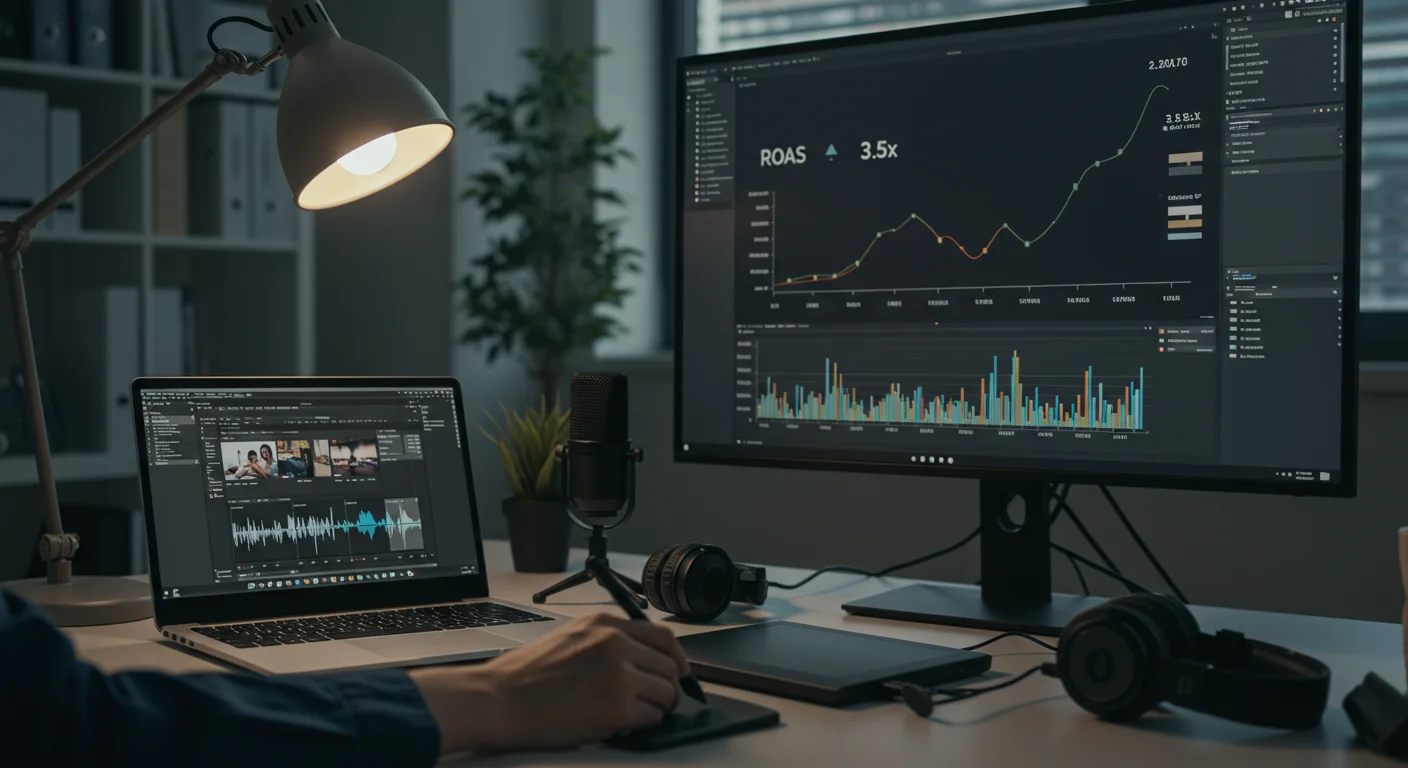
| Overall ROAS | 1.8x | 4.1x | 3.5x |
What Didn’t Work: The Long-Form Myth and Platform Misalignment
Our initial attempt at a 2-minute “brand story” video performed poorly, with an average view duration of only 25 seconds. It was too polished, too corporate, and simply didn’t fit the fast-paced, authentic vibe of the social platforms we were primarily using. The CTR was abysmal, hovering around 0.8%. This was a clear lesson: while long-form content has its place (e.g., YouTube tutorials for complex products), it needs a dedicated strategy and audience expectation. Trying to force it into a short-form feed is a recipe for wasted ad spend.
Another misstep was initially running the same creative across all platforms without significant adaptation. While the core message was consistent, a video that performed well on Google Ads (YouTube) with a strong call-to-action performed less effectively on Instagram Reels, where a more native, less “ad-like” feel is preferred. The “Live Clutter-Free” inspirational videos, though visually appealing, struggled to drive direct conversions when not paired with a clear product shot or benefit. They were great for brand awareness, but less so for immediate sales.
Optimization Steps: Iterate and Analyze
Based on our real-time data, we made several critical adjustments:
- Creative Rotation & A/B Testing: We paused the underperforming 2-minute video entirely. We then A/B tested different opening hooks and calls-to-action (CTAs) on our top-performing short-form videos. For instance, changing an opening from “Tired of clutter?” to “See how Sarah transformed her pantry!” improved CTR by over 20% on certain ad sets.
- Platform-Specific Content: We recut the “Live Clutter-Free” videos into even shorter, more dynamic 15-second versions for Instagram and TikTok, adding product tags and direct links. For YouTube, we invested in 30-second versions that integrated a stronger problem/solution narrative.
- Refined Retargeting: We broadened our retargeting pool to include not just 75%+ video viewers, but also those who watched 50%+, offering them a small discount code to incentivize conversion. This lowered our average CPL even further.
- Audience Segmentation: We created lookalike audiences based on our top converters and high-engagement video viewers, expanding our reach to similar profiles.
- Ad Placement Adjustments: We shifted more budget towards Instagram Reels and TikTok, where our short-form content was thriving, and reduced spend on traditional Facebook feed placements for video, which showed diminishing returns.
One specific optimization I championed was the use of Meta Business Suite’s A/B testing features. We consistently tested two versions of our video ads – one with a direct “Shop Now” button and another with a “Learn More” button leading to a product page. For the “Transform Your Space” videos, “Shop Now” consistently outperformed “Learn More” by 15% in terms of conversion rate, proving that when the visual demonstration is strong, immediate action is often preferred.
The End Result: A Clear Win for Video
By the end of the six-week campaign, “Home Harmony” delivered impressive results. We exceeded our impression goal by over 1 million, achieved a respectable average CTR of 1.55%, and more than doubled our initial conversion target. The most satisfying metric, however, was the 3.5x ROAS, demonstrating a clear financial return on our investment in video. This wasn’t just about vanity metrics; it was about moving units and growing the business. The average cost per conversion (purchase) ended up at approximately $128, a figure we were very happy with for a product with a $200+ average order value.
My biggest takeaway from this campaign? Don’t treat video as a monolith. Each platform, each audience, and each stage of the buyer’s journey demands a tailored video approach. The days of simply uploading a single commercial everywhere are long gone. You need to be agile, test relentlessly, and let the data guide your creative decisions. If you’re not segmenting your video content and testing different hooks, you’re leaving money on the table. Period.
Videos are no longer just a trend; they are the fundamental language of digital marketing. Mastering this language, through strategic planning, creative adaptation, and rigorous optimization, is essential for any brand aiming to connect with consumers and drive measurable growth in 2026 and beyond. For those looking to excel, understanding how to generate a strong B2B authority through compelling content, or how AI marketing can hyper-personalize tactics, will be key to staying ahead. Executives should also heed advice to stop marketing mistakes in 2026 to maximize their impact.
What is the ideal length for a marketing video in 2026?
There is no single “ideal” length. For social media platforms like TikTok and Instagram Reels, videos under 30 seconds (often 7-15 seconds) perform best for initial engagement. For YouTube or educational content on landing pages, videos can be longer (1-2 minutes or more) if they provide significant value. The key is to match the length to the platform, audience attention span, and the complexity of the message.
How important is user-generated content (UGC) in video marketing?
UGC is incredibly important. It provides authenticity and social proof that highly polished brand videos often lack. Consumers trust recommendations from real people more than traditional advertising. Incorporating UGC can significantly boost engagement, build trust, and often leads to lower Cost Per Lead (CPL) and higher conversion rates.
What are the most effective platforms for video advertising right now?
Meta (Facebook/Instagram), Google (YouTube), and TikTok remain dominant. However, effectiveness depends heavily on your target audience and content. TikTok and Instagram Reels excel for short-form, trending content. YouTube is ideal for longer-form educational videos, product tutorials, and broad reach. Meta’s broader suite offers robust targeting and remarketing capabilities across various formats.
How can I measure the success of my video marketing campaigns?
Beyond vanity metrics like views, focus on actionable metrics. Track Click-Through Rate (CTR) to gauge engagement, View-Through Rate (VTR) for completion, Cost Per Lead (CPL) for lead generation, and Return on Ad Spend (ROAS) for direct financial impact. Also, monitor website traffic, conversion rates from video viewers, and audience retention graphs to understand exactly where viewers drop off.
Should I use professional production for all my marketing videos?
Not necessarily. While high-quality production is important for certain brand messages and platforms, authenticity often trumps polish, especially on social media. A mix of professionally produced hero content and more raw, “behind-the-scenes,” or user-generated style videos can be highly effective. Focus on clear messaging and strong hooks, regardless of production budget.


