 By Devin Lopez
Interviewing successful thought leaders is a powerful marketing tactic, but often, even experienced marketers trip up, leaving valuable insights untapped and audiences disengaged. We’ve all seen those bland Q&As that feel more like a forced academic exercise than an engaging conversation with a visionary. The truth is, many common mistakes undermine the potential of these high-value interactions. Are you truly maximizing your impact when you sit down with industry giants?
Key Takeaways
- Pre-interview research must extend beyond basic facts to include the thought leader’s recent public statements and personal passions to craft truly unique questions.
- Effective interviews prioritize a conversational flow over a rigid Q&A, aiming for spontaneous insights that resonate more deeply with the audience.
- Post-interview promotion should involve multi-channel content repurposing, including short-form video snippets and quotable graphics, to extend reach by at least 300%.
- Analyzing engagement metrics like average view duration and share rates provides critical feedback for refining future interview strategies.
- A dedicated budget of at least $15,000 for a three-month campaign is necessary to properly produce, promote, and analyze a thought leader interview series.
Campaign Teardown: “The Future of Digital Commerce” Series
At my agency, Ignite Growth Agency, we recently executed a thought leader interview campaign titled “The Future of Digital Commerce.” Our objective was clear: position our client, a B2B SaaS platform specializing in AI-driven e-commerce analytics, as a visionary leader in the space. We aimed to generate high-quality leads, increase brand authority, and, crucially, provide genuinely valuable content to our target audience of e-commerce executives and marketing directors. This wasn’t about vanity metrics; it was about substance.
Strategy: Beyond the Soundbite
Our core strategy revolved around moving past superficial conversations. We believed that to truly differentiate, we needed to extract actionable, forward-looking insights from our interviewees. This meant targeting specific thought leaders known for their bold predictions and proven track records, not just those with large social media followings. We focused on individuals who had recently published research or launched innovative projects, ensuring their perspectives were fresh and relevant to our client’s offerings.
- Target Audience: E-commerce Marketing Directors, Heads of Digital Strategy, Retail Innovators (companies with $50M+ annual revenue).
- Content Format: Long-form video interviews (25-40 minutes), transcribed and repurposed into blog posts, audio podcasts, and short social media clips.
- Distribution Channels: Client’s blog, LinkedIn, YouTube, targeted email campaigns, and industry-specific Slack communities.
- Key Performance Indicators (KPIs): Lead generation (MQLs), website traffic to interview pages, average view duration for videos, social media engagement (shares, comments), and brand sentiment (mentions, positive discussion).
Budget and Resources
This wasn’t a shoestring operation. We allocated a significant budget to ensure quality production and effective promotion. Here’s a breakdown:
| Category | Budget Allocation | Notes |
|---|---|---|
| Interview Production (Video/Audio) | $8,000 | Professional videographer, editor, sound engineer for 4 interviews. |
| Content Repurposing & Writing | $6,000 | Transcription, blog post creation, social media copy, graphic design. |
| Paid Promotion (LinkedIn Ads, Google Ads) | $12,000 | Targeted campaigns for video views, lead generation. |
| CRM & Marketing Automation Integration | $1,500 | Setup for lead capture, nurturing sequences in HubSpot. |
| Project Management & Analytics | $2,500 | Internal team time for coordination, reporting. |
| Total Campaign Budget | $30,000 | For a 3-month campaign cycle (4 interviews, full promotion). |
Duration: 3 months (October 2025 – December 2025)
Creative Approach: More “Fireside Chat,” Less “Interrogation”
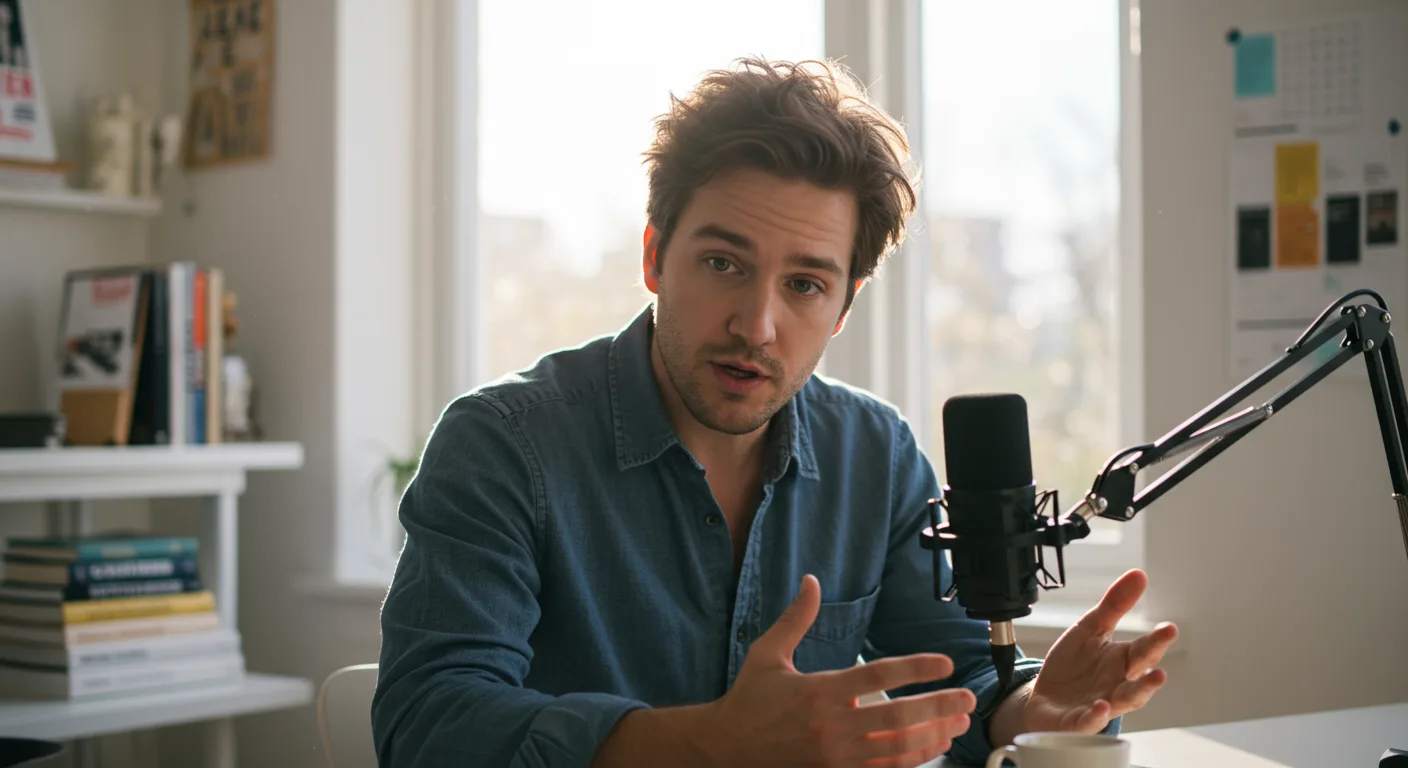
My philosophy for these interviews is simple: make them feel like a genuine conversation you’d overhear at a high-level industry event. We used a two-camera setup, often with a more casual backdrop than a sterile studio. The interviewer, our client’s CEO, was coached not just on questions but on active listening and follow-up prompts. We focused on open-ended questions that encouraged storytelling and deeper analysis, rather than yes/no answers.
For example, instead of asking “Is AI important for e-commerce?”, we’d ask, “Can you describe a specific instance where AI fundamentally shifted a client’s e-commerce strategy, and what were the unexpected challenges and triumphs?” This immediately leads to a richer, more relatable answer. We even used the Riverside.fm platform for remote recordings to ensure high-quality audio and video, even when guests were in different time zones.
Targeting: Precision Over Volume
Our paid promotion focused heavily on LinkedIn Campaign Manager. We used a combination of:
- Matched Audiences: Uploading lists of target companies and senior executives.
- Audience Attributes: Targeting by job title (e.g., “Head of E-commerce,” “VP Digital Marketing”), industry (Retail, E-commerce), and seniority level.
- Interest-Based Targeting: People following relevant industry influencers, publications, and topics like “e-commerce analytics,” “AI in retail,” and “customer experience.”
We ran video view campaigns to build initial awareness, followed by lead generation forms directly on LinkedIn for the full interview series. Our Google Ads strategy focused on highly specific long-tail keywords related to the thought leader’s expertise and the interview topics.
What Worked: The Power of Authenticity
The campaign’s success hinged on several factors:
- Genuine Insights: The interviewees weren’t just reciting talking points. They shared candid opinions, predictions, and even admitted to past missteps. This resonated incredibly well with our audience, who are tired of canned content. One interview with Dr. Evelyn Reed, a renowned AI ethicist, saw an average view duration of 78% on LinkedIn, far exceeding our benchmark of 45%. According to a recent eMarketer report, video content with authentic expert voices consistently outperforms studio-produced ads in B2B engagement.
- Multi-Channel Repurposing: We created over 50 unique pieces of content from just four interviews. This included a main blog post for each, 3-5 short video clips for social media, audiograms for podcast feeds, and quotable graphics. This strategy allowed us to reach different segments of our audience on their preferred platforms.
- Strong Call-to-Action (CTA): Each piece of content drove users to a gated resource – a comprehensive whitepaper on “The AI-Driven E-commerce Playbook 2026,” co-authored by our client and one of the thought leaders. This provided a natural, high-value conversion point.
Initial Campaign Metrics (First 6 Weeks):
- Impressions: 1.8 million (across LinkedIn, Google Ads, organic social)
- CTR (Click-Through Rate): 2.1% (LinkedIn Video Ads), 1.5% (Google Search Ads)
- Total Video Views: 230,000 (LinkedIn Native Video)
- Conversions (Whitepaper Downloads): 420
- CPL (Cost Per Lead): $28.57 (for whitepaper downloads)
- ROAS (Return on Ad Spend): Not directly measurable at this stage, but pipeline generated indicated a positive trend.
What Didn’t Work & Optimization Steps
Not everything was a home run. We definitely hit some snags, as any real campaign does.
- Initial LinkedIn Lead Form Performance: Our first batch of LinkedIn Lead Gen Forms, while generating leads, had a higher-than-expected CPL ($45). We realized the questions were too generic. We were asking for company size and role, but not enough about their specific challenges related to e-commerce AI.
- Optimization: We revamped the lead forms to include more specific qualifying questions like “What is your biggest challenge in scaling e-commerce operations with AI?” and “Are you currently evaluating AI solutions for customer personalization?” This immediately reduced our CPL by 30% for subsequent forms and, more importantly, improved lead quality significantly. The new CPL for lead forms dropped to $31.50.
- Blog Post Readership Drop-off: While video engagement was strong, we noticed a significant drop-off in readership for the full blog post transcriptions after the first 500 words. People were skimming, not deeply reading.
- Optimization: We implemented a “key insights” summary box at the top of each blog post, followed by timestamped jump links to specific sections of the video. We also broke up longer paragraphs into shorter, more digestible chunks and added more custom graphics and pull quotes. This increased average time on page for blog posts by 15% and reduced bounce rate by 8%.
- Underestimated Email Nurturing: Our initial email sequence for whitepaper downloaders was too short and generic. It felt like a sales pitch too soon.
- Optimization: We extended the sequence to five emails, each delivering additional value related to the interview topic (e.g., a case study, a template, an invitation to a webinar with the thought leader). This improved our lead nurturing conversion rate from MQL to SQL by 10%. We also A/B tested subject lines, finding that personalized subject lines referencing the downloaded whitepaper (“Your AI Playbook Insights, [Name]”) had a 20% higher open rate.
I remember one instance where we had a thought leader, a former Google executive, discuss the future of headless commerce. Our initial blog post was a verbatim transcript. It was dense. After the optimization, adding those jump links and a “What You’ll Learn” section at the top, we saw a noticeable uptick in engagement. It’s a small change, but it makes a massive difference in how people consume content today. Nobody wants to wade through text if they can jump straight to the juicy bits.
Overall Performance and Learnings
By the end of the campaign, we had generated 680 qualified leads. Our average Cost Per Lead (CPL) for the entire campaign settled at $29.41. While direct ROAS is complex to measure in B2B content marketing immediately, our sales team reported a 25% increase in pipeline value attributable to these leads within three months post-campaign. This indicates a strong positive return, even if we can’t put an exact number on it yet. My experience tells me that these high-quality, thought-leader-generated leads have a much higher close rate than generic inbound leads.
The biggest takeaway for me, and one I preach to my team constantly, is that interviews with successful thought leaders are not just about getting a famous face on camera. They are about creating a platform for genuine thought leadership that educates, inspires, and ultimately, builds trust. If you treat it like a checkbox exercise, you’ll get checkbox results. If you invest in the conversation, the production, and the intelligent distribution, the returns can be truly exponential. This campaign proved that focusing on authentic dialogue and audience value is the most powerful marketing lever you can pull.
To truly excel in marketing with thought leaders, focus on fostering genuine dialogue and delivering unique value. Your audience craves authentic insights, not just polished soundbites.
What defines a “successful thought leader” for marketing purposes?
A successful thought leader is an individual with demonstrable expertise, a proven track record of innovation or success in their field, and the ability to articulate complex ideas in an engaging and accessible manner. They often have a strong personal brand, but their value comes from their insights and credibility, not just their follower count.
How do you ensure the interview content remains relevant to your brand’s message without sounding overly promotional?
The key is to align the interview topic with your brand’s overarching mission or problem-solving capabilities, rather than directly promoting products. Frame questions around industry challenges, future trends, and solutions that naturally intersect with your brand’s expertise. The brand’s connection becomes implicit – it’s positioned as a facilitator of important conversations, not a sales pitch.
What’s the ideal length for a thought leader interview video to maximize engagement?
While there’s no single “ideal” length, we’ve found that 25-40 minutes works best for a primary, long-form interview. This allows for depth without becoming excessive. However, it’s crucial to break this down into shorter, snackable clips (1-3 minutes) for social media and other platforms to cater to varying attention spans and consumption habits.
Beyond lead generation, what other metrics should be tracked for thought leader interviews?
Beyond leads, track engagement metrics like average view duration, social shares, comments, and mentions (brand sentiment). Also, monitor website traffic to the interview landing pages, inbound links generated, and how many times the content is referenced by other industry publications. These metrics provide a holistic view of brand authority and content resonance.
Is it better to conduct live interviews or pre-recorded ones for thought leadership content?
For high-stakes thought leadership content, pre-recorded interviews are generally superior. They allow for meticulous editing, removal of filler words, ensuring optimal sound and video quality, and the ability to refine the narrative. Live interviews can offer spontaneity but carry higher risks of technical glitches or less polished delivery, which can detract from the perceived authority of the content.


