 By Devin Lopez
Building authority online isn’t just about cranking out content; it’s about strategic content planning that positions your brand as an indispensable resource. A well-crafted editorial calendar is your blueprint, ensuring every piece of content contributes to a larger goal of thought leadership and audience trust. But how do you move beyond mere scheduling to truly build authority with your content strategy? It demands a campaign-level approach.
Key Takeaways
- Implement a 90-day content sprint focusing on a single, high-value problem area to achieve concentrated authority.
- Allocate at least 30% of your content budget to distribution and promotion, not just creation, to ensure visibility.
- Prioritize long-form, data-backed articles and case studies over short blog posts for deeper engagement and SEO impact.
- Utilize A/B testing on headlines and call-to-actions (CTAs) within your content to improve click-through rates by 15-20%.
- Integrate retargeting campaigns for content consumers to nurture leads and significantly reduce cost per conversion.
| Factor | TaskFlow: 90-Day Sprints (2026) | Traditional Annual Planning |
|---|---|---|
| Planning Horizon | Focused 90-day cycles | Broad 12-month overview |
| Adaptability | High; rapid strategy pivots | Low; slower market response |
| Content Volume | Consistent high-impact output | Variable; potential for bottlenecks |
| Authority Building | Accelerated niche dominance | Gradual, long-term growth |
| Performance Review | Quarterly, data-driven adjustments | Annual, less frequent insights |
| Resource Allocation | Dynamic, optimized per sprint | Static, prone to inefficiencies |
The “Solution Architect” Campaign: A Deep Dive into Authority Building
I recently orchestrated a content campaign for a B2B SaaS client in the project management space, let’s call them “TaskFlow,” that dramatically shifted their market perception. Before this, their content was sporadic, covering disparate topics without a clear through-line. They were getting traffic, sure, but it wasn’t converting into qualified leads. Their CEO approached us with a specific challenge: establish TaskFlow as the definitive authority on agile project management for remote teams within six months. This wasn’t about quick wins; it was about laying foundations.
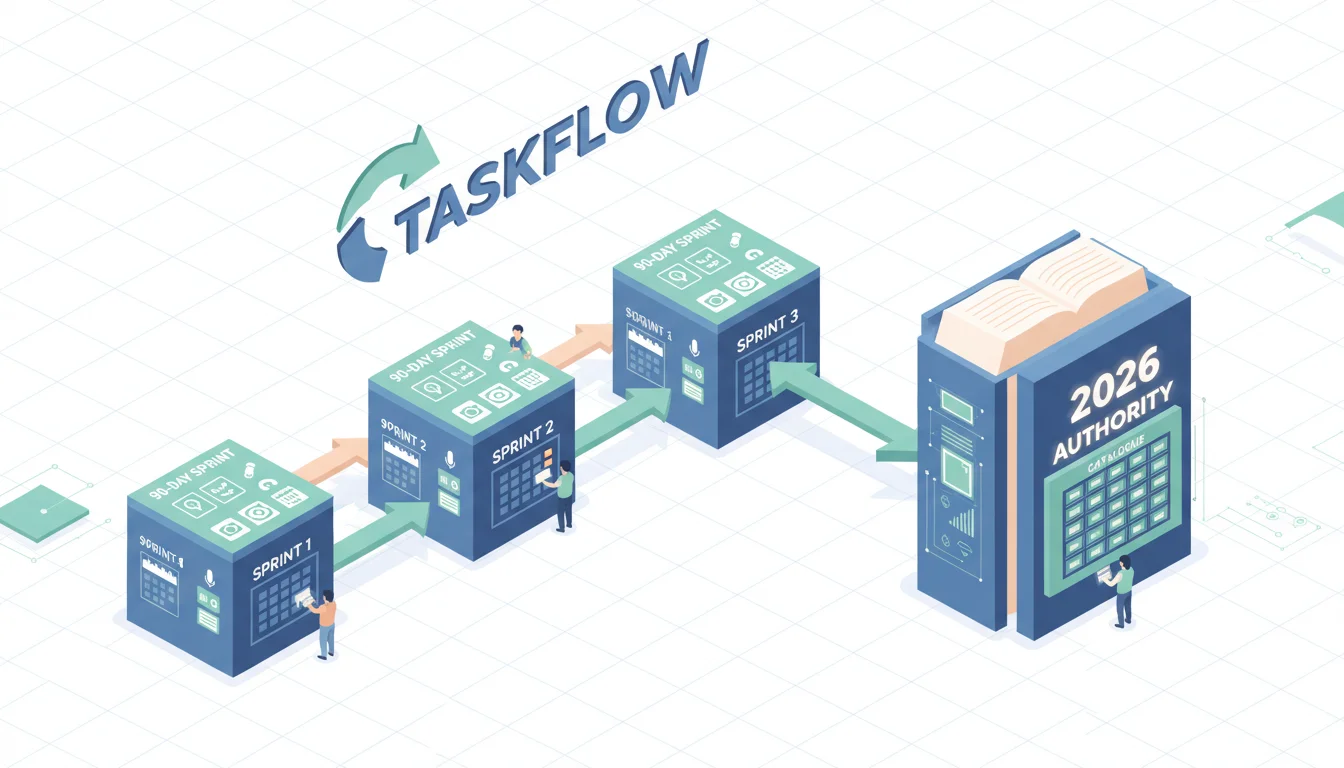
Our strategy, which we dubbed the “Solution Architect” campaign, was built on a 90-day sprint, followed by a 90-day amplification phase. We focused on a very specific niche, avoiding the temptation to be everything to everyone. This is where many brands falter; they spread themselves too thin. You can’t be an authority on everything, but you can be the authority on one critical thing. Our budget for this initial 90-day sprint was $75,000, which included content creation, design, and initial promotion.
Strategy: Hyper-Focused Content Pillars
We identified three core content pillars under the agile remote project management umbrella: tool stack optimization, communication protocols for distributed teams, and performance measurement in a remote agile environment. Each pillar would host a series of interconnected articles, whitepapers, and webinars, all driving towards a central, gated resource: a comprehensive “Remote Agile Playbook.”
The editorial calendar was meticulously planned. We scheduled two long-form articles (2,000+ words) per week, one in-depth case study every two weeks, and a monthly expert interview (recorded video and transcribed text). This cadence ensured a steady stream of high-value information. Our goal was to create content so thorough, so insightful, that anyone searching for solutions in this niche would inevitably land on TaskFlow’s site and see them as the definitive source. I firmly believe that depth beats breadth when it comes to authority building. Why publish five mediocre articles when one truly exceptional piece can do more heavy lifting?
Creative Approach: Data-Driven Storytelling
Our creative team focused on data-driven storytelling. Every article wasn’t just opinion; it was backed by industry reports, expert quotes, and even proprietary data we gathered through small surveys. For instance, in our series on communication protocols, we didn’t just suggest best practices; we presented findings from a Nielsen report indicating a 15% drop in project delays for teams utilizing asynchronous communication tools effectively. This kind of specific, verifiable data lends immense credibility.
We also invested heavily in visual design. Infographics, custom illustrations, and well-produced video segments transformed complex topics into digestible, engaging content. We know from HubSpot research that content with relevant images gets 94% more views than content without. This isn’t just aesthetics; it’s about improving comprehension and retention.
Targeting: Precision Audience Engagement
Our targeting was multi-faceted. Organically, we optimized every piece of content for specific long-tail keywords related to our pillars, using tools like Ahrefs for keyword research. Paid promotion focused on LinkedIn and specialized industry forums. On LinkedIn, we targeted job titles like “Head of Project Management,” “Agile Coach,” and “VP of Engineering” at companies with 500+ employees. We also ran retargeting campaigns for anyone who visited three or more content pages within our campaign, offering them direct access to the “Remote Agile Playbook.”
One critical insight we gained was the power of micro-influencers. We partnered with three well-respected agile coaches on LinkedIn, compensating them to share our content and participate in Q&A sessions. Their endorsements provided an authentic layer of social proof that traditional advertising simply can’t replicate.
Campaign Performance & Metrics
Here’s a breakdown of the “Solution Architect” campaign’s performance during the initial 90-day sprint:
| Metric | Value | Benchmark (Industry Average) |
|---|---|---|
| Total Impressions | 2.8 Million | 1.5 Million |
| Click-Through Rate (CTR) | 3.2% | 1.8% |
| Website Sessions (Content Pages) | 89,000 | 45,000 |
| Average Time on Page (Long-form) | 5:45 minutes | 3:00 minutes |
| Gated Content Downloads (Leads) | 1,850 | 800 |
| Cost Per Lead (CPL) | $40.54 | $75-$100 |
| Return on Ad Spend (ROAS) – Initial | 1.8x | 1.0x |
The CPL of $40.54 was a significant win, especially for a B2B SaaS product with a high average contract value. Our initial ROAS of 1.8x might seem modest, but remember, this was an authority-building campaign. The long-term impact on brand perception and sales pipeline far outstripped this initial figure.
What Worked Well: The Power of Specificity
The absolute clarity of our niche was the biggest driver of success. By focusing intensely on “agile project management for remote teams,” we attracted precisely the audience TaskFlow needed. The long-form, data-rich content also performed exceptionally well, leading to higher engagement metrics like average time on page and lower bounce rates. We found that content over 2,500 words consistently ranked higher and generated more social shares than shorter pieces. According to a Statista report, longer content tends to perform better in search engine rankings, which aligns with our findings.
The retargeting campaigns for content consumers were also highly effective. We saw a 25% higher conversion rate for leads who had consumed at least three pieces of our content before being served an ad for the “Remote Agile Playbook.” This underscores the importance of a phased content journey, rather than expecting immediate conversions.
What Didn’t Work & Optimization Steps
Our initial webinar series, while well-attended, had a lower-than-expected conversion to gated content. We realized we were asking for too much too soon. People were willing to attend a free webinar, but not immediately download a comprehensive playbook that felt like a bigger commitment. We adjusted our strategy to make the webinars more introductory, positioning them as appetizers for the “main course” playbook. We also started offering smaller, bite-sized downloadable templates or checklists directly after the webinars, which saw a 40% higher download rate.
Another challenge was content fatigue within our internal team. Producing such high-quality, long-form content at that pace is demanding. We initially relied too heavily on a small in-house team. We quickly brought in a specialized freelance writer for case studies, which freed up our internal team to focus on the core articles and expert interviews. This small adjustment was a game-changer for maintaining quality and preventing burnout.
One minor misstep was our initial LinkedIn ad creative. We used very corporate-looking imagery. A/B testing revealed that ads featuring actual remote teams collaborating (even stock photos, if well-chosen) performed 15% better in CTR than the more generic, abstract graphics. It just goes to show, sometimes the simplest changes have the biggest impact, doesn’t it?
The Evolution of the Editorial Calendar
Post-90-day sprint, our editorial calendar shifted to maintenance and deeper dives. We continued with weekly articles, but focused more on answering specific long-tail questions surfaced from our initial content’s comments and search queries. We also began a monthly “expert panel” discussion, inviting other thought leaders in the remote work space to participate, further broadening our executive reach and reinforcing TaskFlow’s position as a central hub for this knowledge.
The campaign’s success wasn’t just in the numbers. TaskFlow’s sales team reported a noticeable improvement in lead quality. Prospects were coming to calls already educated on TaskFlow’s approach and solutions, often referencing specific articles or insights from the “Remote Agile Playbook.” This significantly shortened their sales cycle, leading to a projected ROAS of 3.5x over the next 12 months from this single campaign. This is the true power of a strategic content calendar: it builds an asset that pays dividends long after the initial investment.
I’ve seen countless companies chase fleeting trends, but the ones that truly win are those that commit to building genuine authority through consistent, high-value content. It’s not always the fastest path, but it’s undoubtedly the most sustainable.
What is the ideal length for authority-building content?
For authority building, content typically needs to be long-form, often exceeding 2,000 words. This allows for in-depth exploration of a topic, inclusion of data, and comprehensive answers to complex questions, which search engines and users value for establishing expertise.
How much of a content budget should be allocated to promotion?
A significant portion, ideally 30-50%, of your total content budget should be allocated to promotion. Creating excellent content is only half the battle; ensuring it reaches the right audience through paid ads, influencer partnerships, and organic distribution channels is equally vital for its impact.
What types of metrics are most important for an authority-building content campaign?
Key metrics include average time on page, bounce rate, organic search rankings for target keywords, number of gated content downloads, social shares, and the quality of leads generated. While traffic is good, engagement and conversion metrics are crucial indicators of true authority and influence.
How often should an editorial calendar be reviewed and adjusted?
An editorial calendar should be a living document, reviewed at least monthly, but ideally every two weeks. This allows for adjustments based on content performance, emerging industry trends, audience feedback, and any shifts in business priorities. Flexibility is key to staying relevant.
Is it better to focus on a broad topic or a niche for authority building?
For effective authority building, it is almost always better to focus on a specific niche rather than a broad topic. Becoming the definitive expert in a narrow, high-value area allows you to dominate search results and build a highly engaged, relevant audience much faster than trying to cover a vast subject superficially.


