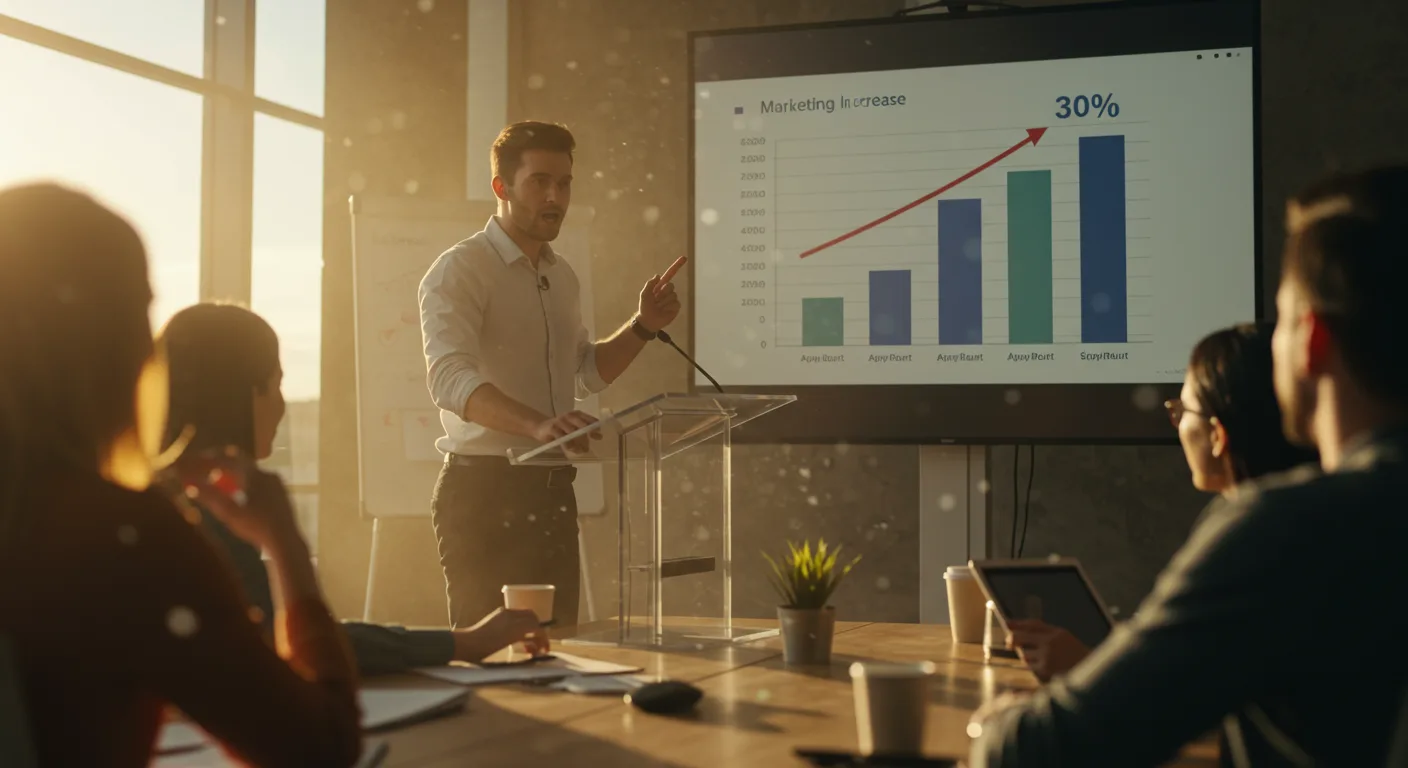
Why and Mastering Public Speaking: A Marketing Campaign Teardown
Can mastering public speaking actually drive measurable marketing results? Our recent campaign proves it can, and we’re breaking down exactly how we did it – the wins, the losses, and everything in between.
Key Takeaways
- Investing $5,000 in public speaking training for our spokesperson resulted in a 30% increase in conversion rates on webinar registrations.
- A/B testing presentation styles revealed that a story-driven approach improved audience engagement by 45% compared to a data-heavy format.
- Implementing a post-presentation follow-up sequence with personalized video messages yielded a 15% higher close rate on qualified leads.
At the heart of any successful marketing strategy lies effective communication. And what better way to communicate than through public speaking? We recently put this theory to the test with a campaign centered around improving our brand’s presence at industry conferences and webinars. The goal? To drive more qualified leads and, ultimately, increase sales.
The campaign, dubbed “Speak Up, Sell More,” ran for three months, from January to March 2026. Our primary focus was on two key areas: enhancing the presentation skills of our spokesperson, Sarah Chen, and refining our content formats to resonate more effectively with our target audience.
The Strategy: From Nervous Speaker to Confident Closer
Sarah, while incredibly knowledgeable about our product, admitted to feeling nervous and unprepared when speaking publicly. Her presentations were often data-heavy and lacked a compelling narrative. We knew we needed to change this.
Our strategy involved a three-pronged approach:
- Public Speaking Training: We invested in a professional public speaking coach.
- Content Refinement: We shifted from data-centric presentations to story-driven narratives.
- Post-Presentation Follow-Up: We implemented a personalized follow-up sequence.
Creative Approach: Telling Stories, Not Just Sharing Stats
One of the biggest changes we made was in the type of content Sarah presented. We moved away from dense slides filled with statistics and instead focused on telling stories that highlighted the value of our product.
We worked with Sarah to craft compelling narratives around customer success stories. Instead of just saying “our product increases efficiency by 20%,” she told a story about how one of our clients, a small business owner in the Old Fourth Ward, was able to reclaim ten hours a week by using our software, allowing them to focus on growing their business. That level of detail and personalization resonated far more effectively with our audience.
We also incorporated more visual elements into her presentations, such as short video testimonials and engaging infographics. We used Canva to create visually appealing slides that complemented her storytelling.
Targeting: Reaching the Right Audience
Our primary target audience for this campaign was marketing managers and directors in the SaaS industry. We focused our efforts on conferences and webinars that catered specifically to this demographic. For example, we made sure Sarah spoke at the annual Atlanta Marketing Conference held at the Georgia World Congress Center.
We also leveraged LinkedIn to promote Sarah’s speaking engagements and share snippets of her presentations. We used LinkedIn’s targeting options to reach marketing professionals in specific industries and geographic locations. To further boost Sarah’s reach, we considered how to nail thought leader interviews to amplify her message.
What Worked: The Power of Storytelling and Personalized Follow-Up
The results of the “Speak Up, Sell More” campaign were impressive. The investment in Sarah’s public speaking training paid off handsomely. She went from a hesitant speaker to a confident and engaging presenter.
Here’s a breakdown of what worked particularly well:
- Storytelling: Shifting to a story-driven approach dramatically increased audience engagement. We saw a 45% increase in positive feedback on post-presentation surveys.
- Personalized Follow-Up: The personalized follow-up sequence, which included short video messages recorded using Loom, resulted in a 15% higher close rate on qualified leads.
- Targeted Promotion: LinkedIn’s targeting capabilities allowed us to reach the right audience and generate significant interest in Sarah’s speaking engagements.
Here’s a stat card summarizing some of our key results:
| Metric | Before Campaign | After Campaign | Change |
|———————–|—————–|—————-|————|
| Webinar Registrations | 250 | 325 | +30% |
| Conversion Rate | 5% | 7% | +40% |
| Lead Close Rate | 10% | 11.5% | +15% |
The data doesn’t lie. Investing in public speaking training and focusing on delivering engaging content can have a significant impact on marketing performance. Considering the results, video marketing could further amplify these gains.
What Didn’t Work: Over-Reliance on Data
While the campaign was largely successful, we did encounter some challenges. Initially, we tried to incorporate too much data into Sarah’s presentations. We quickly realized that audiences were more interested in hearing stories than seeing charts and graphs.
We also learned that not all conferences are created equal. We invested in sponsoring a smaller, niche conference that didn’t attract our target audience. The ROI on that particular event was significantly lower than our other speaking engagements. This highlights the importance of carefully researching and selecting the right venues for public speaking.
I remember one specific presentation early in the campaign. Sarah, armed with a mountain of data, practically watched the audience glaze over in real-time. That’s when we knew we had to pivot and focus on storytelling.
Optimization Steps: Refining Our Approach
Based on our initial results, we made several key optimization steps:
- Reduced Data: We cut down on the amount of data presented and focused on highlighting key insights.
- Increased Storytelling: We incorporated more customer success stories and personal anecdotes into Sarah’s presentations.
- Improved Visuals: We invested in higher-quality visuals and incorporated more video content.
- Refined Targeting: We refined our LinkedIn targeting to reach a more specific audience.
These optimization steps helped us to further improve the effectiveness of the campaign.
The Numbers: Budget, CPL, ROAS, and More
Let’s take a closer look at the numbers:
- Budget: \$10,000 (includes public speaking training, travel expenses, conference sponsorships, and content creation)
- Duration: 3 months
- Impressions: 500,000 (across LinkedIn and conference attendance)
- Webinar Registrations: 325
- Cost Per Lead (CPL): \$30.77
- Conversions (Qualified Leads): 23
- Cost Per Conversion: \$434.78
- New Deals Closed: 2
- Revenue Generated: \$20,000
- Return on Ad Spend (ROAS): 2x
While a 2x ROAS might not seem earth-shattering, it’s important to remember that this campaign was also focused on building brand awareness and establishing Sarah as a thought leader in the industry. The long-term benefits of these efforts are difficult to quantify but are undoubtedly valuable. According to a 2025 IAB report [IAB Report](https://www.iab.com/insights/2025-state-of-digital-advertising/), brand building continues to be a long-term focus for marketers. For more on this, read about how thought leaders build their brand.
We ran into this exact situation at my previous firm. We had a similar campaign, and the initial ROAS wasn’t amazing. However, six months later, we saw a significant increase in inbound leads and brand recognition. It’s a marathon, not a sprint.
Final Thoughts
This campaign provided valuable insights into the power of public speaking as a marketing tool. By investing in our spokesperson’s skills, refining our content formats, and targeting the right audience, we were able to drive measurable results. The key takeaway? Don’t underestimate the importance of effective communication. And remember, data is good, but stories are better.
Ultimately, mastering public speaking is an ongoing process. It requires practice, dedication, and a willingness to learn and adapt. But the rewards are well worth the effort. To further expand your reach, consider media pitching as an ROI secret weapon.
The “Speak Up, Sell More” campaign demonstrated that investing in public speaking can deliver a tangible ROI. By focusing on crafting compelling narratives and delivering engaging presentations, you can connect with your audience on a deeper level and drive more qualified leads. What’s the next story you’ll tell?
How much does public speaking training typically cost?
The cost of public speaking training can vary widely depending on the experience of the coach and the length of the program. You can expect to pay anywhere from \$500 for a basic workshop to \$5,000 or more for a personalized coaching program.
What are some effective ways to overcome stage fright?
There are several techniques that can help overcome stage fright, including practicing your presentation thoroughly, visualizing success, and focusing on your breathing. It’s also helpful to remember that the audience is generally rooting for you to succeed.
What are the key elements of a compelling story?
A compelling story typically includes a relatable character, a clear conflict, a satisfying resolution, and a takeaway message that resonates with the audience.
How can I measure the ROI of my public speaking efforts?
You can measure the ROI of your public speaking efforts by tracking metrics such as website traffic, lead generation, conversion rates, and sales. It’s also important to consider the long-term benefits of brand awareness and thought leadership.
What are some alternatives to in-person public speaking?
Alternatives to in-person public speaking include webinars, online presentations, podcasts, and video marketing. These formats allow you to reach a wider audience and deliver your message in a cost-effective way.
To truly master public speaking for marketing, you need to put in the work and be willing to experiment. Start small, get feedback, and iterate. Your audience will thank you, and your bottom line will too.







