 By Angela Smith
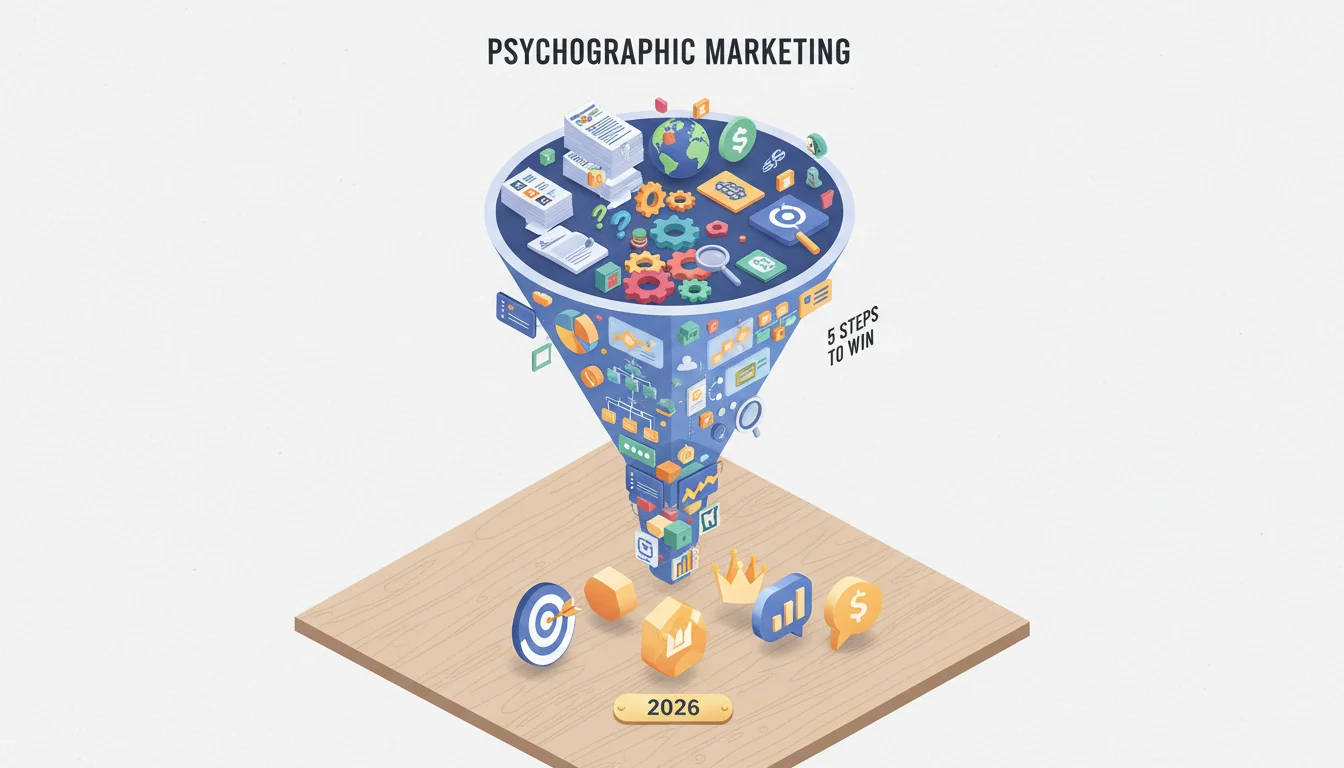
Psychographic targeting, focusing on the attitudes, interests, and lifestyles of consumers, offers a superior approach to traditional demographic segmentation, leading to significantly better marketing focus. This method moves beyond surface-level data, aiming to understand the underlying motivations that drive purchasing decisions. But how does one effectively implement a psychographic strategy in 2026?
Key Takeaways
- Conduct in-depth qualitative research, including surveys and focus groups, to uncover core psychographic segments before initiating any campaign.
- Use advanced analytics platforms like Adobe Analytics to cross-reference behavioral data with identified psychographic profiles for precise audience mapping.
- Segment your email lists and ad audiences based on psychographic clusters, tailoring content and offers to resonate with specific values and pain points.
- Employ A/B testing rigorously across all psychographically targeted campaigns to continuously refine messaging and creative elements for maximum impact.
- Integrate psychographic insights into your content strategy, creating narratives that speak directly to the emotional and aspirational drivers of your target segments.
1. Define Your Ideal Customer’s Psychographic Profile
The first, and perhaps most critical, step in psychographic marketing is to move beyond age and income brackets. You need to understand who your ideal customer truly is, not just what they look like on paper. This involves identifying their values, beliefs, interests, personality traits, and lifestyle choices. For example, a luxury car brand isn’t just targeting high-income individuals. They’re targeting those who value status, performance, and perhaps a certain sense of adventure. A sustainable clothing brand isn’t just for young adults. It’s for consumers who prioritize ethical production, environmental impact, and conscious consumption. Start by brainstorming. What problems does your product or service solve? Who truly cares about those problems? Consider conducting internal workshops with your sales and customer service teams. They interact directly with customers and often possess invaluable qualitative insights into motivations and pain points. Document these hypotheses carefully.
Pro Tip: Start with Qualitative Research
While quantitative data is essential later, begin with qualitative research. This provides the rich, nuanced understanding you need. Think about running small focus groups (virtual or in-person) or conducting in-depth interviews with existing customers. Ask open-ended questions about their daily routines, aspirations, challenges, and what truly matters to them. Tools like SurveyMonkey or Typeform can facilitate structured surveys with qualitative questions, allowing for free-text responses that reveal deeper insights. For instance, instead of asking “Are you interested in fitness?”, ask “What role does health and wellness play in your daily life, and what motivates your choices in this area?”
Common Mistake: Assuming Psychographics from Demographics
A frequent error is assuming psychographic traits based solely on demographic data. For example, not all millennials are tech-savvy early adopters, and not all empty-nesters are interested in retirement planning. These assumptions can lead to generic messaging that fails to resonate. Always validate your psychographic hypotheses with direct research.
| Aspect | Psychographic Marketing | Traditional Demographic Segmentation |
|---|---|---|
| Focus | Attitudes, interests, lifestyles, motivations | Age, income, gender, location |
| Marketing Effectiveness | Significantly better focus, superior approach | Surface-level data, generic messaging |
| Data Sources (Validation) | Qualitative research, advanced analytics, CRM, social listening | Third-party data (often unvalidated) |
| Audience Understanding | Underlying motivations, values, beliefs, pain points | What customers look like on paper |
| Risk of Assumptions | Validated through direct research | High (e.g., not all millennials are tech-savvy) |
2. Gather Data to Validate and Refine Profiles
Once you have initial psychographic hypotheses, it’s time to gather data to either validate or refine them. This step combines both qualitative and quantitative approaches. For qualitative validation, continue with surveys but expand your reach. Use existing customer lists, social media polls, and website feedback forms. Look for recurring themes in open-ended responses. Are certain values or interests consistently mentioned by customers who exhibit similar purchase behaviors? On the quantitative side, your existing marketing analytics platforms are goldmines. Platforms like Adobe Analytics or Google Analytics 4 offer strong capabilities for understanding user behavior. Look at pages visited, time spent on site, content consumed, and conversion paths. While these don’t directly tell you psychographics, they provide behavioral indicators. For instance, if a segment of your audience frequently visits blog posts about sustainable living and then converts on eco-friendly products, you’ve found a strong behavioral signal for an environmentally conscious psychographic segment. Integrate data from your CRM (Salesforce, HubSpot CRM) to cross-reference purchase history and customer interactions with survey responses. What types of products do customers with certain expressed values tend to buy? This correlation is where the power of psychographic targeting truly begins to shine.
Pro Tip: Use Social Listening Tools
Social listening tools (Brandwatch, Sprout Social) can provide invaluable insights into what your audience is talking about, their sentiments, and the topics they engage with online. Monitor keywords related to your product, industry, and the psychographic traits you’re exploring. This provides an unfiltered view of their interests and concerns. For example, tracking discussions around “work-life balance” or “personal growth” can reveal segments driven by self-improvement or well-being. According to a 2024 eMarketer report, social listening is increasingly critical for identifying nuanced consumer trends that traditional surveys might miss.
Common Mistake: Over-reliance on Third-Party Data without Validation
While third-party data providers offer psychographic segments, relying solely on them without validating against your own customer data can be risky. These segments are generalized and may not perfectly align with your specific audience. Always use your proprietary data as the primary source of truth.
“Of the 150 people asked to spare 37 seconds, 90 agreed. A specific request boosted compliance by 42.9%.”
3. Segment Your Audience Based on Psychographic Profiles
With validated psychographic profiles, the next step is to segment your audience. This isn’t just about creating groups. It’s about creating actionable segments that you can target with tailored messaging. Use your marketing automation platform (ActiveCampaign, Mailchimp) to create distinct customer segments. Tag customers based on their identified psychographic profile. For instance, if you’re a travel agency, you might have segments like “Adventure Seekers” (value experiences over luxury, interested in hiking, cultural immersion), “Relaxation Enthusiasts” (value comfort, spa treatments, quiet destinations), and “Family Explorers” (value child-friendly activities, safety, convenience). For advertising, platforms like Google Ads and Meta Business Suite allow for increasingly sophisticated audience targeting based on interests, behaviors, and even inferred personality traits. While direct psychographic targeting fields might not be explicitly labeled as such, you can achieve similar results by combining interests, topics, and behavioral signals. For example, to target “Adventure Seekers” on Meta, you might combine interests like “hiking,” “backpacking,” “ecotourism,” and “adventure travel,” alongside behaviors indicating frequent international travel.
Pro Tip: Create Persona Narratives
For each psychographic segment, develop a detailed persona narrative. Give them a name, a backstory, a day in their life, their goals, their pain points, and their media consumption habits. This humanizes the data and makes it easier for your content and creative teams to craft truly resonant messages. It’s not just an exercise. It’s a living document that guides strategy.
Common Mistake: Creating Too Many Segments
While precision is good, creating an excessive number of micro-segments can dilute your efforts and make execution unwieldy. Aim for 3 to 7 primary psychographic segments that are distinct enough to warrant unique messaging but broad enough to have a significant audience size.
4. Tailor Content and Messaging
This is where psychographic targeting truly comes alive. Once your audience is segmented, every piece of content, every ad copy, and every email should be crafted with a specific psychographic profile in mind. Consider the “Adventure Seekers” from our travel agency example. Their email marketing might feature stunning images of remote field, testimonials from travelers who scaled mountains, and calls to action emphasizing unique experiences and challenges. The language would be energetic, inspiring, and focus on transformation and discovery. Conversely, for “Relaxation Enthusiasts,” emails would show serene resorts, emphasize comfort and pampering, and highlight amenities like spa services and gourmet dining. The language would be calming, luxurious, and focus on escape and rejuvenation. Your website content should also reflect these segments. You might have dedicated landing pages or blog categories that speak directly to the values and interests of each psychographic group. Use A/B testing extensively on headlines, ad copy, and calls to action to see what resonates most with each segment. A strong headline for an “Adventure Seeker” might be “Conquer the Unseen: Your Next Epic Journey Awaits,” while for a “Relaxation Enthusiast” it could be “Unwind Completely: Discover Your Sanctuary.”
Pro Tip: Personalize with Dynamic Content
Modern marketing automation platforms allow for dynamic content insertion. This means different blocks of text, images, or even product recommendations can be displayed based on the recipient’s psychographic profile within the same email or webpage. This level of personalization makes the message feel incredibly relevant.
Common Mistake: Generic Messaging with Psychographic Labels
Simply labeling a segment as “Adventure Seekers” but still sending them generic travel deals is a wasted effort. The messaging must fundamentally change to reflect their core motivations. This is not a superficial change. It demands a deep understanding of their worldview.
5. Monitor, Analyze, and Iterate
Psychographic targeting is not a set-it-and-forget-it strategy. It requires continuous monitoring, analysis, and iteration. Regularly review the performance of your psychographically targeted campaigns. Which segments are responding best to which messages? What are your conversion rates, click-through rates, and engagement metrics for each segment? Use your analytics dashboards to track these key performance indicators. Pay attention to qualitative feedback as well. Are customers commenting on the relevance of your content? Are there new trends emerging in social listening that suggest a shift in your audience’s values or interests? The world, and your audience, evolve. A 2025 IAB report on digital ad spend highlighted the increasing importance of real-time audience understanding to maintain competitive advantage. Based on your analysis, be prepared to refine your psychographic profiles, adjust your segmentation, and iterate on your content and messaging. Perhaps a new “Digital Nomad” segment has emerged among your “Adventure Seekers” who prioritize co-working spaces and high-speed internet in their travel plans. This requires a distinct approach. Don’t be afraid to challenge your initial assumptions. The goal is continuous improvement and deeper connection with your audience.
Pro Tip: Conduct Regular Audience Audits
Schedule quarterly or bi-annual audience audits. Re-run surveys, conduct new focus groups, and analyze fresh behavioral data. This ensures your psychographic profiles remain accurate and relevant in a dynamic market. Sometimes, a subtle shift in cultural values can significantly impact how your audience perceives your brand.
Common Mistake: Sticking to Outdated Profiles
Market dynamics change, consumer values shift, and new trends emerge. Failing to regularly update your psychographic profiles will lead to diminishing returns and missed opportunities. What resonated with “Early Adopters” five years ago might be mainstream today, requiring you to identify the next wave of innovators. Effective psychographic targeting allows businesses to connect with their audience on a deeper, more emotional level, fostering stronger brand loyalty and driving more meaningful conversions. By understanding why people make choices, not just what choices they make, marketers can craft campaigns that truly resonate.
What is the main difference between psychographic and demographic targeting?
Demographic targeting categorizes audiences based on objective, measurable traits like age, gender, income, and location. Psychographic targeting, in contrast, focuses on subjective, internal characteristics such as values, interests, attitudes, lifestyles, and personality traits. Psychographics explain the “why” behind consumer behavior, while demographics describe the “who.”
Can psychographic targeting be used for B2B marketing?
Absolutely. While often associated with B2C, psychographic principles are highly effective in B2B. Instead of individual values, you’d focus on the values, priorities, and culture of the target organization, or the professional aspirations and pain points of the decision-makers within those organizations. For example, targeting businesses that prioritize innovation, sustainability, or cost-efficiency requires a psychographic understanding of their corporate culture and strategic objectives.
What tools are best for gathering psychographic data?
A combination of tools is ideal. For qualitative data, consider survey platforms like SurveyMonkey or Typeform, and social listening tools like Brandwatch or Sprout Social. For quantitative behavioral data that can infer psychographics, web analytics platforms like Adobe Analytics or Google Analytics 4, and CRM systems like Salesforce or HubSpot are invaluable. Also, advertising platforms like Google Ads and Meta Business Suite offer interest-based targeting options that can be leveraged.
How often should psychographic profiles be updated?
Psychographic profiles should be treated as living documents and updated regularly. A good cadence is to conduct a full audit every 6 to 12 months, or whenever significant market shifts, product launches, or major campaign results indicate a need for reassessment. Continuous monitoring of social listening and campaign performance can also highlight emerging trends that warrant more immediate adjustments.
Is psychographic targeting more effective than demographic targeting?
When used effectively, psychographic targeting often leads to higher engagement and conversion rates because it allows for more personalized and resonant messaging. While demographic data provides a foundational understanding, psychographics dig into motivation, making campaigns more persuasive. The most effective strategies often combine both demographic and psychographic insights for a well-rounded view of the target audience.


