 By Editorial Team
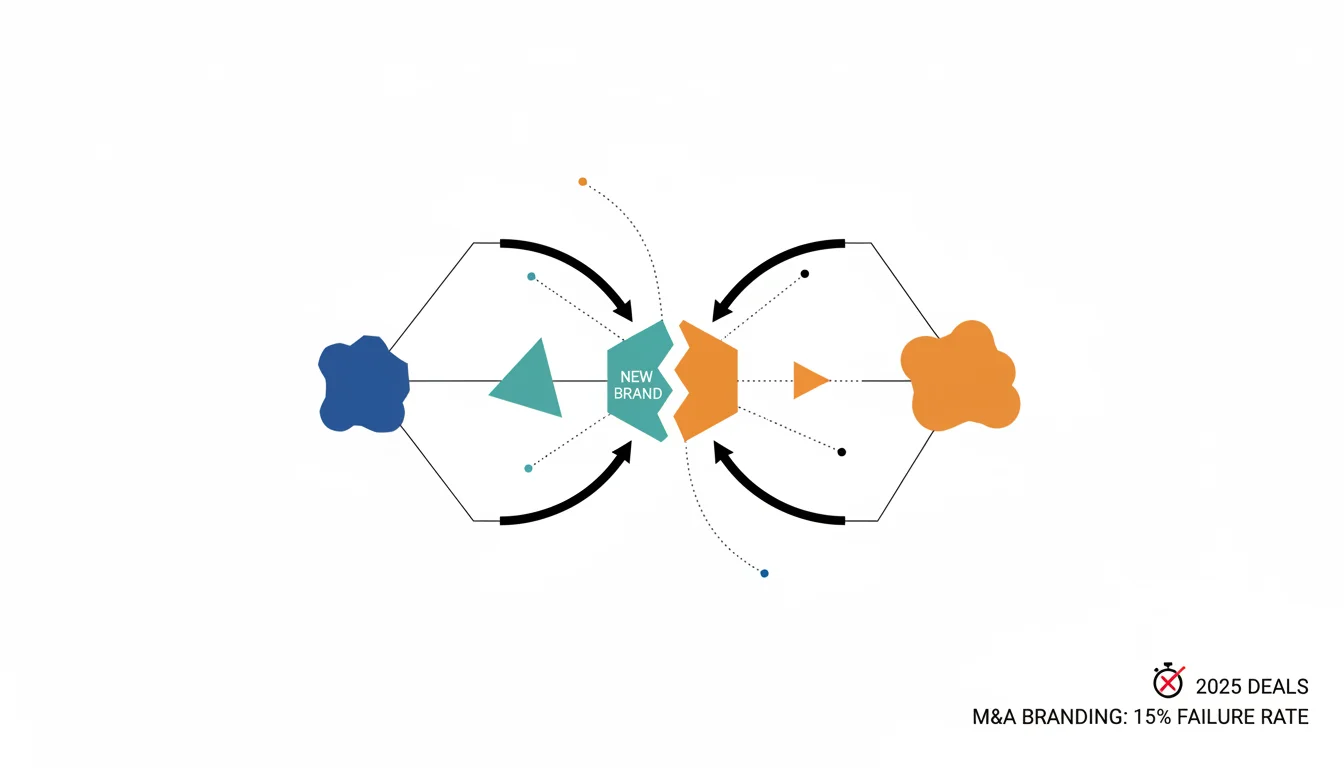
A recent KPMG report says only 15% of M&A deals create value for the acquiring company’s shareholders, a number that should be a wake-up call for any practitioner. The gap in these failed deals is almost always the same: a complete breakdown in unifying the story through strategic storytelling. Good M&A branding is the hard work of building one cohesive narrative that actually means something to everyone, from the most junior employee to the most skeptical investor. So what’s the playbook for making sure your post-merger story actually works?
Key Takeaways
- Get culture and communication right from the start of an M&A deal, and your odds of hitting your targets jump by 20%.
- A single, unified brand story, told everywhere, can cut employee turnover by up to 15% in the chaotic first year after a merger.
- When executives are out front with proactive, transparent communication, investor confidence gets a 10% to 12% bump, which helps keep the stock price steady.
- Tackle brand messaging during due diligence to spot and fix communication problems early, which saves a ton of money and headaches later.
20% Higher Success Rates for Deals Prioritizing Cultural Integration
A 2025 Deloitte study confirms what I see in the field: prioritize cultural integration and communication from day one, and you’ll see a 20% higher success rate in hitting your goals. This means doing more than scheduling a few town halls. It requires digging into the real values and working habits of both companies to build a new, credible story. Too many leaders get lost in the financials, ignoring the people side until it’s a full-blown crisis. They assume signing the papers means cultures will just merge. They don’t.
I’ve seen this firsthand consulting on big tech deals over the past year. The ones that floundered always had leaders who dismissed culture as a ‘soft’ problem for later, after the ‘hard’ work of integration was finished. The successful ones did the opposite. They started by auditing the stories each company’s employees told about their jobs and their purpose. With that knowledge, they built a new, shared narrative with both leadership teams, one that respected where people came from but gave them a clear, compelling reason to be excited about the future. It’s not cheap, you need comms and branding pros locked in with the integration office from the jump. It’s a lot of work, but the payoff is right there in the data.
Up to 15% Reduction in Employee Turnover with Unified Brand Narratives
Nothing tanks M&A value faster than employee anxiety. Research from Mercer in 2024 showed that a unified brand narrative, pushed out consistently everywhere, can slash employee turnover by up to 15% in the first year post-merger. People aren’t just deciding to stay by chance. They’re responding to clarity and purpose in a moment that is defined by confusion. If you can give them a solid ‘why’ behind the deal and show them where they fit into the new company’s mission, they’ll commit. If you leave an information vacuum, they’ll fill it with fear, rumors, and then they’ll just leave.
I watched two big software firms try to merge last year. The acquirer’s leadership went all-in on product roadmaps and tech stacks, just assuming the people would follow. Big mistake. The result was mass confusion and a brain drain of key engineers in the first six months. They only turned it around after they finally brought in a team to build a single story about their combined future, one that showed how the two different cultures would make them stronger together. This led to a full internal campaign with a new mission, new values, and videos from leaders hammering the point home. The exodus stopped. This proves strategic storytelling is one of the most effective retention tools you have.
10% to 12% Increase in Investor Confidence Through Proactive Executive Communication
Financial markets hate uncertainty, and M&A is peak uncertainty. A 2025 PwC report backs this up, showing that proactive and transparent executive communication can boost investor confidence by 10% to 12%, which is huge for stabilizing the stock price. This is about delivering clear, consistent, and credible messages directly from leadership. Investors are simple: they need to hear the strategic logic, see the integration plan, and believe the vision for making money. Any fuzziness on those points creates doubt and will get you punished on the market.
Too many leaders underestimate their own voice, delegating all of this to IR and assuming the job is done. It’s a huge mistake. Nothing builds trust like the CEO and other top execs personally articulating the vision with real conviction and detail. I’ve been in the room for investor roadshows where having leaders from both companies on stage, walking through the integrated strategy, completely flipped negative market sentiment on its head. They laid out the synergies, gave real integration milestones, and told a story about the future that wasn’t just a spreadsheet. This has to be a constant conversation that reinforces the core story of the new business, not just a performance during quarterly earnings.
Early Integration of Brand Messaging Identifies Roadblocks
The old way of thinking was that M&A branding was something you worried about after the deal closed. That’s just wrong. A 2025 analysis from the IAB (Interactive Advertising Bureau) found that when you bake brand and narrative work into the due diligence phase, you spot communication roadblocks early and save a fortune down the line. Finding out after you’ve closed that your brand values are in direct conflict is a nightmare scenario that leads to emergency rebranding, confused customers, and internal battles.
I tell every M&A leader I work with the same thing: brand integration is a critical path item, not a ‘nice to have’. Put your marketing and comms leads in the due diligence room. Their job is to map the brand equity of both companies, flag any potential conflicts, and start drafting what a unified story could even sound like. What do you do when one company’s brand is built on being a disruptive innovator and the other’s is all about stable, enterprise reliability? You have to figure out how to bridge that gap in your story from the start. If you wait, you’re just fixing structural problems with paint and tape later on, which never works and always costs more.
Disagreeing with Conventional Wisdom: The “Soft Skills” Are the Hardest Problems
There’s still a school of thought in M&A that treats communication, culture, and storytelling as ‘soft skills’, secondary to the hard numbers of finance, legal, and ops. I think that’s completely backwards. The data is clear: the most spectacular M&A failures are almost never because of a bad financial model. They’re because of a collapse in human integration. This old-school focus on tangible assets pushes the actual work of aligning people and culture to the back burner which is a flawed view that forgets people, not spreadsheets, are the ones who have to make the strategy work. Your deal can look perfect on paper, but if the team isn’t aligned and motivated, it will fail.
The real work in M&A isn’t finding the value, it’s actually getting it. Realizing that value comes down to execution by a unified, motivated workforce and stakeholders who believe in the plan. Viewing strategic storytelling as optional is a direct path to underperformance. Let’s be practical: fixing a broken culture or winning back lost trust is infinitely harder than tweaking a financial model. These so-called ‘soft’ problems are the hardest to solve because they’re tangled up in emotion, perception, and habit. Leaders have to treat narrative and communication with the same gravity as finance and ops, building it into the deal process from the very start. It’s an investment that pays off far more than any panicked clean-up effort ever could.
Effective strategic storytelling is a core M&A discipline, not a marketing task. By getting the story straight early and telling it consistently, leaders can align their cultures, keep their best people, and maintain investor confidence, the three things you must do to actually get the value you paid for in an acquisition.
What is strategic storytelling in the context of M&A?
It’s the process of building one single, believable story that explains why the deal is happening, what the new company will look like, and what’s in it for everyone, employees, customers, and investors. It’s about creating a shared sense of purpose that goes beyond the numbers on a spreadsheet.
Why is M&A branding important for successful integration?
It’s how you establish the new company’s identity. Good branding clarifies the new mission and values which helps bring different internal cultures together. For the outside world, it eliminates market confusion and builds trust by showing customers and investors a clear, unified front.
How does executive communication impact M&A outcomes?
It sets the entire tone for the integration. When leaders communicate clearly and proactively, they manage expectations, calm fears, and build confidence. This directly helps keep the stock price stable, convinces key people to stay, and makes the whole deal look better to the outside world.
When should companies start developing their M&A narrative?
You need to start during due diligence. Don’t wait until the deal is closed. Bringing in comms and brand experts early lets you audit the existing brands, spot potential culture or messaging clashes, and start outlining the new story before you’ve even signed the papers.
What are the risks of neglecting strategic storytelling in M&A?
If you ignore it, expect high employee turnover from anxiety and confusion, nervous investors tanking your stock price, and general market chaos. You’ll fail to capture the value you expected from the deal because clashing cultures and confused stakeholders won’t know what the new company is for or where it’s going.


