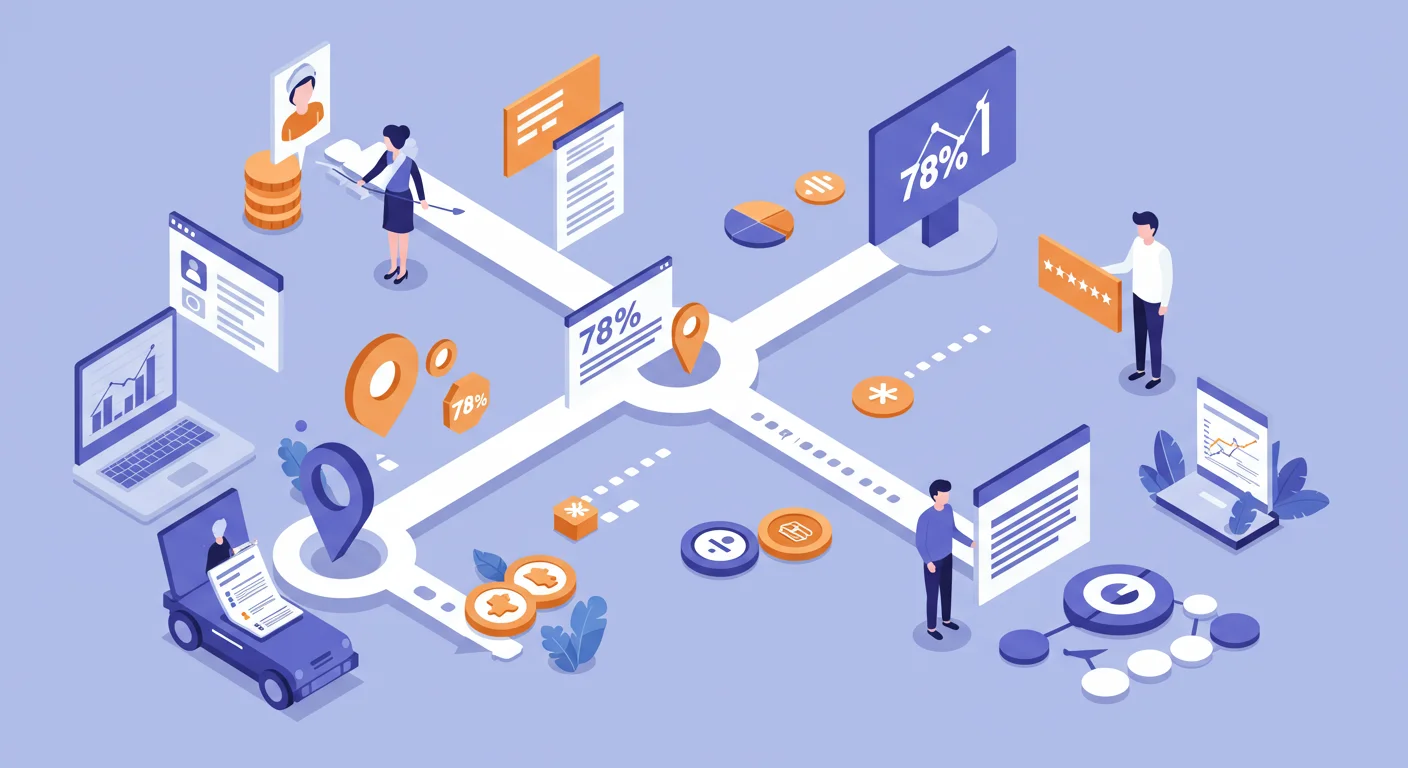
 By Diana Thompson
Key Takeaways
- Influencers must segment their audience into distinct personas, not just demographics, to accurately map diverse customer journeys.
- Implement specific touchpoint analysis, such as analyzing click-through rates on affiliate links or engagement on Q&A sessions, to identify precise points of audience interaction.
- Develop a feedback loop system using direct messages, polls, and comment analysis to continuously refine journey maps and adapt to evolving audience needs.
- Prioritize authenticity and transparency in content creation, as 78% of consumers in a 2025 Nielsen report indicated this was critical for influencer trust.
- Utilize A/B testing on call-to-actions and content formats across different journey stages to empirically determine what drives the most effective audience engagement.
In the dynamic realm of digital marketing, understanding the path your audience takes from initial awareness to loyal advocacy is paramount for any influencer. This process, known as customer journey mapping, isn’t just for traditional businesses anymore; it’s a critical tool for building deeper connections and truly understanding audience engagement. Far too many influencers treat their audience as a monolith, missing out on nuanced opportunities for interaction and conversion. But what if we could meticulously chart every step, every thought, every hesitation, turning fleeting attention into lasting influence strategy?
The Imperative of Understanding Your Audience’s Path
For years, the influencer space operated on a somewhat intuitive model: create compelling content, attract followers, and brand deals would follow. While that still holds a kernel of truth, the landscape has matured. Audiences are savvier, competition is fiercer, and brands demand more than just follower counts; they want demonstrable impact. This is where a deep dive into the customer journey becomes indispensable.
I recall a client, a travel influencer with a substantial following, who was struggling to convert sponsored hotel stays into actual bookings for the brands. They had high engagement on their travel vlogs, but the booking links saw minimal action. My initial thought was, “Are they just not interested in booking, or are we missing something earlier in the funnel?” After mapping out their audience’s journey, we discovered a significant disconnect. Their audience loved the aspirational content, but when it came to booking, they were looking for practical advice on budgeting and logistics, not just beautiful aesthetics. The influencer was speaking to the “dreamer” persona but needed to also address the “planner” persona at a later stage. We introduced dedicated Q&A sessions on Instagram Live focused on travel planning and budgeting, and suddenly, those booking links started seeing serious traction. It was a clear demonstration that a one-size-fits-all approach simply doesn’t cut it anymore.
A comprehensive customer journey map allows us to segment audiences not just by broad demographics, but by their specific needs, pain points, and motivations at different stages of their interaction with our content. Are they just discovering your niche? Are they actively seeking solutions you provide? Are they ready to make a purchase based on your recommendation? Each stage requires a distinct approach, a different type of content, and a unique call to action. Failing to acknowledge these distinctions is like trying to sell a winter coat to someone looking for a swimsuit; you might have a great product, but the timing and context are all wrong.
Deconstructing the Influencer Journey: From Awareness to Advocacy
The influencer customer journey, while sharing similarities with traditional business models, has its own unique rhythm. We can generally break it down into several critical stages:
- Awareness: This is where potential followers first encounter your content. Perhaps through a shared post, a trending hashtag, or a recommendation from a friend. Their goal is often passive consumption or light entertainment.
- Consideration/Engagement: Here, the audience member starts actively engaging. They might like, comment, share, or even follow you. They’re evaluating if your content aligns with their interests and if you offer value.
- Connection/Trust Building: This is a crucial stage unique to influencers. The audience begins to feel a personal connection, seeing you as an authentic voice. They trust your opinions and recommendations. This stage is built on consistency, transparency, and genuine interaction.
- Action/Conversion: This is where the audience takes a desired step, whether it’s purchasing a product you recommend, subscribing to your newsletter, or attending an event. This is often the primary goal for brand collaborations.
- Advocacy/Loyalty: The ultimate stage. Here, your audience not only continues to engage but actively promotes your content and recommendations to their networks. They become your brand ambassadors.
Understanding these stages is foundational. But here’s the kicker: you need to map out the specific touchpoints within each stage. What specific content types initiate awareness? Is it a short-form video on TikTok or a detailed blog post? What drives consideration? Is it your insightful commentary on Instagram Stories, or your educational tutorials on YouTube? The more granular you get, the more effective your influence strategy becomes.
For instance, for an influencer specializing in sustainable living, the awareness stage might involve creating visually appealing content around eco-friendly swaps on platforms like Pinterest or Instagram Reels. The consideration stage could then involve longer-form videos on YouTube demonstrating how to implement these swaps, addressing common challenges. The connection stage would be fostered through direct interactions in comments, Q&A sessions, and sharing personal struggles and successes in their own sustainability journey. The action stage might be driven by a curated list of sustainable products on a personal blog, linked directly from their social profiles. Finally, advocacy comes from followers sharing their own sustainable living triumphs, crediting the influencer for their inspiration.
Mapping Touchpoints and Emotional States
The real magic happens when you start mapping specific touchpoints and, critically, the emotional state of your audience at each point. This isn’t just about what they do, but how they feel. Are they frustrated when searching for information? Inspired by a transformation? Skeptical of a claim? Each emotion provides an opportunity to tailor your content and interaction.
Let’s consider a fitness influencer. Their audience in the awareness stage might be feeling overwhelmed by conflicting diet advice. Their content, then, shouldn’t add to that overwhelm but offer clarity and simplicity. In the consideration stage, they might be feeling motivated but also intimidated by complex workout routines. The influencer’s content should offer achievable steps and encouragement. When they reach the action stage, perhaps signing up for a personalized coaching program, they might feel a mix of excitement and apprehension. A well-crafted onboarding process, maybe a personalized welcome video or a supportive community group, can address that apprehension head-on.
We use tools like Miro or Figma to visually construct these maps. We’ll sketch out the various platforms, content types, and calls to action, then overlay the perceived emotional state. This visual representation often reveals gaps or friction points that were previously invisible. For example, I once worked with a gaming influencer who realized their audience felt a significant drop in engagement (and trust) when they moved from authentic gameplay streams to heavily produced, clearly sponsored content without proper disclosure. The emotional state shifted from “entertained and connected” to “skeptical and sold to.” Simply adding a more transparent disclosure and weaving the sponsored content more organically into their usual style dramatically improved their conversion rates and maintained audience trust.
According to a 2025 Nielsen report on consumer trust, 78% of consumers state that authenticity and transparency are critical factors in their decision to trust an influencer’s recommendation. This isn’t just a nice-to-have; it’s a non-negotiable part of emotional mapping. If your audience feels misled, no amount of perfectly timed content will salvage the relationship.
“In Conductor’s 2026 survey of more than 250 enterprise digital leaders, 94% planned to increase AEO investment.”
Leveraging Data for Refinement and Personalization
Mapping is not a one-time exercise; it’s an ongoing process fueled by data. Every click, every comment, every share provides valuable insights into your audience’s journey. This is where analytics become your best friend. Look beyond vanity metrics. Instead of just tracking total likes, focus on metrics like comment sentiment analysis, retention rates on long-form content, click-through rates on specific calls to action, and conversion rates from different lead magnets.
Platforms like Instagram Insights, TikTok Analytics, and YouTube Studio offer a wealth of data. Dig into audience demographics, peak engagement times, and content performance. But don’t stop there. Utilize tools that go deeper. For instance, if you’re running affiliate campaigns, analyze which specific products or services convert best and from which specific pieces of content. If you’re building an email list, track open rates and click rates on different segments of your audience. Are your new subscribers engaging differently than your long-term followers?
We often implement A/B testing on various elements of the journey. For example, testing two different call-to-actions on an Instagram Story to see which drives more swipe-ups to a blog post. Or experimenting with different introductory hooks on a YouTube video to see which retains viewers longer. This empirical approach takes the guesswork out of audience engagement. My philosophy is this: if you can measure it, you can improve it. And if you can’t measure it, you’re flying blind, hoping for the best. Hope is not a strategy.
Furthermore, consider implementing feedback mechanisms directly into your strategy. Polls on Stories, Q&A boxes, direct messages, and even dedicated feedback forms on your website can provide qualitative data that complements your quantitative analytics. Sometimes, the most profound insights come directly from your audience telling you what they need, what they love, and what frustrates them. I’ve found that asking open-ended questions like, “What’s the biggest challenge you’re facing with [topic] right now?” can unlock a treasure trove of content ideas and journey optimization opportunities.
Crafting Personalized Content for Each Stage
Once you’ve mapped the journey and understood the emotional states and touchpoints, the next logical step is to create content that speaks directly to your audience at each specific stage. This is where true personalization comes into play. It’s about moving beyond generic content and toward highly targeted, valuable interactions.
For the awareness stage, your content should be easily discoverable, visually appealing, and offer immediate value or entertainment. Think short, punchy videos, infographics, or captivating images with intriguing captions. The goal is to grab attention and pique curiosity.
In the consideration phase, content needs to be more informative and problem-solving oriented. This might include tutorials, how-to guides, comparison videos, or blog posts that address common pain points. Here, you’re demonstrating your expertise and building credibility.
The connection stage demands content that fosters community and authenticity. Live Q&A sessions, behind-the-scenes glimpses, personal stories, and direct engagement in comments and DMs are vital. This is where your personality shines through, deepening the bond with your audience.
For the action stage, your content needs clear, compelling calls to action. This could be product reviews, testimonials, limited-time offers, or exclusive access to resources. The focus here is on guiding your audience toward making a decision, providing all the necessary information and reassurance.
Finally, for advocacy, nurture your existing community. Share user-generated content, highlight successful transformations from your followers, create exclusive content for loyal members, and host community events. This reinforces their loyalty and encourages them to spread the word. Remember, a loyal advocate is often more powerful than any paid advertisement.
One of my most successful case studies involved a lifestyle influencer who built a robust customer journey around her home decor niche. She started with visually stunning “room tour” videos (awareness), moved to “DIY project guides” (consideration), then hosted weekly “decorate with me” live streams where she answered questions and shared personal home stories (connection). For action, she created shoppable guides on her blog, linking directly to products. The advocacy piece was brilliant: she featured follower home transformations using her tips and products in a monthly “Community Spotlight” on her Instagram, encouraging others to share their results with a specific hashtag. Within six months, her affiliate revenue increased by 150%, and her engaged follower count grew by 40,000, all attributable to this meticulously mapped and executed content strategy. This wasn’t magic; it was methodical.
Ultimately, a well-defined customer journey map for influencers is not just a diagram; it’s a living document that guides every aspect of your content creation and audience engagement. It transforms guesswork into strategy, fleeting attention into lasting loyalty, and ultimately, elevates your influence strategy to a whole new level of effectiveness. Stop guessing, start mapping, and watch your impact multiply.
What is customer journey mapping for influencers?
Customer journey mapping for influencers is the process of visually charting the entire path an audience member takes from their initial discovery of an influencer’s content to becoming a loyal advocate. It involves identifying touchpoints, emotional states, and opportunities for interaction at each stage.
Why is customer journey mapping important for influencers?
It’s crucial because it allows influencers to move beyond generic content, understand their audience’s diverse needs and motivations at different stages, and create targeted content and calls to action that drive deeper engagement, build trust, and increase conversions for brand collaborations.
What are the key stages of an influencer’s customer journey?
The primary stages typically include Awareness (initial discovery), Consideration/Engagement (active interaction), Connection/Trust Building (personal bond formation), Action/Conversion (taking a desired step), and Advocacy/Loyalty (promoting the influencer’s content and recommendations).
What tools can influencers use for journey mapping?
Influencers can use visual collaboration tools like Miro or Figma to create their journey maps. For data collection and analysis, platform-specific analytics (Instagram Insights, YouTube Studio, TikTok Analytics) are essential, complemented by third-party analytics tools for deeper insights into affiliate performance or website traffic.
How can influencers personalize content for different journey stages?
Personalization involves tailoring content type, tone, and call-to-action to match the audience’s needs and emotional state at each stage. For awareness, focus on engaging, discoverable content; for consideration, provide informative solutions; for connection, foster authenticity and community; for action, offer clear, compelling prompts; and for advocacy, nurture loyalty through exclusive content and community features.


