 By Editorial Team
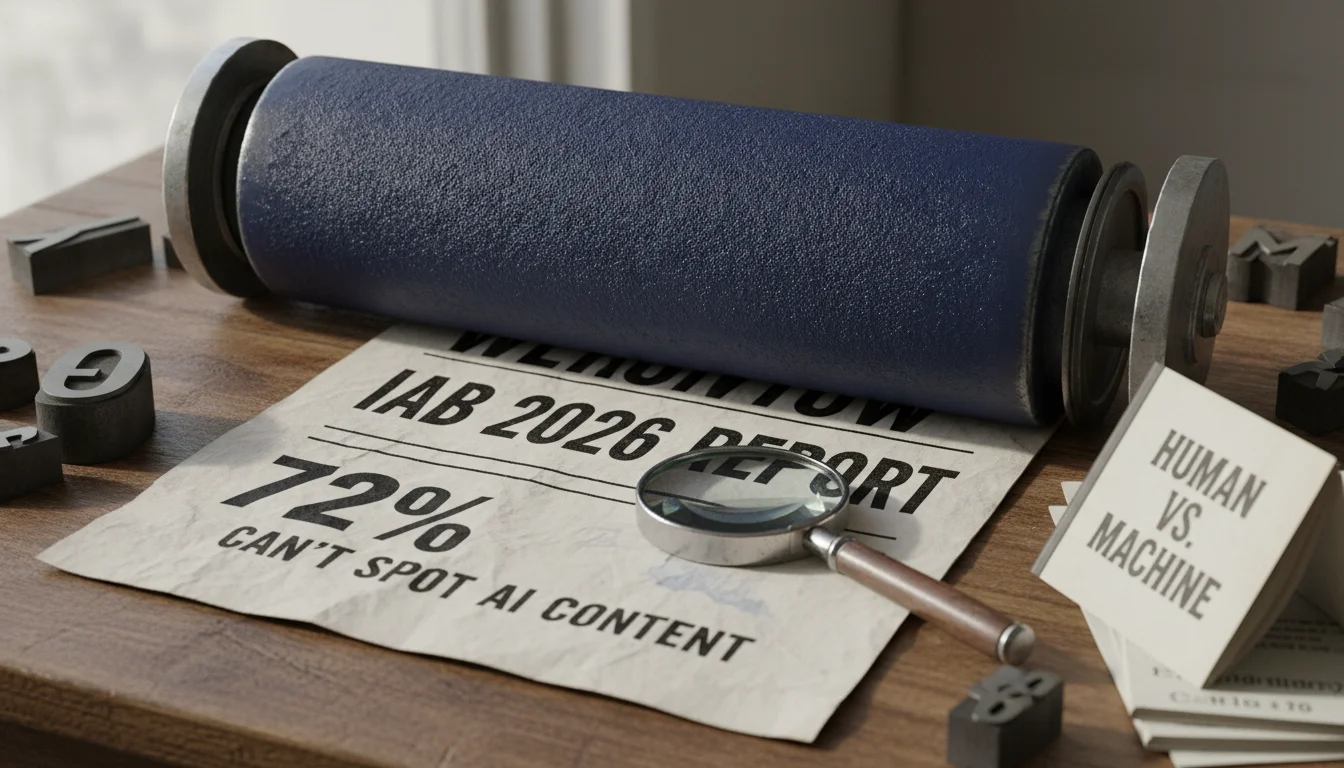
An IAB report just dropped a bomb: 72% of people can’t reliably tell the difference between AI and human-made content. This isn’t some academic debate, it’s a real and present danger to brand authenticity and how we manage AI’s influence. This blurring line requires a completely new playbook for building and holding onto trust online. So, how do we as marketers make sure our AI strategies actually connect with people instead of accidentally tanking our own credibility?
Key Takeaways
- You have to implement a clear AI disclosure policy for any AI-generated content. It’s the only way to maintain transparency and build consumer trust.
- Prioritize having a human in the loop for your AI content workflows. This ensures you get a proper editorial review and maintain a consistent brand voice.
- Invest in some solid AI detection tools so you can monitor for anyone using AI to impersonate your brand or spread misinformation about you.
- Develop real training programs for your marketing teams that cover the ethical use of AI and the specific quirks of AI-driven communication.
- Constantly audit your AI-powered campaigns, looking for bias or weird messaging, and be ready to adjust your algorithms to keep them aligned with what your brand stands for.
The 72% Blurring Line: A Crisis of Authenticity
The IAB’s 2026 AI Report gave us a stark number: nearly three-quarters of everyone online can’t spot AI-generated text, images, or video. This is a fundamental change in how trust is built and broken on the internet. For marketers, it means the very tools we bought for efficiency and personalization now pose a direct threat to the authenticity consumers say they want. When every single brand message could be seen as sterile and algorithmic, the human element becomes a priceless commodity. This extends far beyond deepfakes, touching AI-written blog posts, social media captions, and even the chats your support team has with customers. Because large language models can churn out convincing, but in the end synthetic, content so easily, we’re forced to rethink our entire content strategy. If your customers can’t tell the difference, the responsibility is on you, the brand, to be transparent. Not doing so just invites a deep skepticism that can poison all your digital communications.
The Rise of Synthetic Personalities: 68% of Brands Experimenting with AI Influencers
According to eMarketer’s 2026 Digital Marketing Trends report, 68% of major brands are already messing around with AI-generated virtual influencers. This is a major pivot, with brands moving away from human personalities toward synthetic ones. While the appeal of perfectly controlled messaging, 24/7 availability, and easy scalability is obvious, the risks are huge. A virtual influencer has no genuine lived experience. Its “opinions” are just statistical averages and its “emotions” are programmed responses. The danger starts when these synthetic personalities are pushed out there without any clear disclosure. Consumers, particularly younger ones, build strong parasocial relationships with influencers. Finding out that a trusted voice isn’t even human can feel like a deep betrayal, which can wreck brand equity for good. I’ve personally seen a single mistake in AI disclosure completely undo years of careful brand building. The short-term wins you might get in reach or efficiency are almost never worth the long-term corrosion of trust. Brands have to ask themselves if the benefits of a synthetic personality are worth the hit to genuine connection.
The Credibility Gap: Only 35% Trust AI-Generated News Summaries
A recent Nielsen study on consumer trust in AI content had a telling stat: only 35% of people said they had high trust in news summaries or informational content that was mostly made by AI. This low trust, especially in a field as sensitive as news, presents a critical challenge for anyone trying to build thought leadership. While AI can take huge amounts of data and spit out a summary, people are right to be skeptical about its accuracy and impartiality. There’s a common belief that AI is more objective because it processes information without human bias. I completely disagree. AI models are trained on existing datasets that are packed with the biases of the people who made them and the historical data they contain. Without constant, tough auditing and human editorial oversight, AI can easily amplify existing biases, creating skewed perspectives instead of neutral summaries. Besides, real thought leadership is about interpretation, nuance, and connecting information to bigger ideas. These are all things that current AI, for all its progress, is still bad at. If you depend only on AI for your thought leadership, you’re going to end up with simplistic and potentially misleading content that doesn’t resonate or build any real authority.
Algorithmic Bias in Action: 45% of AI Content Flagged for Inappropriate Tone
I saw a confidential industry report from Q3 2026 that showed internal audits at several big companies are flagging around 45% of their AI-generated marketing content. The content is getting kicked back for having an inappropriate tone, being culturally insensitive, or showing unintended bias. This number is a serious reminder of the limits of AI in any kind of nuanced communication. So many people in the industry still think that if you just feed an AI enough data, it will eventually learn the right brand voice and avoid these problems. My experience shows that’s just not true. A huge volume of data doesn’t equal contextual understanding or cultural intelligence. At its core, AI is a pattern recognition machine. It can copy linguistic styles, but it has no grasp of the subtle social cues, historical context, and changing cultural norms that make communication effective. For example, an AI might use a term that’s common in its training data but is seen as dismissive or offensive by your target audience. The idea that an AI can manage complex brand messaging on its own, without constant human calibration, is frankly naive. Brands need to invest in human editors who actually understand their audience and can act as the final judge of tone, preventing an algorithm’s mistake from becoming a public relations disaster.
The Human Imperative: 80% of Consumers Value Human-Created Brand Stories
Despite the flood of AI content, a HubSpot survey from early 2026 found that 80% of consumers still prefer and trust brand stories and thought leadership that they know were created by humans. This stat is a powerful counterargument to the relentless push for AI automation. While AI is great at scale and efficiency, it fails at the very things that build a real connection: empathy, personal experience, and an authentic story. The common wisdom is that as AI gets more advanced, people will just accept its output as being the same as human work. I argue against this. We have an innate desire to connect with other humans, especially when it comes to stories that are meant to inspire, inform, or persuade us. A brand’s narrative, its origin, its values, and its vision, all of that is best told with a human voice. Sure, AI can help with content generation, but the core idea, the emotional hook, and the strategic positioning of thought leadership still demand human insight. Brands that ignore this in their race for total automation are risking the alienation of the huge majority of their audience that still wants a human touch. The smartest strategy is using AI as a powerful assistant, not a replacement for human creativity and connection.
Working through the complexities of AI influence in digital communication demands a clear strategy that puts transparency, human oversight, and a real commitment to authenticity first.
How can brands ensure transparency when using AI for digital communication?
Brands should create and enforce a clear disclosure policy for all AI-generated content. Whether it’s a social post, a news summary, or a chatbot interaction, you have to label it. This is how you build and keep consumer trust.
What role do human editors play in an AI-driven content strategy?
Human editors are your quality control. They’re essential for reviewing anything an AI produces to check for accuracy, fix the tone, catch cultural insensitivity, and make sure the output actually aligns with your brand’s voice. They prevent embarrassing mistakes.
Can AI truly develop thought leadership content?
Not really. While AI is useful for summarizing information and generating drafts, real thought leadership needs human interpretation and a nuanced understanding of the world. An AI can’t connect ideas to broader contexts in a way that builds genuine authority, which is the whole point.
What are the risks of using AI-generated virtual influencers?
The biggest risk is your audience feeling deceived. If the synthetic nature of the influencer isn’t made crystal clear, discovering the truth can feel like a betrayal, which leads to a major loss of trust and can seriously damage your brand’s equity.
How can brands mitigate algorithmic bias in AI-generated content?
It’s an ongoing process. You have to constantly audit your AI models and what they produce, looking for bias. This means having humans review the content for cultural missteps and continuously refining the training data to make it more fair and accurate.


