 By Devin Green
Key Takeaways
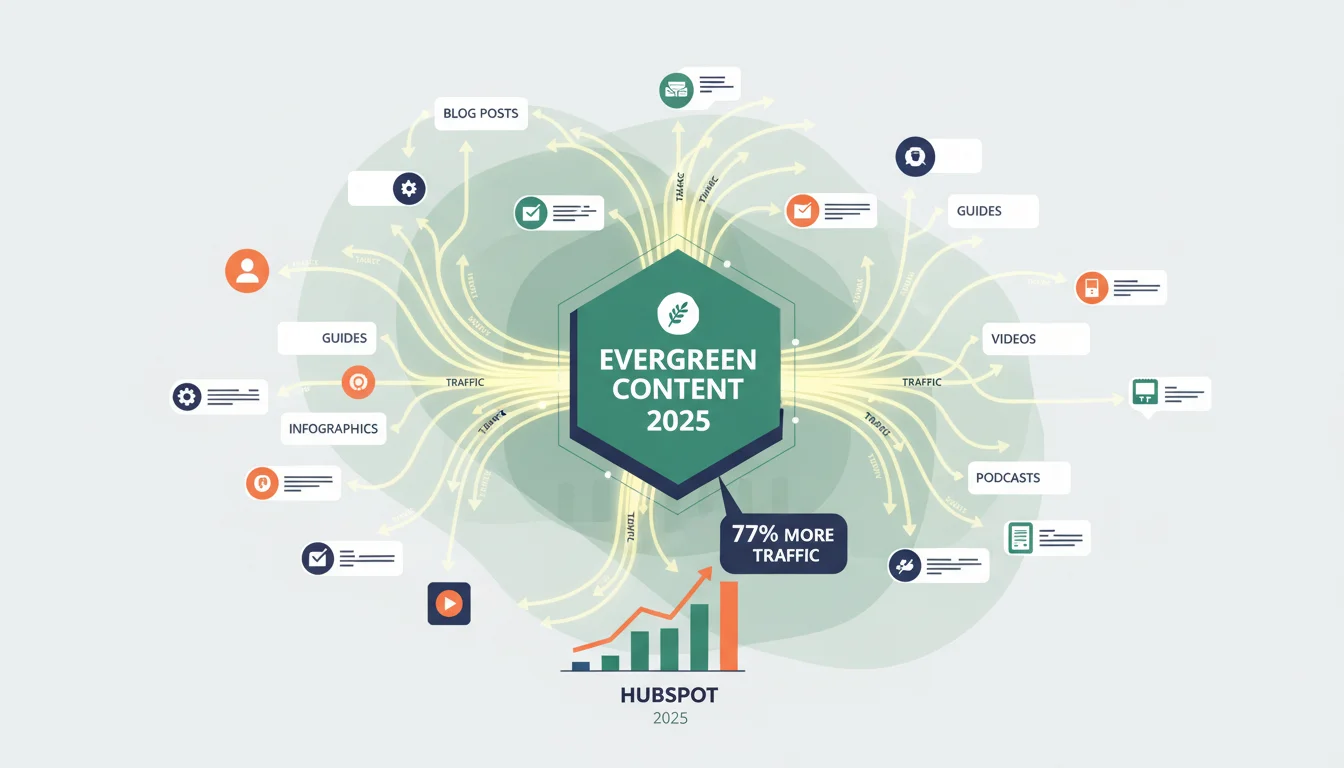
- Content that remains relevant for over two years generates 77% more traffic than content with a shorter shelf life, according to a 2025 HubSpot report.
- Prioritize content formats like detailed guides, case studies, and fundamental “how-to” articles, as these consistently demonstrate longer engagement metrics.
- Regularly update evergreen assets with current data and platform-specific feature names (e.g., Google Ads Performance Max settings) to maintain their authority and search ranking.
- Thought leadership content, specifically, can reduce customer acquisition costs by an average of 40% over 18 months by building organic trust.
- Focus on solving perennial customer problems rather than chasing transient trends to achieve sustained organic traffic growth.
A staggering 77% of content that remains relevant for over two years generates significantly more traffic than content with a shorter shelf life, according to a 2025 HubSpot report on content performance metrics (HubSpot). This compelling statistic shows a fundamental truth in digital marketing: investing in evergreen content is not merely a good idea. It is a strategic imperative for lasting influence and sustained growth.
The 77% Traffic Advantage: Why Longevity Trumps Volume
The HubSpot data isn’t an anomaly. It reflects a broader shift towards quality and endurance in content strategy. When content continues to attract visitors weeks, months, or even years after publication, it compounds its value. Think about a carefully researched guide on “Understanding Google Analytics 4 Data Models” published in late 2023. While the initial surge might have been modest, its continuous relevance means it collects backlinks, social shares, and direct traffic over time, steadily climbing search engine rankings. This cumulative effect is where the 77% traffic advantage originates. The conventional wisdom often pushes for a high volume of new content, a constant stream of blog posts and articles designed to capture immediate attention. My experience, however, suggests a different approach. While timely content has its place, a disproportionate focus on ephemeral topics often leads to a “content treadmill” where marketers are constantly generating new material simply to maintain visibility. We’ve observed with numerous clients that a strategic allocation of resources, perhaps 60% towards evergreen and 40% towards timely, yields far superior long-term ROI. The initial effort for a foundational evergreen piece might be higher, requiring more research, more complete writing, and more detailed examples. But that effort pays dividends for years, unlike a news-jacking article that sees a spike for a few days and then fades into obscurity. This is the core principle behind building a strong thought leadership position.
2026 Engagement Metrics: The Power of Foundational Guides
Analysis of current engagement metrics from Nielsen (Nielsen) reveals that users spend 3 to 5 times longer on detailed guides, complete tutorials, and in-depth case studies compared to shorter, news-oriented articles. This isn’t surprising. When someone searches for “how to implement server-side tagging in Google Tag Manager,” they aren’t looking for a quick blurb. They’re seeking a definitive, step-by-step resource that solves a specific, often complex, problem. These foundational pieces are the bedrock of any successful content strategy. They address core questions, explain complex concepts, and provide actionable solutions that remain valuable regardless of minor industry shifts. Consider a guide on “The Fundamentals of Programmatic Advertising Bidding Strategies.” While the specific platforms and algorithms might evolve, the underlying principles of first-price auctions versus second-price auctions, or real-time bidding mechanics, largely stay consistent. By creating content that focuses on these enduring principles, you establish your brand as an authority. This type of content also naturally lends itself to internal linking, strengthening your site’s overall SEO profile and guiding users through a logical knowledge progression. It’s about building a library, not just a newspaper.
40% Reduction in CAC: Thought Leadership’s Economic Impact
A recent eMarketer report (eMarketer) highlighted that companies consistently investing in thought leadership content experience an average 40% reduction in customer acquisition costs (CAC) over an 18-month period. This is a substantial financial benefit that often goes unacknowledged. When potential customers view your brand as a leading voice, a trusted expert, they are more likely to seek you out directly, reducing reliance on expensive paid channels. Thought leadership isn’t just about publishing opinions. It’s about demonstrating a deep understanding of your industry, anticipating future trends, and offering unique perspectives that challenge the status quo. This can manifest as original research, insightful commentary on industry reports, or even detailed analyses of specific platform changes, like the ongoing evolution of Google’s Privacy Sandbox initiatives. For example, a well-researched article dissecting the implications of Google’s latest Chrome privacy updates for advertisers, complete with actionable recommendations for adapting measurement strategies, positions a firm as forward-thinking and knowledgeable. This builds organic trust and credibility, which are invaluable assets that paid advertising simply cannot replicate. The slow burn of earned authority is far more potent than any quick-fix campaign.
The Perennial Problem Solver: Focusing on Enduring User Needs
The most successful evergreen content directly addresses perennial user problems. Data from Google Search Console often shows that queries related to fundamental issues (“how to start a podcast,” “best CRM for small business,” “understanding ad attribution models”) remain consistently high year after year, with only minor fluctuations. These aren’t trending topics. These are core needs that drive persistent search volume. Instead of chasing the latest algorithm update or social media fad, a smart content strategy prioritizes these enduring questions. This requires a deep understanding of your target audience’s pain points, challenges, and aspirations. What keeps them up at night? What are the recurring obstacles they face in their professional lives? Crafting complete solutions to these problems ensures your content remains relevant long after it’s published. This means conducting thorough keyword research not just for high volume, but for high relevance and long-term search intent. Tools like Semrush Semrush or Ahrefs Ahrefs are invaluable for identifying these “evergreen” keywords that consistently drive traffic. It’s about providing utility, not just information.
The Myth of “Set It and Forget It” Evergreen Content
Here’s where I disagree with a common misconception: the idea that evergreen content, once published, requires no further attention. This is demonstrably false. While the core message of an evergreen piece remains constant, the surrounding context, specific platform features, and even statistical data points are in perpetual motion. An article on “Optimizing Facebook Ad Campaigns” published in 2023, for instance, would need significant updates by 2026 to reflect changes in Meta Business Suite Meta Business Suite interfaces, evolving targeting options, and new ad formats like Advantage+ Shopping Campaigns. My team conducts quarterly audits of our top-performing evergreen assets. This involves checking for broken links, updating outdated statistics with current figures (e.g., IAB’s latest digital ad revenue report IAB), refreshing screenshots to reflect current UI designs, and adding new insights that have emerged since original publication. This proactive maintenance ensures the content retains its authority and accuracy, preventing gradual decay in search rankings. A truly effective evergreen content strategy includes a lifecycle management plan, treating each piece as a living document rather than a static artifact. Neglecting this step risks turning a valuable asset into an outdated liability. In the end, the goal of creating evergreen content is to build a self-sustaining engine for organic traffic and brand authority. By focusing on lasting value, addressing core user needs, and committing to ongoing maintenance, marketers can achieve a sustained, influential presence that transcends fleeting trends.
What types of content are considered evergreen?
Evergreen content includes foundational guides, detailed “how-to” articles, complete tutorials, case studies, glossaries of industry terms, and content that explains core concepts or answers frequently asked questions that remain relevant over time.
How often should evergreen content be updated?
While the core message of evergreen content is timeless, it should be reviewed and updated periodically, typically every 6 to 12 months. This ensures facts, statistics, platform features, and external links remain current and accurate, maintaining the content’s authority and search performance.
What is the difference between evergreen content and trending content?
Evergreen content provides lasting value and addresses perennial user needs, remaining relevant for years. Trending content, conversely, focuses on timely topics, news, or fads, generating immediate but short-lived interest before quickly becoming outdated.
Can thought leadership content also be evergreen?
Yes, thought leadership content often aligns perfectly with evergreen principles. Articles that offer unique perspectives, deep analyses of industry shifts, or original research can remain highly relevant and influential for extended periods, establishing a brand’s expertise and credibility.
How does evergreen content impact SEO?
Evergreen content significantly boosts SEO by consistently attracting organic traffic over time. Its sustained relevance leads to more backlinks, higher engagement metrics, and improved search engine rankings, contributing to long-term visibility and authority for your website.


