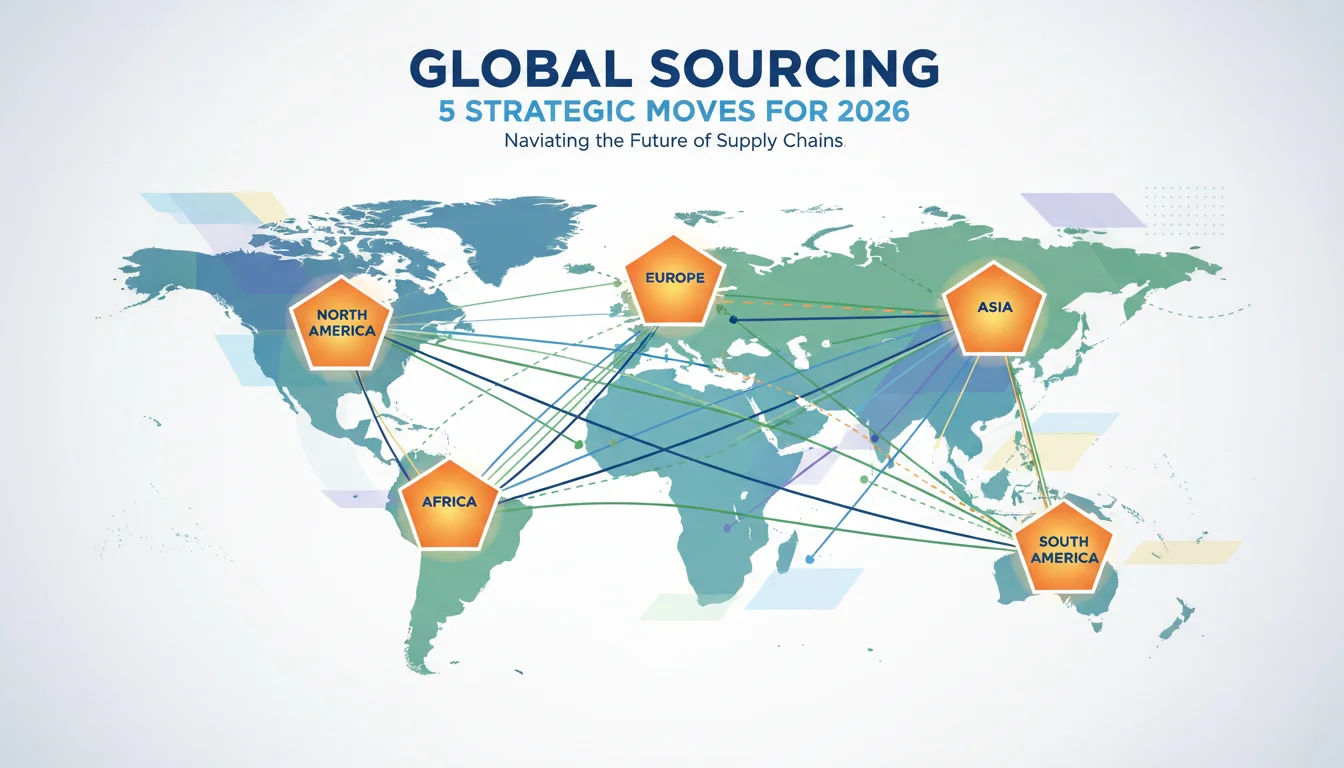
 By Diane Yates
Effective sourcing decisions are not merely logistical exercises. They are strategic imperatives that directly impact a company’s profitability, resilience, and competitive advantage in the arena of global trade authority. Missteps here can lead to significant supply chain disruptions, increased costs, and reputational damage. Understanding where executive oversight must be absolute, and where it can be delegated, defines successful global operations.
Key Takeaways
- Implement a centralized risk assessment framework for all new global suppliers, focusing on geopolitical stability and regulatory compliance.
- Mandate annual reviews of existing supplier contracts to renegotiate terms, ensuring alignment with current market conditions and strategic objectives.
- Establish clear key performance indicators (KPIs) for supply chain resilience, including lead time variability and alternative supplier readiness, reporting these monthly to the executive team.
- Deploy AI-powered demand forecasting tools like o9 Solutions to improve accuracy by at least 15% in complex global supply chains.
- Require detailed environmental, social, and governance (ESG) audits for all Tier 1 suppliers, making compliance a non-negotiable component of contract renewal.
1. Establish a Centralized Global Sourcing Committee with Clear Mandate
The first step involves formalizing the decision-making structure. Without a dedicated committee, sourcing decisions often become fragmented, leading to inefficiencies and missed opportunities. This committee, ideally chaired by a Chief Operating Officer or Chief Procurement Officer, must include representatives from finance, legal, logistics, and product development. Their primary mandate is to define the overarching sourcing strategy, approve new supplier relationships, and oversee risk management protocols across all international operations.
Pro Tip: Define the committee’s decision-making authority explicitly. For instance, any new supplier contract exceeding $1 million in annual spend, or involving a region with a “high” political risk rating (as per Economist Intelligence Unit’s Risk and Resilience Index), should require unanimous committee approval. This prevents rogue decisions and ensures complete due diligence.
Common Mistake: Delegating too much authority to individual department heads without centralized oversight. This often results in a patchwork of suppliers, inconsistent quality standards, and a lack of consolidated purchasing power, which means you’re leaving money on the table.
2. Implement a Strong Supplier Risk Assessment Framework
Once the committee is in place, the next important step is to build and deploy a complete risk assessment framework. This isn’t just about financial stability. It encompasses geopolitical risk, regulatory compliance (including import/export laws and trade sanctions), cybersecurity vulnerabilities, and ethical sourcing practices. Tools like riskmethods provide real-time monitoring of global events, supplier financial health, and potential disruptions. The framework should involve a multi-stage vetting process:
- Initial Screening: Basic financial health, legal standing, and initial ESG checks.
- Detailed Due Diligence: On-site audits (where feasible), in-depth financial analysis, and review of certifications (e.g., ISO 9001 for quality, ISO 14001 for environmental management).
- Ongoing Monitoring: Continuous tracking of news, regulatory changes, and performance against agreed-upon KPIs.
For example, when evaluating a potential manufacturing partner in Southeast Asia, the committee would use riskmethods to assess the country’s political stability score, review any recent labor disputes reported in the region, and verify the supplier’s customs compliance history. This level of scrutiny becomes non-negotiable for critical components.
3. Define Clear Performance Metrics and Reporting Structures
Executive oversight means more than just initial approval. It requires continuous performance monitoring. Establish clear Key Performance Indicators (KPIs) for every supplier relationship and for the overall supply chain. These should include:
- On-Time Delivery Rate (OTD): Percentage of orders delivered by the promised date.
- Quality Defect Rate (QDR): Percentage of products or components that fail quality inspection.
- Cost Variance: Actual cost versus budgeted cost for goods or services.
- Lead Time Variability: Consistency of delivery times.
- Supplier Responsiveness: Time taken to respond to inquiries or resolve issues.
- ESG Compliance Score: Adherence to ethical and sustainable practices.
These KPIs must be reported to the global sourcing committee monthly, with a deeper quarterly review. Visual dashboards, perhaps built using Microsoft Power BI or Tableau, can present this data effectively, highlighting trends and potential issues at a glance. I’ve seen too many organizations collect data without actually using it to drive decisions, which is a waste of resources.
4. Develop and Stress-Test Supply Chain Resilience Plans
The global trade field is inherently volatile. Executive authority must extend to mandating the creation and regular stress-testing of detailed supply chain resilience plans. This includes identifying alternative suppliers for critical components, establishing buffer stocks for high-demand items, and diversifying geographical sourcing. A single-source strategy, while sometimes offering cost advantages, is a ticking time bomb in today’s interconnected world.
Consider a scenario where a critical raw material supplier in Latin America faces unexpected political unrest. A resilient plan would mean having a pre-qualified alternative supplier in Europe or North America, with pre-negotiated terms and a clear activation protocol. The committee should review these contingency plans annually, running simulations of various disruption scenarios (e.g., natural disasters, geopolitical conflicts, cyberattacks) to identify weaknesses and refine responses. According to a NielsenIQ report, companies with strong supply chain resilience strategies experienced significantly less disruption during recent global events.
5. Mandate Technology Adoption for Enhanced Visibility and Analytics
Modern global trade demands modern tools. Executives must champion the adoption of technologies that provide end-to-end visibility and advanced analytics. This includes:
- Supply Chain Management (SCM) Platforms: Solutions like SAP SCM or Oracle SCM Cloud integrate planning, procurement, manufacturing, and logistics.
- Demand Forecasting Software: AI-powered tools (e.g., Kinaxis) that use historical data, market trends, and external factors to predict future demand with greater accuracy.
- Trade Compliance Software: Platforms that automate customs declarations, track regulatory changes, and ensure adherence to international trade agreements.
The executive committee’s role here is to approve the budget for these technologies, ensure cross-functional adoption, and insist on using the data generated for strategic insights. Simply buying the software isn’t enough. The culture must shift to data-driven decision-making. We’re in 2026, and any company still relying on spreadsheets for complex global sourcing is operating at a severe disadvantage.
6. Foster Strong Supplier Relationships and Ethical Sourcing
Beyond transactional interactions, executive authority extends to cultivating strategic partnerships. This involves regular communication, joint innovation initiatives, and a commitment to fair and ethical practices. The committee should ensure that supplier codes of conduct are not just documents, but living principles enforced through audits and performance reviews. This includes adherence to labor laws, environmental standards, and anti-corruption policies.
A report from the IAB highlighted the increasing importance of trust and transparency in supply chain relationships, especially concerning consumer perception. Companies that demonstrate a commitment to ethical sourcing often gain a competitive edge and reduce reputational risks. Executives should actively participate in key supplier relationship meetings, signaling the importance of these partnerships to the organization.
True executive authority in global trade sourcing isn’t about micromanagement. It’s about setting the strategic direction, establishing strong frameworks, and demanding accountability. By implementing these steps, organizations can transform their supply chains from cost centers into sources of strategic advantage and resilience in an increasingly unpredictable global market.
What is the primary role of executive authority in sourcing decisions?
The primary role is to establish the overarching strategic direction for global sourcing, approve critical supplier relationships, define risk management protocols, and ensure continuous performance monitoring to align with corporate objectives and mitigate potential disruptions.
How frequently should global sourcing strategies be reviewed?
Global sourcing strategies should be formally reviewed by the executive committee at least annually, with quarterly deep dives into performance metrics and risk assessments, to adapt to market changes, geopolitical shifts, and technological advancements.
What are some key risks executives should consider in global sourcing?
Key risks include geopolitical instability, currency fluctuations, regulatory changes (tariffs, trade sanctions), supply chain disruptions (natural disasters, pandemics), cybersecurity threats to supplier data, and ethical sourcing concerns such as labor practices and environmental impact.
Which technologies are essential for effective executive oversight in global trade?
Essential technologies include integrated Supply Chain Management (SCM) platforms, AI-powered demand forecasting software, real-time risk monitoring tools, and trade compliance solutions that provide visibility and data analytics for informed decision-making.
Why is building strong supplier relationships important for executive strategy?
Strong supplier relationships foster trust, facilitate joint innovation, improve responsiveness during disruptions, and ensure adherence to ethical and quality standards, which collectively enhance supply chain resilience and protect brand reputation.


