 By Editorial Team
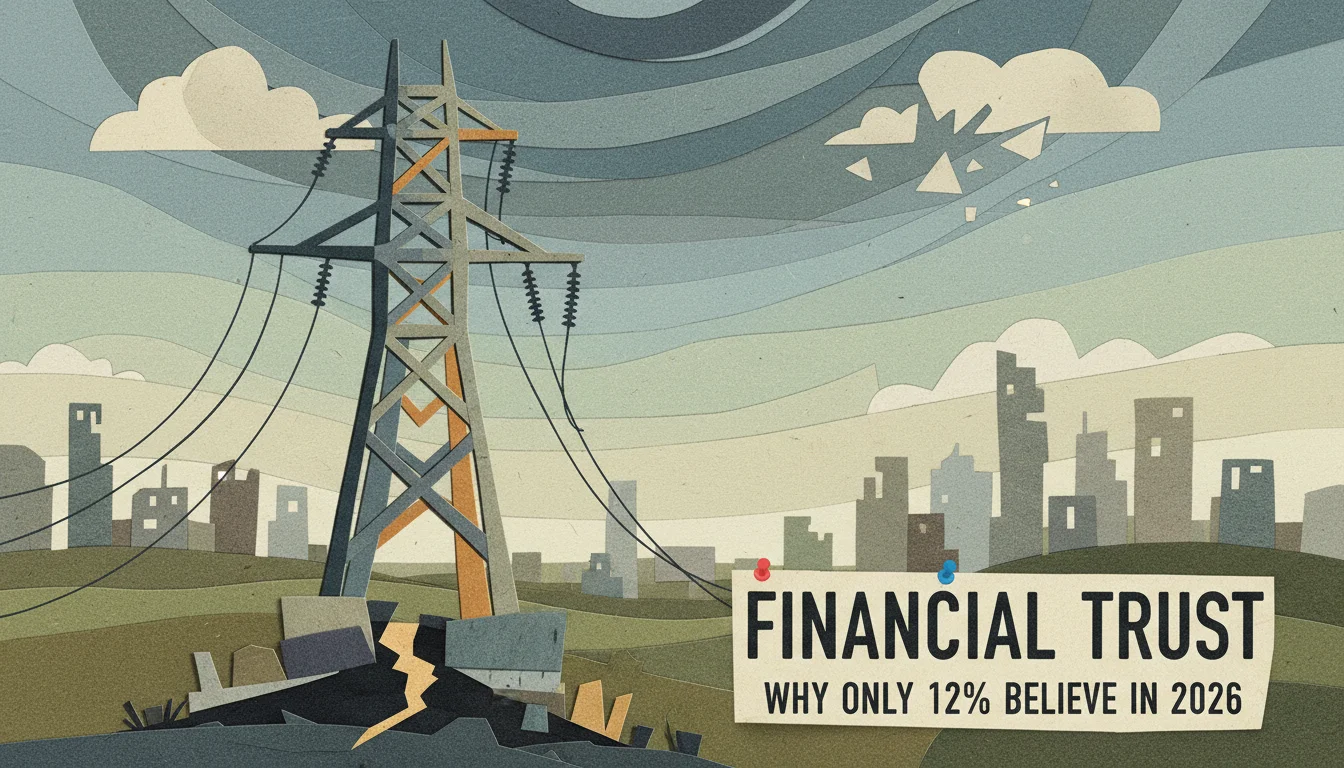
Let’s be direct: only 12% of consumers fully trust financial institutions. That number is a flashing red light, showing just how much work we have to do with transparent, accurate credit risk content to create any sense of financial stability. This skepticism isn’t just a PR problem. It forces a complete change in how financial companies talk about their risk profiles and what they’re doing about them. Good credit risk narratives build confidence, attract investment, and make the whole market more resilient. So how can marketers write stories that actually close this trust gap and reinforce the system’s stability?
Key Takeaways
- To rebuild consumer trust from its current 12% floor, financial institutions have to get serious about data-backed transparency in all their credit risk content.
- Showing your work with predictive analytics insights in risk narratives reduces perceived uncertainty by proving you have proactive risk management strategies.
- Your content strategy must demystify complex financial jargon and translate complicated risk models into information that different audiences can actually understand.
- Marketing teams must work hand-in-glove with risk management departments, it’s the only way to ensure credit risk content is accurate, timely, and reflects what’s happening in the market right now.
- To get the message of financial stability out there, you need a multi-channel content approach that includes things like interactive reports and educational materials to widen your reach and impact.
| Aspect | Current State (2024-2025) | Strategic Shift Needed |
|---|---|---|
| Consumer Trust in FIs | Only 12% fully trust | Rebuild with real transparency |
| Regulatory Requirements | 40% increase since 2020 | Use regs to prove accountability |
| AI in Risk Assessment | 70% of firms employ AI | Show these capabilities in content |
| Credit risk Content Focus | Boilerplate disclosures | Write accessible, human narratives |
| Content Creation Approach | Siloed communications | Data-backed transparency, cross-departmental work |
The Trust Deficit: Only 12% of Consumers Fully Trust Financial Institutions
That 12% statistic is a wake-up call for any marketer in finance. This data point, from a 2024 Edelman Trust Barometer Special Report on Financial Services (Edelman), tells us that the old ways of communicating just aren’t working. Credit risk content isn’t for a closed loop of investors and regulators. We’re talking to the public, and it’s their perception that in the end sets market sentiment and determines financial stability. The real work is translating complex risk models into stories that connect with an audience that’s already suspicious. This means getting away from boilerplate disclosures and instead telling stories that show real oversight, ethical practices, and a clear commitment to protecting people’s money. A bank could, for example, put out an annual “Risk Transparency Report” using infographics to explain stress test results, showing how their loan portfolio holds up in different economic scenarios and the specific measures in place to handle those shocks. Content like this can actually begin to repair the trust deficit.
Regulatory Scrutiny: A 40% Increase in Compliance Reporting Requirements Since 2020
Regulators are getting tougher. We’ve seen a 40% jump in compliance reporting requirements since 2020, according to Thomson Reuters, largely because of past financial meltdowns and the speed of today’s global markets. For marketing teams, this means every piece of credit risk content has to be both engaging and perfectly compliant. Turning dense regulations into plain English is a specialized job, and it demands constant back-and-forth between your legal, compliance, and marketing people. I’ve seen projects get derailed for weeks because of a small misreading of a new directive. The goal should be to treat these regulations as a chance to show you’re transparent and accountable. These requirements aren’t just hurdles. They’re a blueprint for building more credible stories. So instead of just dropping a footnote about being compliant with Basel III, a firm could publish a clear explanation of how those capital requirements actually give depositors better protection and lower systemic risk. That reframes the story from one of obligation to one of public benefit.
The Power of Predictive Analytics: 70% of Financial Firms Now Employ AI for Risk Assessment
AI in financial risk assessment is officially mainstream. A full 70% of firms are now using it, according to Deloitte’s 2025 Global Financial Services Outlook (Deloitte). This huge integration of predictive analytics gives credit risk content a totally new angle. Risk management is no longer just a backward-looking exercise. Today’s AI models can tear through massive datasets, spot developing patterns, and predict potential credit defaults with an accuracy we’ve never had before. Your marketing content can feature these capabilities, proving that your firm is being proactive about mitigating risk. Think about an article or an interactive tool that walks a user through how your machine learning algorithms process thousands of data points, from macro indicators to individual transaction histories, to gauge creditworthiness. This doesn’t just show you’re technologically advanced, it reassures stakeholders that you’re using modern tools to manage risk. The story needs to be about how AI helps human decision-making by providing a more detailed, dynamic picture of risk, not about replacing human oversight. Finding that balance (and it is a balance) is key to keeping trust, since people still want human judgment on the big calls. We’re seeing this play out in how companies are approaching the AI scaling challenge.
“For example, in the UK, two companies were fined £150,000 for sending 7.5 million unwanted messages. Third-party suppliers were unable to prove valid consent.”
Investor Confidence: 65% of Institutional Investors Prioritize ESG Factors in Investment Decisions
Environmental, Social, and Governance (ESG) factors aren’t a side issue anymore. A 2025 PwC survey (PwC) found that 65% of institutional investors now make it a priority in their decisions. This changes how credit risk content has to be written. Why? Because credit risk and ESG risk are now deeply connected. For instance, a company with a terrible environmental record is facing future regulatory fines and reputational damage, which directly translates to higher credit risk. Financial firms have to weave their ESG risk analysis into their main credit risk stories. This means you have to talk about more than just financial metrics. You need to show how your firm assesses and handles risks tied to climate change, social issues, or bad governance within your loan books. A strong piece of content could detail how your bank evaluates the climate transition risk of its energy clients, explaining the specific models used to predict loan impairments if new policies make their assets less valuable. This shows you’re thinking ahead and aligning with what investors care about, and it contributes to a more stable financial system by rewarding sustainable business. Ignoring this is a huge mistake that will cost you access to a growing pool of capital. It’s a core part of updating your marketing infrastructure for new demands.
The Conventional Wisdom Misses: Focusing Solely on “Safety” Undermines Resilience
A lot of financial institutions fall into the trap of talking endlessly about “safety” and “stability” in their public-facing content. I think this is a mistake. The standard thinking is that you build confidence by constantly repeating how secure you are. But a story focused only on some perfect state of absolute security feels generic and, in a world full of economic shocks, unbelievable. A much better strategy for credit risk content is to be realistic about risk while demonstrating a strong capacity for resilience. Financial stability isn’t the absence of risk. It’s the ability to get through bad times and bounce back. Your content should be showing off your adaptive strategies, your dynamic stress testing, and your track record of working through downturns. So, instead of just saying “we are safe,” a firm could publish a case study on how it handled credit defaults during the 2008 crisis or the pandemic, breaking down the exact measures it took and what it learned. That shows resilience, a much more convincing message for stakeholders who know risk is part of the game. It builds a deeper, more lasting trust because it acknowledges reality while proving you’re competent. This is the same challenge that tech pioneers facing challenges have in maintaining trust.
Writing effective credit risk content means you need a solid grasp of market dynamics, regulatory pressures, and the psychology of trust. By using data, being transparent, and talking about resilience instead of just safety, financial institutions can create narratives that actually help stabilize the financial system.
What is credit risk content?
It’s any material, reports, articles, disclosures, that financial institutions use to explain how they measure and manage the risks of lending money. This covers everything from analytical deep dives and investor relations updates to educational content for the public.
Why is transparent credit risk content important for financial stability?
It builds trust with investors, regulators, and the public by giving them a clear view of a bank’s risk management. This clarity cuts down on uncertainty, helps people make better decisions, and can help prevent market shocks by making the financial environment more predictable.
How can AI enhance the creation of credit risk content?
AI provides the advanced predictive analytics needed for better risk assessment, helps automate the production of complex reports, and can even tailor risk communications to different groups. It allows for more dynamic, data-driven stories that reflect what’s happening in the market now.
What role do ESG factors play in modern credit risk narratives?
ESG factors are now a standard part of credit risk analysis because institutional investors demand it. Your content has to show how you’re evaluating risks tied to environmental impact, social issues, and corporate governance in your loan portfolios, proving you have a more complete, sustainable view of risk.
Should credit risk content focus on absolute safety or resilience?
It should prioritize demonstrating resilience. Real financial stability isn’t about claiming you have zero risk. It’s about proving your ability to identify, handle, and recover from economic shocks, a much more believable message that builds deeper trust with stakeholders.


