 By Angelica Bernard
Key Takeaways
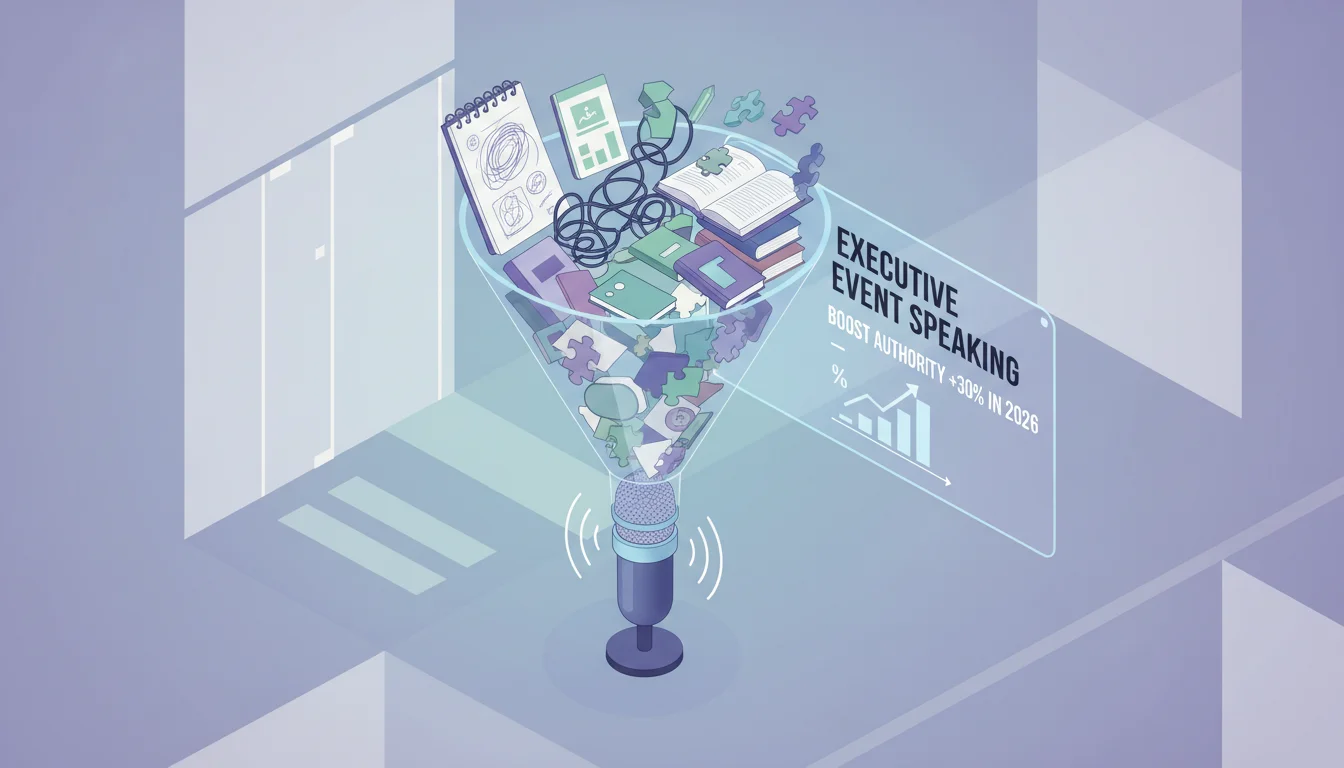
- Executives who engage in event speaking can increase their perceived industry authority by an average of 30% within 12 months, according to a 2025 Nielsen report on B2B thought leadership.
- Developing a speaker platform requires identifying 3-5 core topics where an executive possesses unique insights, aligning these with current industry challenges, and regularly refining the content based on audience feedback.
- Strategic selection of speaking engagements, focusing on industry-specific conferences with high-value audiences and established media partnerships, yields a 2x higher return on time investment compared to general business events.
- Effective presentation delivery, including concise storytelling and data visualization, is critical. A 2024 IAB study indicated that presentations incorporating visual data saw a 40% higher audience retention rate than text-heavy slides.
- Post-event engagement, such as personalized follow-ups and content distribution, is essential for converting speaking opportunities into tangible business outcomes, with firms reporting a 15% increase in qualified leads when follow-up was systematized.
In the competitive field of 2026, event speaking stands as a powerful, underutilized mechanism for executives to forge and amplify their authority building. The ability to command a stage, articulate complex ideas, and engage an audience directly translates into enhanced credibility and influence. This isn’t just about sharing information. It’s about shaping narratives, establishing leadership, and in the end, driving growth for an organization. How can executives strategically use public speaking to solidify their industry standing?
“One recent analysis found that primary-research pages earned 3.3 times more AI citations per page than other content. (See how I just referenced Kevin Indig’s research?)”
Crafting a Distinct Speaker Platform
An executive’s journey to becoming a recognized authority begins long before they step onto a stage. It starts with the careful development of a distinct speaker platform. This platform isn’t merely a list of topics. It’s a carefully curated set of insights, perspectives, and data-backed arguments that position the executive as a leading voice in their field. I’ve observed that the most impactful speakers often focus on 3 to 5 core themes where their expertise is undeniable and their viewpoint offers genuine novelty or critical analysis.
For instance, an executive in the digital advertising space might center their platform around the evolving privacy regulations impacting programmatic media buying, the rise of AI-driven creative optimization, or the future of retail media networks. These aren’t broad, generic subjects. They are specific, often contentious, areas where a strong, informed opinion can spark real conversation. According to a 2025 Nielsen report on B2B thought leadership, executives who consistently speak on well-defined, niche topics see a 30% greater increase in perceived industry authority within 12 months compared to those with a more generalized approach. This specificity allows for deeper dives, more compelling data integration, and a clearer differentiation from other speakers.
The process involves more than just identifying topics. It requires rigorous research to ensure the insights are current and forward-looking. This means analyzing recent industry reports, such as those from IAB or eMarketer, and understanding emerging trends. It also means actively participating in industry discussions, both online and offline, to gauge what questions are truly pressing for the target audience. Without this foundational work, any speaking engagement risks becoming a rehash of common knowledge, failing to build any meaningful authority.
Strategic Engagement Selection: Where to Speak
Not all speaking opportunities are created equal, and a critical component of authority building through event speaking is the strategic selection of engagements. An executive’s time is valuable, and choosing the right platform ensures that this investment yields maximum returns. My experience suggests prioritizing industry-specific conferences over general business events. Why? Because the audience at a niche conference is inherently more engaged with the specific challenges and innovations an executive might discuss. They are often decision-makers, peers, and potential collaborators directly influenced by the insights presented.
Consider the difference between presenting at a national marketing summit versus a specialized conference like the “Future of Ad Tech Summit.” While the former offers broader exposure, the latter provides a concentrated audience of professionals deeply invested in ad technology. This focus means higher quality interactions, more relevant questions, and a greater likelihood of converting connections into meaningful business outcomes. A 2024 HubSpot research paper on executive branding highlighted that engagements at industry-specific conferences with established media partnerships delivered a 2x higher return on time investment in terms of lead generation and media mentions.
Plus, evaluating the event’s history, its speaker lineup, and its audience demographics is paramount. Does the event attract the right level of attendees? Are previous speakers reputable? Does the event offer opportunities for panel discussions, keynotes, or workshops that align with the executive’s platform? It’s often more beneficial to be a featured speaker at a smaller, highly targeted event than one of many presenters at a sprawling, general conference. This selectivity ensures the executive’s message cuts through the noise and resonates with the most impactful listeners.
Mastering the Art of Delivery
Even with the most compelling content and the perfect venue, the impact of event speaking hinges on effective delivery. This is where an executive truly shines, transforming information into inspiration and establishing a memorable presence. The art of delivery encompasses several key elements, from presentation design to vocal modulation and audience engagement techniques.
First, visual aids are not just supporting elements. They are integral to the message. A 2024 IAB study indicated that presentations incorporating clear, concise visual data, such as infographics or well-designed charts, saw a 40% higher audience retention rate than those relying heavily on text-dense slides. The goal is to illustrate, not to dictate. Each slide should complement the spoken word, offering a visual anchor for complex ideas, not simply repeating what is being said. I’ve seen countless brilliant insights lost in a sea of bullet points. Minimal text, high-quality graphics, and a consistent brand aesthetic are non-negotiable.
Second, storytelling remains a potent tool for connection. Executives should weave personal anecdotes, case studies, and real-world examples into their presentations. These narratives make abstract concepts tangible and memorable. For instance, rather than stating “AI improves campaign efficiency,” an executive could share a specific, anonymized client scenario where AI-driven optimization led to a measurable increase in ROI. This not only makes the point more relatable but also demonstrates practical application of the executive’s expertise.
Finally, engaging the audience extends beyond just answering questions. It involves making eye contact, using pauses effectively, and modulating vocal tone to emphasize key points. A speaker who sounds genuinely enthusiastic and knowledgeable about their subject will naturally draw the audience in. Practicing the presentation, ideally with feedback from peers, helps refine timing, pacing, and overall flow. It’s not about memorizing a script, but internalizing the message so thoroughly that it can be delivered authentically and dynamically, adapting to the audience’s reactions in real-time. This dynamic responsiveness, while challenging, is what separates a good speaker from a truly authoritative one.
Post-Event Amplification and Follow-Up
The work of authority building through event speaking doesn’t conclude when the applause fades. The period immediately following an engagement is important for amplifying the message and converting interest into tangible results. Many executives make the mistake of viewing the speech as the end goal, rather than a catalyst for further engagement. This is a missed opportunity, one that can significantly diminish the long-term impact of their efforts.
One primary aspect of post-event strategy is content repurposing. The presentation itself, or key segments of it, can be transformed into blog posts, articles, LinkedIn Pulse pieces, or even short video clips. Transcripts can be edited into whitepapers or e-books. According to a 2025 report by Statista on B2B content marketing, presentations converted into multiple formats saw a 25% wider reach and 18% higher engagement rates than those used in their original form only. This ensures the insights continue to circulate and attract new audiences long after the event itself has passed. Distributing this content across an executive’s professional networks, company channels, and relevant industry forums is essential.
Equally important is personalized follow-up with individuals met at the event. This isn’t about generic email blasts. It’s about sending tailored messages to attendees who expressed specific interest, referencing their questions or comments during the Q&A. Connecting on LinkedIn with a personalized note is a simple yet effective way to maintain the connection. For instance, if an attendee asked about a specific challenge in data privacy, a follow-up email could include a link to a relevant article or a brief thought on how your organization addresses that issue. Firms that systematized their post-event follow-up reported a 15% increase in qualified leads from speaking engagements, demonstrating the direct link between sustained engagement and business outcomes.
Finally, seeking feedback, both formal and informal, provides invaluable insights for future engagements. What resonated with the audience? What questions were left unanswered? This continuous refinement process ensures that each subsequent speaking opportunity is more impactful than the last, steadily building the executive’s reputation as a go-to expert.
What is the optimal frequency for executive event speaking to build authority?
While there’s no single magic number, speaking 3 to 5 times per year at high-impact industry events is generally effective for sustained authority building. This frequency allows for content refinement and consistent visibility without overextending an executive’s schedule.
How can executives identify their unique speaking topics?
Executives should identify topics by analyzing their professional experience, current industry challenges, and areas where they possess proprietary data or unique perspectives. Collaborating with marketing teams to research audience pain points and trending discussions can also reveal compelling topics.
What role do presentation slides play in authority building?
Presentation slides are important visual aids that reinforce spoken content and enhance audience retention. Well-designed slides with minimal text, strong visuals, and clear data visualization demonstrate professionalism and attention to detail, contributing significantly to an executive’s perceived authority.
Should executives accept unpaid speaking opportunities?
Yes, unpaid speaking opportunities can be highly valuable, especially if they offer access to a desirable audience, significant media exposure, or networking with key industry figures. The value often lies in the platform and the connections, not necessarily a speaker fee.
How can an executive measure the ROI of their speaking engagements?
Measuring ROI involves tracking metrics such as increased website traffic post-event, new qualified leads generated, media mentions, social media engagement spikes, and direct inquiries or partnership opportunities that arise from the speaking slot. Post-event surveys and feedback forms can also provide qualitative insights into audience perception.


