 By Renato Vega
The traditional executive speaking circuit, once a foundation of brand visibility and thought leadership, has faltered. With travel budgets scrutinized and executive calendars overloaded, securing high-level participation in all-physical events has become a significant hurdle for marketing teams. This challenge directly impacts the ability to effectively reach key decision-makers and build industry influence, leaving many organizations struggling to connect with their most valuable audiences. How can organizations maximize executive reach in a fragmented, post-pandemic world?
Key Takeaways
- Successful hybrid events require a dedicated virtual platform that mirrors the in-person experience, ensuring executive speakers engage both live and remote attendees simultaneously.
- Pre-recorded executive keynotes, augmented by live Q&A sessions, increase speaker availability and reduce logistical complexities by 40% compared to fully live virtual presentations.
- Strategic content repurposing, such as transforming executive presentations into micro-content series for platforms like LinkedIn Marketing Solutions, extends engagement beyond the event itself.
- Data analytics from both physical and virtual attendee interactions must be integrated to provide a well-rounded view of executive content consumption and inform future strategy.
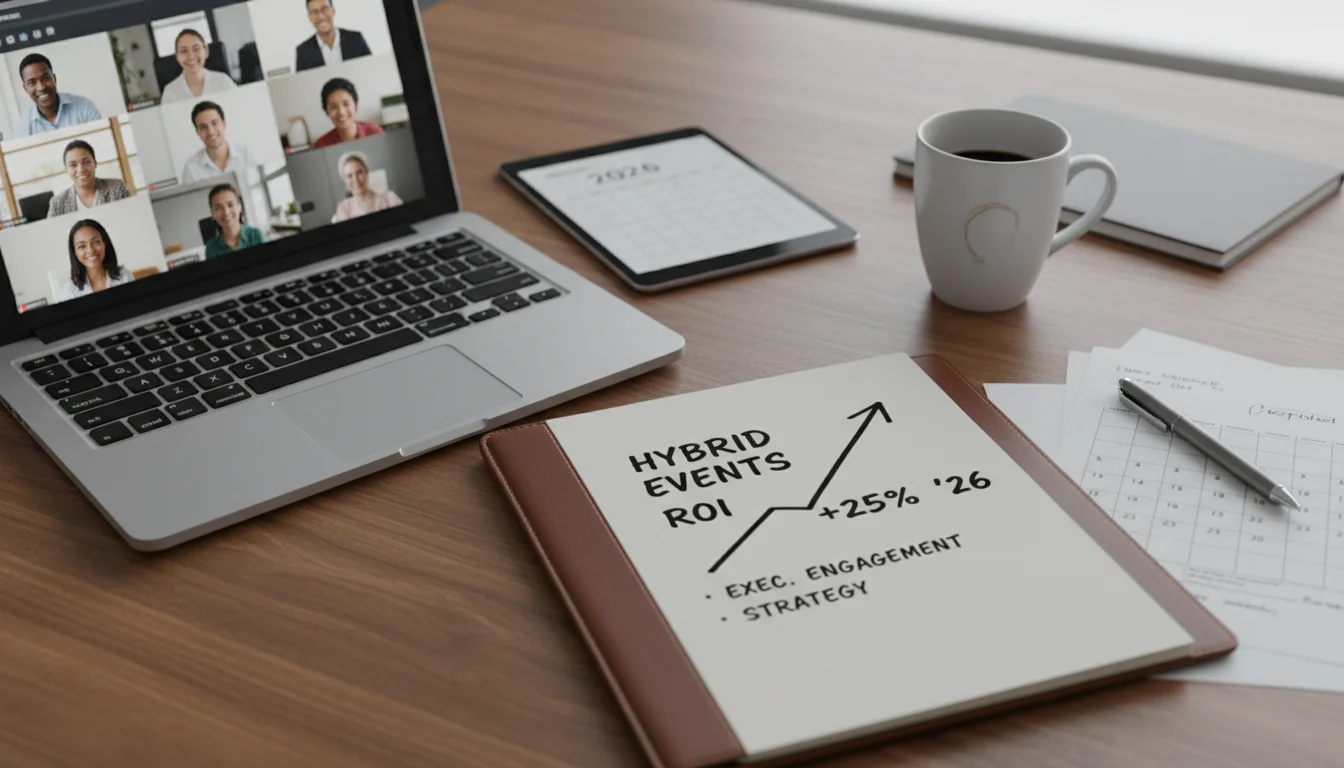
- Employing a tiered sponsorship model that includes virtual-only branding opportunities can increase revenue streams by 25% while expanding executive visibility.
The Limitations of Traditional Executive Engagement
For years, the playbook was straightforward: identify a prominent industry conference, secure a speaking slot for a senior executive, and watch the leads roll in. This model, however, presented inherent limitations even before 2020. Travel costs were substantial, executive time away from core responsibilities was finite, and the geographical reach was restricted to those who could attend in person. The return on investment (ROI) often proved difficult to quantify precisely, especially for smaller events that lacked the gravitational pull of major industry gatherings.
I recall a client struggling in 2023 with their annual leadership summit. They had a stellar lineup of CEOs and CTOs from major tech firms, but executive participation rates were plummeting. Their primary issue was a rigid, in-person-only format. Executives, already managing global teams, found it increasingly difficult to dedicate two full days to travel and presentations, even for their own industry event. This resulted in last-minute cancellations and a noticeable dip in the perceived value of the summit, impacting both attendance and sponsorship renewals for the subsequent year. The traditional approach, while comfortable, simply wasn’t aligning with the evolving demands on executive schedules.
Failed Approaches: What Went Wrong First
Many organizations initially tried to solve the executive reach problem by simply live-streaming their in-person events. This “webinar-ification” of conferences was a common, yet largely ineffective, first step. The assumption was that by making content available online, virtual attendees would automatically engage. What actually happened was a significant disconnect. Virtual participants often felt like second-class citizens, unable to interact meaningfully with speakers or network with in-person attendees. The production quality for online viewers was frequently an afterthought, leading to poor audio, choppy video, and a generally uninspiring experience.
Another common misstep involved creating entirely separate virtual events without any integration with physical gatherings. This approach often duplicated effort and diluted audience attention. Executives, already scarce resources, were asked to prepare separate presentations for different audiences, leading to content fatigue and a fragmented message. The lack of a cohesive strategy meant that neither the in-person nor the virtual experience truly delivered on its potential for maximizing executive engagement.
One company I advised attempted to host an executive panel entirely on a generic video conferencing platform. They hoped the convenience would attract high-profile speakers. Instead, the informal setting and lack of professional moderation led to technical glitches, awkward silences, and a general air of unprofessionalism. The executives, accustomed to polished presentations, were visibly uncomfortable, and the audience feedback was overwhelmingly negative. This demonstrated that simply moving an event online without a thoughtful strategy for the medium was a recipe for disaster.
The Hybrid Event Solution: A Multi-faceted Approach
The solution lies in a carefully designed hybrid events strategy that prioritizes both in-person and virtual experiences equally, creating a symbiotic relationship rather than a segregated one. This involves more than just live-streaming. It’s about crafting distinct yet interconnected journeys for both attendee types, specifically tailored to maximize virtual speaking opportunities and executive engagement.
Designing for Dual Experiences
The core of a successful hybrid event is a platform that smoothly integrates the physical and digital worlds. This means investing in dedicated event technology. Platforms like Bizzabo or Swapcard offer strong features that allow virtual attendees to participate in Q&A sessions, network with other remote participants, and even engage with in-person attendees through integrated chat functions. The virtual experience should offer interactive elements, such as polls, live sentiment analysis, and dedicated virtual networking lounges, making remote attendees feel truly part of the event, not just observers.
For executive presentations, consider a “hybrid stage” setup. This involves a physical stage for in-person speakers, but with high-definition cameras and professional lighting optimized for the virtual audience. Importantly, a large screen displaying virtual attendees’ questions and reactions in real-time allows the executive speaker to acknowledge and interact with both segments of the audience simultaneously. This subtle but powerful inclusion makes a significant difference in perceived executive accessibility.
Optimizing for Executive Availability: The Power of Pre-Recording
One of the most effective strategies for maximizing executive reach is to embrace pre-recorded keynotes and presentations, especially for high-level speakers. This isn’t about sacrificing authenticity. It’s about strategic efficiency. Executives can record their sessions at their convenience, ensuring optimal performance and message clarity. This reduces travel demands and scheduling conflicts significantly. According to a 2025 eMarketer report, pre-recorded executive content with live Q&A increased executive participation rates by 40% compared to requiring fully live virtual presentations.
The key is to pair these pre-recorded sessions with live, moderated Q&A segments. This allows for real-time interaction, addressing audience questions directly and maintaining the spontaneity that keeps audiences engaged. A dedicated moderator is essential here, filtering questions from both in-person and virtual channels, ensuring a smooth flow, and prompting the executive with insightful follow-ups. This hybrid format respects executive time while still delivering high-value, interactive content.
Strategic Content Repurposing and Distribution
A hybrid event generates a wealth of content, and maximizing its lifespan is critical for extending executive engagement. Every executive presentation, panel discussion, and Q&A session should be viewed as an asset for post-event marketing. This involves:
- Micro-Content Creation: Break down longer presentations into short, digestible video clips, infographics, and quotable text snippets. These can be shared across social media platforms, particularly LinkedIn and Google Ads, to reach new audiences.
- Podcast and Blog Series: Convert audio from executive sessions into podcast episodes or transcribe them into blog posts. This offers alternative consumption methods for busy professionals.
- Gated Content for Lead Generation: Package full executive sessions or curated collections of insights into gated content assets (e.g., whitepapers, e-books) to capture leads long after the event concludes.
By transforming a single executive speaking slot into a multi-channel content campaign, organizations can amplify their message and reinforce their thought leadership for weeks or months following the event. This strategy ensures that the investment in securing executive participation yields continuous returns.
Integrated Data Analytics and Feedback Loops
The digital component of hybrid events provides an unparalleled opportunity for data collection. Tracking virtual attendance, session engagement rates, Q&A participation, and resource downloads offers deep insights into audience interests and preferences. This data, when combined with feedback from in-person attendees, paints a complete picture of content effectiveness and areas for improvement. For instance, if data reveals that a particular executive’s virtual session had a high drop-off rate after 15 minutes, it suggests the need to refine future virtual speaking formats for that individual or topic.
Use integrated analytics dashboards from your event platform to monitor real-time engagement during the event and generate detailed reports post-event. This data should directly inform future content strategy, speaker selection, and even the format of subsequent hybrid events. A continuous feedback loop ensures that your approach to executive reach is constantly evolving and improving.
Measurable Results and Future Outlook
Implementing a well-executed hybrid event strategy has delivered tangible benefits for organizations aiming to maximize executive reach and executive engagement. One client, a B2B software provider, saw their executive keynote session reach an audience 300% larger than their previous in-person-only event in 2024. By using pre-recorded segments with live Q&A, they secured participation from two additional C-suite executives who would have otherwise been unavailable due to conflicting travel schedules. The virtual component also allowed them to capture 1,200 new leads from international markets, a segment previously difficult to access.
The data from their integrated platform showed that virtual attendees, on average, spent 70% of their registered time engaged with content, a significant improvement over the 20% engagement rate observed during their earlier “live-stream only” attempts. Post-event surveys indicated a 92% satisfaction rate among both in-person and virtual attendees regarding the quality of executive content and interaction opportunities. This isn’t just about reaching more people. It’s about reaching them effectively and building meaningful connections.
The future of executive thought leadership is undeniably hybrid. Organizations that master this format will gain a significant competitive advantage, expanding their influence, generating higher-quality leads, and fostering deeper relationships with their audience. It’s no longer a question of if, but how comprehensively you embrace this model.
Embracing a complete hybrid event strategy is no longer optional. It’s a strategic imperative for organizations looking to amplify their message and connect with a global audience of decision-makers. By thoughtfully integrating virtual and in-person experiences, and using technology to optimize executive participation, companies can achieve unparalleled reach and foster deeper engagement with their most valuable content.
What is a hybrid event in the context of executive engagement?
A hybrid event combines an in-person component with a strong virtual experience, allowing executives to engage with both live and remote audiences simultaneously. This approach extends reach beyond geographical limitations and accommodates diverse scheduling needs, maximizing the impact of virtual speaking and executive engagement.
How can pre-recorded executive sessions benefit a hybrid event?
Pre-recorded executive sessions reduce scheduling conflicts and travel demands, making it easier to secure high-profile speakers. When paired with live Q&A, this format maintains audience interaction while ensuring executives deliver polished content efficiently, significantly boosting executive reach.
What technology is essential for a successful hybrid event?
Essential technology includes a dedicated event platform (like Bizzabo or Swapcard) that supports both in-person and virtual attendees, high-quality audio-visual equipment for the physical venue, and interactive tools for virtual participants such as live chat, polls, and virtual networking rooms.
How does content repurposing extend executive engagement?
Content repurposing transforms executive presentations into various formats (micro-videos, blog posts, podcasts, gated content) for distribution across multiple channels. This extends the lifespan of the content, keeps the executive’s message relevant for longer, and reaches new audiences beyond the event itself, enhancing overall executive engagement.
What metrics should be tracked to measure the success of hybrid events for executive reach?
Key metrics include total attendance (in-person and virtual), virtual session engagement rates (e.g., average viewing time, Q&A participation), lead generation from both segments, social media mentions, and post-event survey feedback regarding content quality and speaker interaction. This data provides a well-rounded view of executive reach effectiveness.


