 By Angela Smith
So much misinformation swirls around the topic of email list building, especially when your target is an elite executive audience. I’ve seen countless businesses squander resources chasing generic growth metrics instead of focusing on true engagement. The truth is, building a high-value list requires precision, not just volume.
Key Takeaways
- Targeted content, like exclusive whitepapers and webinar access, consistently outperforms generic lead magnets for attracting executive subscribers.
- Personalized outreach through platforms like LinkedIn Sales Navigator, followed by an opt-in email, yields significantly higher executive conversion rates than broad advertising.
- Data privacy compliance, particularly with GDPR and CCPA, is non-negotiable and essential for maintaining trust and avoiding severe penalties with executive contacts.
- Automated email sequences must be highly segmented and deliver bespoke value to each executive persona to prevent immediate unsubscribes.
- A/B testing subject lines, send times, and content formats is critical for continuous improvement, with even minor adjustments leading to substantial engagement gains.
Myth 1: More Subscribers Always Means More Influence
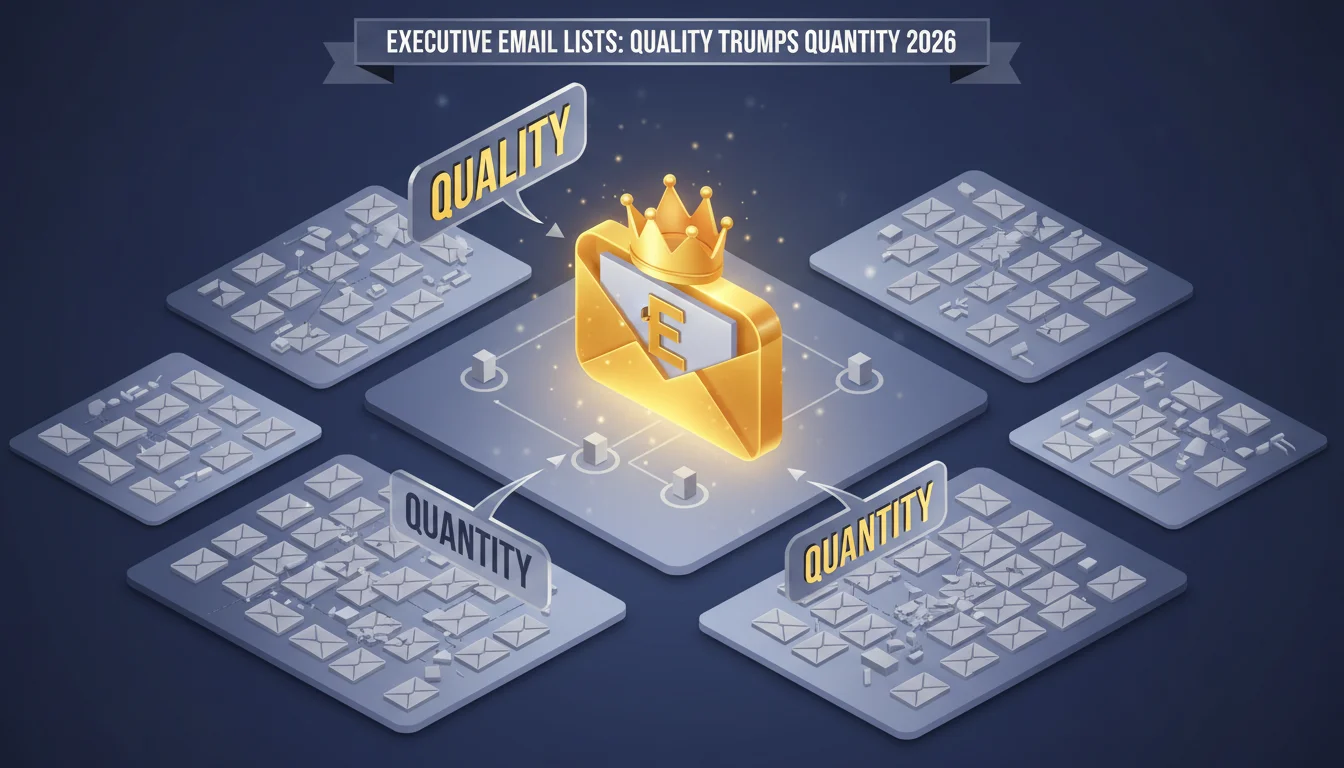
This is perhaps the most pervasive and damaging myth I encounter. Many marketers become fixated on sheer subscriber numbers, believing a larger list automatically translates to greater influence or more sales. I had a client last year, a B2B SaaS firm, who boasted about their 100,000-strong email list. When we dug into the data, their open rates for C-suite content were abysmal, hovering around 8%, and click-through rates were under 1%. Most of these subscribers were entry-level or mid-management, acquired through broad, untargeted campaigns. The reality is that for an executive audience, quality absolutely trumps quantity. An email list of 5,000 highly engaged decision-makers is infinitely more valuable than 50,000 lukewarm contacts. Why? Because executives are time-poor. They filter ruthlessly. If your content isn’t immediately relevant, insightful, and actionable for their specific challenges, it’s deleted, or worse, marked as spam. According to a HubSpot report on B2B marketing trends, personalization can increase email open rates by 26%, and for executive audiences, this jumps even higher due to their demand for tailored information. Focusing on relevant insights rather than broad appeal is paramount. We need to shift our mindset from “how many can we get?” to “who are we getting, and what value do they truly seek?” This means defining your ideal executive persona with granular detail: their industry, company size, specific challenges, decision-making authority, and even their preferred communication style.
Myth 2: Executives Don’t Have Time for Email Newsletters
I hear this one frequently: “Oh, executives are too busy; they only check email for urgent operational matters.” This is a convenient excuse for poor content strategy, not a reflection of executive behavior. While it’s true they are busy, executives rely heavily on email for information gathering, strategic insights, and staying abreast of industry developments. A Nielsen Norman Group study on executive information consumption found that email remains a primary channel for receiving curated, relevant updates. The issue isn’t their willingness to read emails; it’s the quality and relevance of the emails they receive. The problem often lies in treating executive newsletters like consumer-facing promotions. Executives crave thought leadership, data-driven analysis, and concise summaries of complex topics. They want to understand implications for their business, not be sold a product directly in every email. At my previous firm, we developed an email series for a cybersecurity client targeting CISOs and CTOs. Instead of product features, we focused on emerging threat vectors, regulatory compliance changes (like the impending federal data privacy acts of 2027), and strategic risk management frameworks. We included exclusive access to invite-only virtual roundtables with industry experts. Our open rates consistently exceeded 40%, and the engagement metrics (replies, forwards, registrations) were phenomenal. The key was delivering perceived “insider” knowledge and exclusive opportunities, not just generic updates.
Myth 3: You Can’t Personalize Email for a Broad Executive List
This myth usually comes from marketers who are overwhelmed by the sheer volume of data or who are still using outdated email marketing platforms. In 2026, with the advancements in AI-driven segmentation and dynamic content, the idea that personalization is too difficult for a large list is simply incorrect. The tools are here; it’s about knowing how to use them. We ran into this exact issue at my previous firm with a financial services client. They had a single “executive insights” newsletter going out to over 15,000 contacts, ranging from small business owners to Fortune 500 CFOs. The content was generic, trying to appeal to everyone, and thus appealed to no one. We implemented a robust segmentation strategy using their existing CRM data and enriched it with publicly available information. We segmented by industry, company revenue, job title, and even regional economic indicators (e.g., executives in the Atlanta Metro area versus those in the Bay Area). For example, a CFO at a manufacturing company in Georgia would receive an email highlighting supply chain resilience, interest rate forecasts impacting capital expenditures, and insights on new tax incentives relevant to manufacturing (like those outlined in O.C.G.A. Section 48-7-29.2). Meanwhile, a CEO of a tech startup in California would get content on venture capital trends, talent acquisition strategies, and IP protection. We used a platform like ActiveCampaign to create dynamic content blocks within a single email template, ensuring each recipient saw only the most relevant sections. The result? A 25% increase in click-through rates within three months for the segmented emails compared to the old generic version. Personalization isn’t just possible; it’s mandatory for executive engagement.
Myth 4: Cold Outreach for Executives is Always Spammy
“Don’t ever cold email an executive; it’s just spam and will ruin your reputation.” This is another common misconception that holds marketers back. Yes, poorly executed cold outreach is spammy. Sending a generic sales pitch to an executive you know nothing about is a surefire way to get blocked. However, highly targeted, value-driven cold outreach, especially when used to initiate a connection and offer an opt-in to your valuable content, is a legitimate and often effective strategy for email list building. The key here is research and relevance. I advocate for a multi-touch approach. Start by identifying specific executives who align perfectly with your ideal customer profile using tools like LinkedIn Sales Navigator. Don’t just send a connection request. Engage with their recent posts, comment thoughtfully on their industry insights. Build a tiny bit of rapport first. Then, craft a personalized message that highlights a specific challenge you know they face (based on your research) and offers a piece of your exclusive content (e.g., a proprietary research report, an invitation to a private industry briefing) as a solution, explicitly stating it’s an opt-in for future valuable communications. For instance, if I identify a VP of Operations at a logistics company struggling with supply chain disruptions, my initial outreach might reference a recent industry report on predictive analytics for logistics that I’ve authored, offering to send it their way if they’re interested. This isn’t a sales pitch; it’s an offer of value. The email should be concise, respectful of their time, and clearly state what they’ll gain. Remember, the goal is not to sell in the first email, but to pique their interest enough to opt into your content stream. It’s a delicate dance, but when done right, it can yield high-quality leads.
Myth 5: Compliance is Just a “Check the Box” Exercise
I’ve seen too many companies treat data privacy and email compliance as an afterthought, a mere formality. This is a catastrophic error, particularly when dealing with an executive audience. Executives, and the companies they represent, are acutely aware of data privacy regulations like GDPR, CCPA, and the emerging federal statutes. A single misstep can not only lead to hefty fines but also irrevocably damage your brand’s reputation for trustworthiness. According to an IAB report on data privacy, consumer trust is directly linked to perceived compliance. For businesses, this translates to executive trust. Compliance isn’t just about avoiding legal trouble; it’s about building and maintaining trust. When you’re asking a senior executive for their email address, you’re asking for access to their highly protected inbox. They need to know you respect their data and their privacy. This means clear, explicit consent mechanisms (double opt-in is non-negotiable for executive lists, in my opinion), transparent privacy policies, and easy unsubscribe options. You must ensure your email marketing platform (e.g., Mailchimp or Salesforce Marketing Cloud) is configured for full compliance and that your team understands the implications of every email sent. I had a client facing significant backlash because their unsubscribe process was convoluted. Executives, frustrated by the extra steps, simply marked the emails as spam. This not only hurt their sender reputation but also generated complaints that caught the attention of their legal department. We immediately streamlined the unsubscribe process to a single click and sent a re-permission campaign to ensure all contacts had explicitly opted in under the new, stricter guidelines. It led to a temporary dip in list size, but a massive surge in engagement and a restoration of trust. Compliance is a foundational pillar of executive email list building, not an optional extra. To truly build an engaged executive audience through email, you must abandon outdated notions and embrace a strategy rooted in value, precision, and unwavering respect for their time and privacy. Focus on delivering irreplaceable insights, and your list will grow not just in numbers, but in influence.
What is the most effective lead magnet for attracting executives?
The most effective lead magnets for executives are typically high-value, exclusive content pieces such as proprietary research reports, industry benchmark analyses, executive-level whitepapers offering strategic frameworks, or invitations to private webinars and virtual roundtables with thought leaders. These should provide actionable insights or unique perspectives not readily available elsewhere.
How often should I email an executive audience?
For an executive audience, quality and relevance far outweigh frequency. A safe starting point is typically once or twice a month for strategic insights or quarterly for deeper dives like comprehensive reports. The key is to send emails only when you have genuinely valuable content to share, avoiding routine “check-ins” that lack substance.
What are the critical elements of an executive-focused email subject line?
Executive email subject lines must be concise, clear, and immediately convey value or urgency. They often include numbers, specific benefits, or pique curiosity about a relevant industry trend. Examples include: “Q3 Economic Outlook: Impact on Capital Markets,” “New Data: 3 Strategies to Boost Supply Chain Resilience,” or “Invitation: Private Roundtable on AI Governance.” Avoid clickbait or overly promotional language.
Should I use a personal or company email address for outreach to executives?
For initial, highly personalized cold outreach that aims to offer valuable content and gain an opt-in, sending from a personal professional email address (e.g., firstname.lastname@yourcompany.com) can appear more authentic and less like mass marketing. However, all subsequent automated communications part of your regular email list should come from a recognized company email address with proper branding.
What data points are most important for segmenting an executive email list?
Key data points for segmenting an executive email list include industry, company size (revenue/employees), job title/seniority level, geographical location (for regional relevance), specific business challenges or pain points (inferred from their role or company activities), and their past engagement with your content (e.g., topics they’ve clicked on or reports they’ve downloaded).


