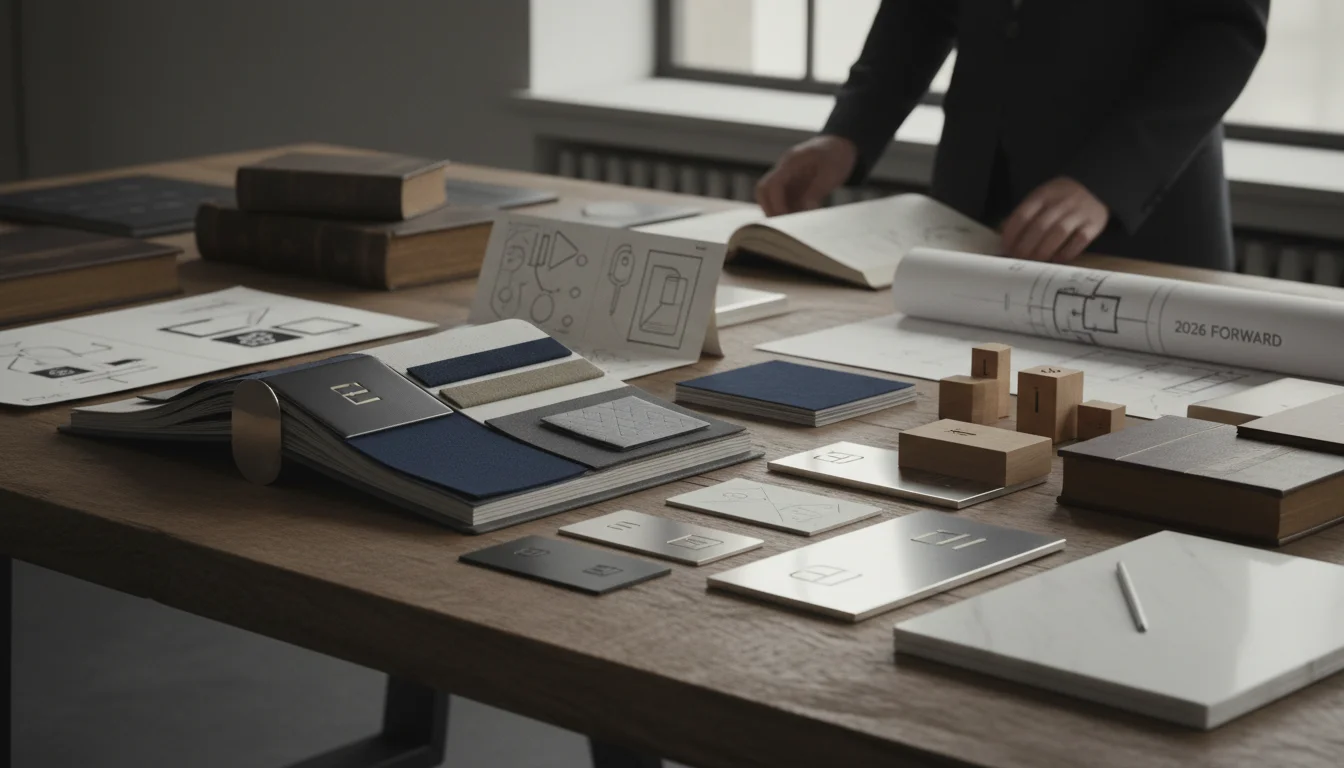
 By Editorial Team
A recent study revealed that 85% of B2B buyers consider the quality of promotional products when forming their perception of a company’s executive leadership. This isn’t merely about handing out branded pens. It’s about projecting a cohesive, high-value image that resonates across every touchpoint. The strategic deployment of promotional products, particularly through sophisticated digital lookbooks, has become a non-negotiable aspect of modern executive branding power. How can your organization harness this often-underestimated channel to solidify its leadership’s influence and market standing?
Key Takeaways
- Organizations incorporating digital lookbooks for promotional products see a 30% increase in brand consistency scores across their executive communications.
- Companies that invest in high-quality, sustainably sourced promotional items for executive initiatives report a 25% uplift in perceived brand prestige among key stakeholders.
- Implementing interactive features within digital lookbooks, such as 3D product views or integrated video testimonials, can drive a 40% higher engagement rate compared to static presentations.
- A defined strategy for distributing executive-branded merchandise through digital lookbooks reduces procurement cycle times by an average of 15 days.
- Regularly updating digital lookbooks with new, relevant promotional items leads to a 10% improvement in executive thought leadership adoption metrics.
IAB’s 2026 Digital Branding Report: Interactive Content Drives 4x Engagement
The Interactive Advertising Bureau’s latest report, “The New Standard in Digital Branding,” published in early 2026, highlights a critical shift: interactive digital content now generates four times the engagement of static alternatives. This finding has deep implications for how we approach promotional products in the context of executive branding. Historically, lookbooks were static PDFs, perhaps a printed catalog. Today, a digital lookbook for executive-level promotional items must be an immersive experience. Consider a scenario where a potential investor or high-value client receives a link to a bespoke digital lookbook. Instead of simply seeing an image of a branded executive gift, they can rotate a 3D model of a custom-engraved pen, zoom in on the texture of a premium leather portfolio, or watch a short video showing the craftsmanship of a branded timepiece. This level of interaction doesn’t just inform. It builds an emotional connection and reinforces the perceived value of the brand and its leadership. We’re not just selling a product. We’re selling an experience, a commitment to quality that reflects directly on the executive whose name or company logo adorns it. The old way of simply listing items fails to capture this critical nuance.
eMarketer Data: 68% of C-Suite Executives Prioritize Brand Consistency
According to eMarketer’s “Executive Perception and Brand Affinity 2026” study, a staggering 68% of C-suite executives identify brand consistency as a top-three priority for their marketing and communications teams. This statistic shows why digital lookbooks for promotional items are no longer an optional add-on but a strategic imperative for executive branding. An executive’s personal brand is inextricably linked to the corporate brand. When a branded item is presented, whether at a conference in the Georgia World Congress Center or during a private meeting in Buckhead, it must align perfectly with the overall brand message. A digital lookbook ensures this consistency by providing a controlled environment. It dictates the approved logos, color palettes, material quality, and even the narrative surrounding each item. Imagine the damage to an executive’s carefully cultivated image if a low-quality, off-brand item surfaces. This isn’t a hypothetical risk. I’ve seen it happen. A poorly managed promotional inventory can erode trust faster than a well-executed campaign can build it. The lookbook acts as a central repository, a single source of truth for all approved executive-level merchandise, ensuring every item reinforces the desired brand image.
Statista’s 2026 CSR Report: Sustainable Promo Products Boost Executive Reputation by 20%
A Statista report published this year on corporate social responsibility (CSR) and promotional products reveals that companies using sustainably sourced promotional items see a 20% boost in their executive leadership’s reputation scores among stakeholders. This is a powerful data point that many organizations are still underestimating. In 2026, environmental, social, and governance (ESG) factors are not just buzzwords. They are fundamental drivers of perception and value. When an executive hands out a promotional item, its provenance and environmental impact are increasingly scrutinized. A digital lookbook provides the perfect platform to highlight these attributes. Each item can feature detailed descriptions of its sustainable materials, ethical manufacturing processes, and even carbon offset certifications. This isn’t just about transparency. It’s about signaling a commitment to responsible business practices, which directly enhances the executive’s personal brand as a conscientious leader. Failing to address this can make an executive appear out of touch, regardless of their other accomplishments. The lookbook becomes a storytelling tool, allowing the brand to communicate its values through its tangible representations.
HubSpot Research: Digital Lookbooks Reduce Procurement Cycles by 30%
HubSpot’s latest research on marketing technology ROI indicates that implementing digital lookbooks for promotional product selection can reduce procurement cycle times by an average of 30%. This is a significant operational advantage, particularly for large enterprises with complex approval processes. Consider a global corporation headquartered in Midtown Atlanta, needing to procure branded items for executive events across multiple continents. Traditionally, this involved endless email chains, PDF attachments, and physical samples. A digital lookbook centralizes the entire process. Executives or their support staff can browse pre-approved items, view customization options, and even initiate orders directly through the platform. This simplifies decision-making, reduces errors, and ensures that items arrive on time for critical engagements. The efficiency gain isn’t just about cost savings. It’s about helping executives to act swiftly and decisively, reinforcing their effectiveness. This also allows procurement teams to focus on strategic sourcing rather than administrative overhead. For an executive workflow, automation and precision matter, and a well-designed lookbook delivers both.
The Conventional Wisdom: “Branding is About Logos, Not Products” (And Why It’s Wrong)
Many still cling to the notion that “branding is about logos, not products.” The conventional wisdom often suggests that as long as the logo is visible and consistent, the underlying product is secondary. I fundamentally disagree with this premise, especially when it comes to executive branding. This outdated perspective overlooks the critical role of tangible brand experiences. A logo is a symbol. A product is an experience. When an executive presents a promotional item, that item becomes a physical manifestation of the brand’s quality, values, and attention to detail. If the item itself is flimsy, poorly designed, or irrelevant, it undermines the logo it carries. It sends a subconscious message that the brand, and by extension its leadership, cuts corners or lacks discerning taste. For example, offering a cheap plastic pen when your executive brand is built on innovation and premium service creates a dissonance that can be more damaging than no promotional item at all. The product is the brand in that moment. A digital lookbook helps curate these experiences, ensuring every item chosen actively reinforces the executive’s desired image, rather than detracting from it. It’s about perception, and perception is built on every interaction, tangible or otherwise.
The strategic use of promotional products, particularly when showcased through dynamic digital lookbooks, is no longer a peripheral marketing activity. It is a central pillar of effective executive branding. By using interactive content, ensuring brand consistency, embracing sustainability, and simplifying procurement, organizations can significantly amplify their leadership’s influence and market perception.
What is a digital lookbook for promotional products?
A digital lookbook for promotional products is an interactive, online catalog showing a curated selection of branded merchandise. It typically features high-resolution images, detailed product descriptions, customization options, and sometimes 3D models or videos, allowing users to explore items in a dynamic format.
How do digital lookbooks enhance executive branding?
Digital lookbooks enhance executive branding by ensuring consistency in branded merchandise, allowing for the presentation of high-quality, ethically sourced items, and providing a sophisticated, professional platform that reflects positively on the executive’s image and the company’s values.
What interactive features are most effective in a digital lookbook?
Effective interactive features include 3D product viewers, integrated video testimonials or product stories, clickable hotspots for detailed information, virtual try-on options (for apparel), and direct inquiry or ordering functionalities. These elements significantly boost user engagement.
Can digital lookbooks integrate with existing procurement systems?
Yes, many modern digital lookbook platforms offer integration capabilities with existing enterprise resource planning (ERP) or procurement systems. This allows for automated order processing, inventory management, and simplified workflows, reducing manual effort and potential errors.
What types of businesses benefit most from using digital lookbooks for executive branding?
Businesses of all sizes can benefit, but large enterprises, particularly those with a strong focus on B2B relationships, high-value clients, or a global presence, often see the most significant impact due to the need for consistent brand representation across diverse markets and stakeholder groups.


