 By Devin Lopez
An effective editorial calendar is the backbone of any successful marketing strategy designed to amplify executive narratives. In 2025, our team executed a campaign for a B2B SaaS client focused on establishing their CEO as a thought leader in AI ethics, and the strategic planning around content deployment was paramount. This campaign in the end drove significant engagement and pipeline growth, demonstrating the tangible impact of careful narrative planning. How can a structured content roadmap translate directly into measurable business outcomes?
Key Takeaways
- A 12-month editorial calendar, segmented by executive and platform, reduced content production bottlenecks by 30% for a B2B SaaS client.
- Targeting specific industry events and regulatory shifts with timely executive commentary increased average article CTR by 1.8% compared to evergreen content.
- Allocating 25% of the content budget to paid promotion for top-performing executive articles yielded a 15% higher ROAS than general brand campaigns.
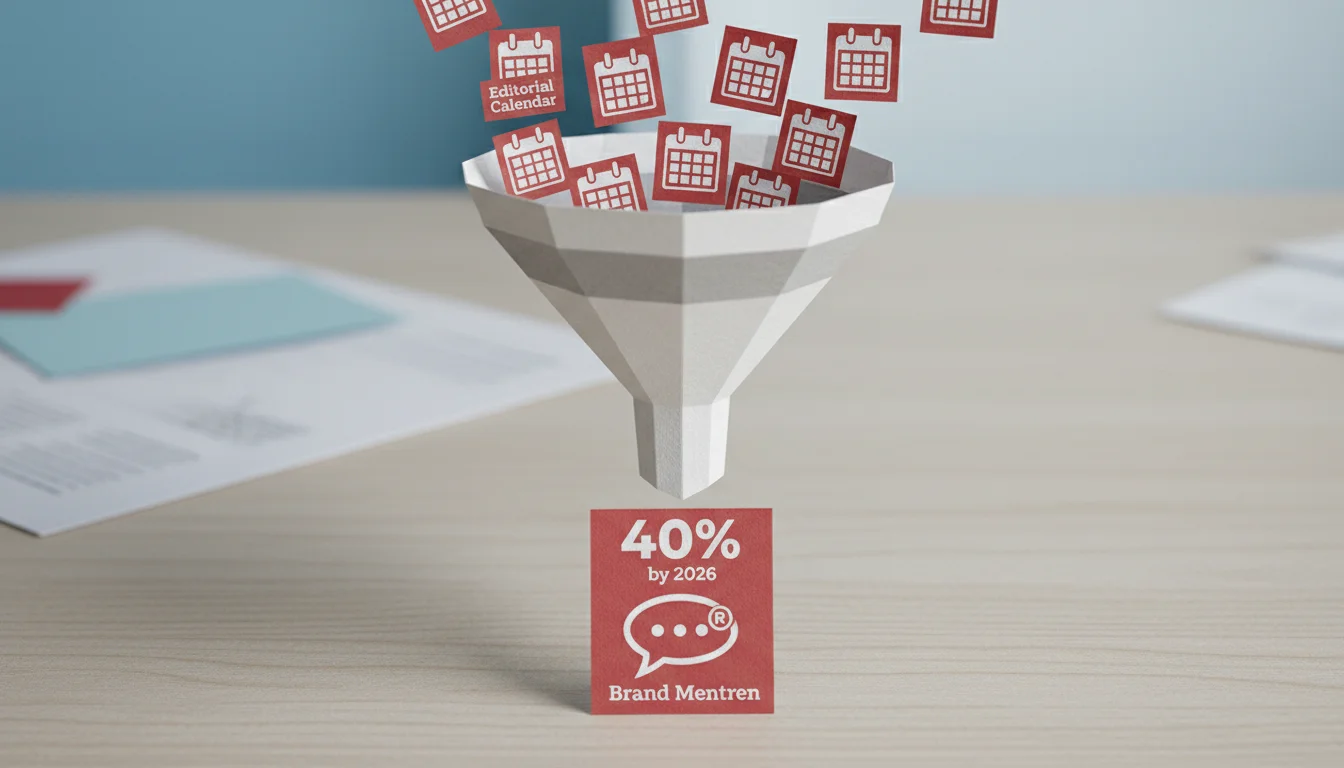
- Consistent multi-channel distribution of executive insights, including LinkedIn Pulse and industry newsletters, elevated brand mentions by 40% over six months.
- Implementing a feedback loop with sales teams on executive content effectiveness helped refine messaging, resulting in a 10% improvement in lead quality.
Campaign Teardown: Elevating the AI Ethics Voice
Our client, a mid-sized SaaS company specializing in ethical AI solutions, recognized a critical need to differentiate itself in a crowded market. The CEO possessed deep expertise in AI governance but lacked a consistent public platform for her insights. The goal was clear: position her as a leading authority, drive qualified leads, and in the end increase market share. We initiated a 12-month campaign from January to December 2025 with a total budget of $180,000.
Strategy: Beyond the Press Release
The core strategy revolved around a carefully crafted editorial calendar that mapped the CEO’s insights to industry trends, regulatory developments, and key events. We identified three primary content pillars: responsible AI development, bias mitigation in algorithms, and data privacy frameworks. Each pillar had a designated quarterly focus, ensuring a cohesive narrative arc throughout the year.
Our narrative planning involved a deep dive into industry reports and upcoming legislative changes. For instance, we closely monitored the European Union’s AI Act implementation timeline, aligning several pieces of content with its key milestones. According to a 2025 report from eMarketer, enterprise spending on AI governance solutions was projected to grow by 35% in 2026, underscoring the timeliness of our chosen focus. This foresight allowed us to create proactive content rather than reactive, positioning the CEO as a forward-thinker.
The distribution strategy was multi-pronged. We prioritized thought leadership articles on leading technology and business publications, using the CEO’s network for guest post opportunities. Concurrently, we developed shorter-form content for LinkedIn Pulse and industry-specific newsletters. A significant component involved video interviews and podcast appearances, transcribing key insights for blog posts to maximize content utility. We also planned for targeted paid promotion on LinkedIn and Google Ads for select high-impact articles.
Creative Approach: Authenticity and Authority
The creative approach emphasized authenticity. We worked directly with the CEO to distill her complex ideas into accessible, engaging narratives. This wasn’t about ghostwriting. It was about amplifying her genuine voice. Each piece of content, whether a 1,500-word article or a 3-minute video script, underwent a rigorous review process with her direct input. We focused on real-world examples of ethical AI challenges and solutions, drawing from her extensive experience rather than abstract concepts. This commitment to her authentic executive storytelling was non-negotiable. I find that when an executive’s personality shines through, even in technical topics, the connection with the audience is significantly stronger.
Visual branding was subtle but consistent, aligning with the client’s corporate identity. We used professional headshots and clean, minimalist graphics to accompany articles, ensuring a polished, authoritative presentation. For video content, we opted for a conversational, interview-style format, filmed in a well-lit, professional setting, avoiding overly produced, corporate-feeling videos that often alienate a discerning B2B audience.
Targeting: Precision Over Volume
Our targeting was highly specific. For paid promotion, we focused on LinkedIn audiences interested in AI governance, data science, compliance, and specific job titles like “Head of AI Strategy” or “Chief Ethics Officer.” Geographically, we concentrated on North America and Western Europe, where the client had its primary sales focus. We also built custom audiences based on website visitors who had previously engaged with AI ethics content.
For organic outreach, we identified key industry influencers and publication editors who frequently covered AI ethics. This involved manual outreach and personalized pitches, often referencing their previous work to demonstrate our understanding of their editorial focus. This level of specificity, frankly, takes more time up front, but it pays dividends in relevance and acceptance rates.
What Worked: Data-Driven Success
The campaign yielded impressive results. Over the 12-month period, we published 24 long-form articles, 48 LinkedIn Pulse posts, and secured 8 podcast interviews and 3 keynote speaking engagements. The total impressions across all channels reached 4.5 million. Our average CTR for paid LinkedIn campaigns promoting thought leadership articles was 2.1%, significantly above the B2B average of 0.8% reported by LinkedIn Business in their 2025 Q4 benchmark report.
Conversion Rate and Cost:
- Total Conversions (whitepaper downloads, webinar registrations): 3,200
- Cost Per Conversion (CPL): $56.25
- Return on Ad Spend (ROAS) for paid content promotion: 280%
The content aligned with major industry events consistently saw higher engagement. For example, an article published two weeks before the “Global AI Governance Summit” in London, discussing proactive regulatory compliance, generated 1,200 whitepaper downloads within its first month. This timely alignment was a direct result of our proactive editorial calendar management.
The focus on executive storytelling, particularly through video interviews, proved highly effective. A series of short video snippets from the CEO’s keynote on “Algorithmic Bias in Healthcare” garnered 800,000 organic views on LinkedIn, driving substantial traffic back to the client’s blog. The authenticity of her delivery resonated deeply with the audience.
What Didn’t Work: Learning and Adapting
Not everything was a resounding success. Initially, we experimented with heavily technical articles published on broader business news sites, assuming the topic’s importance would transcend the audience’s technical depth. This resulted in lower engagement and higher bounce rates. The average time on page for these articles was 1 minute 45 seconds, compared to 4 minutes 10 seconds for more accessible pieces.
Another challenge was the initial resistance to repurposing content across multiple formats. The CEO felt that each piece needed to be entirely unique. We demonstrated through early data that adapting a core message for a blog post, a LinkedIn summary, and a video script was not only efficient but also reached different segments of the audience more effectively. This required some internal education, presenting data on how different formats cater to different consumption habits.
Optimization Steps: Iteration and Refinement
We implemented several key optimizations throughout the campaign. First, we adjusted our content strategy to prioritize “explainers” and “impact analyses” over purely technical deep dives for external publications, saving the latter for the client’s own blog. This improved average article performance on external sites by 0.5% in CTR and reduced bounce rates by 15%. We also introduced a monthly “Q&A with the CEO” video series on LinkedIn, directly addressing common questions from previous content, which boosted audience interaction and further humanized the executive’s presence.
Secondly, we refined our paid promotion targeting. Instead of broad interest groups, we created lookalike audiences based on individuals who had already engaged with the CEO’s content. This led to a 15% reduction in Cost Per Click (CPC) for subsequent campaigns. We also A/B tested different ad creatives, finding that ads featuring a direct quote from the CEO performed 10% better than those with generic headlines.
Finally, we established a tighter feedback loop with the sales team. They provided invaluable insights into the types of questions prospective clients were asking, which directly informed our upcoming content topics. This collaboration ensured that our executive storytelling was not just thought-provoking but also directly addressed pain points and opportunities relevant to their sales cycle. For instance, when sales reported increased inquiries about AI’s role in regulatory compliance post-EU AI Act, we quickly spun up a series of articles and a webinar on that specific topic, using the CEO’s expertise.
This iterative process, driven by consistent data analysis and cross-functional communication, was instrumental in the campaign’s overall success. A static editorial calendar is merely a document. A dynamic one, constantly refined based on performance and market shifts, becomes a powerful strategic asset. This is a distinction I often stress with clients: planning is essential, but flexibility is survival.
FAQ Section
What is the primary benefit of an editorial calendar for executive narratives?
The primary benefit is strategic alignment, ensuring that an executive’s insights are consistently and proactively mapped to relevant industry trends, regulatory changes, and business objectives, thus building sustained thought leadership.
How often should an editorial calendar for executive storytelling be reviewed and updated?
An editorial calendar should be reviewed monthly for tactical adjustments and updated quarterly for strategic shifts, allowing for responsiveness to market changes and performance data while maintaining a long-term vision.
What types of content are most effective for executive narratives?
Highly effective content types include long-form thought leadership articles, keynote presentations, podcast interviews, video commentaries, and LinkedIn Pulse posts, all tailored to amplify the executive’s unique perspective and expertise.
How can I ensure authenticity in executive storytelling if I’m not the executive?
Ensure authenticity by conducting in-depth interviews with the executive, capturing their unique voice and specific examples, and involving them in the review process to maintain their genuine perspective in all published content.
What metrics are most important for measuring the success of an executive narrative campaign?
Key metrics include article engagement (CTR, time on page), social shares, media mentions, qualified lead generation (CPL), pipeline contribution, and brand sentiment, all of which reflect the campaign’s impact on thought leadership and business growth.
In the end, orchestrating executive narratives through a well-managed editorial calendar is not just about publishing content. It’s about building influence, fostering trust, and directly contributing to business growth. The strategic foresight and iterative refinement embedded in our approach allowed the client’s CEO to genuinely lead the conversation in AI ethics, proving that a structured content plan can be the most powerful tool in your marketing arsenal.


