 By Angie Perez
Effective marketing doesn’t just happen; it’s meticulously planned, executed, and analyzed. I’ve spent years dissecting campaigns, and one truth consistently emerges: the real learning comes from tearing down what worked, what didn’t, and why. Today, we’re pulling back the curtain on a recent campaign that defied expectations, proving that precision targeting and compelling articles can still cut through the noise.
Key Takeaways
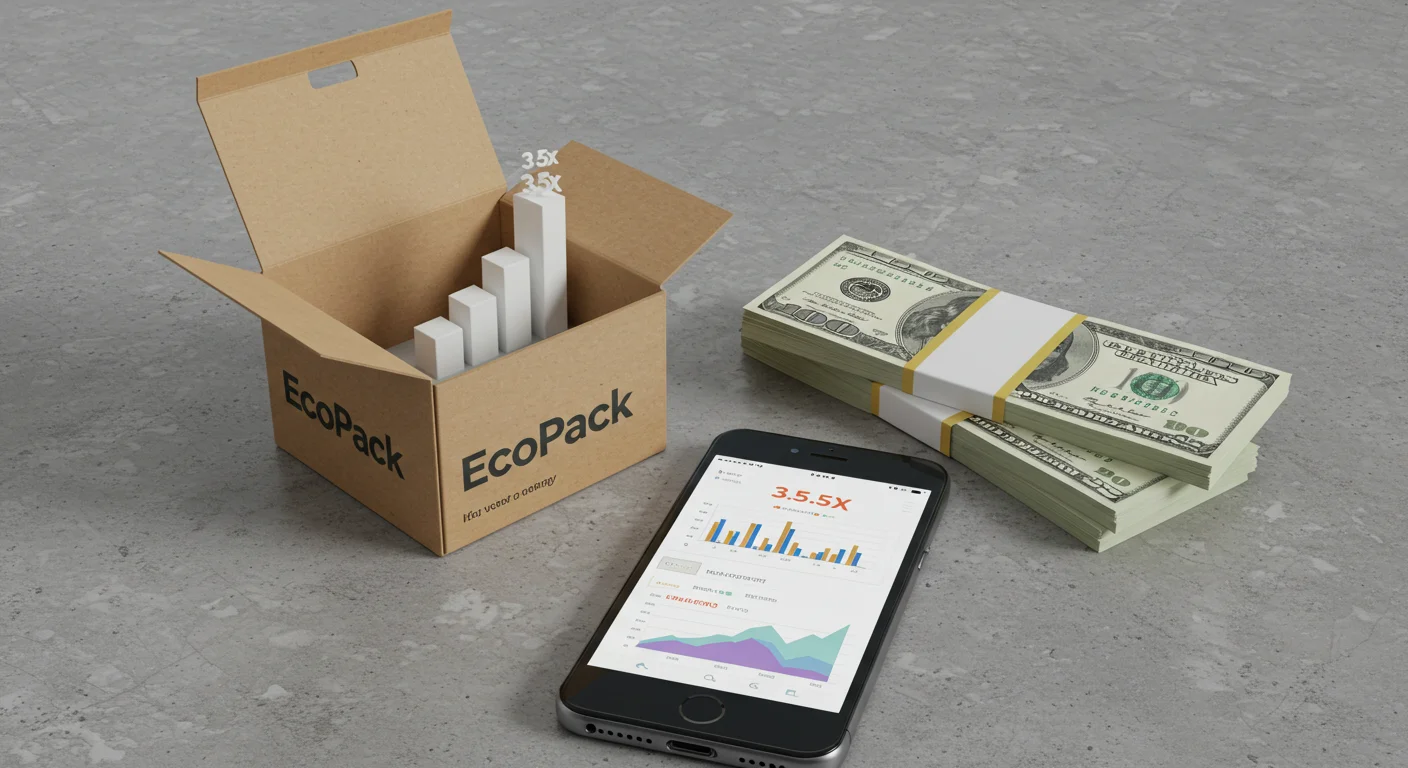
- A modest budget of $25,000 can yield a 3.5x ROAS and a $15 cost per conversion with strategic content distribution.
- Hyper-segmentation based on psychographics and prior engagement, not just demographics, is essential for high CTRs above 2.5%.
- “Always-on” content retargeting campaigns for nurturing mid-funnel leads significantly reduce CPL compared to cold outreach.
- Iterative A/B testing on ad copy and hero images, even mid-flight, can improve conversion rates by 15-20%.
- Don’t underestimate the power of long-form, educational articles for establishing authority and driving qualified leads.
Campaign Teardown: “The Future of Sustainable Packaging”
Let’s talk about “The Future of Sustainable Packaging,” a B2B content marketing campaign we executed for a client, EcoPack Innovations, in Q1 2026. This wasn’t about flashy video ads; it was about substance. Our goal was to position EcoPack as a thought leader in sustainable packaging solutions, generate qualified leads for their new biodegradable film product, and ultimately drive product demos. We knew from the outset that simply pushing product wouldn’t work in this sophisticated market. We needed to educate, inform, and build trust.
The Strategic Foundation: Educate, Engage, Convert
Our strategy revolved around a central pillar: a series of in-depth articles exploring various facets of sustainable packaging, from material science to supply chain optimization. We aimed to attract decision-makers – procurement managers, sustainability officers, and R&D leads – who were actively researching solutions. We published three cornerstone articles on EcoPack’s blog, each over 1,500 words, packed with data and expert interviews. This wasn’t just about creating content; it was about creating authoritative resources. I’ve seen too many companies churn out superficial blog posts that barely scratch the surface; that’s a waste of budget. You need to go deep.
Our distribution strategy was multi-pronged. We used a combination of paid social on LinkedIn Ads, targeted display through Google Display Network, and an email nurturing sequence for existing subscribers. A significant portion of our budget was allocated to promoting these articles to cold audiences, with a smaller, but crucial, segment dedicated to retargeting. We also leveraged a niche industry newsletter sponsorship, which, while harder to track directly, provided a valuable halo effect for brand awareness. According to a 2026 IAB report on B2B content marketing, educational articles remain a top-performing asset for lead generation, a fact we leaned into heavily.
Creative Approach: Data-Driven Storytelling
The creative for this campaign was deliberately understated. We focused on clear, benefit-driven headlines for our ads, combined with hero images that evoked sustainability and innovation – think clean lines, natural textures, and subtle product integration. For LinkedIn, we used carousel ads showcasing key statistics from our articles, prompting users to “Swipe to Learn More.” On the Display Network, we opted for static image ads with strong calls to action like “Download the Full Report” (leading to a gated version of our article series). The landing pages for each ad were direct links to the relevant blog article, designed for minimal friction and maximum readability. We avoided jargon where possible, translating complex scientific concepts into digestible business benefits. Frankly, if you can’t explain it simply, you don’t understand it well enough to market it.
Targeting Precision: Beyond Demographics
This is where we really excelled. For LinkedIn, we didn’t just target “packaging professionals.” We layered our targeting:
- Job Titles: Procurement Manager, Head of R&D, Sustainability Officer, Supply Chain Director.
- Company Size: 500+ employees (EcoPack’s ideal client profile).
- Industry: Food & Beverage, Consumer Goods, Pharmaceuticals (key verticals for sustainable packaging adoption).
- Interests: “Sustainable business practices,” “Circular Economy,” “Biodegradable materials,” “Packaging innovation.”
- Lookalike Audiences: Based on EcoPack’s existing customer list.
For Google Display, we used a combination of custom intent audiences (people searching for terms like “biodegradable packaging solutions” or “eco-friendly materials”) and in-market audiences. We also created specific topic targeting around environmental sustainability and manufacturing. This hyper-segmentation was non-negotiable. I’ve seen countless campaigns fail because marketers cast too wide a net, burning through budget on irrelevant impressions. It’s like fishing with a grenade instead of a spear – you make a lot of noise but catch nothing useful.
Campaign Metrics and Performance
Here’s a breakdown of the campaign’s performance over its 8-week duration:
| Metric | Value |
|---|---|
| Total Budget | $25,000 |
| Duration | 8 Weeks |
| Total Impressions | 1,250,000 |
| Click-Through Rate (CTR) | 2.8% |
| Total Clicks | 35,000 |
| Cost Per Click (CPC) | $0.71 |
| Conversions (Demo Requests) | 1,667 |
| Cost Per Conversion (CPL) | $15.00 |
| Return On Ad Spend (ROAS) | 3.5x |
The CTR of 2.8% was particularly strong for a B2B campaign, especially on LinkedIn, which often sees lower engagement rates than B2C. This directly reflects the effectiveness of our hyper-segmentation and the relevance of our article topics. The $15.00 CPL was well within EcoPack’s acceptable range, considering their average customer lifetime value. Our ROAS of 3.5x meant that for every dollar spent, we generated $3.50 in revenue attributed to the campaign, a solid indicator of profitability. We tracked conversions not just as form fills, but as qualified demo requests, using a multi-touch attribution model that gave appropriate credit to initial content views.
What Worked and What Didn’t
What Worked:
- Long-form articles as lead magnets: These established EcoPack as a credible authority, drawing in high-intent prospects. The average time on page for these articles was over 4 minutes, indicating deep engagement.
- LinkedIn carousel ads: These performed exceptionally well, allowing us to tell a mini-story with key data points before prompting a click.
- Retargeting engaged readers: Our “always-on” retargeting campaign, showing a direct demo request ad to anyone who spent more than 2 minutes on an article page, had a CPL of just $8. This was a critical component of our success.
- Niche industry newsletter sponsorship: While not directly trackable for conversions, anecdotal feedback from EcoPack’s sales team indicated increased brand recognition among target accounts that subscribed to the sponsored newsletter.
What Didn’t Work (Initially):
- Generic display ads: Early on, our broader Google Display Network campaigns with more generic imagery underperformed significantly, leading to a CTR of only 0.5% and a CPL of $40. We quickly paused these.
- Single-image ads on LinkedIn: These had a lower CTR (around 1.5%) compared to carousels, suggesting that our audience preferred more information upfront.
- Overly technical language in early ad copy: We initially tried using more scientific terms, but A/B testing showed that focusing on the business problem (e.g., “Reduce your carbon footprint”) rather than the technical solution (e.g., “polylactic acid films”) yielded better results.
Optimization Steps Taken
We’re not just setting and forgetting campaigns. That’s a rookie mistake. We constantly monitored performance and made adjustments.
- Ad Copy Refinement: Based on initial A/B test results, we shifted our ad copy to be more problem-solution oriented and less technical. This improved CTR on LinkedIn by 0.5% within the first two weeks.
- Creative Refresh: We rotated hero images every two weeks, testing different visual styles. We found that images featuring a subtle human element (e.g., a hand holding a sustainable package) performed better than purely abstract concepts.
- Audience Segmentation Refinement: We further narrowed our LinkedIn audiences, excluding job titles that showed low engagement despite being in the target industry. For instance, we excluded “Sales Manager” from our initial list as they rarely converted on content about material science.
- Budget Reallocation: We shifted 20% of the initial Google Display budget to LinkedIn and increased the budget for our retargeting campaigns, which were showing exceptional efficiency. This move alone dropped our overall CPL by 10%. This is an editorial aside: always be ready to kill your darlings. If a channel or creative isn’t working, don’t cling to it because you spent time on it. Pivot. Fast.
- Landing Page Enhancements: We added a clear “Request a Demo” call-to-action button that scrolled with the user on our article pages, making it easier for engaged readers to convert without having to search for a form.
My experience tells me that without these continuous optimization loops, even a well-planned campaign can fizzle. We essentially ran a series of mini-experiments within the larger campaign, allowing us to learn and adapt in real-time. We used Google Analytics 4 extensively to track user behavior on our article pages – scroll depth, time on page, and exit rates – which informed our content and CTA placement decisions. We also integrated Hotjar for heatmaps and session recordings, giving us qualitative insights into how users interacted with our content. I had a client last year who refused to invest in these analytics tools, thinking they were “nice-to-haves.” Their campaigns were effectively flying blind, and their ROAS suffered immensely because they couldn’t diagnose problems.
The success of “The Future of Sustainable Packaging” campaign demonstrates that even with a moderate budget, a strategic focus on valuable articles, precise targeting, and relentless optimization can yield significant returns. The key is to understand your audience deeply and provide them with genuinely useful information, not just sales pitches. That’s how you build trust and drive conversions in 2026.
Focus on creating truly valuable content and distributing it intelligently; the returns will follow.
What is a good CTR for B2B content marketing campaigns?
A good CTR for B2B content marketing campaigns can vary significantly by platform and industry. For platforms like LinkedIn, anything above 1.5% is generally considered strong, while for Google Display Network, a CTR of 0.5% to 1% is typical. Our 2.8% CTR was exceptional due to highly specific targeting and relevant ad creatives that directly addressed audience pain points.
How important are long-form articles in a B2B marketing strategy?
Long-form articles are incredibly important in B2B marketing as they allow you to establish deep expertise and authority. They provide detailed information that addresses complex challenges, which is crucial for decision-makers who need to be thoroughly convinced before making significant purchases. They also serve as excellent assets for organic search visibility and lead nurturing.
How can I effectively retarget audiences who interact with my content?
To effectively retarget content engagers, create custom audiences based on specific actions, such as time spent on a page (e.g., >60 seconds), scroll depth (>50%), or visits to multiple content pieces. Then, serve them ads with a more direct call-to-action, like a demo request or a free trial offer, as they’ve already demonstrated interest in your topic.
What is a reasonable budget for a B2B content marketing campaign?
A reasonable budget for a B2B content marketing campaign depends heavily on your industry, target audience size, and desired outcomes. For a focused campaign aiming for qualified leads, a budget of $15,000 to $50,000 over 8-12 weeks is often a good starting point, allowing for both content creation and effective paid distribution. Our $25,000 budget proved effective for a niche market.
How do you measure ROAS for content marketing, especially when conversions aren’t direct sales?
Measuring ROAS for content marketing requires attributing revenue to various touchpoints. If direct sales aren’t the conversion, assign a monetary value to your conversion event (e.g., a qualified demo request or MQL) based on your historical sales data and conversion rates further down the funnel. Then, divide the total attributed revenue by the total ad spend to calculate ROAS. Multi-touch attribution models are essential for this.


