 By Diane Davis
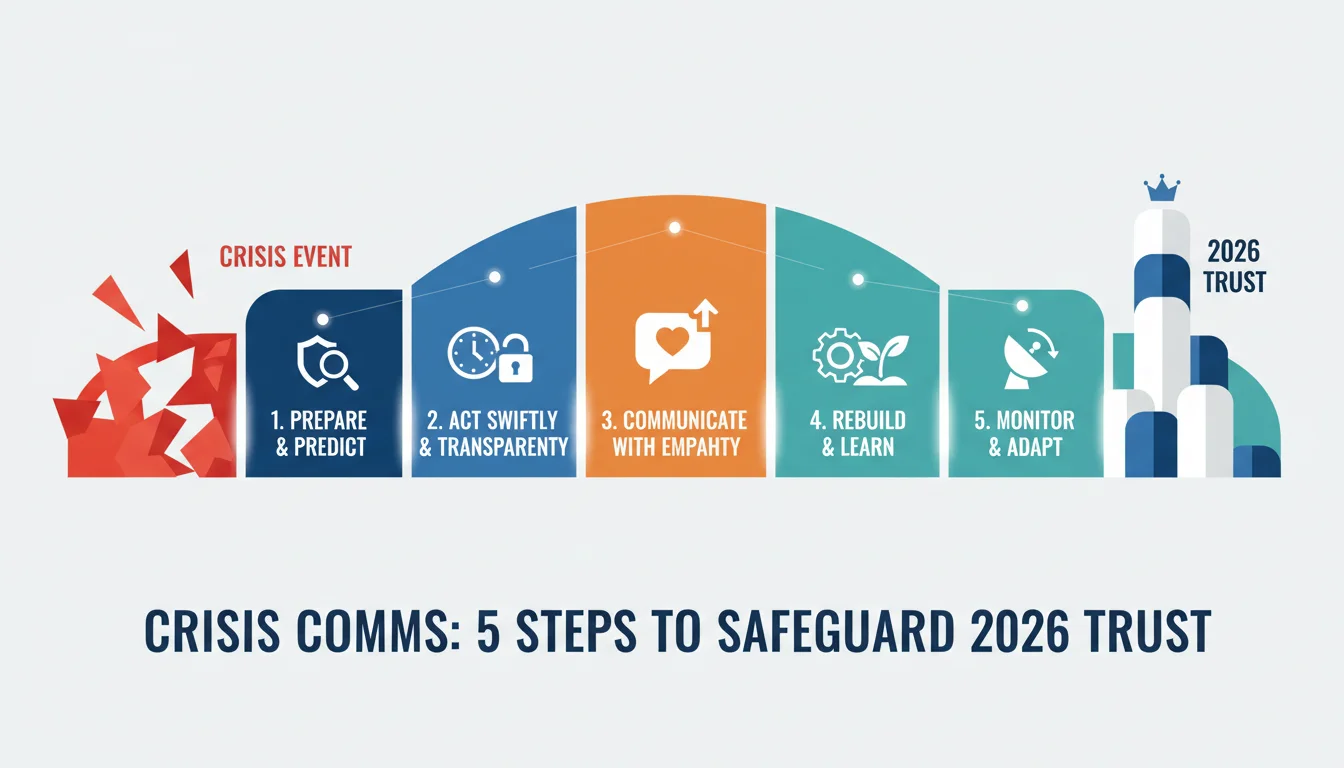
Key Takeaways
- Establish a dedicated crisis communication team with defined roles and responsibilities before any incident occurs.
- Develop and pre-approve a crisis communication plan that includes holding statements, key messages, and designated spokespersons.
- Monitor social media and news outlets continuously using tools like Brandwatch or Meltwater to detect potential crises early.
- Communicate transparently and consistently across all channels, providing factual updates and demonstrating empathy.
- Conduct a post-crisis analysis within 72 hours to evaluate response effectiveness and refine future strategies.
Crisis communication for thought leaders demands an immediate and strategic response to safeguard reputation and maintain trust. In an era where information spreads globally in seconds, a misstep or delayed reaction can have deep and lasting negative consequences, impacting credibility and market standing. Effective crisis communication is not merely reactive. It requires proactive planning and a clear understanding of media relations to navigate turbulent situations. How can thought leaders ensure their rapid response is both effective and authentic?
1. Assemble and Train Your Crisis Communication Team
The foundation of effective crisis communication is a well-defined team. This isn’t a task to delegate ad hoc when a crisis hits. Your team should include a lead strategist (often a senior communications director), legal counsel, a social media manager, and a designated spokesperson. Each member needs clear responsibilities. For instance, the legal team reviews all public statements for compliance and potential liability, while the social media manager monitors real-time sentiment and flags emerging narratives. I advocate for at least quarterly training sessions, simulating various crisis scenarios from data breaches to product recalls. This practice ensures everyone understands their role and can execute under pressure. According to a 2025 report by the Institute for Public Relations (IPR), organizations with dedicated, trained crisis teams reduce their reputational damage by an average of 30% compared to those without structured preparedness [Institute for Public Relations](https://instituteforpr.org/research/crisis-communication/).
Pro Tip: Conduct a “Dark Site” Drill
Beyond tabletop exercises, develop a “dark site” or a pre-built, hidden section of your website dedicated to crisis information. During drills, practice activating this site with holding statements and FAQs. This ensures technical readiness and speeds up information dissemination when it truly matters.
2. Develop a Complete Crisis Communication Plan
A plan isn’t just a document. It’s your roadmap through chaos. This plan must outline potential crisis scenarios, pre-approved holding statements, key messaging for various stakeholders (employees, customers, investors, media), and communication channels. For each scenario, identify primary and secondary spokespersons, ensuring they are media-trained and understand the organization’s stance. Your plan should detail internal communication protocols as well. Employees are often the first line of defense and can become unintentional sources of misinformation if not properly informed. A strong plan includes contact lists for critical internal personnel and external stakeholders, including journalists from major wire services like [Reuters](https://www.reuters.com/news/archive/business-news) and [Associated Press (AP)](https://apnews.com/business).
Common Mistake: One-Size-Fits-All Messaging
A frequent error is crafting a single message for all audiences. Different stakeholders have different concerns. A message to investors about financial stability will differ significantly from a message to customers about service disruption. Tailor your message without altering the core facts.
3. Establish Real-Time Monitoring and Alert Systems
In 2026, a crisis doesn’t wait for traditional news cycles. It erupts on social media, forums, and niche online communities. Investing in real-time monitoring tools is non-negotiable. Platforms like Brandwatch (Brandwatch) or Meltwater (Meltwater) allow you to track mentions of your thought leader’s name, company, and relevant keywords across millions of sources. Configure alerts for sudden spikes in negative sentiment, specific keywords (e.g., “scandal,” “recall,” “lawsuit”), or mentions from influential accounts. For example, set up a Brandwatch query to monitor “ThoughtLeaderName OR CompanyName” with sentiment analysis enabled, triggering an email alert if negative mentions increase by 20% within an hour. This proactive detection allows for rapid assessment and response, often before a situation escalates to mainstream media. Project Horizon: 2026 Data-Driven Marketing Shifts emphasize the importance of such monitoring for effective strategy.
4. Craft and Disseminate Holding Statements Immediately
When a crisis breaks, silence is a vacuum that will be filled with speculation. Your first public communication, often a holding statement, should be issued within the first hour if possible. This statement doesn’t need to have all the answers. Its purpose is to acknowledge the situation, express concern, state that you are actively investigating, and commit to providing further updates. For instance, a holding statement might read: “We are aware of the reports circulating regarding [issue]. We are taking this matter very seriously and are actively investigating. Our top priority is [e.g., the safety of our customers/integrity of our data]. We will provide a further update as soon as more verified information becomes available.” This buys your team time to gather facts and formulate a complete response while demonstrating accountability.
Pro Tip: Prioritize Empathy in Initial Statements
Even if facts are scarce, leading with empathy can significantly soften public perception. Acknowledge the impact on those affected before digging into operational details. This humanizes the response.
5. Designate a Single, Trained Spokesperson
Consistency in messaging is paramount during a crisis. Appointing a single, authorized spokesperson prevents conflicting information and confusion. This individual must be articulate, calm under pressure, and thoroughly briefed on all aspects of the crisis and the approved messaging. Media training is important. A spokesperson should know how to bridge to key messages, avoid speculation, and handle aggressive questioning. For highly technical crises, a subject matter expert might be paired with the primary spokesperson to ensure accuracy without losing control of the narrative. The spokesperson should rehearse potential interview questions, including the most difficult ones, to ensure a fluid and confident delivery.
6. Use All Relevant Communication Channels Strategically
Your response needs to reach your audience where they are. This means a multi-channel approach.
- Press Releases: For formal statements and updates, distributed through services like PR Newswire (PR Newswire).
- Social Media: Regular updates on platforms like LinkedIn, X (formerly Twitter), and Instagram. Tailor content for each platform. A short, factual update on X, a more detailed statement on LinkedIn.
- Website/Crisis Hub: The dedicated dark site activated earlier becomes your central source of truth, hosting FAQs, official statements, and contact information.
- Email: Direct communication to employees, key customers, or investors for sensitive updates.
Ensure all messages are consistent across these channels. A unified front reinforces credibility. Building trust automation with AI marketing can also play a role in maintaining consistent messaging.
7. Monitor and Engage with Media and Public Sentiment
After initial statements, continuous monitoring remains vital. Track not just mentions, but also the tone and sentiment of media coverage and public discourse. Are new rumors emerging? Is the narrative shifting? Use your monitoring tools to identify influential voices amplifying the crisis, whether they are journalists, industry analysts, or prominent social media users. Engage respectfully and factually where appropriate, correcting misinformation swiftly and politely. For example, if a specific news outlet misrepresents a fact, a polite correction with a link to your official statement can be effective. Avoid getting into public debates or appearing defensive. Focus on providing accurate information.
Common Mistake: Ignoring Negative Comments
While you shouldn’t engage every troll, ignoring legitimate concerns or questions from the public or media can be perceived as arrogance or an admission of guilt. Address valid points directly and transparently. Targeting journalists effectively is key to managing public perception.
8. Conduct a Post-Crisis Analysis and Learnings
Once the immediate crisis has subsided, the work isn’t over. Within 72 hours, convene your crisis communication team for a thorough debrief. This analysis should cover:
- What happened? (A detailed timeline of events)
- How effective was our initial response?
- Which communication channels performed best?
- What were the key challenges and bottlenecks?
- What media coverage did we receive, and was it accurate?
- What could have been done better?
This post-mortem allows you to update your crisis plan, refine protocols, and improve future readiness. For instance, a recent analysis of major corporate crises by HubSpot Research (HubSpot Research) indicated that organizations conducting regular post-crisis reviews improved their subsequent crisis response times by an average of 15%. This continuous improvement cycle is essential for any thought leader operating in a high-stakes environment. Crisis communication for thought leaders requires careful preparation, swift action, and unwavering transparency. By building a strong team, developing a strong plan, and committing to continuous learning, leaders can effectively protect their reputation and emerge stronger from challenging situations. Building trust in 2026 is a continuous effort that extends beyond crisis moments.
What is the primary goal of crisis communication for a thought leader?
The primary goal is to protect the thought leader’s reputation and credibility, maintain trust with their audience and stakeholders, and minimize negative impacts on their professional standing.
How quickly should a thought leader issue a first statement during a crisis?
A first public communication, often a holding statement, should ideally be issued within the first hour of the crisis becoming public knowledge to acknowledge the situation and prevent speculation.
Why is a single spokesperson recommended during a crisis?
A single, designated spokesperson ensures consistency in messaging, prevents conflicting information, and helps maintain a unified and credible public front during a turbulent time.
What role do social media monitoring tools play in crisis communication?
Social media monitoring tools like Brandwatch or Meltwater are critical for real-time detection of emerging crises, tracking public sentiment, identifying key influencers, and correcting misinformation swiftly across various online platforms.
What should be included in a post-crisis analysis?
A post-crisis analysis should include a detailed timeline of events, an evaluation of the initial response, an assessment of communication channels, identification of challenges, and a review of media coverage to inform future crisis preparedness and strategy refinements.


