 By Editorial Team
So many businesses have no idea how to talk about themselves. They just throw a bunch of disconnected marketing messages out there, hoping something sticks. When you don’t have a single, unified master narrative, your audience gets confused, they can’t remember who you are, and your growth stalls. Without that central story guiding everything, even your best campaigns feel like one-offs that don’t build any real customer loyalty. How do you take all the different things your business does and weave them into one story people won’t forget?
Key Takeaways
- Nailing your master narrative can boost brand recognition by an average of 20% in the first year you start using it consistently.
- You have to figure out your brand’s core myth, its archetypes and values, before you even think about planning a specific marketing campaign.
- A narrative governance framework is just a set of rules to make sure every person creating content for you is sticking to the same script and story.
- Do a regular audit of your content against your main story. You can spot what’s off-message and fix it, which can improve audience engagement by up to 15%.
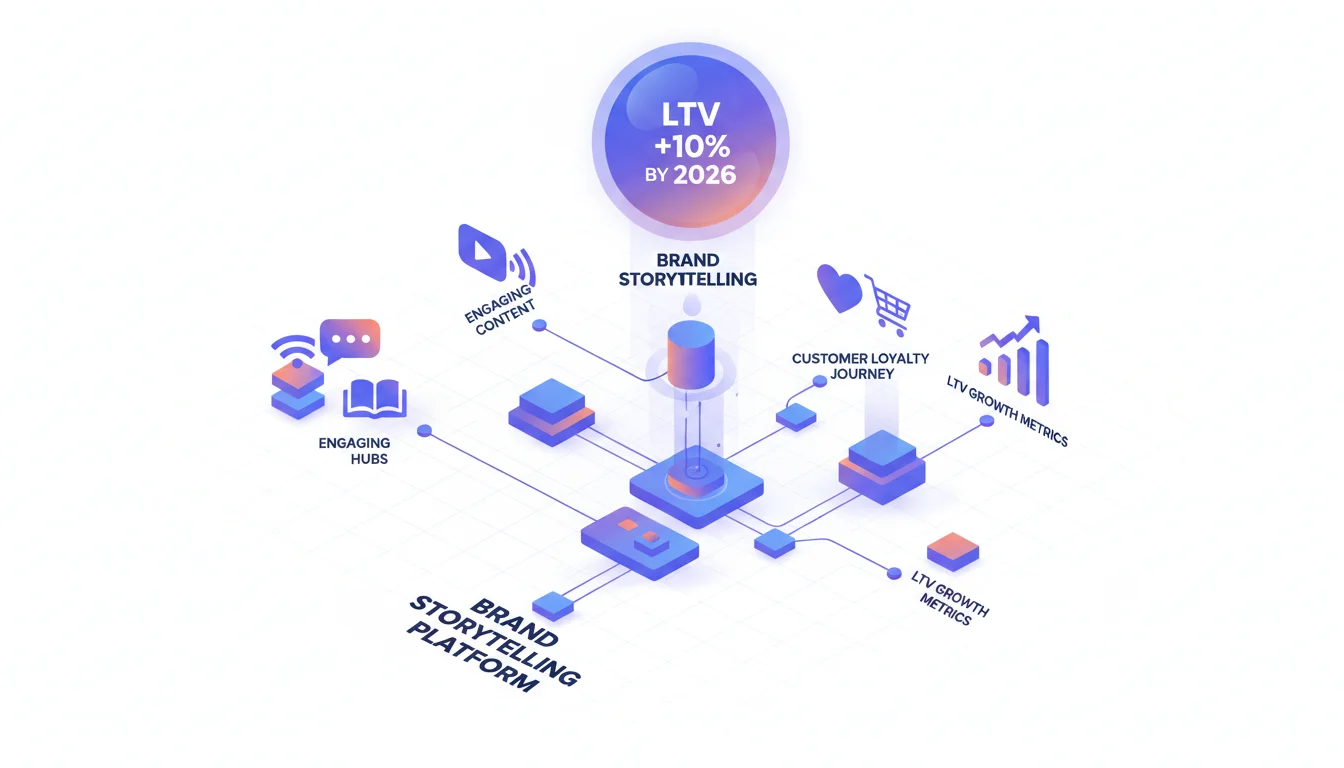
- When you get the story right across all your touchpoints, from a tweet to a customer service call, you can increase your customer lifetime value by 10% or more.
The Disconnect: When Marketing Messages Don’t Align
I’ve seen it a thousand times. A company spends a fortune on a new website, goes hard on social media, and produces slick videos, but the overall feeling is just… muddled. The real problem is almost never a lack of effort or money. It’s a complete lack of a guiding master narrative. Without that big story, every blog post or ad becomes its own little island, effective on its own maybe, but it doesn’t build toward anything bigger. This is how you get what I call “message fatigue,” where people are drowning in your content but have no clue what your brand is actually about.
Think about a fake tech startup, “Quantum Innovations.” Their website brags about bleeding-edge AI. Their LinkedIn is all about their great workplace culture. Their sales reps are pushing low prices. Sure, all that stuff might be true, but who *are* they? Are they the innovators, the great employer, or the cheap option? When these messages aren’t united under one story, customers can’t form a clear picture of the company. It kills trust and makes it impossible to stand out. A 2025 Nielsen report on brand perception found that people are 70% more likely to remember brands that tell a clear, consistent story everywhere, compared to brands that are all over the place.
The “What Went Wrong First” Section: Failed Approaches to Brand Storytelling
Before we get to what works, it helps to see the common ways this goes wrong. A lot of companies start by focusing on the surface level. For example, they think their mission statement is their story. It isn’t. A mission statement just defines a purpose. A narrative tells a story. “To provide innovative software solutions” is a mission. “Born from a garage project, our founders fought through technical problems and doubters to build tools that help small businesses win, because they’re underdogs too” gets you started on a real narrative. One is static, the other feels alive.
Another total failure is what I call “feature dumping,” where all the marketing does is list product specs and benefits and just assumes the customer will figure out why it matters. Features are important, sure, but they don’t create an emotional bond. People are buying solutions to their problems, and more than that, they’re buying into the stories those solutions help them create. A drill makes holes, yes, but its story is about building a child’s crib or finally putting together a home. The story is about the joy of making something or the security of family, not the drill’s torque. If you don’t have that story, your marketing is just a boring list of facts nobody remembers.
Finally, too many businesses get stuck in a “campaign-centric” mindset. They cook up a theme for a campaign, launch it, and then immediately start thinking about the next, completely different campaign. Campaigns are fine, but they have to serve the larger master narrative. If every campaign tells a different story, you never build any momentum for the brand itself. It’s like trying to read a book where every chapter is from a different novel. You might get a few memorable ads out of it, but you’ll never build a memorable brand.
Crafting Your Concord: Building a Master Story
You develop a compelling master narrative through a disciplined process of looking inward and thinking strategically. You’re not making up a story. You’re discovering the real, authentic core of your brand and then finding a way to tell that story so that it connects with your audience. This takes you through a few key steps, from internal soul-searching to polishing the external message.
Step 1: Unearthing Your Core Myth and Archetype
Every great story runs on universal themes and archetypes, and your brand’s story should too. Start by digging for the core myth. What’s the real reason your company exists? What problem is in your DNA to solve? Why? Focus on your underlying purpose, not the product itself. A cybersecurity firm might be a “Protector,” while a design studio is a “Creator.” Figuring out your brand’s archetype (like The Innocent, The Sage, The Rebel, The Lover, The Hero) gives you a mental shortcut for its personality. Carl Jung’s work on archetypes which gets used in marketing all the time, is a good place to start your digging. This core myth is the foundation that will outlast any single product you sell.
With your core myth identified, you can write down your brand’s core values. These are the non-negotiable principles behind every decision you make. Is it innovation? Integrity? Community? Courage? Your values have to be the real deal, not just some words you wish were true. They’re the moral compass for your story. If “transparency” is a core value, for example, your narrative has to show it, especially when you’re talking about your own screw-ups. This step demands some brutal honesty, and it’s usually best to get people from across the company, leadership, marketing, sales, support, into a room for a workshop.
Step 2: Defining Your Hero, Villain, and Mentor
A good story has characters. In your brand’s story, it breaks down like this:
- Your Customer is the Hero: They’re the one on a journey, facing a problem, and trying to get somewhere. Always remember: your customer is the hero.
- The Problem is the Villain: What’s stopping your customer from winning? Is it inefficiency? A lack of good information? Shoddy quality? You have to name the bad guy. For a financial planner, the villain could be the feeling of being overwhelmed by complexity or just the fear of financial insecurity.
- Your Brand is the Mentor/Guide: You’re the one with the expertise, the tool, or the plan that helps the hero beat the villain. You’re the one who gives them the magic sword or the secret map. Your brand’s role is to be the guide, the mentor, or the tool that helps the hero win. This builds trust and makes you a partner, not just a vendor.
When you frame your story this way, you make an emotional connection. Customers see their own struggles in the hero’s journey, and they see your brand as the ally they need to get through it. This structure is so much more compelling than just pitching a product. We’re talking about a fundamental shift in perspective that moves your business from a simple transaction to a real relationship.
Step 3: Crafting the Narrative Arc and Key Messaging Pillars
Once you have your characters and core myth, you can map out the story’s arc. What’s the journey the customer goes on with your brand? It usually follows a classic pattern:
- The Call to Adventure: The customer realizes they have a problem or a big desire.
- The Refusal of the Call: They hesitate, maybe out of fear, cost, or just inertia.
- Meeting the Mentor (Your Brand): They find you and your solution.
- Tests, Allies, and Enemies: They start using your product or service, hitting small wins and overcoming little obstacles.
- The Ordeal: This is the big moment where your solution really has to prove itself against a major challenge.
- The Reward: The customer gets what they wanted all along.
- The Return with the Elixir: The customer is changed for the better because of the journey.
You don’t have to spell this out in every tweet, but this arc should be the emotional blueprint underneath all your content. For example, a software company’s blog post about a new feature is really about “The Ordeal”, it shows how that feature solves a huge, painful bottleneck for the user.
From that big story arc, you need to pull out 3-5 key messaging pillars. These are the main themes you’ll hit again and again in all your communications. A sustainable clothing brand might have pillars like “Ethical Sourcing,” “Timeless Design,” and “Community Impact.” Every piece of content you create, from an Instagram story to your annual report, should support at least one of these pillars. This lets you stay consistent without sounding like a broken record. I’ve found that keeping the number of pillars small makes it much easier for your whole team to actually remember and use them.
Step 4: Implementing Narrative Governance and Training
You can have the best story in the world, but it’s useless if your people don’t tell it consistently. You need to set up a narrative governance framework, basically, a rulebook. Create a brand storytelling guide that lays out:
- The brand’s core myth, archetype, and values.
- The customer persona (the hero).
- The villain (the problem).
- The brand’s role (mentor/guide).
- The full narrative arc.
- Your key messaging pillars, with examples of good and bad ways to talk about them.
- Tone of voice guidelines (the personality of the narrator).
- A list of approved words and phrases, and just as important, a list of words to avoid.
This guide needs to be a living document that everyone who creates content can get to, from your marketing team to your customer support reps. You have to do regular training, too. Make sure everyone knows the story and their part in telling it. A huge mistake is thinking everyone “gets it” after one meeting. You need constant reinforcement. It can even help to pick a “narrative champion” in each department to keep an eye on things.
Step 5: Auditing and Adapting Your Narrative
Markets change, and a story can get stale. You have to audit it. Set aside time every year (or even every six months) for a narrative audit. Go through your website, your social feeds, your sales decks, and your customer service chat logs. Does it all line up with the master narrative? Where are the weak spots? Ask your customers and your employees for feedback. Is the story still connecting with them? Is it still relevant?
A 2024 eMarketer study on brand consistency found that companies that regularly audit their content and tweak their messaging based on what they learn see their brand sentiment scores go up by an average of 15%. The goal of an audit isn’t to tear up your core myth every year. It’s to fine-tune how you tell the story so it stays fresh. If your core myth is “Innovation,” for example, you might adjust the story to talk about new technologies or changing customer needs, but you’re always reinforcing that main theme of pushing boundaries. This is how you keep your story powerful and relevant.
The Measurable Impact: Results of a Unified Story
When a business finally gets its master narrative right and sticks to it, the results are real and you can feel them across the company. The first thing you’ll probably notice is a jump in brand recognition and recall. A single story is just easier for the human brain to remember than a dozen random facts. Customers start to connect your brand with specific feelings, values, and ideas, which puts you top-of-mind. For instance, a regional bakery that built its narrative around being a “Community Gatherer”, focusing on shared moments and local suppliers, saw its brand mentions on local social media jump by 25% in six months, according to their own 2025 analytics.
A strong story also makes a huge difference in customer engagement and loyalty. When people feel a personal connection to your brand’s story, they’re far more likely to interact with your stuff, tell their friends about you, and stick with you even if a competitor has a slightly better price. A 2026 HubSpot report on consumer behavior showed that brands with a clear story and purpose had a 10% higher customer retention rate than brands that only talked about their product features. That emotional connection becomes repeat business and word-of-mouth, which is still the best advertising there is.
There’s a huge internal benefit, too. When every single employee gets the core story, it gives everyone a common direction. The sales team can build their pitches around the narrative, support reps can handle problems in a way that reinforces the brand’s values, and product teams can focus on developing things that fit the brand’s purpose. This alignment makes communication more efficient, cuts down on internal arguments, and creates a much more authentic brand experience at every single touchpoint. It has benefits that go way beyond marketing and create real organizational coherence, sometimes reducing internal communication disconnects by as much as 30% and building a more focused work environment.
Finally, a great master narrative gives you a serious leg up on the competition and gives you market differentiation and pricing power. In a market where everyone has a million choices, a unique story that resonates is the best way to stand out. It improves your brand from being just another commodity and makes it a specific choice. When customers buy into your story, they’re often happy to pay more for the value and the feeling that your brand gives them. This lets you compete on something other than price, building a competitive advantage that’s really hard for anyone else to copy. In the end, your narrative is your competitive moat.
So, a master narrative isn’t a project you finish. It’s an ongoing commitment to telling your brand’s truth. By figuring out your core myth, understanding your customer’s journey, and telling your story consistently everywhere, you can build a brand that people connect with, stick with, and help grow.
What is a master narrative in brand storytelling?
It’s the single, overarching story that defines your brand’s identity, its purpose, and its relationship with customers. This central theme is what should connect all your marketing and communications, making the brand experience feel cohesive and memorable.
How does a master narrative differ from a mission statement?
A mission statement declares a company’s purpose, usually in a short, factual way. A master narrative is the emotional story behind that purpose, it explains the brand’s origins, the challenges it helps people overcome, and the change it brings to its customers. The narrative gives the mission statement life.
Can a small business effectively develop a master narrative?
Absolutely. Small businesses often have an advantage because they’re closer to their original founding story and values, which makes finding an authentic narrative easier. It’s a process that’s about clarity and consistency, which doesn’t require a huge budget.
How often should a brand’s master narrative be updated or reviewed?
The core myth and values should be stable, but you should review how you’re expressing the narrative at least once a year. This keeps the story fresh and relevant to what’s happening in the market and with your customers, without changing the fundamental reason your brand exists.
What are the key components of a strong brand narrative?
A strong narrative positions the customer as the hero on a journey, clearly defines the problem they face as the villain, and casts the brand as the helpful mentor or guide. It’s built on a core myth, an archetype, a set of real values, and a consistent story arc that shapes all your key messages.


