 By Lena Chai
The year 2026 presents a complex market environment, characterized by rapid technological shifts, evolving consumer expectations, and geopolitical uncertainties. Building brand resilience in this climate isn’t merely advantageous. It’s a fundamental requirement for sustained growth. Brands that fail to adapt their strategies now risk becoming irrelevant in the very near future.
Key Takeaways
- Implement a real-time sentiment analysis dashboard using tools like Brandwatch or Sprinklr to monitor brand perception across 10+ social platforms, updating every 60 seconds.
- Allocate 15% of your annual marketing budget to experimental campaigns on emerging platforms, such as Threads or new Web3 social environments, to identify future engagement channels.
- Develop a crisis communication playbook that includes pre-approved statements for 5-7 common scenarios, ensuring a response time under 30 minutes for critical issues.
- Invest in AI-powered content generation tools like Jasper.ai or Copy.ai to produce 50-70% of routine marketing copy, freeing human marketers for strategic tasks.
1. Establish a Real-Time Brand Health Monitoring System
Understanding your brand’s perception in real-time is no longer a luxury. It’s a necessity. Traditional quarterly surveys are too slow. You need instant feedback loops. I advocate for a dedicated brand health dashboard that aggregates data from diverse sources, giving you a pulse on public sentiment at any given moment. For example, a client recently used this approach to detect a sudden negative spike related to a product feature, allowing them to issue a public clarification within two hours, effectively neutralizing a potential PR crisis before it escalated.
Pro Tip: Integrate your monitoring with AI-driven anomaly detection. Tools like Brandwatch or Sprinklr offer modules that flag unusual shifts in sentiment or mention volume, alerting your team automatically. Configure alerts for a 15% deviation from your 7-day average sentiment score, or a 20% increase in negative mentions within a 30-minute window.
Common Mistake: Relying solely on keyword mentions. Context is everything. A surge in mentions of your brand alongside unrelated negative news can skew your data. Refine your monitoring queries to include contextual phrases and employ natural language processing (NLP) to distinguish between direct brand criticism and tangential discussions.
2. Diversify Your Digital Presence Beyond Established Platforms
The digital field of 2026 is fluid. While Meta and Google platforms remain dominant, emerging channels gain traction rapidly. Remember the sudden rise of TikTok? Now, we’re seeing similar dynamics with platforms like Threads and various decentralized social networks. Brands that exclusively focus on the established giants risk being caught flat-footed when audience migration occurs. Your strategy must include a dedicated budget and team for exploring and experimenting with these nascent platforms.
I suggest allocating a minimum of 15% of your digital marketing budget to experimental campaigns on these newer channels. This isn’t about immediate ROI. It’s about future-proofing. For instance, testing short-form video content on a platform like Threads, even if it only reaches a small, engaged audience, provides invaluable insights into content formats and audience demographics that could become mainstream within 12-18 months.
Pro Tip: Don’t just repurpose content. Each platform has its own vernacular and user expectations. A video ad that performs well on Instagram Reels will likely require significant adaptation for a more niche, community-driven platform. Tailor your content to the specific platform culture, even if it means creating entirely new assets.
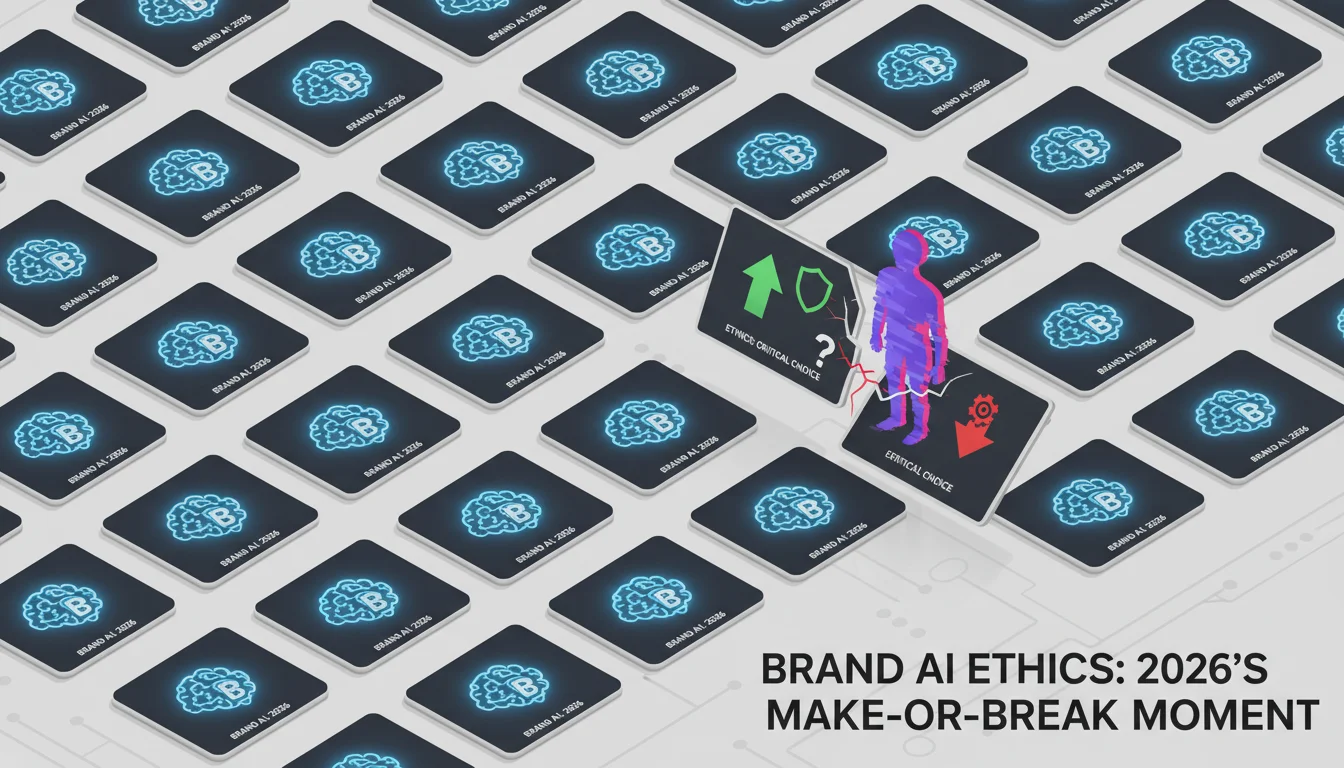
3. Prioritize Ethical AI Integration in Customer Experience
Artificial intelligence is no longer a futuristic concept. It’s embedded in consumer interactions. From chatbots handling initial inquiries to personalized product recommendations, AI shapes the customer journey. However, the ethical implications of AI, particularly regarding data privacy and bias, are under increasing scrutiny. Brands that adopt AI without a clear ethical framework risk significant reputational damage and regulatory penalties. The California Consumer Privacy Act (CCPA) and forthcoming federal regulations mean that AI’s ethical use isn’t just good practice, it’s legally mandated.
Your AI strategy must explicitly address data governance, algorithmic transparency, and bias mitigation. This means auditing your AI models regularly for discriminatory outputs and ensuring clear consent mechanisms for data collection. One financial services client I worked with implemented an “AI Ethics Board” comprised of internal stakeholders and an external privacy expert. This board reviews all new AI deployments before launch, a step that has prevented several potential public relations missteps.
Common Mistake: Implementing AI solutions solely for efficiency gains without considering the user experience or potential for unintended consequences. A chatbot that frustrates users or provides inaccurate information does more harm than good, eroding trust and damaging your brand’s reputation.
4. Cultivate a Strong, Authentically Purpose-Driven Narrative
Consumers in 2026 are increasingly discerning about the brands they support. A recent Nielsen report found that 61% of global consumers are more likely to buy from brands that demonstrate a commitment to social and environmental issues. This isn’t about “greenwashing” or superficial gestures. It requires genuine commitment and transparent action. Brands must articulate a clear purpose beyond profit and demonstrate how they are actively contributing to that purpose.
Your brand narrative should be woven into every touchpoint, from your product development to your marketing campaigns and internal culture. For instance, if your brand champions sustainable manufacturing, provide verifiable data on your reduced carbon footprint, partner with accredited environmental organizations, and communicate these efforts clearly on your website’s “Sustainability” section, including links to third-party audit reports. Authenticity is key. Any perceived hypocrisy will be swiftly identified and amplified by online communities.
Pro Tip: Help your employees to be brand advocates for your purpose. When employees genuinely believe in the brand’s mission, their organic sharing and advocacy can be far more impactful than any paid advertising campaign. Internal communication about your purpose, including regular updates on progress and challenges, is essential.
5. Invest in Agility and Scenario Planning
The defining characteristic of the 2026 market is its unpredictability. Geopolitical events, rapid technological breakthroughs, and sudden shifts in consumer behavior can impact your brand overnight. Building brand resilience demands an organizational structure and strategic planning process that embraces agility. This means moving away from rigid, multi-year plans and towards iterative, adaptive strategies.
Implement a quarterly or even monthly scenario planning exercise. Gather key stakeholders from marketing, product, and operations. Identify 3-5 plausible “what if” scenarios (e.g., a major supply chain disruption, the emergence of a dominant new competitor, a significant regulatory change). For each scenario, brainstorm potential impacts on your brand and pre-plan initial responses. This proactive approach allows you to react quickly and thoughtfully when unexpected events occur, rather than scrambling to formulate a strategy under pressure. We use a framework that maps out potential impacts across revenue, reputation, and operational efficiency, assigning a likelihood score to each. This isn’t about predicting the future, it’s about preparing for multiple futures.
Pro Tip: Foster a culture of continuous learning and adaptation within your marketing team. Encourage experimentation, allow for failure as a learning opportunity, and provide regular training on emerging technologies and market trends. This prepares your team to innovate rather than react defensively.
Common Mistake: Confusing agility with a lack of strategy. Agile planning isn’t about abandoning long-term goals. It’s about having flexible pathways to achieve those goals, allowing for course correction based on real-time market signals.
6. Develop Strong Crisis Communication Protocols
In a volatile market, a crisis is not a matter of if, but when. Your brand’s response in the initial hours and days of a crisis will largely determine its long-term impact. A well-defined crisis communication plan is a non-negotiable component of brand resilience. This plan must be more than a document. It needs to be a living protocol that is regularly reviewed and rehearsed.
Your plan should include: a designated crisis response team with clear roles and responsibilities. Pre-approved holding statements for common scenarios (e.g., product recall, data breach, negative media coverage). A clear escalation matrix. And identified communication channels for internal and external stakeholders. For instance, establish a dedicated dark site or landing page that can be activated instantly to serve as a central source of accurate information during a crisis. I advise clients to conduct at least one simulated crisis exercise annually, testing response times and message consistency. This often reveals unexpected bottlenecks or gaps in the plan that can be addressed proactively.
Pro Tip: Use social listening tools to identify a developing crisis early. Configure alerts for sudden spikes in negative sentiment, specific keywords related to potential issues (e.g., “recall,” “bug,” “outage”), or mentions from influential critics. The faster you detect a problem, the more control you have over the narrative.
Building a resilient brand in 2026 demands proactive strategies, ethical AI integration, and unwavering authenticity. Brands that embrace continuous adaptation and prioritize real-time insights will not only survive but thrive amidst market volatility.
What is brand resilience in 2026?
Brand resilience in 2026 refers to a brand’s ability to withstand and adapt to market volatility, technological shifts, and evolving consumer expectations, maintaining its relevance and positive perception through proactive strategies and ethical practices.
How often should a brand monitor its health in a volatile market?
Brands should monitor their health in real-time, using integrated dashboards that update sentiment and mention data every 60 seconds. This allows for immediate detection of anomalies and rapid response to potential issues.
Why is ethical AI integration important for brands now?
Ethical AI integration is important because consumers and regulators are increasingly scrutinizing AI’s impact on data privacy, bias, and transparency. Brands risk reputational damage and legal penalties if their AI solutions are not ethically sound and compliant with regulations like CCPA.
What is scenario planning and how does it help brand resilience?
Scenario planning involves identifying potential future events and developing pre-planned responses. It helps brand resilience by preparing teams for various “what if” situations, enabling faster, more strategic reactions to unexpected market changes or crises.
Which emerging platforms should brands consider for their digital presence?
Brands should consider platforms like Threads and various decentralized social networks that are gaining traction, allocating a portion of their budget to experiment with content formats and audience engagement on these new channels.


