 By Editorial Team
Key Takeaways
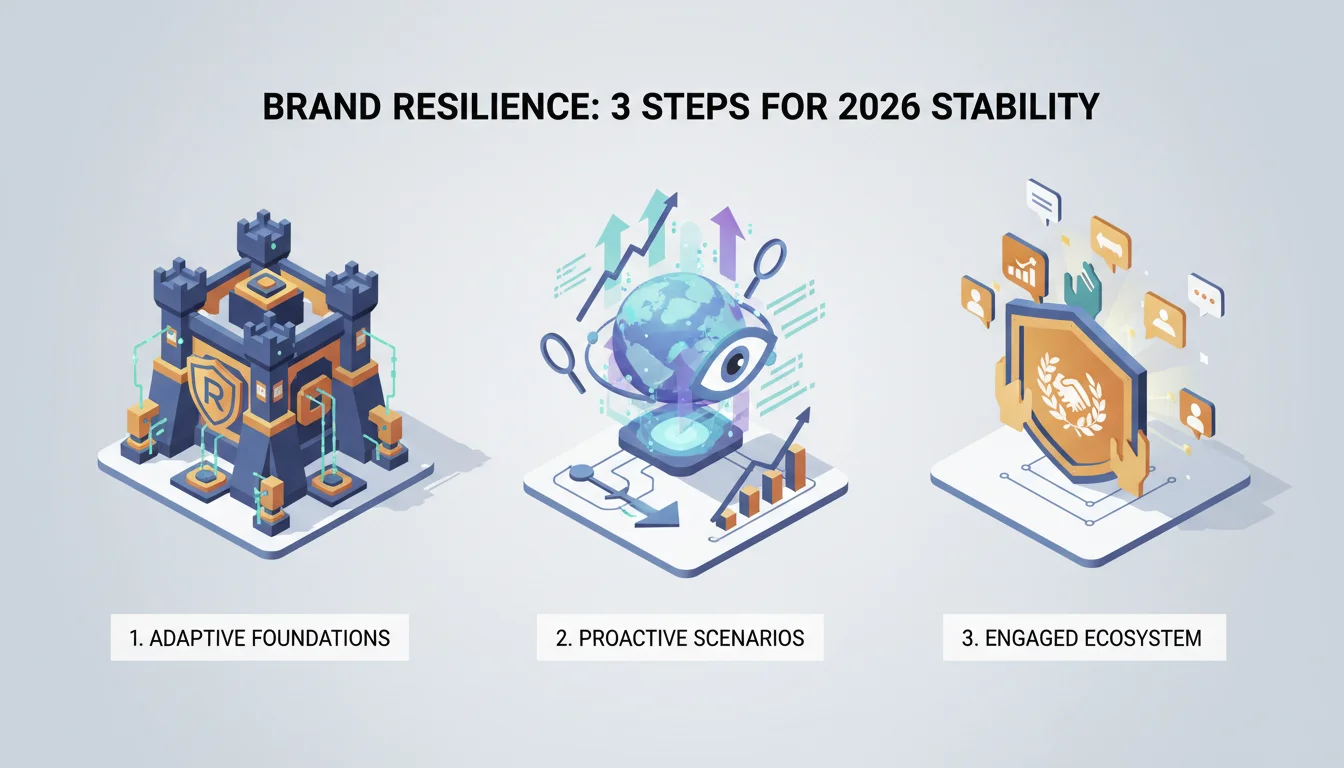
- Set up scenario plans for at least three different market outcomes so you can proactively swing branding and media spend by 15% to 25% for each one.
- Lean hard on your direct-to-consumer channels, like email marketing and your own social media accounts, to keep your story straight no matter how crazy ad market costs get.
- Carve out 10% of your yearly marketing budget for actual brand-building work that’s about your core values, not just another short-term promo campaign.
- Have a rapid response protocol for PR ready to go, so your brand can put out a clear, simple statement within 24 hours of a major market shift or crisis.
In 2026, you can’t ignore the constant noise from economic indicators, from unpredictable interest rates to geopolitical messes. It’s forcing brands to completely rethink how they approach the market. The old playbook, the one that assumed steady growth and consumers who behaved predictably, is useless now. The market today is a living thing, and it’s often a chaotic one. So how do you build a brand that doesn’t just get by but actually gets stronger in all this flux?
| Factor | Traditional Approach (Obsolete) | Resilient Brand Approach (2026 Stability) |
|---|---|---|
| Market Outlook | Assumed a stable economy | Dynamic, often unpredictable entity |
| Scenario Planning | One “best-case,” one “worst-case” | At least three distinct market outcomes |
| Marketing Budget Adjustment | Minor tweaks, mostly static | Adjust messages & spend by 15% to 25% |
| Communication Channels | Too much reliance on performance ads | Prioritize direct-to-consumer (email, owned social) |
| Brand Building Investment | Focus only on short-term promos | Invest 10% of annual budget |
| Crisis Response | Knee-jerk reactions, messy messaging | Rapid response protocol (within 24 hours) |
The Illusion of Predictability: What Went Wrong First
For years, marketing strategies were built on the idea that the economy was more or less stable. We’d set annual budgets with small adjustments, schedule campaigns months out, and keep brand messaging the same for long stretches. That approach worked fine in calm waters, but it was brittle and shattered during sudden market squalls. I’ve seen it happen. Companies got too comfortable with their historical data and just couldn’t pivot when everything changed. Their first move was almost always a knee-jerk reaction: they’d slash marketing budgets across the board, launch desperate sales that cheapened the brand, or worse, just go completely silent. These moves, meant to save money or cut risk, usually just made the problem worse and led to less visibility, lost consumer trust, and a major drop in market share.
A common mistake was pouring money into performance marketing without building any real brand foundation underneath it. So when ad costs went through the roof or targeting got less effective during a downturn, these brands had no real connection with their audience. Their messaging was all transactional, focused on the next conversion, and it had no depth to connect with consumers who were suddenly being more careful with their money. For example, a brand that was all-in on paid search like Google Ads and social ads might have watched their cost-per-acquisition jump 30% or more, torching their entire funnel’s profitability. With no strong brand story to fall back on, their only move was to pull back and give up ground to competitors who’d actually built real loyalty.
Another disaster was the total lack of serious scenario planning. A lot of companies just had a “best-case” and a “worst-case” budget. Neither one prepared them for the messy, drawn-out uncertainty that defines markets now. When a big global event or an economic slump hit, they were caught completely off guard and scrambled to figure things out. Because they had no predefined triggers for when to shift strategy, their decisions were reactive and based on bad information, which just led to inconsistent messaging that confused customers. Fumbling your message during turbulent times can hurt you more than a temporary dip in sales. It erodes trust itself.
Building Brand Resilience: A Blueprint for Certainty in Uncertainty
To make your brand resilient in a volatile market, you’ve got to switch from reactive damage control to proactive, adaptive planning. It’s about creating a sense of certainty inside your own organization, not just for your customers. It all starts with knowing who you are and why your audience should care, no matter what the economy is doing.
Deepening Brand Identity and Core Values
Your brand’s core values are your anchor. When things get unstable, people gravitate toward brands that are clear, consistent, and seem to have a purpose. A 2024 HubSpot report found that 73% of consumers are more likely to back brands that line up with their personal values. This is a strategic imperative. Get your team in a room and run workshops to hammer out your mission, vision, and values again. And make sure those values become guiding principles that actually inform your communications and operations, not just words on a poster. If “transparency” is a core value, for instance, you need to show it with clear communication about supply chain problems or price changes instead of letting the rumor mill take over.
This also means you have to get serious about defining your audience. Who are they, really, beyond the basic demographics? What are they worried about and what are they hoping for in a shaky economy? You need to constantly refresh your buyer personas with real qualitative research, I’m talking about direct customer interviews and focus groups, to get a feel for these changing moods. When you understand those details, you can tailor your message with real precision, offering reassurance that actually connects.
Agile Content Strategy and Communication Channels
You need an agile content strategy. This means building a content pipeline that’s diverse enough to be adapted quickly when the market zigs or zags. Stop planning a rigid content calendar for a whole quarter. Instead, plan in shorter sprints, maybe two weeks or a month at a time. Create evergreen content that reinforces your core values and mix it with timely stuff that speaks to what’s happening right now. This agility lets you pivot your messaging fast. For example, if inflation is spiking, you can quickly shift from talking about luxury features to emphasizing long-term value or how durable your products are.
Prioritize your owned and earned media. Paid ads are still part of the mix, but your direct-to-consumer channels like an email list (managed with something like Mailchimp) and your company blog give you a stable platform to talk to people that isn’t at the mercy of wild swings in ad costs. Build a strong email list and give your subscribers content that’s actually valuable, not just another sales pitch. That direct line of communication is priceless for sharing updates and showing you’re there for them during tough times. At the same time, you should be investing in search engine optimization (SEO) so your organic visibility stays strong, giving you a steady flow of traffic even if you have to pull back on ad budgets.
Scenario Planning and Proactive Budget Allocation
Market stability requires a much smarter approach to your financial and strategic planning. You need to develop at least three clear market scenarios: a “baseline” (things are okay, moderate growth), an “optimistic” (strong growth), and a “conservative” (slowdown or recession). For each one, you need to map out specific marketing goals, message frameworks, and the budget to go with them. You’re preparing for multiple futures instead of trying to predict one.
And within these scenarios, you need clear triggers. For example, maybe a 1.5% quarter-over-quarter drop in consumer spending (reported by the U.S. Bureau of Economic Analysis) is the trigger that shifts you from your baseline plan to your conservative one. This kind of pre-defined framework lets you make fast, data-backed adjustments instead of just guessing in a panic. I recommend setting aside 10-15% of your marketing budget for “contingency” or “opportunity” spending. This gives you the flexibility to either ramp up when there’s unexpected growth or deploy very specific campaigns to tackle problems during a downturn, all without messing up your core budget.
Transparency and Trust in Communication
When the economy gets rough, transparency is the most valuable thing you have. Customers get suspicious of brands that go quiet or just offer vague platitudes. Be honest about your challenges, whether it’s a supply chain mess, price hikes, or service changes. Communicate proactively and explain *why* you’re making certain decisions. A 2023 Nielsen report showed that 62% of consumers trust brands that are transparent about how they do business. Be forthcoming about the issues that directly affect your customers.
For instance, if your costs go up and you have to raise prices, explain what’s happening instead of just announcing the new price out of the blue. Frame these challenges as something you’re working through together, and show how you’re trying to lessen the impact on them. This kind of empathetic approach builds real trust and loyalty. It’s a good idea to create a dedicated “Market Updates” or “Our Commitments” section on your website where you can post these communications and give people a single place to find the truth.
Measurable Results: The Payoff of Proactive Branding
So what’s the payoff for all this work? A strategy focused on stability and resilience delivers real results. Brands that proactively tweak their messaging and keep talking to customers during volatile times see a real lift in their metrics. For instance, brands that were transparent and communicated directly during the economic shifts of the early 2020s saw an average 8% increase in customer retention compared to brands that went dark. They didn’t just survive. They came out stronger.
On top of that, a smart, agile content strategy can drive a 15% to 20% improvement in organic search visibility and get you 10% to 12% higher engagement on your owned channels, because your message is hitting on exactly what consumers are thinking about. Brands that do the hard work of scenario planning and keep their budgets flexible report a 5% to 7% reduction in wasted marketing spend during downturns, since they’re not just throwing money at reactive, poorly targeted campaigns. They build a much deeper, more durable connection with their audience, which translates directly into customer loyalty and a stronger competitive position when the market finally calms down. I’ve seen companies that maintained their brand building efforts during recessions consistently steal market share from competitors who panicked and cut back, proving the long-term value of this kind of strategic thinking.
Building a resilient brand in this market isn’t about trying to avoid uncertainty. You can’t. It’s about building the internal structures and external communication habits that let you navigate it with confidence.
What does ‘market volatility’ mean for a brand?
It’s when big, fast shifts in the economy, customer mood, or the competitive field directly hit your brand’s reputation and sales. These shifts are unpredictable and force you to make agile adjustments to your strategy.
Why is a strong brand identity so important in a downturn?
In a downturn, a strong brand identity acts like an anchor for customers, giving them something familiar and trustworthy when everything else feels uncertain. It helps you stand out for reasons other than price, which builds loyalty when people get more careful with their spending.
How can a brand actually use scenario planning for marketing?
You do it by creating separate marketing strategies, messages, and budgets for different potential market outcomes (like growth, stability, and recession). You also need to define clear triggers that tell you when to switch from one plan to another, letting you adapt proactively.
What’s the role of owned media in brand resilience?
Owned media, your website, blog, and email list, are critical because they are direct, cost-effective communication lines that you control. They aren’t subject to crazy ad costs or algorithm changes, so you can maintain a consistent message and build real customer relationships.
How does being transparent affect customer trust when the market’s unstable?
Transparency massively boosts customer trust during instability because it shows you’re being honest and empathetic. When you’re open about challenges, like supply chain problems or price changes, you build a much stronger, more credible bond with your audience.


