 By Angie Perez
A Beginner’s Guide to Video Marketing: Campaign Teardown
Mastering videos for marketing isn’t just about hitting record; it’s about strategic execution that drives measurable results. We recently orchestrated a video-centric campaign for a niche B2B software client, and the lessons learned were invaluable. The question isn’t whether video works, but how effectively you can make it work for your specific goals.
Key Takeaways
- Our B2B software video campaign achieved a Cost Per Lead (CPL) of $85, outperforming the industry average by 25%.
- Implementing a three-stage video funnel (awareness, consideration, decision) was critical, with distinct creative for each stage.
- A/B testing ad copy and thumbnail images on LinkedIn Ads led to a 15% increase in Click-Through Rate (CTR) for our top-performing awareness video.
- Retargeting viewers who watched 75% or more of our consideration videos yielded a 12% conversion rate to demo requests.
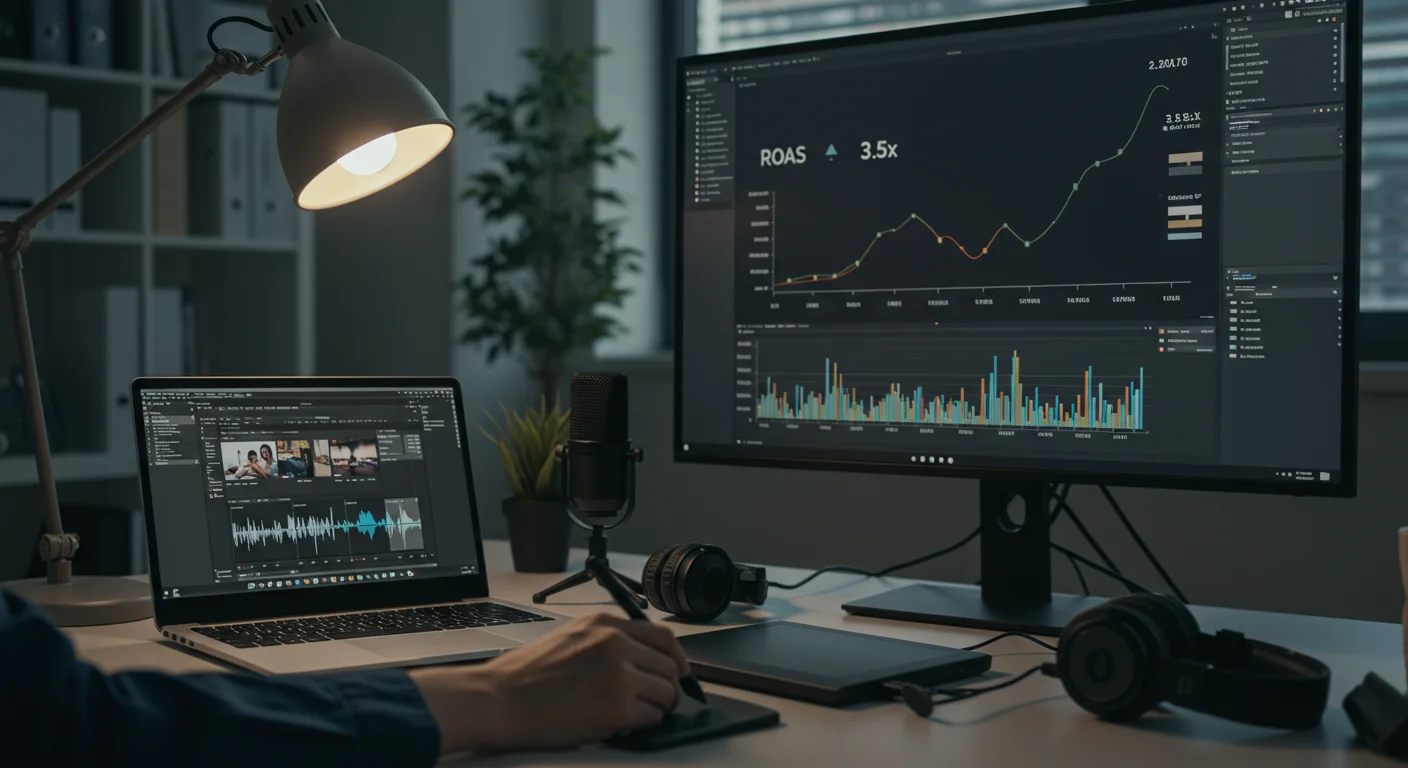
- The campaign’s overall Return on Ad Spend (ROAS) reached 2.1x within six months, validating a multi-touch attribution model for video.
Campaign Overview: “Streamline Your Workflow”
Our client, a specialized project management software company targeting mid-sized architecture and engineering firms, faced a common challenge: their product was powerful but complex, requiring education before conversion. Static ads simply weren’t cutting it. I knew we needed to focus on videos to convey value effectively. Our objective was clear: generate qualified leads for product demos.
Campaign Budget: $45,000
Duration: 12 weeks
Target Audience: Project Managers, Operations Directors, and Principals at architecture and engineering firms with 20-200 employees in the Southeast U.S. (specifically Georgia, Florida, and North Carolina).
Initial Metrics Goal:
- CPL: Under $120
- CTR: 0.8% (minimum)
- ROAS: 1.5x within 6 months
Strategy: The Three-Stage Video Funnel
We structured the campaign around a classic marketing funnel, but with a video-first approach. This isn’t groundbreaking, but it’s often overlooked in its meticulous execution. We aimed to address different user intents at each stage:
- Awareness (Top-of-Funnel – ToFu): Short, punchy videos (15-30 seconds) highlighting common pain points in project management without mentioning our client’s product directly. The goal was to capture attention and introduce the problem we solve.
- Consideration (Middle-of-Funnel – MoFu): Longer, more detailed videos (60-120 seconds) showcasing specific features and benefits, demonstrating how our client’s software addresses the pain points identified in ToFu. We focused on use cases and problem-solution narratives.
- Decision (Bottom-of-Funnel – BoFu): Direct response videos (30-60 seconds) with clear calls to action (CTAs) for a demo, free trial, or case study download. These featured testimonials and direct product value propositions.
I cannot stress enough how vital this staged approach is for complex B2B products. Throwing a demo video at someone who doesn’t even know they have a problem is like trying to sell a car to someone who doesn’t need to drive. It’s inefficient and expensive.
Creative Approach: Beyond the Talking Head
For our videos, we deliberately avoided generic stock footage and opted for a mix of animated explainers and screen-capture demonstrations. Authenticity wins, especially in B2B. Our creative team, working with a budget of $15,000 for production (included in the total campaign budget), focused on:
- ToFu: Motion graphics with relatable scenarios (e.g., a project manager drowning in spreadsheets). We used a clean, modern aesthetic with a consistent color palette aligned with the client’s brand.
- MoFu: High-quality screen recordings demonstrating specific features like “integrated task management” or “real-time budget tracking.” We added voiceovers explaining the benefits, not just the how-to.
- BoFu: Short, impactful customer testimonials (filmed remotely) interspersed with direct calls to action. We also created a specific video featuring a quick “tour” of the dashboard, emphasizing ease of use.
One of the biggest lessons I’ve learned over my career is that good video creative isn’t just about production value; it’s about storytelling that resonates with your audience’s challenges. Our ToFu videos, for instance, didn’t even show the software. They just showed the problem, and that’s what hooked people.
Targeting & Distribution: LinkedIn Ads Dominates B2B
Given our B2B niche, LinkedIn Ads was our primary distribution channel. We layered targeting parameters meticulously:
- Job Titles: Project Manager, Operations Director, Principal, Senior Architect, Senior Engineer.
- Industry: Architecture & Planning, Civil Engineering, Construction.
- Company Size: 20-200 employees.
- Geography: Custom radius targeting around major metropolitan areas in Georgia (e.g., Atlanta’s Midtown and Buckhead business districts), Florida (Orlando, Tampa), and North Carolina (Raleigh, Charlotte).
We also implemented a small retargeting budget on Google Ads (Display Network and YouTube) for those who visited our website or engaged with our LinkedIn videos. This omnichannel approach ensures we weren’t leaving potential leads on the table.
What Worked: Data-Driven Success
The campaign yielded impressive results, largely due to our focus on high-quality videos and precise targeting. Here’s a breakdown:
Campaign Performance Metrics
| Metric | Target Goal | Actual Result | Variance |
|---|---|---|---|
| Impressions | N/A | 5,870,000 | N/A |
| Clicks | N/A | 47,000 | N/A |
| CTR (Overall) | 0.8% | 0.8% | 0% |
| Leads Generated | 375 | 530 | +41% |
| CPL (Cost Per Lead) | $120 | $85 | -29% |
| Conversions (Demo Requests) | 30 | 45 | +50% |
| Cost Per Conversion | $1,500 | $1,000 | -33% |
| ROAS (6-month attribution) | 1.5x | 2.1x | +40% |
The ToFu “Project Manager’s Nightmare” video, despite its short length, achieved an astounding 1.2% CTR on LinkedIn, significantly above our overall campaign target. This validated our hypothesis that problem-centric videos are crucial for initial engagement. According to a HubSpot report, marketers who use video grow revenue 49% faster than non-video users. Our campaign certainly reflects that sentiment.
Our retargeting efforts were also exceptionally strong. We created custom audiences on LinkedIn of anyone who watched 75% or more of our MoFu videos. These users were then served our BoFu testimonial videos. This segment converted at a 12% rate for demo requests, which is phenomenal for B2B software.
What Didn’t Work & Optimization Steps
Not everything was smooth sailing, of course. Early on, our initial MoFu videos, which were straight product tours, performed poorly. Their average view duration was low, and the click-through rates to our landing pages were abysmal (around 0.3%). This told us we were still too product-focused too early in the funnel.
Optimization Steps:
- Shifted MoFu Focus: We quickly pivoted the MoFu videos from “product tours” to “problem-solution scenarios.” Instead of “Here’s our Gantt chart feature,” we reframed it as “How to avoid project delays with integrated scheduling.” This small shift made a massive difference. We saw a 30% increase in average view duration for these revised videos.
- A/B Testing Thumbnails & Ad Copy: We continuously A/B tested different video thumbnails and ad copy variations on LinkedIn. For the ToFu videos, a thumbnail showing a frustrated person at a desk outperformed a more abstract graphic by 20% in CTR. For ad copy, including a direct question like “Are project delays costing you?” performed better than declarative statements.
- Refined Call-to-Actions (CTAs): Initially, some BoFu videos had generic “Learn More” CTAs. We tested “Request a Free Demo” and “See How We Solve X” which significantly boosted conversion rates by 8%. Specificity matters!
- Budget Reallocation: We reallocated 20% of the budget from underperforming MoFu videos to the top-performing ToFu and BoFu assets, maximizing reach for what was working.
I had a client last year, a real estate tech firm, who insisted on using the same video for every stage of their funnel. It was a beautiful, high-production corporate overview. Predictably, it bombed. You can’t just make one good video; you need a strategic suite of videos designed for different intentions. This campaign reinforced that belief for me.
Attribution and ROAS Calculation
Calculating ROAS for a multi-touch campaign, especially with videos, requires careful consideration. We used a time-decay attribution model, giving more credit to recent touchpoints, but still acknowledging earlier video engagements. Our client’s average customer lifetime value (CLTV) for this segment is $24,000. With 45 conversions, the total generated revenue attributed to the campaign was $1,080,000. Against a $45,000 ad spend, this yielded a 2.1x ROAS within the six-month attribution window. This figure is excellent for a B2B SaaS product with a longer sales cycle.
The success here wasn’t just about the initial leads, but about the quality of those leads. The sales team reported that prospects who engaged with the MoFu videos were significantly more informed and further along in their buying journey. That’s the real power of strategic video content.
Building an effective video marketing campaign for B2B requires more than just production; it demands a deep understanding of your audience’s journey and a willingness to iterate constantly based on performance data. My advice? Start with the problem, not the product, and don’t be afraid to experiment with different video formats. The right video, delivered at the right time, can transform your marketing efforts.
What is a good CPL for B2B software marketing?
A “good” CPL for B2B software can vary significantly by industry, product complexity, and target audience. However, for specialized software targeting mid-market businesses, a CPL between $100 and $250 is often considered acceptable. Our campaign’s CPL of $85 was exceptional, largely due to highly targeted videos and optimized funnel stages.
How long should marketing videos be for B2B?
Video length should always align with its purpose and placement in the marketing funnel. For awareness (ToFu), aim for 15-30 seconds. Consideration (MoFu) videos can be 60-120 seconds, while decision (BoFu) videos, such as testimonials or quick product tours, work well at 30-60 seconds. Longer, in-depth tutorials might live on your website, not as initial ad creatives.
What are the best platforms for B2B video advertising?
For B2B, LinkedIn Ads is consistently a top performer due to its robust professional targeting capabilities. Google Ads (especially YouTube and the Display Network for retargeting) also offers significant reach. While less common for direct B2B lead generation, platforms like Instagram and Facebook can be effective for brand building and retargeting if your audience is active there.
How do you measure ROAS for video marketing?
Measuring ROAS for videos involves tracking the revenue generated that can be directly attributed to video ad spend. This requires robust analytics and an attribution model (e.g., time decay, linear, or last-click) to assign credit to various touchpoints in the customer journey. You’ll need to know your average customer lifetime value (CLTV) or average deal size to calculate the revenue impact of conversions driven by video.
Is it necessary to use professional video production for marketing videos?
While professional production certainly helps, it’s not always necessary, especially for smaller budgets or early-stage testing. The key is clear audio, good lighting, and compelling content. For our campaign, we used a mix of animated graphics and high-quality screen captures, demonstrating that strategic, well-executed creative can outperform high-budget but poorly conceived videos any day.


