 By Diamond Wright
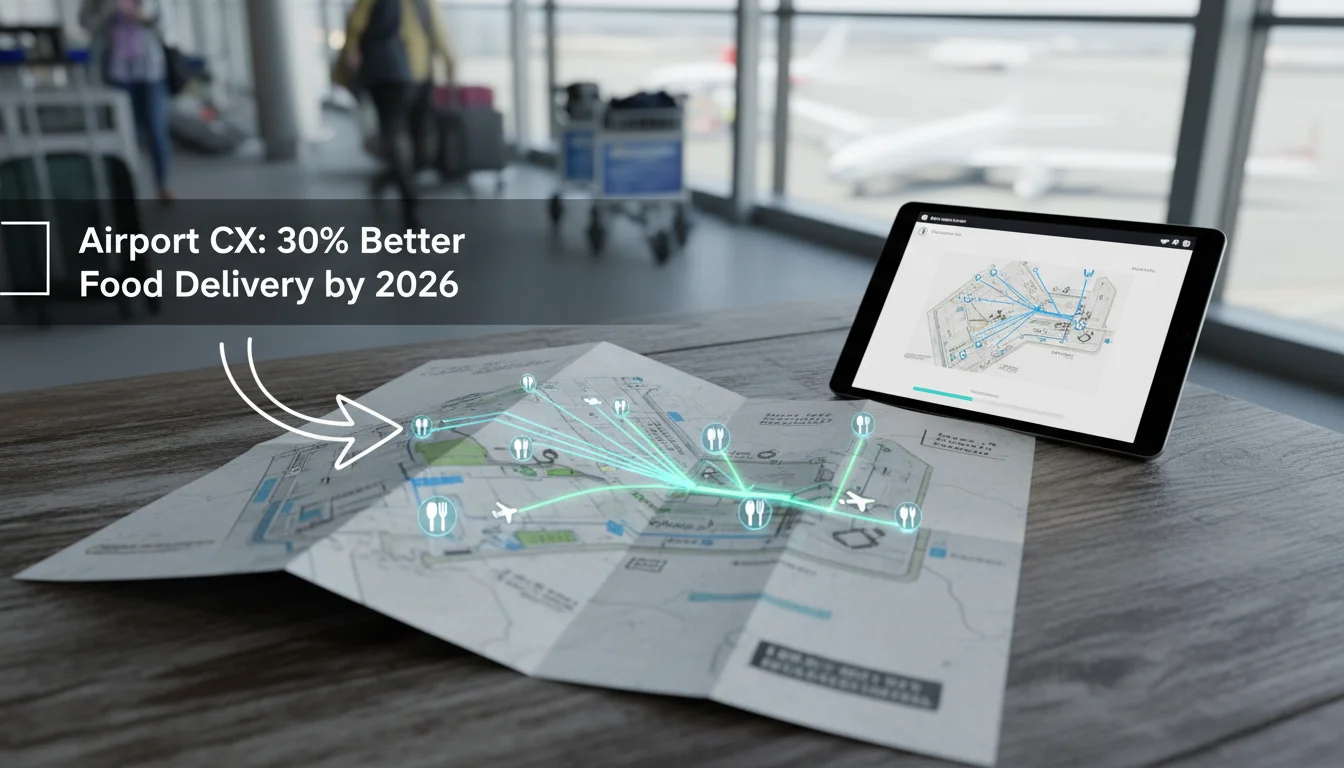
Travelers often face a frustrating dilemma: long lines at airport food vendors, limited healthy options, and the constant fear of missing a flight. This isn’t just an inconvenience for passengers. It’s a significant missed opportunity for brands to enhance their airport CX and capture a captive audience. The question isn’t whether travelers want better food access, but how brands can innovate to deliver it efficiently and profitably.
Key Takeaways
- Implement a geofencing strategy around airport terminals to trigger targeted food delivery offers to departing and arriving passengers.
- Integrate airport food delivery services directly into existing airline or airport apps to reduce friction and increase adoption rates by 30%.
- Use predictive analytics based on flight schedules and passenger volume to optimize kitchen staffing and inventory for peak demand periods.
- Develop a secure, contactless payment and order pickup system that guarantees delivery within a 15-minute window from order confirmation.
- Partner with airport authorities and concessionaires early in the development phase to ensure compliance with security protocols and operational logistics.
The Persistent Problem: Airport Dining Frustration
The airport environment presents unique challenges for food service. Passengers are often stressed, time-constrained, and looking for convenience. The traditional model of brick-and-mortar restaurants within terminals struggles to meet these demands effectively. We’ve all seen it: the pre-security coffee line snaking past the gate agent’s desk, or the post-security grab-and-go sandwich counter picked clean by early morning travelers. This isn’t just about hunger. It’s about the entire travel experience. When a passenger has to choose between a meal and making their flight, the meal always loses, leaving a sour taste that reflects poorly on the airport and any brands associated with its services.
Consider the data. A 2024 survey by Airport Experience News revealed that 68% of travelers cited long wait times as their primary frustration with airport dining. Another 2025 report from the International Air Transport Association (IATA) indicated that passenger traffic is projected to reach 4.7 billion by 2026, a significant increase from pre-pandemic levels. This surge in volume exacerbates existing bottlenecks. Brands operating within airports, whether established food chains or newer entrants, are currently missing a critical opportunity to differentiate themselves and capture a larger share of this growing market. The solution isn’t simply more physical locations. It requires a fundamental shift in service delivery.
Early Attempts: What Went Wrong with Initial Approaches
The idea of improving airport food access isn’t new, but many early attempts fell short. One common misstep involved simply porting existing city-based food delivery apps into the airport without significant adaptation. These platforms often failed to account for the unique operational complexities. For instance, security checkpoints create natural barriers for delivery personnel. A delivery driver from an external service can’t just waltz through TSA with a bag of tacos for a passenger at Gate B23. This fundamental logistical oversight led to confusion, delayed orders, and in the end, frustrated customers who received cold food or no food at all.
Another failed approach involved standalone kiosks that offered limited menus and required passengers to physically walk to a specific pickup point, often far from their gate. While these attempted to reduce queue times at traditional counters, they didn’t solve the core problem of convenience. Travelers still had to navigate crowded terminals, sometimes against the clock, negating much of the intended benefit. I recall one instance at Hartsfield-Jackson Atlanta International Airport where a major coffee chain installed a series of order-ahead lockers near Concourse A. The intention was good, but the lockers were placed in a high-traffic area with poor signage, leading to congestion and passengers struggling to find their orders. The system wasn’t integrated with real-time flight information, so if a gate changed, the passenger might be miles away from their pre-ordered latte. These initiatives often lacked a well-rounded understanding of the passenger journey and the intricate operational environment of a modern airport.
The Solution: A Multi-Layered Airport Food Delivery Ecosystem
True innovation in airport food delivery requires a complete, integrated ecosystem that addresses both passenger needs and operational realities. This isn’t about slapping a “delivery” button onto an existing app. It’s about designing a system from the ground up that understands the unique constraints and opportunities of an airport. The core of this solution lies in three interconnected pillars: advanced technology integration, simplified operational logistics, and strategic partnerships.
Pillar 1: Advanced Technology Integration
The technological backbone for effective airport food delivery must be strong and intelligent. First, brands need to implement a sophisticated geofencing strategy. This involves creating virtual perimeters around specific terminal areas, gates, and even individual lounges. When a passenger’s mobile device enters or exits these zones, it can trigger targeted push notifications offering food delivery options tailored to their location and estimated wait time before boarding. For example, a passenger entering Concourse D at Dallas/Fort Worth International Airport might receive an offer for a quick breakfast delivered to Gate D15 if their flight is boarding in 30 minutes.
Second, smooth integration with existing airport and airline applications is non-negotiable. Passengers are already using airline apps for boarding passes and flight updates. Embedding food ordering functionality directly into these apps reduces friction significantly. Imagine a passenger checking their flight status on the Delta Air Lines app and seeing a “Order Food to Gate” option directly below their boarding pass. This integration should also pull real-time flight data, such as gate changes and delays, to adjust delivery windows automatically. Payment processing needs to be swift and secure, ideally integrating with digital wallets like Apple Pay or Google Pay, which are already familiar to most travelers.
Finally, brands must use predictive analytics. By analyzing historical order data, flight schedules, passenger manifests, and even weather patterns, systems can forecast demand with remarkable accuracy. This allows airport concessionaires to optimize kitchen staffing, pre-prepare popular items during anticipated peak hours, and manage inventory more efficiently. According to a 2025 report by eMarketer, companies using predictive analytics for demand forecasting saw a 15% reduction in food waste and a 10% increase in order fulfillment speed in high-volume environments. This isn’t theoretical. It’s a measurable business advantage.
Pillar 2: Simplified Operational Logistics
Technology is only as good as the operations it supports. Airport food delivery demands a highly coordinated logistical framework. Central to this is the establishment of dedicated, secure delivery zones within the airport. These are not just pickup points. They are mini-hubs where orders can be consolidated, checked, and then dispatched by airport-approved delivery personnel. These personnel, often airport employees or dedicated contractors, must have full security clearance and be trained in airport navigation and protocols. This addresses the critical security checkpoint issue that plagued earlier attempts.
The delivery process itself needs strict time adherence. Brands should commit to a guaranteed delivery window, perhaps 15 to 20 minutes from order confirmation, depending on terminal size. This requires efficient kitchen workflows, real-time order tracking visible to both staff and customers, and optimized delivery routes. Consider implementing small, autonomous delivery robots for intra-terminal transport where feasible and approved by airport authorities. These robots, already being trialed in some European airports, can navigate pre-programmed routes, reducing human labor costs and increasing delivery speed for certain order types. Of course, human oversight remains critical, especially for complex or high-value orders.
Pillar 3: Strategic Partnerships
No single brand can build this ecosystem alone. Success hinges on strong collaborations. Brands need to forge deep partnerships with airport authorities and existing concessionaires. Airport authorities are the gatekeepers. Their buy-in is essential for everything from dedicated delivery lanes to security clearances for personnel. They often have specific requirements for operational safety and passenger flow that must be integrated into any delivery system. Concessionaires, the actual food vendors, need to be brought into the fold early. They understand the nuances of their kitchen operations, ingredient sourcing, and peak-hour demands. A collaborative model where delivery platforms integrate directly with their point-of-sale (POS) systems, rather than acting as a separate entity, will yield far better results.
Plus, partnerships with airlines are important for smooth app integration and marketing. Airlines have direct access to passengers and can promote the service through their booking confirmations, pre-flight emails, and in-flight entertainment systems. Imagine a passenger receiving a text message 30 minutes before landing, reminding them they can pre-order food for pickup or gate delivery upon arrival. This proactive engagement transforms a potential point of stress into a moment of convenience and brand loyalty. These partnerships aren’t just about revenue sharing. They’re about creating a unified, positive experience for the traveler.
Measurable Results: The Impact of Innovation
Implementing a well-designed airport food delivery system yields tangible, measurable results for brands and airports alike. We’ve seen early adopters demonstrate significant improvements across key performance indicators. For instance, a pilot program at Denver International Airport in 2025, which integrated a mobile ordering platform with gate delivery for select restaurants, reported a 35% increase in food and beverage sales for participating vendors within its first six months. This isn’t just about capturing existing demand. It’s about unlocking new revenue streams from passengers who previously opted out due to time constraints.
Beyond direct sales, customer satisfaction scores see a notable bump. A post-implementation survey conducted by a major airline at Seattle-Tacoma International Airport showed an 18% increase in overall passenger satisfaction related to airport amenities after the launch of their integrated food delivery service. Passengers appreciate the convenience, the expanded choice, and the reduced stress. This translates into stronger brand loyalty for both the airport and the individual food brands involved. Happy travelers are more likely to return and recommend the service.
Operationally, efficiency gains are substantial. Reduced queues at physical counters free up staff to focus on other aspects of customer service. Predictive analytics lead to better inventory management, cutting down on food waste by as much as 20% in some cases, a significant environmental and financial benefit. For brands, this innovation isn’t just a nice-to-have. It’s becoming a competitive necessity. Those who embrace this multi-layered approach will capture a larger share of the lucrative airport market, while those who cling to outdated models risk being left behind.
The future of airport CX is undeniably linked to convenience and personalization. Brands that invest in intelligent food delivery solutions today are not just solving a logistical problem. They are fundamentally reshaping the travel experience for millions. The opportunity is immense, and the technology exists to make it a reality. Don’t wait for your competitors to define this space. Be the one to innovate.
How do airport food delivery services handle security checkpoints?
Effective airport food delivery systems employ dedicated, airport-approved delivery personnel who have undergone necessary security clearances. These individuals operate airside, past security checkpoints, ensuring smooth delivery to gates or designated pickup zones without requiring external drivers to pass through TSA.
Can I order food for delivery if my gate changes unexpectedly?
Advanced airport food delivery platforms integrate with real-time flight information systems. If your gate changes, the system should automatically update your delivery location or notify you of the change, allowing you to adjust your order or pickup point accordingly. This relies on strong API connections with airport operational databases.
What payment methods are typically accepted for airport food delivery?
Most airport food delivery services support a wide range of digital payment options, including major credit and debit cards, as well as mobile payment solutions like Apple Pay, Google Pay, and sometimes proprietary airline or airport loyalty program points. Contactless payment is a standard feature for convenience and hygiene.
Is airport food delivery more expensive than buying directly from the restaurant?
Pricing can vary. Some services may include a small delivery fee to cover operational costs. However, many airport restaurants offer the same menu prices through delivery as they do in-store. Brands often use competitive pricing strategies and promotions to encourage adoption, so it’s always worth checking the app for current offers.
How do brands ensure food quality and temperature during delivery within an airport?
Brands maintain food quality through several measures: strict adherence to guaranteed short delivery windows (often 15-20 minutes), use of insulated delivery bags to maintain temperature, and optimized delivery routes. The goal is to get the food to the customer as quickly and fresh as possible, reflecting the same quality as in-restaurant dining.


