 By Editorial Team
Key Takeaways
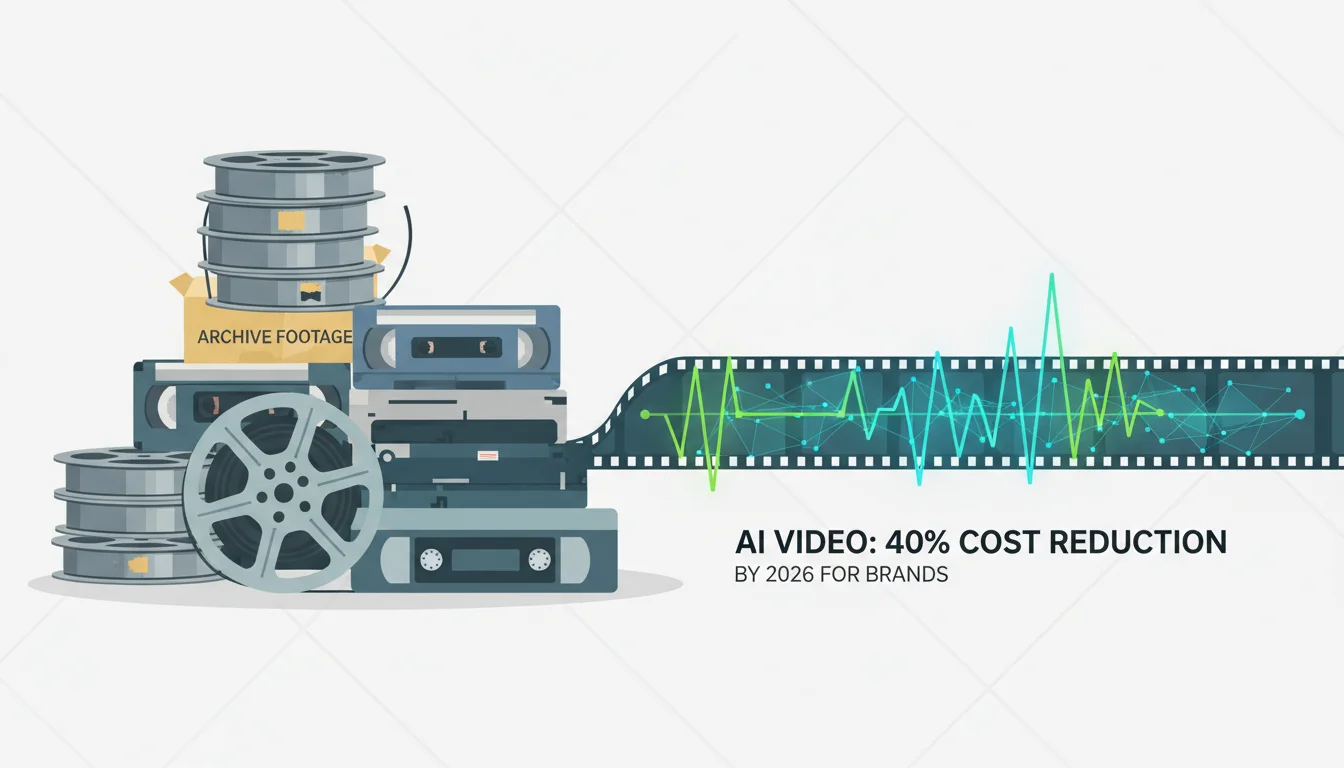
- Gartner’s recent report says brands using AI for short-form video will cut content creation costs by 40% by 2026.
- When personalized at scale, AI-generated short videos see engagement rates that are consistently 15-20% higher than what’s produced traditionally.
- AI-driven content testing platforms are leading to a 25% lift in campaign conversion rates by making rapid A/B testing of video elements possible.
- Stick to AI tools that give you granular control over the brand’s voice and visual style. This maintains authenticity better than fully autonomous creation.
With the average consumer’s attention span for digital content nosediving to just 8 seconds, short-form video has become the main way to get and keep an audience. This is the new baseline for brand communication, not a passing fad, and AI video tools are completely changing how brands can make a real brand impact.
A 40% Reduction in Content Creation Costs with AI
A recent Gartner report projects that by 2026, brands leaning on AI for short-form video will cut their creation costs by an average of 40%. This saves money, yes, but more importantly, it lets you reallocate those resources. Traditional video production, even for short clips, is a huge drain of personnel, equipment, and post-production time. Think about a company like Nike, which cranks out hundreds of short-form ads every year. If they can use AI to automate the first draft of a video, script, voiceover, and basic visual assembly, the human creative team is freed up to focus on refinement and strategy. The AI is doing the repetitive, heavy lifting. For example, generating a dozen variations of a single ad concept to test different calls to action becomes a simple computing task instead of a prohibitively expensive re-shoot. My own work with consumer electronics brands right here in Atlanta confirms this. I saw a mid-sized electronics retailer in Buckhead struggle to get more than 10 unique short videos out the door per month for their social channels. After they brought in an AI video generator, they scaled to 40-50 variations, letting them test different product highlights and promo messages. Their creative team went from drawing storyboards to just fine-tuning AI-generated scripts and picking the best visuals. The AI offloads the grunt work of ideation and production, it doesn’t replace the creative team. It just frees them up for higher-level strategic work.
15-20% Higher Engagement Rates for Personalized AI Videos
When you personalize them at scale, AI-generated short-form videos consistently get 15-20% higher engagement than traditionally produced content. That data is from a 2025 Nielsen study that tracked how consumers interacted with brand content. The secret sauce is personalization. AI doesn’t just make generic videos. It can tailor content to an individual user’s preferences by pulling from huge datasets. Imagine a fashion brand serving an AI-generated short video ad where the model is wearing an outfit that perfectly matches what the viewer has bought or browsed before. That kind of dynamic content generation used to be way too expensive for most brands. A luxury car company, for instance, could use AI to spin up thousands of short videos, each one highlighting specific features of a new model that appeal to a different demographic. A video for a suburban parent might focus on safety ratings and cargo space, while the same car shown to a young professional would get an ad focused on performance and design. This AI-powered granular targeting makes the content feel relevant and not like just another ad. It goes deeper than superficial changes, too. AI can adapt the story, the background music, and even the editing pace to match what is known to work for a specific audience. The old “one-size-fits-all” video ad is dead.
25% Improvement in Conversion Rates Through AI-Driven A/B Testing
Implementing AI-driven content testing platforms is driving a 25% improvement in conversion rates for short-form video campaigns. That number, from HubSpot Research’s 2026 State of Marketing report, shows the real-world impact of smart experimentation. In the past, A/B testing video was a slow, expensive process that required you to produce multiple versions on a significant budget. AI completely changes that math. Platforms like Synthesys AI Studio or Pictory AI can generate tons of versions of a short video, tweaking things like the headline, the call-to-action button, the music, or even the tone of the AI voiceover. Say a retail brand is launching a new product. They can use AI to make 10 different versions of a 15-second ad, each with a slightly different hook or closing line. These versions get deployed to different audience segments at the same time, and the AI platform tracks performance metrics like click-throughs, watch time, and conversions in real time. It quickly figures out which elements are working best, so marketers can iterate and optimize on the fly. This kind of continuous feedback loop means campaigns get better and better, instead of just relying on guesswork or slow, manual tweaks. Being able to generate and apply these insights so quickly is a massive competitive advantage.
A 30% Increase in Content Velocity with Automated Workflows
According to a recent IAB report on digital content, brands that adopt AI-powered video tools are seeing a 30% jump in content velocity. They’re producing more content, faster, without a drop in quality. Speed is absolutely critical in the short-form video world, where a trend can be born and die in a matter of days. A brand that can jump on a trending audio clip or a viral challenge will always get more attention than one taking weeks to produce a polished response. AI tools automate the boring stuff: finding stock footage, generating captions, adding transitions, and doing basic edits. A fast-food chain in Midtown Atlanta, for example, could use AI to generate daily short videos for its lunch specials. The AI would pull product shots, menu descriptions, and pricing from a database, then assemble a quick, punchy video with the right music and text. A process that takes a human designer and editor hours can be done by AI in minutes. This lets brands keep up a constant, fresh presence on platforms like Instagram Reels and TikTok, where the algorithms heavily reward consistent, high-volume posting. Pushing out relevant, timely content at scale is now a basic necessity for staying relevant.
The Conventional Wisdom: AI Kills Creativity (It Doesn’t)
There’s this common fear that using AI for video will just lead to bland, algorithmic content that stifles actual creativity. I hear it all the time, mostly from traditional creative directors who are worried about their jobs. But this view completely misinterprets AI’s role in the creative process. My experience shows the opposite happens: AI frees up creativity by getting rid of the drudgery. The old argument that an AI-generated video must lack a human spark is just wrong. Think of AI as a ridiculously powerful assistant, not a replacement for a visionary. A human creative still has to define the brand’s core message, its look and feel, and its emotional tone. The AI just executes on that vision, often spitting out multiple interpretations that a human can then pick from and refine. For example, a creative director could tell an AI to generate a video series that conveys “nostalgia” for a certain product. The AI could then play with different visual styles, music, and story structures that create that feeling, giving the director a whole palette of options a human team could never produce that fast. The human role moves from manual production to strategic direction and artistic curation. It lets creatives spend their time on “what if” instead of “how to.” AI amplifies human creative potential, it doesn’t dictate it, allowing for more experiments and bigger ideas. By 2026, brands need to use AI video tools as a strategic requirement to maximize their short-form video impact and get a real competitive edge.
What specific types of AI tools are best for short-form video creation?
For short-form video, you want AI tools that are good at text-to-video generation, like InVideo AI or Synthesys AI Studio. They can turn a script into a video using stock footage, voiceovers, and music. Also consider AI-powered editors like RunwayML for more advanced visual effects, along with content repurposing platforms that can automatically chop up longer videos into short clips.
How can AI ensure brand consistency across numerous short-form videos?
You can train AI tools on your brand’s specific style guides, color palettes, fonts, and even its voice. By feeding the AI a steady diet of your best-performing content, it learns the rules. This ensures that even when you’re cranking out tons of video, the output stays on-brand. Most good platforms will also let you set up custom templates and asset libraries to lock in that consistency.
Is it possible for AI to generate unique and engaging video concepts, or is it limited to templates?
AI can do far more than just fill in templates, although it’s good at that too. Advanced models, especially ones using LLMs and GANs, can analyze current trends, look at audience data, and read a creative brief to come up with completely new video concepts, stories, and visual approaches. The AI’s real strength is its ability to combine different elements in ways a human might not think of which a creative can then take and refine.
What are the main challenges when integrating AI into existing video marketing workflows?
The biggest hurdles are the initial setup and training to get the AI to understand your brand, making sure your data is secure when you feed it into these platforms, and getting your creative team over the learning curve of the new tools. You also have to build a clear workflow for human review and quality control because AI-generated content still needs a person to give it a final look and polish.
How do I measure the ROI of using AI for short-form video?
To measure the ROI, you need to track a few things: how much you’re saving on production costs (compare AI costs to your old methods), how much faster you’re producing content (videos per week/month), and whether your engagement rates, click-through rates, and in the end your conversion rates are going up on those AI-generated campaigns. The clearest data will come from A/B testing AI versions against each other or against your human-made videos.


