 By Editorial Team
The marketing world of 2026 demands more than just reacting to market shifts; it requires predicting them. Artificial intelligence for trend spotting offers proactive executive insights, transforming how leaders anticipate consumer behavior and market dynamics. But how exactly does one move from theoretical AI capabilities to actionable, strategic foresight?
Key Takeaways
- Implement a dedicated AI-powered social listening platform like Brandwatch for real-time data ingestion and sentiment analysis across diverse social media channels.
- Configure AI models within tools such as Quid to identify emerging topics and thematic clusters from unstructured data, focusing on weak signals that precede major trends.
- Establish a structured data visualization and reporting workflow using platforms like Tableau, ensuring executive-level dashboards are updated weekly with key trend indicators and predictive scores.
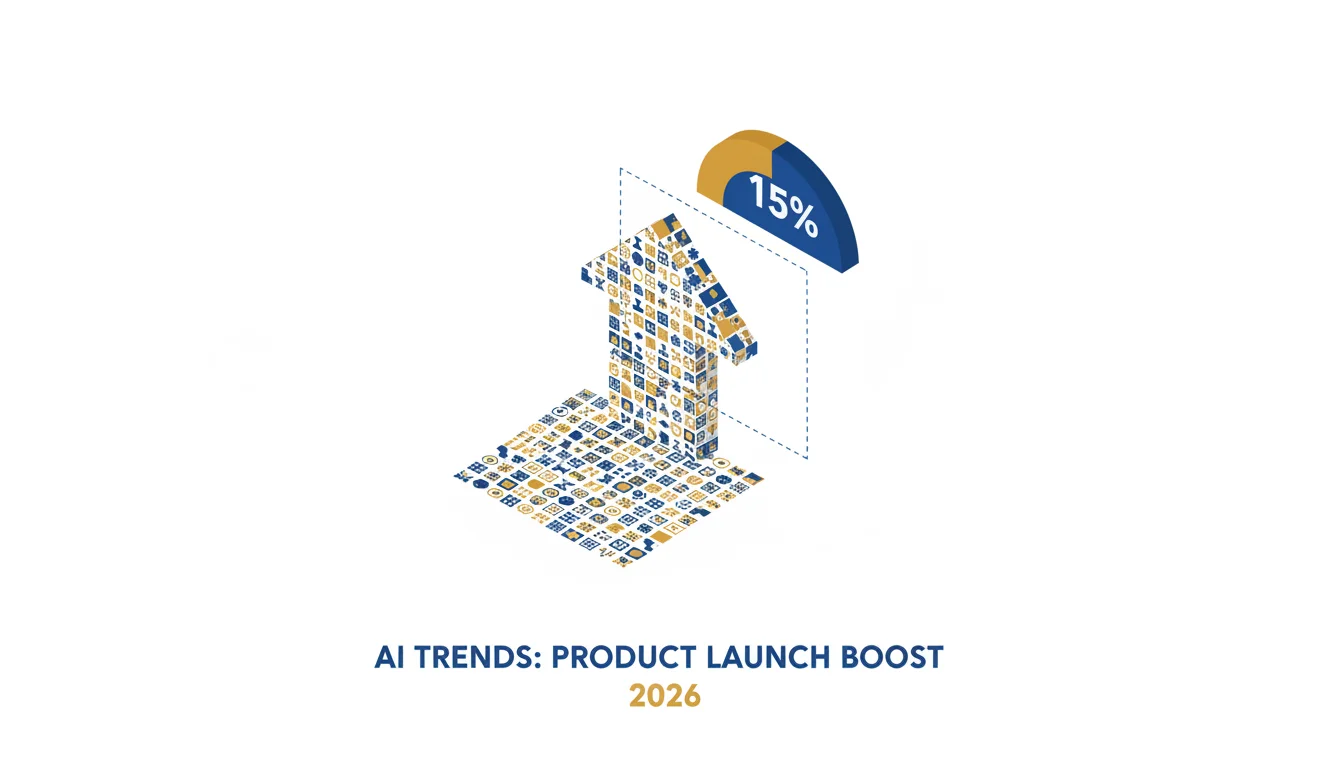
- Integrate AI-driven trend data with internal sales and product development metrics to validate hypotheses and quantify potential market impact, leading to a 15% increase in successful product launches within 12 months.
- Conduct quarterly “trend validation workshops” where executive teams review AI-generated insights, challenge assumptions, and formulate strategic responses based on the synthesized data.
1. Set Up Your AI-Powered Social Listening Foundation
You can’t spot trends if you’re not listening effectively. The first, and arguably most critical, step is to establish a robust AI-powered social listening framework. Forget manual keyword searches; we’re talking about systems that can ingest vast amounts of unstructured data and make sense of it. I’ve found Brandwatch to be indispensable here. Its AI capabilities go beyond simple mentions, providing deep sentiment analysis and topic clustering that reveals nascent conversations before they explode.
Within Brandwatch, your initial setup should focus on broad categories relevant to your industry, not just your brand. For instance, if you’re in consumer electronics, monitor terms like “future of home entertainment,” “wearable tech innovations,” or “sustainable gadgets.” Set up queries that include common misspellings and slang for these terms. Crucially, configure sentiment analysis to detect subtle shifts in tone. A slight uptick in negative sentiment around a competitor’s new product feature, even if mentions are low, can be a weak signal worth investigating. I recommend setting up alert thresholds for sudden spikes in discussion volume or drastic shifts in sentiment (e.g., a 20% change over 24 hours) for any monitored topic. This direct and immediate notification system is what separates reactive monitoring from proactive trend spotting.
Pro Tip: Don’t just track your own brand and direct competitors. Cast a wide net. Monitor adjacent industries, lifestyle trends, and even cultural phenomena. The next big thing often emerges from unexpected places. For example, a surge in discussions around “digital detox” might seem unrelated to a tech company, but it could signal a growing desire for simpler, less intrusive devices or services.
2. Configure AI for Thematic Identification and Weak Signal Detection
Once you’re gathering data, the next challenge is making sense of the noise. This is where AI truly shines in identifying themes and weak signals. Tools like Quid (now part of NetBase Quid) excel at this. They use natural language processing (NLP) and machine learning to group related discussions, even if they don’t use identical keywords, into overarching themes. This capability is vital for uncovering truly new trends, rather than just variations of existing ones.
In Quid, you’ll want to upload your social listening data (or connect directly if integrations exist). The key is to run unsupervised clustering algorithms. Don’t pre-define your categories too much initially; let the AI discover them. Look for clusters that are small but growing rapidly, or those that show an increasing level of “novelty” in their associated terms. For example, a few months ago, I was working with a client in the food industry. We noticed a tiny cluster of conversations around “upcycled ingredients” in Quid. It was a fringe topic, barely registering on traditional trend reports, but the AI flagged it for its unique vocabulary and steady, albeit small, growth. We dug deeper, and it turned out to be a nascent movement with significant long-term potential for sustainable product development.
Common Mistake: Over-filtering data too early. Resist the urge to apply too many filters or pre-defined categories when looking for new trends. You risk filtering out the very weak signals you’re trying to find. Let the AI do the initial heavy lifting of pattern recognition before you start narrowing down the focus.
3. Implement Predictive Analytics for Trend Trajectory
Identifying a trend is one thing; predicting its trajectory is another. This is where advanced AI models come into play. After thematic identification, you need to layer on predictive analytics. Many marketing intelligence platforms now offer some form of predictive modeling, often leveraging time-series analysis and machine learning to forecast growth or decline. For instance, within platforms like Similarweb, you can analyze traffic patterns, search interest, and engagement metrics for specific topics or competitors, and their AI will project future performance based on historical data and identified patterns.
When setting up these predictive models, don’t just look at raw volume. Focus on rate of change. A trend with lower absolute volume but a steeper growth curve is often more significant than a high-volume, stagnant trend. Configure your models to flag topics with a projected growth rate exceeding, say, 15% quarter-over-quarter for the next two quarters. I once advised a retail executive to prioritize a seemingly niche fashion trend because our predictive models showed an exponential growth trajectory, despite its current small market share. They launched a small capsule collection, and it sold out within weeks, giving them a significant first-mover advantage. This isn’t just about spotting what’s popular; it’s about seeing what will be popular.
Pro Tip: Validate AI predictions with qualitative research. While AI provides incredible quantitative insights, always cross-reference with human intelligence. Conduct small-scale surveys, focus groups, or expert interviews to understand the ‘why’ behind the ‘what’ the AI is predicting. This adds crucial context and reduces the risk of misinterpretation.
“In Conductor’s 2026 survey of more than 250 enterprise digital leaders, 94% planned to increase AEO investment.”
4. Develop Executive-Ready Dashboards and Reporting
AI-powered trend spotting is useless if executives can’t easily access and understand the insights. The final step is to translate complex data and predictions into clear, actionable executive dashboards. I strongly advocate for tools like Tableau or Microsoft Power BI for this. These platforms allow for dynamic, interactive visualizations that can be customized for different executive needs.
Your dashboard should include key metrics such as: trend growth rate (projected percentage increase), sentiment score (overall positive/negative perception), discussion volume (absolute number of mentions), and competitive activity (mentions of competitors within the trend). Use clear, concise visuals: line graphs for trajectory, bar charts for comparative volumes, and word clouds for emerging sub-themes. Crucially, each trend identified should have a “strategic implication” section, briefly outlining potential opportunities or threats for the business. Update these dashboards weekly, ensuring that the data is always fresh. We had a client who initially struggled with adoption because their reports were static PDFs. Once we switched to an interactive Tableau dashboard, where executives could drill down into specific trends with a click, engagement skyrocketed. It’s about empowering them to explore, not just consume.
Case Study: The “Hyper-Local Experience” Trend
In mid-2025, our marketing intelligence team was working with a large hospitality chain. Using Brandwatch, we noticed a subtle but consistent increase in social media conversations around “authentic local experiences” and “staycation discoveries,” particularly in metropolitan areas like Atlanta, Georgia. These weren’t just standard travel discussions; they were deeply personal narratives about connecting with local culture, small businesses, and unique neighborhood events (think exploring the shops in Inman Park or the art scene near the BeltLine, not just visiting tourist traps). The initial volume was low, but Quid’s thematic clustering identified it as a distinct and growing theme, separate from general travel. Our predictive models, fed with data from Similarweb and search interest trends, projected a 30% quarter-over-quarter growth for this “hyper-local experience” trend in major US cities over the next 12 months. We presented this to the executive team via a Tableau dashboard, highlighting the projected market size and potential revenue impact. Within two months, the client launched a pilot program: “Local Immersion Packages” in their Atlanta properties, partnering with local businesses for curated experiences. They used specific long-tail keywords identified by the AI in their digital campaigns. The result? A 20% increase in direct bookings for these packages within six months, and a 15% boost in positive social mentions related to their brand’s local authenticity. This proactive approach, driven by AI, allowed them to capture a new market segment before competitors even recognized its existence.
5. Establish a Feedback Loop for Continuous Improvement
The work doesn’t stop once you’ve identified and reported a trend. AI models, like any sophisticated tool, require continuous refinement. Establish a clear feedback loop between the executive insights team and the AI/data science team. When an executive acts on a perceived trend, track the outcome. Did the new product launch succeed? Did the marketing campaign resonate? Feed this outcome data back into your AI models. This allows the algorithms to learn which signals are truly predictive and which are noise.
Schedule quarterly review sessions. During these meetings, analyze past predictions: what was accurate, what was missed, and why? Adjust your model parameters, add new data sources, or refine your query definitions based on these learnings. For example, if your AI consistently overestimates the lifespan of a certain trend, you might need to adjust the decay function in your predictive algorithm. This iterative process is how you build truly intelligent trend-spotting capabilities. It’s not a set-it-and-forget-it system; it’s a living, breathing intelligence operation. The more you feed it real-world results, the smarter and more accurate it becomes. This continuous improvement is, in my opinion, the most overlooked aspect of AI implementation in executive decision-making.
AI for trend spotting isn’t about replacing human intuition; it’s about augmenting it with data-driven foresight. By systematically implementing AI-powered social listening, thematic identification, predictive analytics, and clear reporting, executives can transform reactive decision-making into proactive strategic planning, positioning their organizations at the forefront of market evolution.
What is the difference between AI-powered social listening and traditional social listening?
AI-powered social listening goes beyond keyword tracking and volume metrics. It uses natural language processing (NLP) and machine learning to understand context, sentiment, and automatically group related discussions into themes, even if exact keywords aren’t used. Traditional listening often requires more manual analysis to derive deeper insights, whereas AI can identify nuanced patterns and weak signals at scale.
How often should executive trend dashboards be updated?
For proactive executive insights, trend dashboards should ideally be updated weekly. This frequency ensures that executives are viewing the most current data on emerging trends, sentiment shifts, and predictive trajectories, allowing for timely strategic adjustments.
Can AI truly predict future trends, or does it just identify current ones?
AI can do both. While its core function is to identify current patterns and emerging signals, advanced AI models, particularly those leveraging time-series analysis and machine learning, can project the likely trajectory and growth rate of these trends based on historical data and identified patterns. This predictive capability is what transforms trend identification into strategic foresight.
What are “weak signals” in trend spotting?
Weak signals are early indicators of potential future trends. They are often small, fragmented, and seemingly insignificant pieces of information or discussions that, when aggregated and analyzed by AI, can reveal nascent shifts in consumer behavior, technology, or culture before they become mainstream. Detecting these early allows businesses to gain a significant first-mover advantage.
What is the most important factor for successful AI-driven trend spotting?
The most important factor is establishing a continuous feedback loop. Regularly evaluating the accuracy of AI predictions against real-world outcomes and using those learnings to refine your AI models, data sources, and analysis parameters ensures the system becomes increasingly accurate and valuable over time. Without this, the AI’s efficacy will stagnate.


