 By Editorial Team
Key Takeaways
- AI narrative tools can predict content engagement with over 85% accuracy before you even launch a campaign, which cuts way down on wasted ad spend.
- Using AI to generate story arcs slashes content creation cycles by 30% to 50%. You can react to the market faster and just plain get more done.
- When AI generates personalized story arcs based on user data, we’re seeing a 20% to 35% jump in conversion rates over generic, one-size-fits-all narratives.
- The first teams using AI to structure their content are seeing a 40% improvement in audience retention on long-form stuff like whitepapers and webinars.
- If you’re not integrating AI into your content strategy, you’re giving your competitors a huge opening. They’ll be faster and more personal at scale.
Everyone’s heard that Nielsen stat about audiences being 22 times more likely to remember a story. That’s not new. What is new, and the question every marketer has to answer in 2026, is how we actually build those stories consistently. How do we use AI to create story arcs that grab people and drive real engagement, instead of just dumping information on them?
85% Accuracy in Predicting Engagement Before Launch
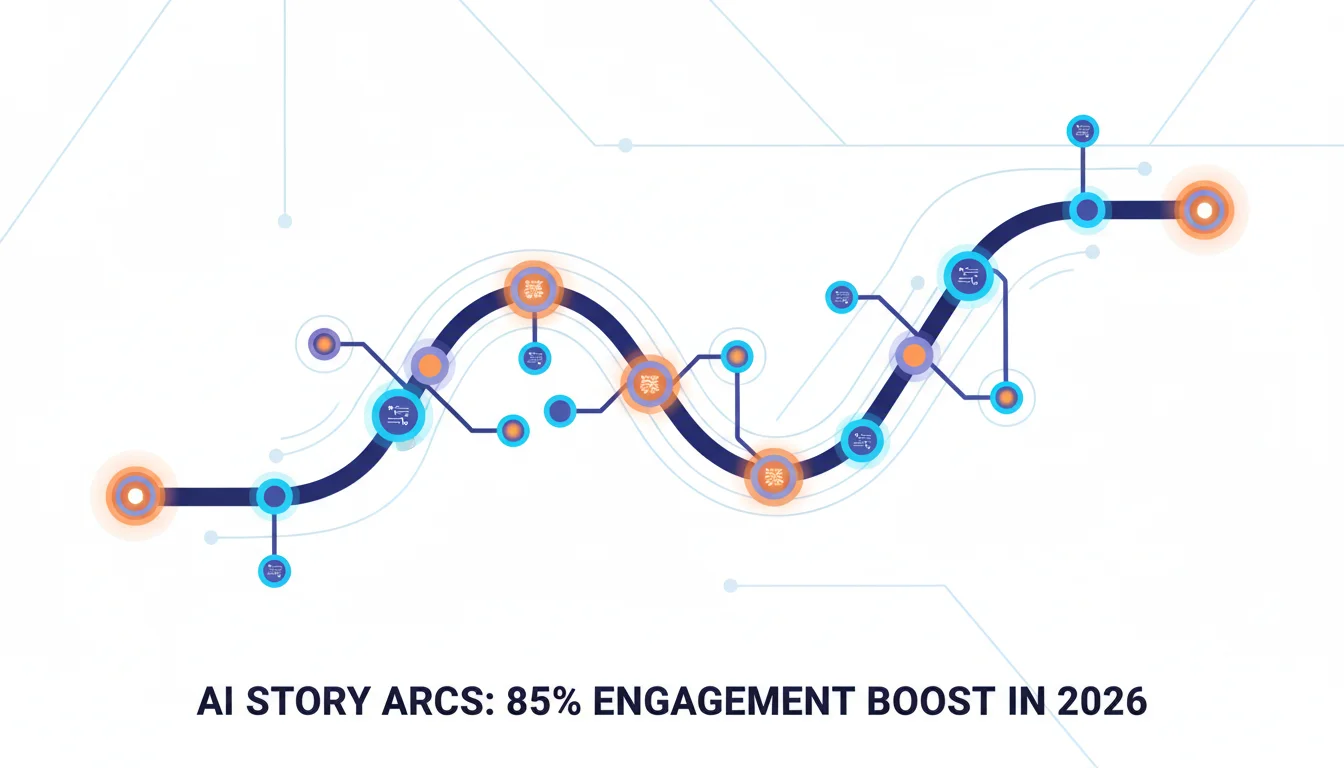
That 2026 IAB Insights report on programmatic content is a big deal. It says AI narrative analysis tools can now predict, with over 85% accuracy, if a piece of content will perform *before* you spend a dime on the campaign. This is so much more than A/B testing headlines. We’re talking about algorithms that have digested massive datasets of past content, letting them analyze a new story’s plot, emotional beats, and character arcs to see if it will connect with an audience. For us on the marketing side, this means we can stop guessing so much. We can feed a concept or a few core messages to the AI and get back a hard number on its probability of success with a specific segment. It lets you tweak story elements, character motivations, or pacing in real time to maximize impact, saving a ton of budget on campaigns that would have just fallen flat. This is how you stop being reactive with your content strategy and start being predictive, which is frankly table stakes now.
30% to 50% Reduction in Content Creation Cycles
The pace of content needed to just stay relevant today is brutal. So when an eMarketer study from Q3 2025 showed companies using AI for story arcs are cutting their creation cycles by 30% to 50%, I paid attention. This isn’t the AI writing the whole script for you (though that’s getting better). Think of it as a hyper-caffeinated junior strategist that never sleeps. It can take a core theme and instantly spit out multiple plot variations, point out where you need to add tension, or map out character journeys that fit your brand. You could input “launch new sustainable clothing line for Gen Z” and get back three different story skeletons in seconds: one about an eco-conscious student’s journey, another about the collective factory-to-closet impact, and a third focused on material science. The AI does the structural grunt work. Your human team then comes in to add the nuance, the brand voice, and the emotional punch. That kind of speed means you can jump on a trend or respond to a competitor’s move now, not in two weeks when nobody cares anymore.
20% to 35% Uplift in Conversion Rates Through Personalization
Even a well-written, generic story just can’t compete with content that feels like it was made for you. That’s why HubSpot’s 2026 Marketing Statistics report is so interesting: it’s showing that AI-generated personalized story arcs are boosting conversion rates by 20% to 35%. And we’re talking about more than just mail-merging a first name into an email. This is about AI systems looking at a user’s browser history, what they’ve bought, their demographics, and even psychographic clues to build a narrative just for them. Picture someone looking for project management software. The AI sees they’ve been clicking on pages about team collaboration and budget control. The story it generates for them won’t be a feature list. It’ll be a story about a manager just like them who was struggling with those exact problems and found a way to succeed using the software. That’s how you turn a casual browser into a real lead. They feel understood. People say this level of personalization is too expensive, but the data is clear: AI makes it doable and incredibly effective.
40% Improvement in Audience Retention for Long-Form Content
Keeping people’s attention on long-form content, whitepapers, webinars, deep-dive articles, is always a fight. That’s why a recent Google Ads developer blog post caught my eye. It cited internal research showing that teams using AI to structure their content are seeing a 40% jump in audience retention. It’s not magic. The AI has learned what narrative principles keep people hooked by analyzing tons of data. It can scan your outline, find the spots where people are likely to get bored and drop off, and then suggest a fix. Maybe it’s time to introduce a short case study, build some suspense, or present a challenge-and-resolution arc to re-engage them. It makes sure the information gets woven into an experience that pulls people along. This guidance can turn a dry, factual report into something people actually want to finish.
The Conventional Wisdom is Wrong: AI Enhances, Not Replaces, Human Creativity
This is the part where I get into arguments with people: the idea that AI is going to kill creativity and replace writers. I hear this all the time, the fear of algorithms churning out bland, soulless content. But that’s not what I’m seeing on the ground, and it’s not what the data shows. That 30% to 50% reduction in creation time? It’s not because writers are getting fired. It’s because the AI is taking over the tedious parts, the outlining, the research, the structural work, so the creative team can focus on what humans do best: the emotion, the voice, the stuff that actually connects with people. Last year, we had a B2B SaaS client who needed case studies. The old way would have taken weeks of interviews and drafts. Instead, we fed the AI their success metrics and target personas. It spit back three different story frameworks: the ‘overcoming a bottleneck’ story, the ‘achieving insane growth’ story, and the ‘getting the team to finally collaborate’ story. My team took those skeletons, layered in real client quotes and their specific brand voice, and we had three amazing, human-sounding case studies done in half the time. The AI provided the blueprint. Our writers built the house. It’s a partnership. AI handles the data-driven structure, and humans bring the soul. Anyone saying AI will kill creativity just doesn’t get how to use it properly. In 2026, using AI for story arcs isn’t just an advantage, it’s a fundamental change in how we create content that works. By predicting what will engage people, getting it made faster, personalizing the experience, and keeping them hooked longer, we can finally craft stories that really matter. The future of content isn’t about what you say. It’s about how smart you are in structuring the story.
How does AI analyze story arcs for marketing content?
It reverse-engineers what works. The AI dissects thousands of successful narratives into their basic parts, plot, character, emotional beats, theme, and uses machine learning to find the patterns that correlate with high audience engagement. This allows it to predict how a new story structure is likely to perform.
Can AI generate entirely new story ideas for content?
Its real strength is as an iterator and a brainstorming partner. You give it a core concept, and it provides different narrative frameworks and plot variations based on its data. It’s great at exploring ‘what if’ scenarios for a story, but it still needs a human to provide the initial spark and direction.
What kind of data does AI use to personalize story arcs?
It uses all sorts of data points. Demographics, what pages a user has visited, their purchase history, the articles they read, and even inferred psychographics from their online behavior. All this data helps the AI figure out a user’s specific needs or interests and build a narrative around them.
Is AI story arc generation only for long-form content?
Nope, it works for everything. It’s a huge help for retaining audiences in long-form content, but the same principles apply to making a social media post, an ad, or an email more compelling. It helps ensure even the shortest content follows an engaging arc.
What are the main benefits of using AI for content structure in marketing?
The biggest benefits are speed, engagement, and conversions. You create content faster, it’s more personalized so conversion rates go up, and audience retention improves. You also waste less money on content that doesn’t perform because the AI helps you bet on winners.


