 By Angela Smith
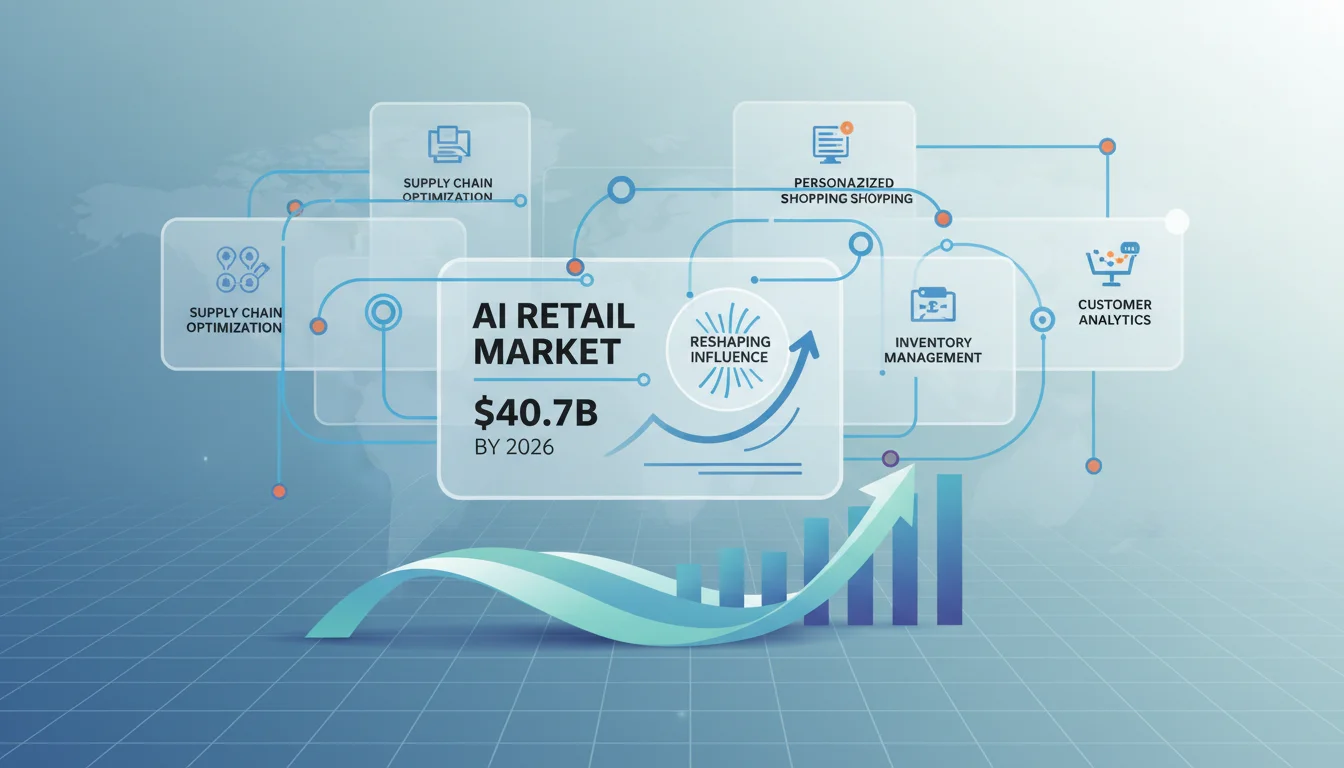
A recent study by Statista projects that the global AI market in retail will reach an astonishing $40.7 billion by 2026, marking a significant shift in how businesses interact with their clientele. This rapid integration fundamentally reshapes consumer behavior, moving it from passive reception to active, personalized engagement. How deeply will artificial intelligence redefine the very essence of digital influence?
Key Takeaways
- AI-driven personalization engines are now capable of predicting purchase intent with over 85% accuracy, significantly reducing sales cycles for e-commerce platforms.
- Voice search and AI assistants now account for nearly 30% of all online product searches, demanding a shift in SEO strategies towards conversational queries.
- Dynamic pricing algorithms, powered by AI, are increasing average order values by 10-15% for retailers who implement them effectively.
- The integration of AI chatbots for customer service has decreased response times by an average of 70%, directly impacting customer satisfaction and loyalty.
85% of Consumers Expect Personalized Experiences
The expectation for personalization isn’t a niche preference. It’s a mainstream demand. According to a Salesforce report, 85% of consumers now expect personalized experiences across all touchpoints with a brand. This isn’t just about addressing a customer by their first name in an email. It extends to highly tailored product recommendations, customized website layouts, and offers specifically designed around past purchase history and browsing patterns. AI algorithms excel here, sifting through vast datasets to identify granular preferences that human analysts might miss. For instance, a luxury fashion retailer might use AI to recommend accessories based on the specific cut and fabric of a previously purchased garment, rather than just suggesting “other luxury items.” This level of detail isn’t merely convenient. It encourages a sense of being understood, building stronger brand loyalty. Without AI, achieving this scale of individualization is impractical, if not impossible. The challenge for marketers lies not in collecting data, but in effectively deploying AI tools to interpret and act on it in real-time, creating a cohesive, individualized journey that feels natural, not intrusive.
AI-Powered Visual Search Drives 25% Higher Conversion Rates
The rise of visual search capabilities, powered by advanced AI image recognition, is transforming how consumers discover and purchase products. Pinterest Lens, for example, allows users to snap a photo of an item in the real world and find similar products online. This technology isn’t just a novelty. It converts. A study by ViSenze indicated that retailers implementing AI-powered visual search experienced conversion rates up to 25% higher compared to traditional text-based searches. Think about it: a customer sees a unique lamp in a cafe, takes a picture, and within seconds, finds several online retailers selling identical or similar lamps. This removes significant friction from the discovery process, shortening the path from inspiration to purchase. For businesses, this means optimizing product images with detailed metadata and ensuring their inventory is easily discoverable through visual search engines. It’s no longer enough to just have high-quality product photos. Those photos need to be intelligent, capable of being analyzed and matched by AI systems. My own observations working with e-commerce clients confirm this trend. Those who invest in strong image recognition and tagging protocols see a direct uplift in engagement from visual search channels.
““AI is like a calculator,” says Taylor. “Just because I have a TI-89 doesn’t mean I’m going to get the right answer. I still need to put the right inputs into the calculator.””
Dynamic Pricing Algorithms Increase Revenue by 7-10%
One of the more powerful, and sometimes controversial, applications of AI in commerce is dynamic pricing. This isn’t just about holiday sales or clearance events. It’s about real-time price adjustments based on a multitude of factors including demand fluctuations, competitor pricing, inventory levels, customer segmentation, and even individual browsing history. A report from McKinsey & Company highlighted that companies effectively using dynamic pricing strategies have seen revenue increases ranging from 7% to 10%. Consider an airline ticket pricing system: AI continuously monitors seat availability, booking trends, time until departure, and even the user’s past search behavior to offer a price that maximizes profitability while remaining competitive. This level of granular optimization is far beyond human capacity. While some consumers might perceive dynamic pricing as unfair, particularly if they see different prices for the same product, the reality is that businesses are using AI to respond with unprecedented agility to market forces. The key for brands is transparency and value perception. If the price fluctuation is justified by perceived scarcity or premium service, consumers are more likely to accept it. Where I often see brands stumble is in failing to explain the value proposition behind a variable price, making it feel arbitrary.
AI Chatbots Handle 60% of Customer Service Inquiries
Customer service, traditionally a labor-intensive department, is being significantly reshaped by AI. By 2026, Gartner predicts that AI chatbots will handle 60% of all customer service inquiries. This isn’t about replacing human agents entirely, but rather about automating routine questions and tasks, freeing human agents to focus on more complex issues requiring empathy and critical thinking. Imagine a customer needing to track an order, change a shipping address, or inquire about a product’s specifications. An AI-powered chatbot can provide instant, accurate responses 24/7, without wait times. This immediate gratification directly impacts customer satisfaction. For businesses, the operational efficiency gains are substantial, reducing labor costs and improving response times. However, the quality of these interactions varies wildly. A poorly designed chatbot that can’t understand natural language or escalates too quickly creates frustration. The best implementations involve a smooth handover to a human agent when the AI reaches its limits, ensuring a positive customer experience rather than a dead end. We advise clients to invest heavily in natural language processing (NLP) training for their chatbots, using real customer interaction data to refine responses and pathways.
Challenging the “AI Will Replace All Human Interaction” Narrative
Despite the undeniable impact of AI on various aspects of commerce, a common misconception persists: that AI will completely eliminate the need for human interaction in the customer journey. I find this perspective overly simplistic and, frankly, wrong. While AI excels at automation, data analysis, and predictive modeling, it currently lacks genuine empathy, nuanced understanding of complex emotional states, and the ability to build deep, personal relationships that are often critical in high-value sales or sensitive customer service scenarios. For example, while an AI can recommend a product with high accuracy, a human sales associate can understand a customer’s unspoken needs, anxieties, or aspirational desires and guide them through a more consultative purchase. Similarly, in a crisis, a human customer service representative’s ability to offer reassurance and creative problem-solving often surpasses any current AI capability. The future isn’t about AI replacing humans, but rather augmenting human capabilities. Businesses that integrate AI to handle the mundane, repetitive tasks, thereby helping their human teams to focus on high-touch, high-value interactions, are the ones that will truly thrive. It’s a teamwork, not a substitution. Dismissing the enduring value of human connection in favor of pure automation overlooks a fundamental aspect of consumer psychology.
The integration of artificial intelligence into commerce is not merely a technological upgrade. It is a fundamental restructuring of how businesses understand, engage with, and in the end serve their customers. Businesses that embrace AI’s capabilities to personalize experiences, simplify discovery, optimize pricing, and enhance service will gain a significant competitive advantage, shaping the future of digital influence one interaction at a time. For further insights into how AI is transforming customer engagement, consider exploring the impact of AI storytelling on personal narrative or how AI brand storytelling can enhance authenticity in 2026.
How does AI personalize the shopping experience?
AI personalizes shopping by analyzing a customer’s past purchases, browsing history, demographic data, and even real-time behavior to recommend products, customize website layouts, and offer tailored promotions, creating a unique journey for each individual.
What is dynamic pricing and how does AI enable it?
Dynamic pricing is the strategy of adjusting product prices in real-time based on various factors like demand, competitor pricing, inventory levels, and customer segments. AI algorithms process these complex data points instantaneously to set optimal prices that maximize revenue.
Can AI chatbots fully replace human customer service?
No, AI chatbots are not expected to fully replace human customer service. While they efficiently handle routine inquiries and provide instant responses, human agents remain essential for complex problem-solving, empathetic interactions, and building long-term customer relationships.
How does AI impact consumer behavior in product discovery?
AI significantly impacts product discovery through features like visual search, which allows consumers to find products by uploading images, and intelligent recommendation engines that suggest items based on inferred preferences, shortening the path from inspiration to purchase.
What challenges do businesses face when implementing AI in commerce?
Businesses face challenges such as ensuring data privacy and security, integrating AI systems with existing infrastructure, accurately training AI models with diverse data, and maintaining a balance between automation and the need for human interaction to avoid alienating customers.


