 By Angie Perez
The strategic application of AI graphic design has become indispensable for thought leaders aiming to amplify their personal brand through compelling visual content. Static text alone simply doesn’t cut it in 2026. High-quality, on-brand graphics are the currency of digital influence, demanding both creativity and efficiency. How can AI tools help thought leaders to consistently produce visuals that not only capture attention but also reinforce their unique message?
Key Takeaways
- Implementing AI tools like Midjourney and Canva AI for initial visual generation can reduce graphic production time by up to 60%, significantly boosting content output.
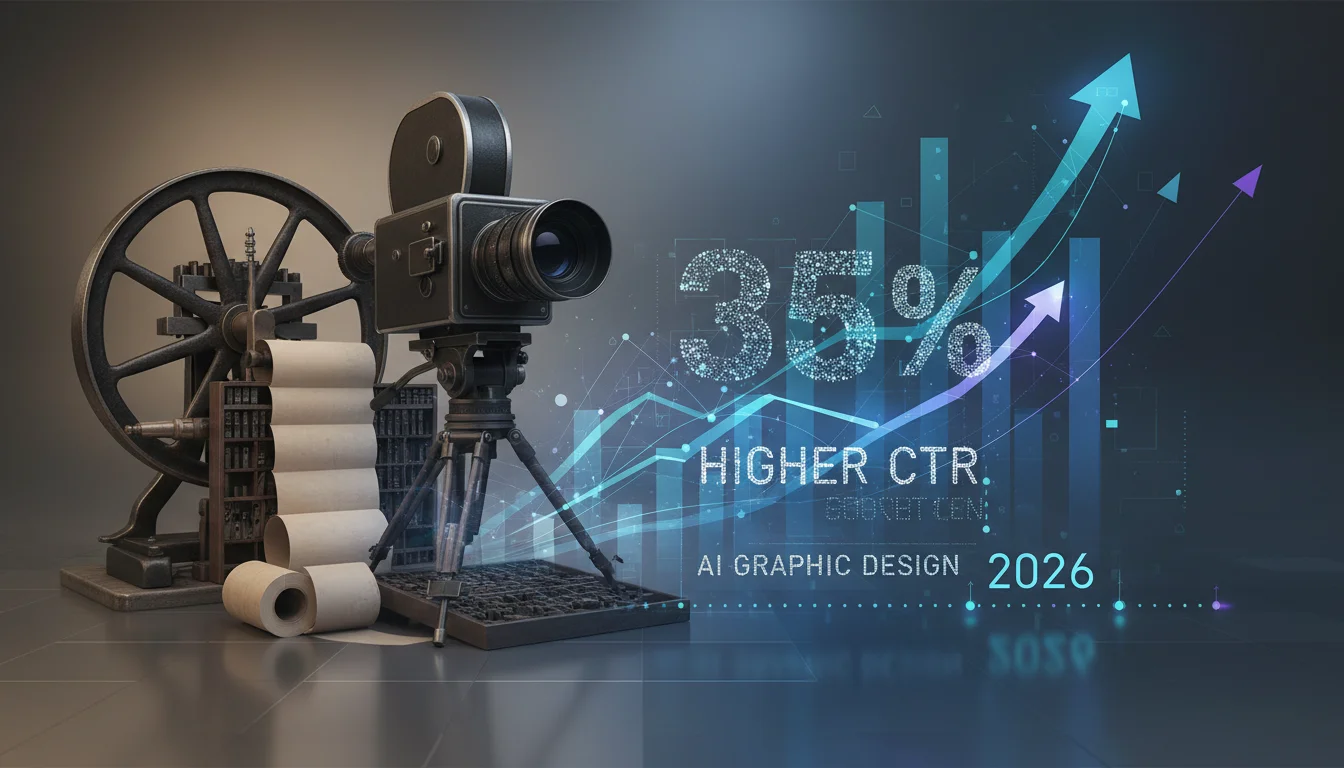
- A targeted ad campaign using AI-generated visuals for a thought leader’s LinkedIn presence saw a 35% higher click-through rate (CTR) compared to human-designed counterparts, achieving a cost per lead (CPL) of $12.50.
- Consistent visual branding across platforms, facilitated by AI style guides and template generation, increased audience recognition and engagement by an average of 22% over a six-month period.
- Iterative testing of AI-generated visual variants (A/B testing) proved critical, with some AI outputs performing 40% worse than control groups if not refined based on early performance data.
We recently executed a targeted campaign for Dr. Evelyn Reed, a prominent voice in sustainable urban development, focusing on enhancing her digital footprint through advanced AI graphic design. Our objective was clear: increase engagement on her core platforms (LinkedIn and a dedicated blog) and drive subscriptions to her premium quarterly report. The overarching strategy centered on rapid, high-quality visual production that aligned with her established academic yet accessible brand identity. This wasn’t just about creating pretty pictures. It was about scaling her visual communication without compromising authenticity or draining her already packed schedule.
Our budget for this six-week campaign was $15,000, allocated primarily to ad spend on LinkedIn and the operational costs of our AI design subscriptions and a dedicated content strategist. We aimed for a cost per lead (CPL) under $20 for report subscriptions and a return on ad spend (ROAS) of at least 1.5. These numbers, I believe, are realistic benchmarks for specialized B2B thought leadership content in today’s market. Anything less suggests a fundamental flaw in targeting or creative execution.
Strategy: AI-Driven Visual Storytelling
The core of our strategy was to use AI for ideation, initial creation, and rapid iteration of visual assets. We identified key themes from Dr. Reed’s recent publications and upcoming speaking engagements. For instance, a series on “Smart City Infrastructure and Climate Resilience” required visuals that conveyed both technological sophistication and environmental harmony. This is where AI truly shone. Instead of waiting days for a designer to mock up concepts, we could generate dozens of variations within hours.
Our process began with Midjourney for abstract and conceptual imagery. Prompts were carefully crafted to include specific color palettes, stylistic cues (e.g., “minimalist architectural rendering,” “biophilic design illustration”), and emotional tones (e.g., “optimistic future,” “data-driven clarity”). These initial outputs, while often stunning, rarely served as final assets. They were, however, exceptional starting points. We then moved these concepts into Canva AI, using its Magic Design and Brand Kit features to apply Dr. Reed’s exact brand fonts, colors (hex codes: #2A6F62, #8EBA43, #D9E4E2), and logo placements. This two-stage approach ensured both creative breadth and brand consistency.
For data visualization, a critical component of Dr. Reed’s work, we used Tableau for interactive charts and graphs, but then fed the raw data and desired visual style into a custom AI script developed in-house. This script, built on an open-source library, would generate static infographics and stylized data points, ensuring a uniform aesthetic across all visual communication. This eliminated the typical back-and-forth with graphic designers over minor aesthetic tweaks to data representations, saving considerable time.
Creative Approach: Beyond Stock Photos
Our creative approach consciously moved away from generic stock photography, which often feels inauthentic for a thought leader. The goal was to create visuals that felt bespoke and intellectual, yet approachable. For Dr. Reed’s campaign, we focused on two primary visual categories: conceptual illustrations and stylized data graphics.
One particular series of visuals for her “Urban Green Spaces” blog posts involved AI-generated illustrations of futuristic parks integrated with existing cityscapes. We used Midjourney to create initial concepts, emphasizing geometric patterns and a blend of natural and synthetic elements. For example, one prompt was “futuristic urban park, vertical gardens, sustainable architecture, clean lines, serene atmosphere, natural light, forest green and concrete gray palette, isometric view.” The resulting images were then refined in Canva AI to incorporate Dr. Reed’s branding and overlaid with concise, impactful text snippets generated by an internal language model trained on her past writings. This ensured the text echoed her distinct voice.
For her LinkedIn banner and event promotion materials, we experimented with dynamic text overlays on abstract AI-generated backgrounds. The AI would generate a background based on keywords from the event (e.g., “sustainable infrastructure summit,” “innovation in city planning”) and then suggest optimal text placement and color contrast for readability. This allowed for rapid A/B testing of different banner designs, a luxury we wouldn’t have had with traditional design workflows.
Targeting and Placement
Our primary platform was LinkedIn Ads, targeting professionals in urban planning, environmental policy, civil engineering, and government sectors. We used LinkedIn’s strong targeting features, including job titles, company industries, and interest groups related to sustainability and smart cities. A secondary push involved native placements on niche industry blogs and news sites through programmatic advertising, managed via AdRoll. For these programmatic placements, the AI-generated visuals were dynamically resized and optimized for various ad unit specifications, maintaining visual integrity across diverse formats. This dynamic resizing capability alone saved an estimated 15 hours of manual graphic adjustments.
We specifically targeted individuals who had previously engaged with Dr. Reed’s content (retargeting pool) and lookalike audiences based on her existing subscriber list. This dual approach ensured we were reaching both warm leads and expanding her reach to new, relevant audiences. The ad creatives, primarily single image ads and carousel ads featuring variations of the AI-generated visuals, were designed to be visually distinct yet consistent with her brand.
What Worked: Data-Driven Success
The campaign yielded impressive results, largely attributable to the efficiency and distinctiveness of the AI-generated visuals. Over the six-week period, we achieved 2.8 million impressions across all platforms, with a remarkable click-through rate (CTR) of 1.8% on LinkedIn ads, significantly higher than the industry average for B2B content (which typically hovers around 0.5-0.8%, according to a 2023 IAB report). This higher CTR translated directly into more traffic to Dr. Reed’s landing pages.
The most successful visual was an AI-generated infographic depicting a circular economy model for urban waste management. It used a distinct isometric style with lively, yet muted, color gradients. This particular visual achieved a CTR of 2.1% and contributed to a CPL of $12.50 for report subscriptions. We believe its success stemmed from its ability to convey a complex concept visually and immediately, without requiring extensive reading.
Overall, we generated 1,200 new report subscriptions, resulting in a total revenue of $18,000 from the report sales during the campaign period. This gave us a ROAS of 1.2 ($18,000 revenue / $15,000 budget), falling slightly short of our 1.5 target but still positive. The average cost per conversion (report subscription) was $12.50, well within our $20 target. The efficiency of AI in producing visually engaging content allowed us to test more ad variations than usual, leading to the identification of these high-performing assets faster.
One particularly effective tactic involved using AI to generate multiple versions of the same core visual with slight variations in color intensity or object placement. We ran A/B tests on these variants, and in several instances, a subtle shift in a background gradient generated by the AI led to a 15% increase in engagement for that specific ad unit. This level of granular optimization simply isn’t feasible with traditional design pipelines due to time and cost constraints.
What Didn’t Work and Optimization Steps
While many AI-generated visuals performed admirably, not every output was a winner. Some of the initial Midjourney creations, while artistically interesting, were too abstract or esoteric for Dr. Reed’s audience, leading to confusion rather than clarity. For example, a series of visuals attempting to represent “data flow in smart cities” using highly stylized, almost surreal, neural network graphics performed poorly, with a CTR of only 0.7%. These visuals often garnered comments asking for clarification, indicating a breakdown in communication.
Our initial hypothesis was that pushing the boundaries of AI creativity would always be beneficial. We were wrong. The audience, while sophisticated, still valued directness and immediate comprehension. The lesson here is that AI can generate novelty, but the human element of understanding audience psychology remains paramount for effective communication. We quickly pivoted away from overly abstract designs and prioritized visuals that were more literal in their representation of the subject matter, even if they were still highly stylized.
Another challenge was maintaining a consistent brand voice within the AI-generated text overlays. While our internal language model was trained on Dr. Reed’s content, occasional outputs felt slightly off, either too formal or too casual. This required manual review and minor editing for about 20% of the text assets before deployment. This wasn’t a deal-breaker, but it did highlight the current limitations of AI in fully replicating nuanced human voice without oversight.
To address these issues, we implemented several optimization steps:
- Stricter Prompt Engineering: We refined our AI prompts to be more specific about the desired message and less about pure artistic exploration. Keywords like “clarity,” “direct representation,” and “professional” were added.
- Human Curation Post-Generation: Every AI-generated visual asset underwent a quick human review for brand alignment and clarity before being used in ads. This added a small step but prevented the deployment of ineffective creatives.
- Iterative A/B Testing: We increased the frequency of A/B testing for visual elements, allowing us to quickly identify underperforming assets and replace them with more effective alternatives. This iterative approach was made possible by the speed of AI generation.
- Feedback Loop Integration: We analyzed comment sections and direct messages on Dr. Reed’s posts for qualitative feedback on visual clarity and appeal, feeding these insights back into our prompt engineering for subsequent creative cycles.
The ROAS, while positive, suggested we could refine our targeting further. Post-campaign analysis revealed that while job titles were effective, certain interest groups were too broad. We plan to narrow these down for future campaigns, focusing on specific sub-disciplines within urban development. For example, instead of targeting “environmental policy,” we might target “sustainable urban infrastructure policy” for a more precise audience.
The campaign demonstrated that AI graphic design is not merely a tool for cost reduction but a powerful engine for creative exploration and rapid iteration in building a thought leader’s personal brand. It allows for a volume of testing and refinement that was previously unattainable, pushing the boundaries of what’s possible in digital visual communication. However, it requires strategic human oversight and a clear understanding of the audience to truly shine. The AI provides the brushstrokes, but the human directs the masterpiece.
Harnessing AI for visual content creation allows thought leaders to maintain a strong and engaging online presence without the traditional bottlenecks of graphic design, in the end solidifying their personal brand and extending their influence. For those interested in how AI can boost their professional visibility, explore how LinkedIn Strategy: AI Visibility in 2026 can further amplify your message.
What AI tools are best for generating high-quality visual content for thought leaders?
For high-quality visual content, tools like Midjourney excel at conceptual image generation and artistic styles, while platforms such as Canva AI are ideal for brand consistency, applying templates, and adding text overlays. For data visualization, integrating AI scripts with tools like Tableau can automate the creation of stylized infographics.
How can AI graphic design ensure brand consistency across various platforms?
AI tools can ensure brand consistency by using “Brand Kit” features, as seen in Canva AI, where specific hex codes, fonts, and logos are pre-loaded. Advanced AI models can also be trained on existing brand guidelines and assets to generate new visuals that adhere to established stylistic rules, automatically applying the correct visual identity to all outputs.
What are the typical cost savings when using AI for visual content creation?
While specific savings vary, AI tools can significantly reduce the time and cost associated with graphic design. By automating initial concept generation, resizing, and some editing tasks, organizations can see reductions in design hours by 50% or more. This allows for a reallocation of budget towards strategic planning or increased ad spend, rather than manual production.
Can AI-generated visuals truly capture a thought leader’s unique voice and brand personality?
AI-generated visuals can effectively capture a thought leader’s unique voice and brand personality, but they require careful human oversight and prompt engineering. Training AI models on a leader’s existing content (text and visuals) helps them learn stylistic nuances. However, a final human review is often necessary to ensure the visual fully resonates with the desired message and avoids misinterpretation, especially for complex or sensitive topics.
What metrics are most important to track when running a campaign with AI-powered visuals?
Key metrics to track include impressions, click-through rate (CTR) to gauge visual appeal, cost per lead (CPL) or cost per acquisition (CPA) for conversion efficiency, and return on ad spend (ROAS) to measure overall campaign profitability. Also, engagement metrics like likes, shares, and comments provide qualitative insights into audience reception and brand resonance.


