 By Editorial Team
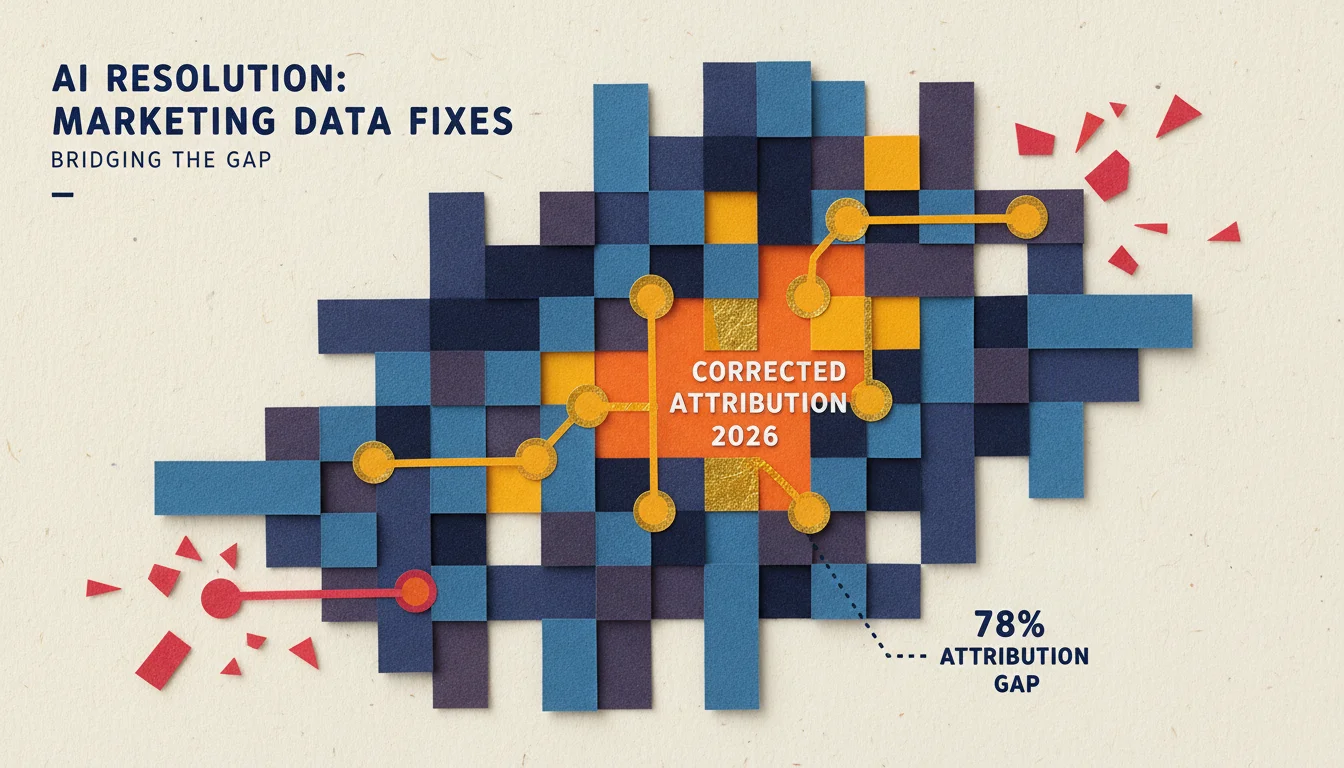
The marketing world is drowning in data, yet many executive marketing teams struggle to translate that deluge into cohesive, impactful campaigns across diverse channels. A surprising 78% of businesses still struggle with cross-channel attribution modeling, even with advanced analytics tools. This indicates a fundamental disconnect between data availability and actionable insights. The promise of AI in cross-channel campaign management isn’t just about automation; it’s about bridging that gap, transforming disparate data points into a unified, intelligent strategy. But what does this look like in practice for executive marketing leaders?
Key Takeaways
- AI-driven predictive analytics can reduce customer churn by up to 15% by identifying at-risk segments before they disengage.
- Implementing AI for real-time bid adjustments on platforms like Google Ads and Meta can improve return on ad spend (ROAS) by an average of 10-20%.
- Automated content personalization, powered by AI, increases engagement rates by an average of 18% across email and social channels.
- AI-powered sentiment analysis of customer feedback provides early warnings for campaign issues, allowing for adjustments within hours, not days.
The 78% Attribution Gap: More Data, Less Clarity?
The statistic that 78% of businesses struggle with cross-channel attribution paints a stark picture. We have more touchpoints than ever, from social media to search, email to in-app notifications. Each generates its own metrics, its own reports. The challenge isn’t collecting data; it’s stitching it together into a coherent narrative that accurately reflects a customer’s journey and assigns credit where credit is due. Traditional attribution models, like first-click or last-click, are woefully inadequate for today’s complex paths to conversion. They fail to account for the interplay of multiple channels, the subtle influence of brand awareness efforts, or the time lag between initial exposure and final purchase.
AI offers a path forward here. Machine learning algorithms excel at identifying complex patterns within vast datasets that human analysts simply cannot. By analyzing millions of customer journeys, AI can develop sophisticated multi-touch attribution models that distribute credit more accurately across all contributing channels. This isn’t theoretical. According to a recent IAB report, companies utilizing AI for advanced attribution saw a 15% improvement in marketing budget allocation efficiency. That’s a significant figure, especially for executive marketing teams accountable for every dollar spent. It means moving beyond gut feelings and into truly data-driven investment decisions. The old way of guessing which touchpoint deserved credit is dead; AI brings precision.
Real-time Bid Optimization: The Algorithmic Edge
One of the most immediate and tangible benefits of AI in cross-channel campaign management manifests in real-time bid optimization. Consider platforms like Google Ads or Meta Ads Manager. These environments are dynamic, with auction prices fluctuating by the second based on competition, audience behavior, and ad quality. Manual bid adjustments, even daily, are inherently reactive and slow. They miss opportunities and overspend on underperforming placements. AI, however, thrives in this chaos.
AI algorithms can analyze billions of data points, including historical performance, user intent signals, time of day, device type, geographic location, and even weather patterns, to predict the optimal bid for any given impression. This isn’t just about achieving a lower cost per click (CPC); it’s about maximizing the probability of conversion within a defined budget. A 2025 eMarketer study highlighted that businesses employing AI for automated bid strategies experienced an average 10-20% increase in return on ad spend (ROAS). This isn’t a minor tweak; it’s a fundamental shift in how campaign budgets are managed, moving from human-limited reaction to algorithmic foresight. The competitive advantage is clear: those who embrace this will simply outmaneuver those who don’t.
Predictive Analytics for Churn Prevention: Foreseeing Disengagement
Customer retention is often more cost-effective than acquisition, yet many campaigns remain heavily skewed towards attracting new users. AI offers a powerful tool for shifting this balance through predictive analytics for churn prevention. By analyzing customer behavior data across all channels, AI models can identify subtle signals indicating a customer is at risk of disengaging before they actually leave. This includes declining engagement with emails, reduced app usage, changes in purchase frequency, or even negative sentiment in customer service interactions. The model learns what “at-risk” looks like for your specific customer base.
Once identified, these segments can be targeted with highly personalized retention campaigns. Imagine an AI detecting a user’s app usage drop-off, triggering an email offering a personalized discount on a relevant product, followed by a targeted social media ad highlighting a new feature. This proactive intervention is far more effective than trying to win back a customer who has already churned. HubSpot research indicates that companies using AI for predictive churn analysis can reduce customer attrition by 5-15% annually. That’s a direct impact on the bottom line, turning potential losses into loyal customers. It’s about being one step ahead, always.
Dynamic Content Personalization: Beyond Basic Segmentation
The days of basic “segmentation by demographic” are largely over. Consumers expect experiences tailored specifically to them, not just to a broad group they happen to fall into. Dynamic content personalization, powered by AI, takes this to an entirely new level. Instead of manually creating multiple versions of an email or ad for different segments, AI can generate and deliver hyper-personalized content in real time based on individual user behavior, preferences, and context.
Consider an e-commerce campaign. An AI system observes a user browsing specific product categories, adding items to a cart but not completing the purchase. It can then dynamically generate an email featuring those exact items, perhaps with alternative suggestions, or a limited-time offer, all within minutes. The content isn’t pre-set; it’s adaptive. A Nielsen study on personalization found that campaigns utilizing AI for dynamic content generation saw an average 18% increase in engagement rates across email, social media, and website interactions. This isn’t just about adding a name to an email. This is about delivering the right message, with the right visuals, at the right time, on the right channel, for every single user. It’s a level of precision that human marketers, no matter how skilled, simply cannot achieve at scale.
The Conventional Wisdom AI Won’t Replace Creatives: A Misguided Comfort
There’s a prevailing narrative that while AI handles data and optimization, the creative side of marketing remains sacrosanct, immune to algorithmic encroachment. Many marketing leaders reassure their teams that AI will free them from tedious tasks, allowing them to focus on “true creativity.” I believe this is a dangerous misconception, a form of intellectual escapism. While AI may not (yet) spontaneously generate a groundbreaking, emotionally resonant brand narrative from scratch, its capabilities in creative generation are advancing at an astonishing pace. We’re already seeing AI tools that can generate ad copy, design visual assets, and even compose background music, all optimized for specific audience segments and campaign goals. These aren’t just templates; they’re algorithmically informed creations. The idea that human creatives provide the “spark” and AI merely executes is becoming outdated. AI can now provide the spark too, albeit a different kind of spark. It generates variations, tests them, and learns what resonates. The role of the human creative will undoubtedly shift, becoming more about directing and refining AI outputs, rather than originating every single element. To ignore this evolution is to risk being left behind, clinging to a romanticized view of creativity that doesn’t align with technological reality.
The integration of AI into cross-channel campaign management is not a luxury; it’s a strategic imperative for executive marketing leaders aiming for sustained growth and efficiency. The ability to unify disparate data, optimize bids in real-time, proactively retain customers, and personalize content at scale represents a profound shift in marketing capabilities. Embracing these AI-driven approaches will define the successful marketing organizations of the next decade.
How does AI improve cross-channel attribution beyond traditional models?
AI utilizes machine learning algorithms to analyze complex customer journeys across all touchpoints, developing sophisticated multi-touch attribution models that accurately distribute credit for conversions, unlike simplistic first-click or last-click models.
Can AI truly automate bid adjustments across different ad platforms?
Yes, AI-powered systems can analyze real-time market conditions, competition, and audience behavior across platforms like Google Ads and Meta, automatically adjusting bids to maximize ROAS and achieve campaign objectives more effectively than manual methods.
What kind of data does AI use for predictive churn prevention?
AI for churn prevention analyzes a wide range of customer behavior data, including engagement with marketing communications, product usage patterns, purchase history, website interactions, and customer service feedback to identify early indicators of disengagement.
How does AI-driven content personalization differ from basic segmentation?
AI-driven personalization goes beyond broad demographic segmentation by dynamically generating and delivering unique content elements (text, visuals, offers) in real-time, tailored to an individual user’s specific behaviors, preferences, and contextual signals.
Is it necessary for executive marketing teams to have AI specialists in-house?
While deep AI expertise is valuable, executive marketing teams primarily need leaders who understand AI’s strategic implications and can effectively integrate AI tools and platforms, often leveraging external vendors or upskilling existing team members rather than hiring dedicated AI scientists for every role.


